Retrospective: Does the Dying Will of Reborn! Still Burn?
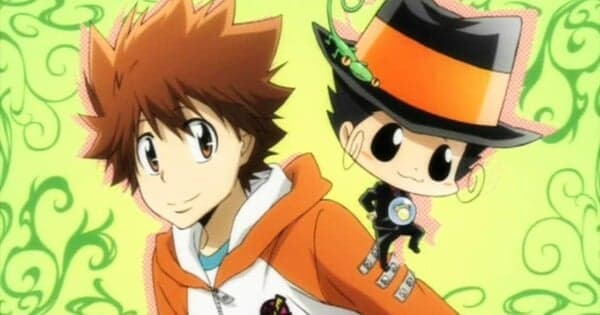
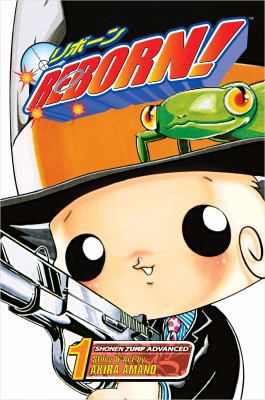
Like most teenagers growing up in the late 2000s, I was obsessed with Naruto, and that obsession led me to delve deeper into the murky waters of anime and manga to find something similar. During some of those searches, I would occasionally stumble across an image of a manga featuring a weird-looking toddler holding a pistol, and while that series seemed fairly popular on the internet, I found the image kind of off-putting and didn't give it a second thought. Then one weekend, I was banned from watching TV after turning in some bad grades, and with little else to do but quietly scroll through manga, my attention turned back towards that weird baby with the gun.
Over the course of that weekend, I ended up burning through what was available of the manga, and in the process, Reborn! quickly became my new obsession, and I was desperate to get my hands on anything related to it, whether it was new manga volumes or a set of Vongola Rings to wear with my friends. Since then, the series has always held a special place in my heart, and even well over a decade later, I still often find myself thinking about its quirky cast of characters and shifts in escalation. However, the passage of time has also led me to become increasingly ambivalent about the series as a whole, and for everything I like about it, there's a lot I find incredibly frustrating. So now, all these years later, it's time to ask the question: Does Reborn! still hold up?
For those unfamiliar with the series, Reborn! was a manga series drawn and written by Akira Amano (who these days is also known for her series Ron Kamonohashi's Forbidden Deductions and contributing character designs to the Psycho-Pass franchise) and ran in Weekly Shonen Jump from 2004 to 2012, totaling a run of 42 volumes. It also received a 203-episode anime adaptation from Studio Artland that aired from 2006 to 2010, and, in addition to being one of the last shows Artland worked on before shutting down, it was also one of the earliest shows that Crunchyroll ever simulcasted as it transitioned from a pirate site to an official streaming service.
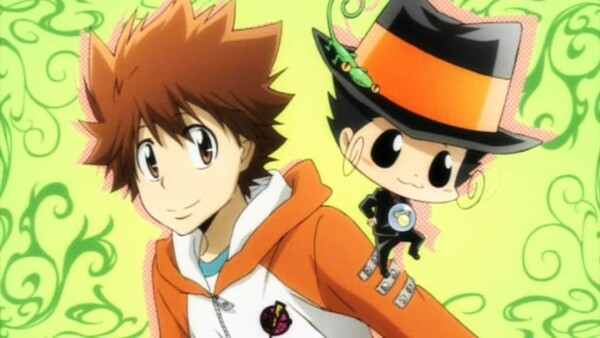
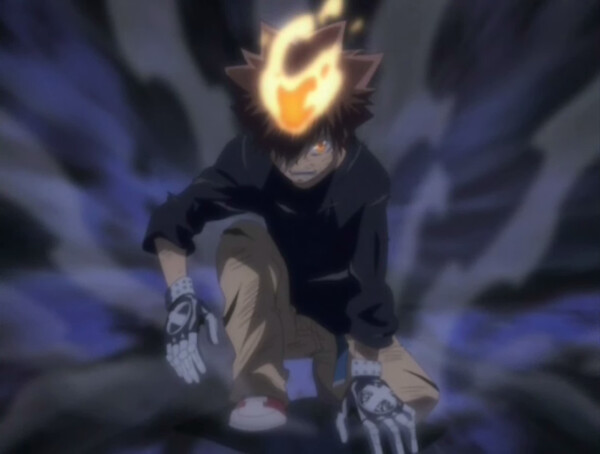
The series follows a middle-schooler named Tsuna, known as a dorky loser who fails at everything and can't even muster the courage to stand up to a chihuahua, much less ask out his crush, Kyoko. His life takes a sudden turn when a strange baby in a mafia suit shows up at Tsuna's door as his new home tutor, claiming that Tsuna is the current heir to the powerful Vongola mafia family. As such, he's been sent to whip Tsuna into becoming a proper mafia boss, and one of his primary methods involves the use of a magic bullet called the “Dying Will Bullet” or “Deathperation Shot” depending on your preferred translation/pun (while I know most fans prefer the former, I'll be sticking with the latter for the sake of consistency with most official translations).
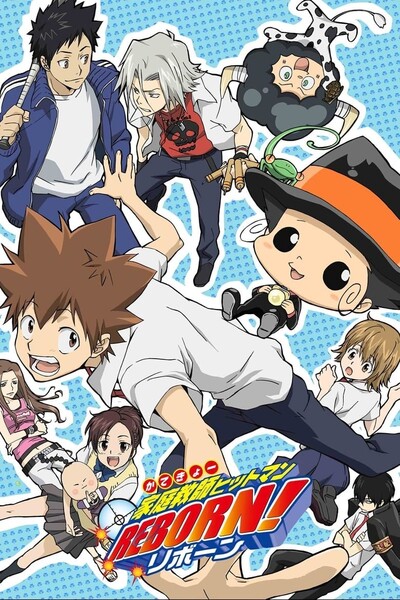
When shot with this bullet, Tsuna is killed and immediately revived in his boxers in order to fulfill whatever his final regret before dying was, and with it, Tsuna starts finding the courage to do things he never could before, as well as finding himself surrounded by an ever-increasing ensemble of weirdos that join his mafia family. Said weirdos include Gokudera, a Vongola hitman who becomes Tsuna's dedicated fanboy after being “defeated” in a duel, Yamamoto, a baseball prodigy who befriends Tsuna while thinking that all the weird mafia stuff surrounding them is some elaborate form of make-believe, and Lambo, an annoying child assassin with a magic bazooka that ages him up 10 years when he shoots himself with it. These characters are just the tip of the iceberg, though, as it's filled with a cast of quirky killers with gimmicks ranging from only being able to cook using poisons to being able to use psychic powers with gyoza, and many of them are wacky in one way or another.
If that sounds like a weird premise for a popular battle shonen, you'd be correct, because it's actually the premise of what was initially a gag manga. For the first 61 chapters of the manga, and 19 episodes of the anime, Reborn! was entirely a comedy, with most of the jokes centering around Tsuna either meeting some crazy new character connected to the mafia or using the Deathperation Shot to deal with whatever bizarre scenario Reborn! tosses him into. The comedy itself can be a bit hit or miss (which isn't helped by the anime having greatly toned down a lot of the manga's violent slapstick), but it's a functional enough formula for a comedy to be entertaining, and the series regular introduces enough new characters with quirky gimmicks to keep things from getting too stale.
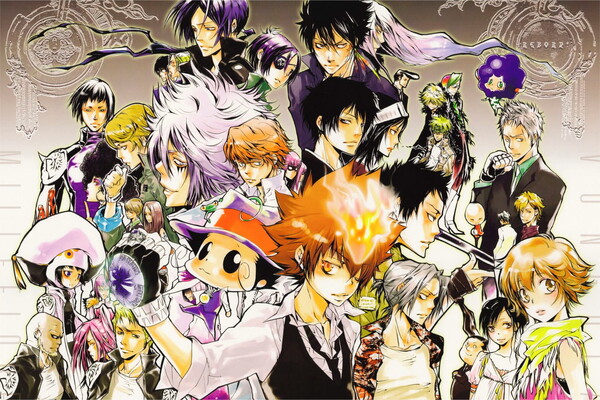
In time, though, the series eventually made an abrupt shift into a battle shonen, and when I say abrupt, I mean abrupt, as depending on whether you're going through the manga or the anime, it goes from either a chapter about Gokudera turning down a mafia promotion or an episode about Tsuna meeting a boy who gives out weird fortunes to the gang being targeted by a group of hitmen led by a guy with a bargain bin Sharingan. Between the ultra-competitive nature of JUMP as a magazine, and the need to keep readers constantly engaged to avoid cancellation, there have certainly been other examples of JUMP series that switched genres during their serializations (Dragon Ball basically started a gag manga about martial arts and only became what it is now when the martial arts ceased to be a joke), but a lot of those examples usually happened more gradually, or early enough in their runs for the shift not to feel too jarring. Comparatively, Reborn! stands out as one of the most egregious instances of this concept at work, and given that it happened well over a year into the manga's serialization, it was a move that absolutely should not have worked. Yet it worked so well that not only did the series manage a pretty successful run following that shift, but the gag manga section itself is now mostly seen as a set-up rather than the story in its original form.
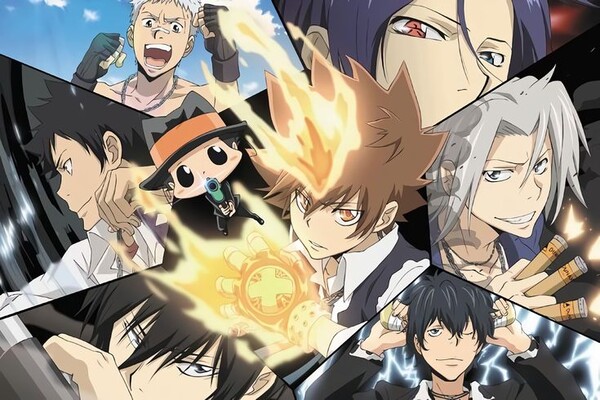
But, while a common sentiment among fans is that the series doesn't really pick up it moves past the more gag oriented stuff (and the fact that stretch of the story goes on for 19 episodes was almost certainly a contributing factor as to why it was never picked up for a dub, or given a home video release in the states until years later), I'd argue that's actually because of those origins that the move towards action managed to work so well. Since a lot of JUMP battle manga tend to ride through their serializations by having a constant sense of momentum, it also means there's little room for downtime between characters, or giving readers time to get attached to anyone outside of the most plot-relevant cast members (with a lot of that being compensated through filler episodes or supplementary material). However, because the series spends so much time as a comedy, it has plenty of time to establish dynamics between the core cast and see how they bounce off each other in different situations. Sure, a lot of that is done through simple ongoing gags, like Gokudera being antagonistic towards Yamamoto at all times because he thinks he'll threaten his position as Tsuna's right-hand man, or having the school prefect and resident bad boy, Hibari, inspire fear in nearly every character except Reborn! because he admires his strength, but they do nevertheless make for distinct relationships. More importantly, though, it gives you plenty of time to get attached to these characters, so by the time it does shift in tone, and they fight in order to go back to their initially carefree lives, that motivation feels sincere rather than obligatory.
Another feather in Reborn!'s cap is that while it likely wasn't intended to become a battle shonen, Akira Amano was extremely good at reworking her pre-existing ideas. Rather than starting over from scratch after the series switched genres, Amano took much of what already existed in the comedy portions and retooled it into lore, or material that could be used for more dramatic purposes. Instead of simply existing as talking babies because it's funny, Reborn! and his fellow “strongest babies in the mafia,” called the Arcobaleno, are later revealed to be under a mysterious curse that has kept them in the form of infants. The “Deathperation Flames” that appear on Tsuna's head whenever he's under the influence of Reborn!'s bullets eventually become part of his regular combat set, with later arcs seeing it completely branch off into its own shonen power system similar to Chakra from Naruto or Nen in Hunter X Hunter. Even the gag about Lambo's magic time bazooka becomes the basis of the longest arc in the series when Tsuna gets shot with it and is sent into a dark future where a powerful mafia family is after a power that could threaten all of creation.
What's by far her most effective bit of retooling, though, is the evolution of Tsuna as a character. Prior to the genre shift, Tsuna's character usually waffled between being portrayed as a spineless wimp and playing the straight man to all the crazy individuals he was surrounded by. But as the story's scope becomes more serious, we see Tsuna become a little more courageous and responsible, and the first time he musters the will to fight after a couple of dozen episodes of fleeing danger still delivers satisfying emotional payoff. As the series goes on, we see Tsuna start to grow in confidence under Reborn!'s tutelage, and eventually go from seeing his new household of weirdos as a nuisance to a family that he'll put himself on the line to defend.
However, while the series mostly managed its genre shift in its favor, it wasn't without its problems. Although the series is largely arc-driven, it maintains some linear progression and escalating stakes through the end of the Future Arc, which is also where the anime ended. Comparatively, the last two arcs of the manga, the Inheritance and Curse of the Rainbow arcs, are a pretty significant step down in terms of both stakes and quality, and while they do have their moments, like Tsuna finding a new friend in someone as dorky as he is, or him briefly standing up to Reborn! when the latter starts to underestimate him, it never quite manages to return to the highs of its first three story arcs. It certainly doesn't help that the manga's final antagonists feel half-baked, and the ending even more so, as it hastily resolves a few of the manga's ongoing mysteries while leaving others completely unresolved. By the time the series wraps up, it feels like it simply ran out of gas rather than having a natural conclusion, and it's hard not to feel that the anime kind of dodged a bullet by ending where it did.
Even prior to those last two arcs, though, the series still suffered elsewhere. I mentioned before that one of the biggest things it had going for it was the ability to leverage audience investment in its characters prior to the genre shift, but that effect wasn't always positive. This is especially for the female side of its cast, who get treated pretty roughly even by JUMP standards. While characters like Gokudera benefit from the transition as we see him gradually shift from prioritizing Tsuna over everything else to learning to value himself more, others like his sister Bianchi or the martial arts assassin I-Pin are pushed deeper and deeper into irrelevance, despite their previous status as core cast members. The lone designated girl-fighter, Chrome, more or less exists as a literal substitute for the story's resident anti-hero, Mukuro, and never really gets to be her own character as she spends much of her time either having him bail her out of fights or out of commission on a hospital bed.
The worst victims in this regard, however, are Tsuna's primary love interests, Kyoko and Haru. Prior to the genre shift, the primary joke between him and Kyoko was that he maintained a hopeless crush on her, while she showed no real interest in him and just saw him as another one of her friends. It works well enough as a recurring gag in a comedy, but since her character is otherwise a blank slate, the two end up having negative chemistry, which makes any romantic interactions feel largely forced. Inversely, while Haru does actually like Tsuna, since he only has eyes for Kyoko and sees Haru as too much of a quirky weirdo even well after the two have become friends, he denies any interest in her, even when others around him can see it. This dynamic between the three of them never really changes, even when the stakes of the series turn more dramatic, and it doesn't help that Tsuna intentionally keeps Kyoko and Haru out of the loop on any dangerous situations he and the others are involved in (something that holds true even when the two are directly affected). When the story does make an attempt to address the latter problem, it results in them being told they simply don't need to involve themselves with the dealings of men (something they're told by another woman, no less), and while Tsuna does eventually fess up, it's only because he feels bad for them, rather than him being framed as in the wrong. It's pretty terrible, and made all the worse by the series not even following through with it, as the two of them are largely absent from the final arcs of the manga altogether.
Additionally, for everything I mentioned about Tsuna's growth as a character, Amano's insistence on always being able to poke fun at him for being a dork means that very little of it sticks in the long term. Despite several suggestions that Tsuna could someday reform the Vongola Family from a violent mafia organization into the vigilante group it started as, Tsuna only ever dons the mantle of responsibility when he absolutely has to, and otherwise flees at the mere suggestion of becoming a mafia boss. For every step we see Tsuna take in becoming a little more mature or growing as a leader, it's usually followed up by a reminder of how hopeless he is without Reborn! to look after him, and most of the character development he does have is largely reset in the last two story arcs, which see a hard swerve back to the status quo of his character. By the time the series ends, Tsuna is no closer to inheriting the Vongola Family than he was at the start of the series (that the last couple of chapters tease a potential resolution to the aforementioned love triangle only for Tsuna to back out of it just rubs salt in the wound even further), and it's even stated outright that the only real thing that's changed is that he has friends now. Needless to say, it's a deeply unsatisfying resolution to his character arc, and while it's hard to fault Amano too much for not sticking the landing when the series had transformed into something so radically different from what it started as, it still doesn't make the final punchline here any less disappointing.
So does Reborn! still hold up? Looking at the whole of the series, I'd say probably not. While it's pretty incredible to look at how far Amano was able to take it as a battle manga, given that likely wasn't the original plan, its problems with its female characters and need to maintain its own status quo keep it from culminating into something grander. I've seen a lot of desire for a new anime adaptation, and while I can't deny that some part of me would be excited about it, I'm not quite convinced it would work out. It's hard not to imagine a new adaptation just skipping past the bulk of the comedy segments to get to the “good stuff” faster, and since the prior time spent with the cast is part of what helps to soften some of the flaws of the action stuff, it would likely end up being weaker than what we already have.
For all those complaints, though, I'm still really fond of Reborn!, even if that's more so for some of its individual components than the entire story. While those last couple of manga arcs are underwhelming, the earlier arcs, like the Kokuyo Land and Varia arcs, are still pretty solid by themselves, and for as much as I've complained about the treatment of characters like Bianchi or Haru in later parts of the series, it's only because they were among the funniest characters prior to the genre shift. Even if I can't necessarily recommend the entire thing, the moments where it shines are still pretty fun, and while its low points stand out, it's a solid enough action series that I wouldn't say it deserves to just fade into history either. Reborn! may not exactly come together as a total package, but between its wild shifts in tone and equally wild characters, I think it still makes for a worthwhile experience, even if it's a pretty messy one.