In an era where comedy in anime is defined by what it is not rather than what it is, Aho Girl stands among the few would rather be judged for its own merits. Likewise, it holds no regard for what has traditionally worked in the past… Unless you’re speaking about series author Hiroyuki. Aho Girl is undeniably the next step in the evolution of Hiroyuki’s signature style last seen in his previous work, The Comic Artist and Assistants. Aho Girl takes what elements worked and expand upon them tenfold. Whatever mild character development or instances of a serious tone found in Hiroyuki’s previous series (which even then was rather rare to come across) are completely abandoned in Aho Girl. There is absolutely nothing here that could even remotely be considered serious or deep. Rather, Aho Girl is 100% comedy. It is nothing more nor nothing less.
___
Story and Characters
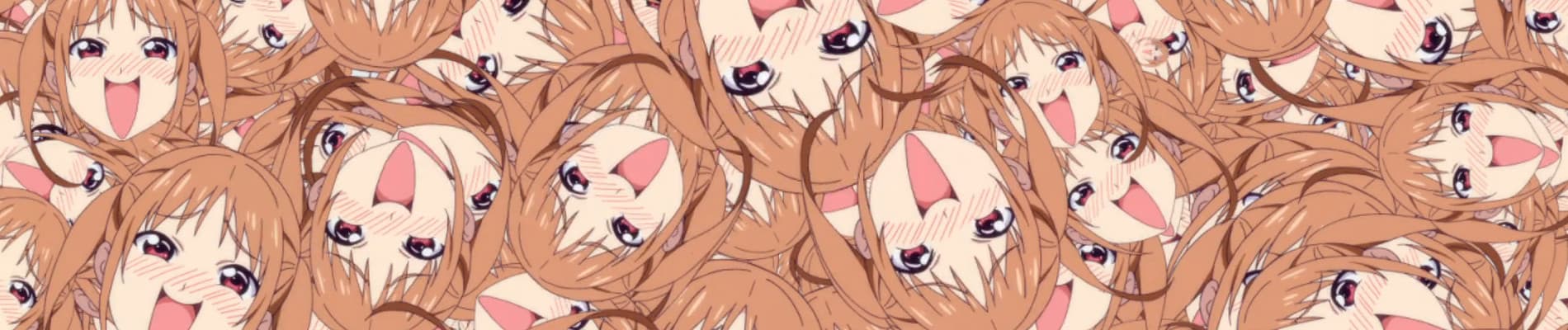
There is little sense in separating these two categories when they not only exist but thrive in a mutual existence. The premise is not only enhanced by the characters found here, but it also serves to put said characters into the situations we see in this series. Quite simply, Hanabatake Yoshiko, a high school girl, is idiotic beyond repair. Her childhood “friend” (and according to her perspective, her lover) Akuru Akutsu (amusingly referred to as Akkun, a clever pun on Japanese honorifics) is along for the ride, much to his dismay. He, as well as the colorful cast of characters they come across bear witness to humanity’s most dangerous idiot.
She's still probably more intelligent than people on social media...
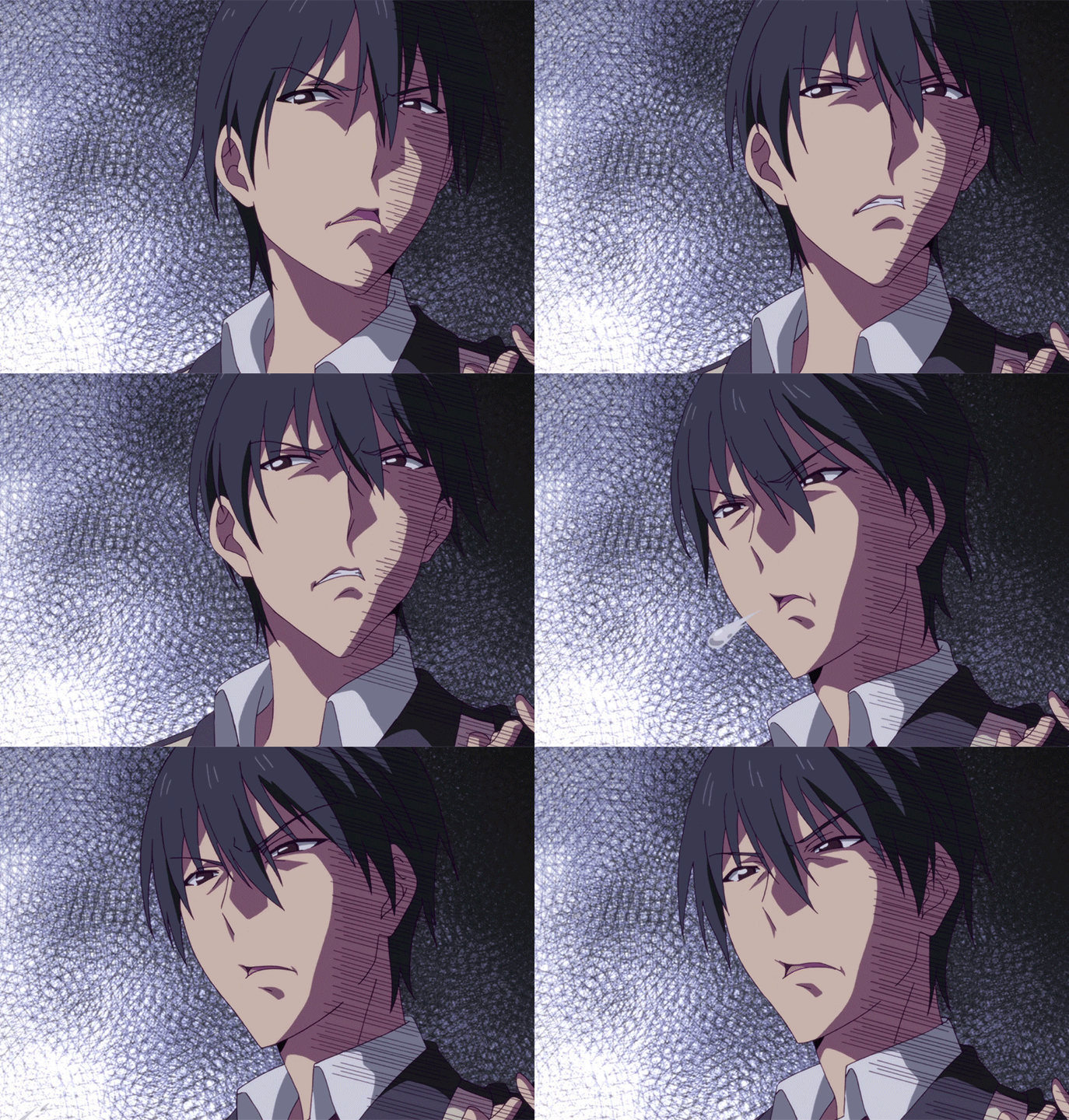
Though I summarized it quite elaborately, the premise is nonetheless simple. It is reminiscent of a dynamic that is fairly common in media that focuses on comedy. There is the straight man who is stuck with someone lesser – usually in regard to intelligence. That is what is put on display for us here… Initially at least. As the series goes on, it unfolds into something much grander in scale. This is done by incorporating new characters into the various shenanigans we witness. As such, we attain a greater understanding of the psyches of our characters. Thanks to the series executing this so well, we come to understand that most if not all characters in this series are… Just as insane and unstable as the titular idiot girl herself. I would argue that this idea isn’t as prevalent in the anime as it is in the manga (after all, the anime is merely a fraction of what these characters end up doing), but the idea is conveyed just enough that it adds to further enjoyment of the series. The series thrives thanks to how each character is essentially a foil to each other. Thing of light refracting through a prism. Allow me to speak about a few of these characters that make the series what it is. What has already been said about Yoshiko is all there is to say. However, though she is idiotic in every sense of the word, she nonetheless acts as the center of this series. As episodes go on, the series no longer limits itself to Akkun working to put an end to Yoshiko’s antics. Heck, some segments don’t feature Akkun at all (for better or worse). We instead see Yoshiko interacting exclusively with other characters, usually one-on-one. If Yoshiko is the bread of the series, these characters serve as the butter. I have referred to Akkun several times up to this point, but I would like to dedicate a portion of this review specifically to him. He is undoubtedly, the highlight of the series. There is something that is simply entertaining about a man who struggles every step of the way when dealing with an idiot who is as insufferable as anyone could be. Perhaps there is something relatable about seeing someone having little to no choice but to put up with someone so dumb. Though what really makes Akkun the highlight of the series is how beyond surface level, he is as inept as Yoshiko – though in different regards. His personality is self-destructive, whether it be his obsession with perfection or his lack of social skills (as well as his unwillingness to try and fix that). As dumb as Yoshiko is, she is nonetheless pleased with life. Akkun? Not so much. When viewed from this perspective, the dynamic found here is all the more entertaining. Unfortunately, however, and this is an issue most prominent in the anime, but Akkun is ultimately pushed to the sideline in the latter half of the show’s run in favor of Yoshiko interacting with other characters. This simply comes down to what chapters were adapted. While the series is certainly entertaining as a whole, the segments which feature Akkun offer significantly more laughs than those that don’t.
No clever joke here. I just really like this GIF.
That aside, there are plenty of other characters that are nearly, if not just as entertaining. Though she’s not as vital to the series as Akkun, my personal favorite character would undoubtedly be the degenerate member of the disciplinary committee, who takes a liking to Akkun. Obviously, this trope is hardly new. However, as it does with nearly everything, Aho Girl turns it up to eleven, essentially giving it a fresh coat of paint. While it is another case of “it was better in the manga” (purely because of how much more content it features), any segment featuring the disciplinary committee girl (her name is actually not mentioned at all in the anime’s run) is plenty entertaining. The last of the primary cast is Sayaka, the actual “straight man” of the series. There isn’t much to say about her from an individual perspective but she works very well as a stark contrast to every other character present. There are many more characters to be found in the series serving minor roles. If I were to speak about everyone at length, there would be no end to this review. Nevertheless, whether Yoshiko is manipulating her teacher into having an improper relationship with a student who doesn’t exist, or her mom working tirelessly to pawn her own daughter off to Akkun for life, there is nothing in the sense of repetitiveness here. If anything, mentioning those examples of secondary characters should prove how unpredictable, but all too enjoyable the characters and situations are. Not once does the series rest on its laurels and play it safe. While not every joke is a home run (one example being the final episode which uses chapters that were never intended to serve as conclusion to form a makeshift one for the adaptation), they’re never boring. And not once will you think “I’ve seen this humor before”. While the series may use tropes as a foundation or premise for a gag, the actual humor is wholeheartedly unique. That said, I would argue that the humor feels a bit stretched thin in the final episodes, but once again, I believe that is attributed to what the anime adapts rather than poor directing and whatnot. All in all, Aho Girl is a rollercoaster from start to end. There is simply nothing in the anime landscape that is truly comparable to Aho Girl – mostly in concept but it would also be true when said for quality.
___
Presentation (Art, Animation, Audio)
Everything previously mentioned would be for naught if the anime were poorly produced or directed. Thankfully, Studio Deen did an exceptional job with the handling of Aho Girl. While the art is simple and relatively standard, it remains consistent and is complimented by the effort put into the animation. Given the high energy comedy put on display, it is only suitable that bubbly and fluid animation accompanies it. When put side by side with other 4-koma adaptations, there is significantly more “animation” in Aho Girl as opposed to static and reused frames. Furthermore, there are several instances where the animation staff went above and beyond to deliver on a joke. A prime example would be the fight scene between a banana-wielding Yoshiko and gang members in episode 11. However, one aspect that I truly appreciate and that always stuck with me past the show’s original airing is the unique opening sequences for every episode. While there isn’t anything technically impressive to be found here, every episode has a unique visual gag that is showcased during the opening song. That, more than anything else gives me the sense the production staff enjoyed making the show. Not only that, it is a successful attempt at encouraging the viewer to watch the opening sequence every time.
____
Speaking of the opening, “Zenryoku☆Summer!” by angela is a certified bop. I could think of nothing else that portrays the zaniness and high energy of a series such as Aho Girl than this song. Furthermore, while hardly as memorable, “Odore! Kyu-kyoku Tetsugaku” acts as the show’s ending song and is perfectly serviceable, even if there is no animation to accompany it (the song plays over the conclusion of an episode’s final segment). Another aspect of the audio is the voice acting present, and it is clear that the actors gave it their all for this show. So many of the jokes in the show are enhanced, if not simply created by the remarkable job done here. I would like to highlight Aoi Yuuki as Yoshiko, who offers an insanely broad selection of voice ranges for the character, and Tomokazu Sugita, who accurately captures Akkun’s never ending frustration. Enjoyment Ultimately, your enjoyment will be largely dependent on your toleration for low-brow and simplistic humor. While Aho Girl is undoubtedly creative, it does not require your brain to think much in the slightest. However, I consider that to be something that works in its favor. Given the rapid onslaught of jokes and short run time to cram them all into, simplistic humor allows the viewer to soak it all in. Additionally, this makes it great for repeat viewings.
___
Overall, I must say I hold a soft spot for Aho Girl. For better or worse, this show got me into following anime on a seasonal basis. As such, it was one of my earliest experiences with the medium. I can’t entirely say I’d enjoy the series if I had first experienced it today, but I firmly believe there is plenty of value to be found here. Series creator Hiroyuki has clearly refined his style here and it shows. The series, being as simplistic as it is, is very accessible to anyone willing to accept dumb humor. But its greatest bane is how far it is willing to go to achieve uniqueness and prove its creativity. While the anime is held back slightly from being truly outstanding by the nature of its medium, being the fact that content must be cut and fit into a 12-minute format, in addition to how not every joke will land given how concerned it is with maintaining a fast pace. Nevertheless, Aho Girl deserves much more credit than it often receives. I believe the comedy here is relatively untapped in the anime and manga market at large. That said, the only author I believe that can truly grasp it is Hiroyuki himself – for the time being at least. As it stands, Aho Girl is his “magnum opus” in a sense. While it’s hardly perfect (not that it’s trying to be), what it does accomplish is too outstanding to be overlooked.
I award Aho Girl an 83/100. On a ten point scale, I would award it an 8/10. There is so much more I can say about the series. As such, I will also be working on a review for the manga, which is definitely the complete Aho Girl experience. While that review will share some amount of the content found in this review, I aim to make it a sort of “director’s cut”, adding in and adjusting stuff to better analyze and convey my thoughts on the manga. Keep an eye out for it!

 __
__
