I sure picked a great series for my first-ever review, didn't I. This is a manga with quite a lot to talk about and analyze, so I hope this isn't all over the place. WARNING: Spoilers inbound
Oyasumi Punpun's greatest strength is in its tone, its portrayal of depression and other heavy topics, and the way it perfectly encapsulates how a protagonist is NOT always a good guy. Punpun is a character whose journey we follow as readers through his childhood, and because we have an intimate look at his dysfunctional family life and inner thoughts/coping mechanisms, it's very easy to see how his story develops through the series. The early chapters of the manga portray a sort of childlike innocence to Punpun, even when he's doing something like watching a porn video with his friends. He doesn't know what people mean by "going out" as boyfriend and girlfriend, and all he really knows about sex is that it's something you do with a girl that you love. Sex, like other things later on in Punpun's life, is something that's idealized from this early age; because of this, it leads to scenes where when he DOES have sex or sexual thoughts/desires, reality comes to completely rebuke what he thinks it was like in his head. He wants to have sex with Aiko while only understanding it's something you do with someone you love; he wants to lose his virginity to Aiko
Spoiler, click to view
and winds up losing it to his Uncle's girlfriend instead, in a way that isn't magical or idealized but is very uncomfortable to read considering the age gap of the people involved...and because, you know, it's his Uncle's girlfriend.Because we see Punpun's development throughout his adolescence, that gradual loss of innocence and dissolution with the world around him is that much more tragic. Punpun loves his father greatly and
Spoiler, click to view
is very hurt when his dad leaves the household after his domestic abuse charge/probation/divorce. Over time, he begins to view his father in a different light by the asinine and obviously fake letters of working at NASA to build on Punpun's childhood love of space and the stars. Not only that, but it's only after his mother's death that he discovers that she was the one writing them all along in an attempt to help him cope with/feel better about his dad's absence. Punpun's relationship to his mother is one of the most toxic and turbulent relationships in his life, to the point that it influences his views on others and himself
Spoiler, click to view
even after her death. And as someone who has a strained relationship with a family member in a similar way, Punpun's inability to feel much about his mother dying is...painfully accurate. It's one of many moments where I felt too relatable to Punpun, which is something readers are likely to feel a lot!One story trope I love is when interconnecting storylines and character arcs interact with each other, and this is something that's done very well in Oyasumi Punpun. There's a quote from a very similar series with a very similar protagonist, an animated US series called Bojack Horseman: "In this world, all we have are the connections we make." The theme of connections and relationships to people around you is central to Oyasumi Punpun:
Spoiler, click to view
Punpun's idealized relationship to Aiko and how he obsessively searches for her later in life (and how they continue to idealize each other when they reunite), Punpun's view of Sachi being colored by how she resembles his mother in terms of personality, Sachi and Seki's revelation that they had met earlier and how she was the girl at the abandoned building on the night of the fire, Suzumi's relationship to Seki becoming strained and him joining the Good Vibrations cult to find purpose and people to believe in him. I could go on and on, but relationships and the way they're all interconnected is a big focal point of this manga. One might say that we're all simply musical notes playing together on a giant music box called the Akashic Records...Another theme throughout Oyasumi Punpun is varying characters and how they view God and faith in general. Punpun's childhood rhyme to call God forth is one of the only real coping mechanisms he had in his household, but his calls to God are rarely answered in a way that really comforts him.
Spoiler, click to view
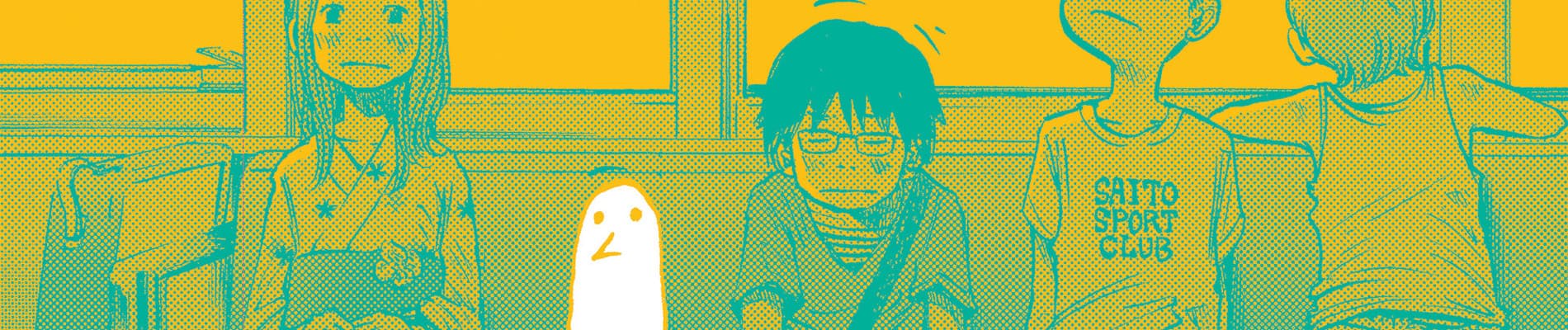
Over time, this God becomes more and more intertwined with Punpun's own psyche, and basically takes on all of Punpun's intrusive and violent/sexual thoughts. Like everything else Punpun idealized and viewed as a child, even his view of God has become warped over time. The cultists and their subplot about the world ending is obviously related to religion and faith, and adds to their major role in the story; not only is Shimizu in the cult because the leader could understand the images he sees (the same ones that Seki admonished for clinging to now that he was an adult), but the lingering date of the world ending is one of the manga's lingering swords of Damacles that leaves you wondering what the hell is going to happen when we get to that day. Punpun's uncle and his denial of God existing is central to his character, and it's one of the aspects about him that never falters throughout his development. He's still depressed by the end of the story, but he still strives to find meaning in his live and relationships without any faith in an outside power. Aiko's mother is part of a cult and her childhood likely colored her development into an adult. She becomes extremely dependent on Punpun for saving her and killing her mother, and I wouldn't be surprised if part of that dependence came from growing up in a cult where a central figure was hailed as the ONE person that could give her and her mother freedom and happiness. Now that she's free of the cult, that one person is the one who "saved her"--Punpun.One other thing I really like about this series is the way Asano uses the simplistic design of the Punyama family to juxtapose the wonderfully detailed artwork of the world and characters around them. It lends to that feeling of isolation and disconnection that they feel to society in general, and it also leads to the series' funniest--and scariest--moments. I personally loved whenever one of these characters would be talking excitedly with that cute little scribbled beak and gesticulate with stick arms, just because it looked so silly. And then there are the darker moments: the Punyamas will have close-ups of their eyes in a much more realistic art style, with a gaze that's incredibly intense and staring right at the reader. Their stick arms are much more humanlike and detailed when they touch someone or something. And in Punpun's case, the changes to his cartoony design are so effective in adding to the tone of a scene;
Spoiler, click to view
The panels where his head suddenly changed into that multiple-eyed black face after beating that litterer, and the panel where he first has his devil horns after killing Aiko's mother both legitimately gave me shivers.This review is only a small snippet of the many great things about Oyasumi Punpun, and I would highly recommend reading it for yourself to discover those intertwined connections, themes that echo throughout the story, and to feel that very specific heavy feeling on your chest when you finish the last chapter and realize that's how Punpun's story ends. If you like psychological stories, character studies, and protagonists that aren't good guys in any sense of the word, I can't recommend this series enough.