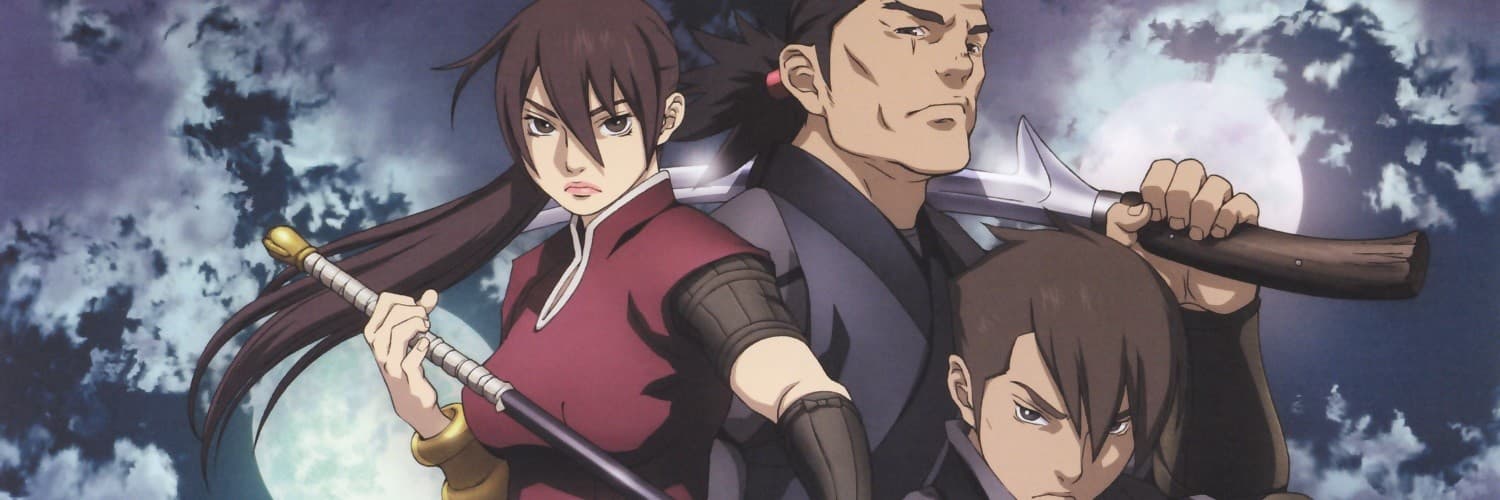


Stories matter. They always have and they always will. They form the structural foundations of our cultures, histories and identities. From the Paleolithic masterworks adorning the walls of the Lascaux to those hanging in the Museo Reina Sofia. From Homer to Malory, Sophocles to Shakespeare and Chaplin to Coppola. From around the embers of the campfire to fornenst the glow of the bedside table lamp. Stories are the nation-building myths, chronicles and aspirations that, for millennia, have driven the hearts and minds of men, women and children alike.
▶ Video
▶ Video

Episode 12 - KILL IT WITH FIRE 
But most importantly, stories are who we are. Even if we don’t want to admit it, even if we’d rather forget them, each of us has hundreds of stories to tell. They mould us, shape us and craft us into what and who we are as individuals. Ultimately, each of us is the protagonist of our own biography.
Seirei no Moribito understands this above all else.
Once upon a time
The young Prince Chagum has been possessed by the spirit of a water demon. Fearing the demon will plunge his country into indefinite drought, Chagum’s father orders his assassination. His mother is a little less than happy with this turn of events and arranges for Balsa, a spear-wielding mercenary and all-round badass, to protect Chagum until the threat passes.
Moribito is a story about stories. As such, it isn’t nearly as action-heavy as one would initially expect. Surprisingly, aside from the frantic opening episodes and the closing few, it isn’t particularly plot-driven either. In fact, the series takes a near episodic approach during the middle of its run.
Rather, Moribito excels at retrospective story telling. Upon our initial introductions to the cast and setting we know very little. The result is character and story development that operates in two directions: prospectively and retrospectively.
Prospective development is the usual fanfare and comes in the form of character interactions, world building and key plot points etcetera.
Retrospective development – growth by looking at the past – comes in the form of storytelling. Most series would tackle this with flashbacks and whilst Moribito certainly has its fair share of blasts from the past, it instead chooses a slightly less heavy-handed approach: dialogue.
It isn’t as boring as it sounds. The series has a major thematic emphasis on the importance of oral storytelling traditions, especially as a means of cultivating cultural identity. This motif is translated seamlessly into the plethora of stories told by the characters. In fact, the show’s strongest and most climatic moments come in the form of one character recounting tales of bygone days to another. This generally works because the stories that are told are evocative and engaging in their own right – more so, I would argue, than the primary story arc itself. More importantly, however, these stories pay dividends in the development of both the world and the characters that inhabit it. The stories do not only add another element of wonder to the series’ fantasy world. They breathe the life into its characters. So many dimensions are revealed as to character motivations and simply comprehending and empathising with who they really are. Their triumphs, actions and ideals – all can be fully appreciated through stories.
#When a tow truck breaks down
Such a unique approach is not without its risks, however, and this reliance on storytelling is ultimately a double-edged sword. This style of presenting information doesn’t really lend itself much room for creative diversity, and thus leads to a lot of exposition. Many of Moribito’s tales, particularly those implemented for plot progression, can be written off as poorly disguised info-dumps. It naturally isn’t the most riveting method in terms of plot development, doubly so as it tends to avert conflict and tension.
It doesn’t help that the plot itself is somewhat dry. Moribito, adapted from a novel, is actually quite generic as far as fantasy stories go. That is not to say that the plot is poorly executed, but it’s not exactly memorable either. Furthermore, despite the high stakes, there never seems to be any real sense of urgency and so the impending threat lacks a great deal of gravity. This only exacerbates the lack of tension and results in a somewhat anticlimactic conclusion.
The pacing can get slow at times. This is because the series transitions into a pseudo slice-of-life style around the midway point, with entire episodes dedicated to a particular element or plot point. When storytelling was involved, this produced some of my favourite episodes, particularly episode eight: ‘The Swordsmith’. On the other hand, some individual episodes had little to do with character, plot or world progression and as such, felt like a sore waste of time.
#I.G doesn't disappoint (mostly)
Thankfully, Moribito’s characters are incredibly well-rounded. Almost the entire cast, side-characters included, are mature, sympathetic and have clear motivations. In fact, a few irritating quirks aside, majority of the cast are really likable – they’re almost too perfect.
Balsa claims the spotlight. Despite her rough exterior and general badassery she has a gentle soul and a maternal side that lends itself to some truly beautiful moments with Chagum. Her backstory, wonderfully fleshed out through the show’s storytelling, is indispensable in gauging her feelings and actions. The end result is one of the strongest, most determined and empathetic female leads I’ve witnessed in anime.
Chagum is sweet beyond impair. He’s exceedingly resourceful and mature given his circumstances and acts in a very humbling and admirable manner. That said, he’s still a child. He may not always act like it, but he still has the needs and hopes of every kid, doubly so given that he has been deprived of his mother. In a world that simply isn’t fair, it’s quieting to see just how Chagum copes and struggles to overcome his internal conflicts and doubts.
Production IG, as much as I love them, have this annoying habit of using some pretty awful CG models in place of background characters, vehicles, monsters etc. That said, besides episode twelve where the art randomly shits the bed, Moribito is a visual marvel.The action sequences are wonderfully executed and well-choreographed. But it’s the background art that really shines. It’s simply, to be blunt, fucking gorgeous. It’s the first thing you notice and the thing you continue to notice. It is some of the most brilliant, vibrant, lush imagery I’ve ever seen, comparable to that of Mushishi, and adds so much to the wondrous fantasy feel to the world.
#But that's a story for another time...
For a story about stories, it is ironically Moribito’s own overarching story that lets it down. When all is said and done, however, Moribito serves as a humbling reminder of how much power the stories we tell truly hold. Within the show’s universe, they shape both character and setting, bringing them to life. In this way, Moribito’s world is truly a reflection of our own.
Give it a watch. It certainly deserves more attention than it's gotten.