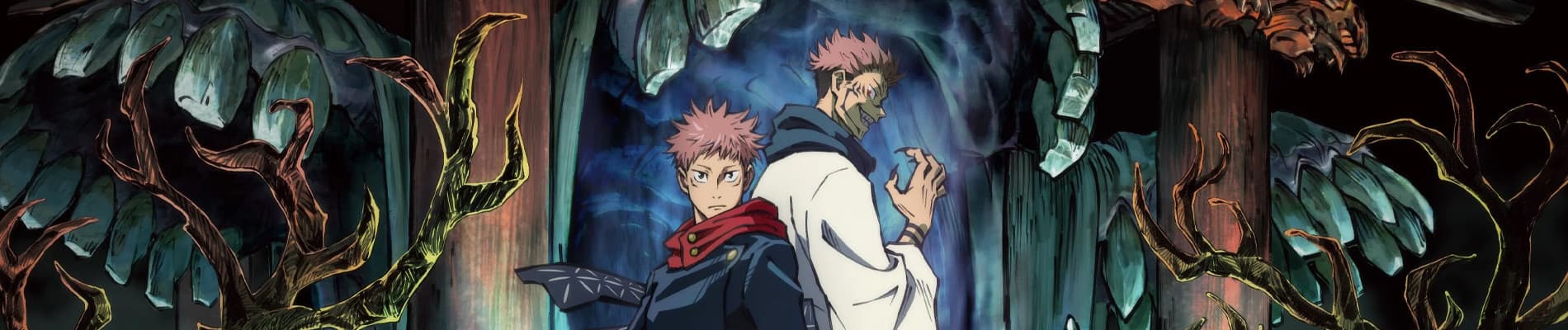
JUJUTSU KAISEN
a review by SunlitSonata
a review by SunlitSonata
The thing about trends that a lot of people take for granted is that the more overstuffed a particular set of ideas are, the more likely it is to see either flipped on its head (see Shrek for fairy tale musicals) or given more offbeat renditions (see Joker or Into the Spider-Verse for superhero blockbusters). Genres being overstuffed, if anything, should encourage more experimentation and refinement.
Over the years the Shonen genre has gone through a number of these phases. From past its formative years with Dragon Ball and Dragon Ball Z, you’ve gotten shows using the mold for massive tapestries (One Piece), those attempting to rewrite the genre rulebook (see Fullmetal Alchemist), shows trying to test Shonen’s capacity for being applicable in distinct scenarios (see HxH), long-form parodies of the genre, and many that wallow in it without doing anything interesting. Jujutsu Kaisen is interesting in this regard because on paper, it doesn’t seem that different from the standard genre mold, but in practice, it truly understands the appeal of the genre and what audiences want to get from it.
Jujutsu Kaisen’s first season served as a phenomenal introductory section into the story it wants to tell, presenting its plot, characters, action and tone in a way that’s easy to digest, but is simultaneously a very smart setup that stands out by committing to multiple angles. The show feels like natural selection, where Gege Akutami realizes the elements that people have grown to like in the genre and downplays those that haven’t held up as well.


Jujutsu Kaisen wants to mix shonen power action, comedy, and horror ideas together into one distinct package, and all things considered it’s really cohesive.
The first half of the show is primarily dedicated to showing the ropes of the world to Yuuji, but even this basic setup is handled in some pretty fun ways. By Episode 3, they already have the main three characters banter together in an enjoyable dynamic that thankfully never turns into love triangle bollocks. A later episode has to explain how the show’s power system works, but it doesn’t have Yuuji sit in a classroom to learn about it through exposition dumps, or even white-haired mentor character Gojou talking to him about it one on one. No, Gojou’s an incredibly wholesome gadfly, so he pulls Yuuji out of movie-induced focus to actively demonstrate how Cursed Domains work against a monster who actively reacts to its use. This felt like a much more natural way to convey exposition, and even the more whiteboard exposition like the danger grade levels is conveyed with a pretty breezy, sardonic sense of humor.
It also introduces the villains in a way that, while not outstanding, worked well in pushing Yuuji to his physical and emotional limit right before the second half started. The only weird structural issue I had with the first half was some backstory for Kento Nanami. It’s spliced right in the middle of a serious fight, where the circumstances leading to it and the consequences following it were far more pertinent than this one guy’s backstory. By the end of the season, he was one of the characters who left the least impression on me.
The second half of the show makes the focus of the first half even more reasonable, whilst honing in on the aspect that grew my attention the most early on; the many students from their setting’s magic school, all wearing the same swag as hell reflective uniform. The exchange event team battle serves as a great way to introduce a lot of these characters, their powers, unique designs, and their respective dilemmas without cheating shit later as story ramps up. Almost a third of the run is spent on this, but it’s infinitely more interesting than having a tournament arc in small arena cutting to stills of audience reaction since it gets out a lot more fun character moments. Akutami understands that we, as the excitable audience, want to see some coolass superpowers from a Shonen, and he happily delivers a ton of those that get to shine in this arc, from characters like:
-Nobara, the main female girl in the series that, much like Yuuji, doesn’t feel tied to an archetype, appreciating fashion and fangirling over exciting scenes, yet not taking taunts lightly, being protective of her friends, and having a coolass power of fabricating voodoo dolls with specially sized hammers.
-A guy who can only speak normally in ramen ingredients, but has incredible word power with increasingly higher personal costs against opponents
-An incredibly wholesome talking panda with very versatile fighting stances
-A bratty, yet at times comically deadpan witch girl with vantage via flight
-A cool-looking bloodbender that currently gets by throwing packets but’ll inevitably have to use his own as deadly consequence.
-The adorableness incarnate that is Miwa; a super earnest girl with a simple dream and appropriately simple power that is easy to see as being friendly with others, possible reflection for the audience too.
-Two sisters, Mai and Maki, with a quick but strong burst of emotional tension established between them. They each have some sort of limit, Maki being an incredibly resolute fighter but with a weakness to not see curses without glasses, and Mai being unable to use curses without an object but being driven by heaps of vindictive spite.
-A talking Iron Man suit with a twist that pleasantly caught me off guard
-Toudou, a muscleman who’s incredibly self-centered until struck at personal interest, in which case he becomes an increasingly earnest partner with a sickass skill.
Not everyone may like all of these characters, but with their fun powers, interesting power limiters and/or distinct personalities, they nail the appeal of a shonen ensemble. The initial presentation of these abilities in a lower stakes scenario makes their introduction less intrusive on a wider plot. Plus, the majority of these personalities play well for whenever the goofier moments roll around, particularly in the post episode stingers, and episodes like #21. I’m glad the author thought beyond the overly standard elemental stuff to make the ensemble leave an impression. Only hero characters of note I didn’t go more extensively on are Megumi and Gojou. Admittedly, Megumi doesn’t leave quite as much an impression as the others, but he still has a pretty cool power over familiars and got more interesting near the end as his persona began to unravel. And Gojou is such a fun rendition of the typical mentor character, with an excellent design that’s fitting to both sides of his character, constantly holding back yet being comically curious.

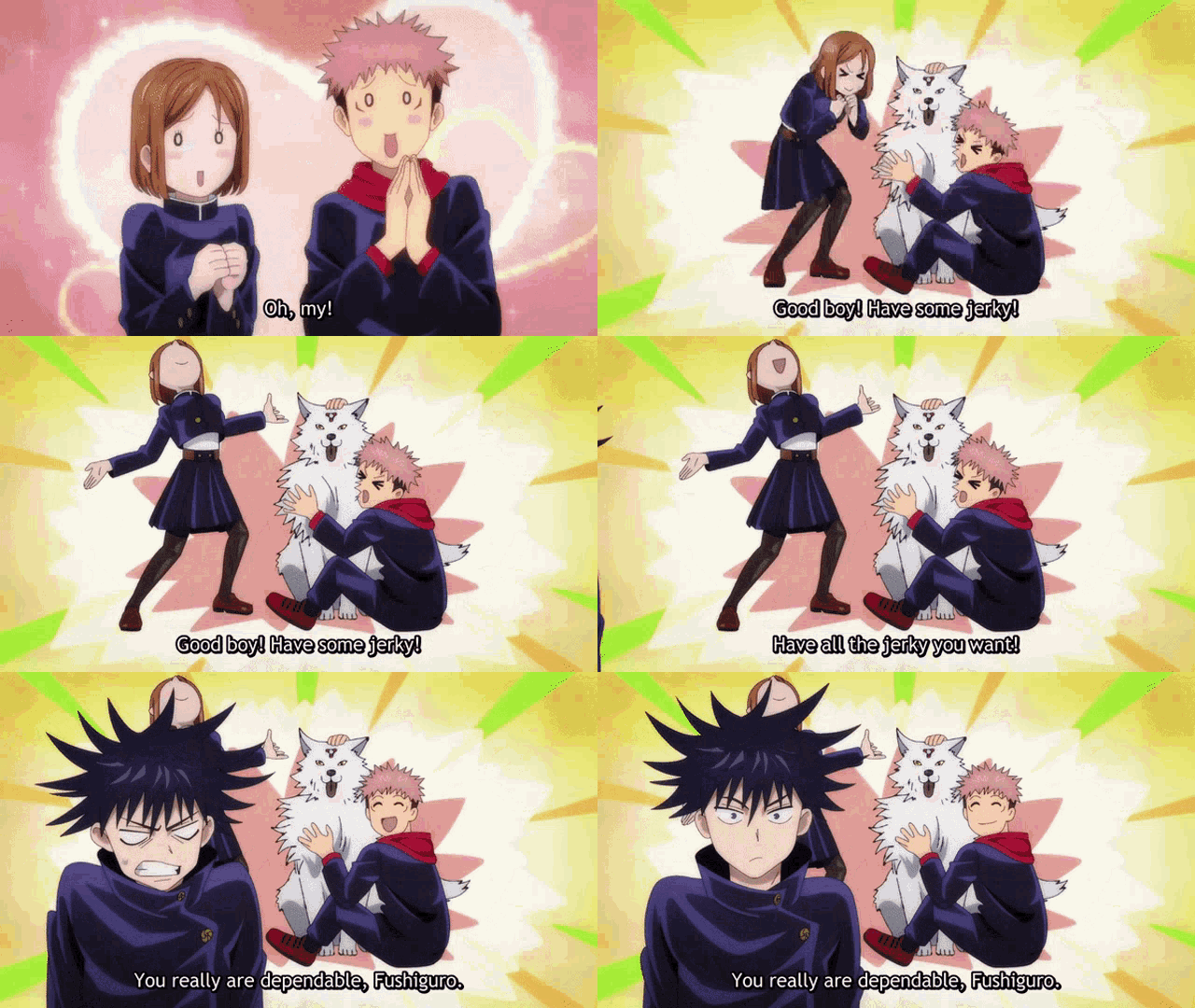
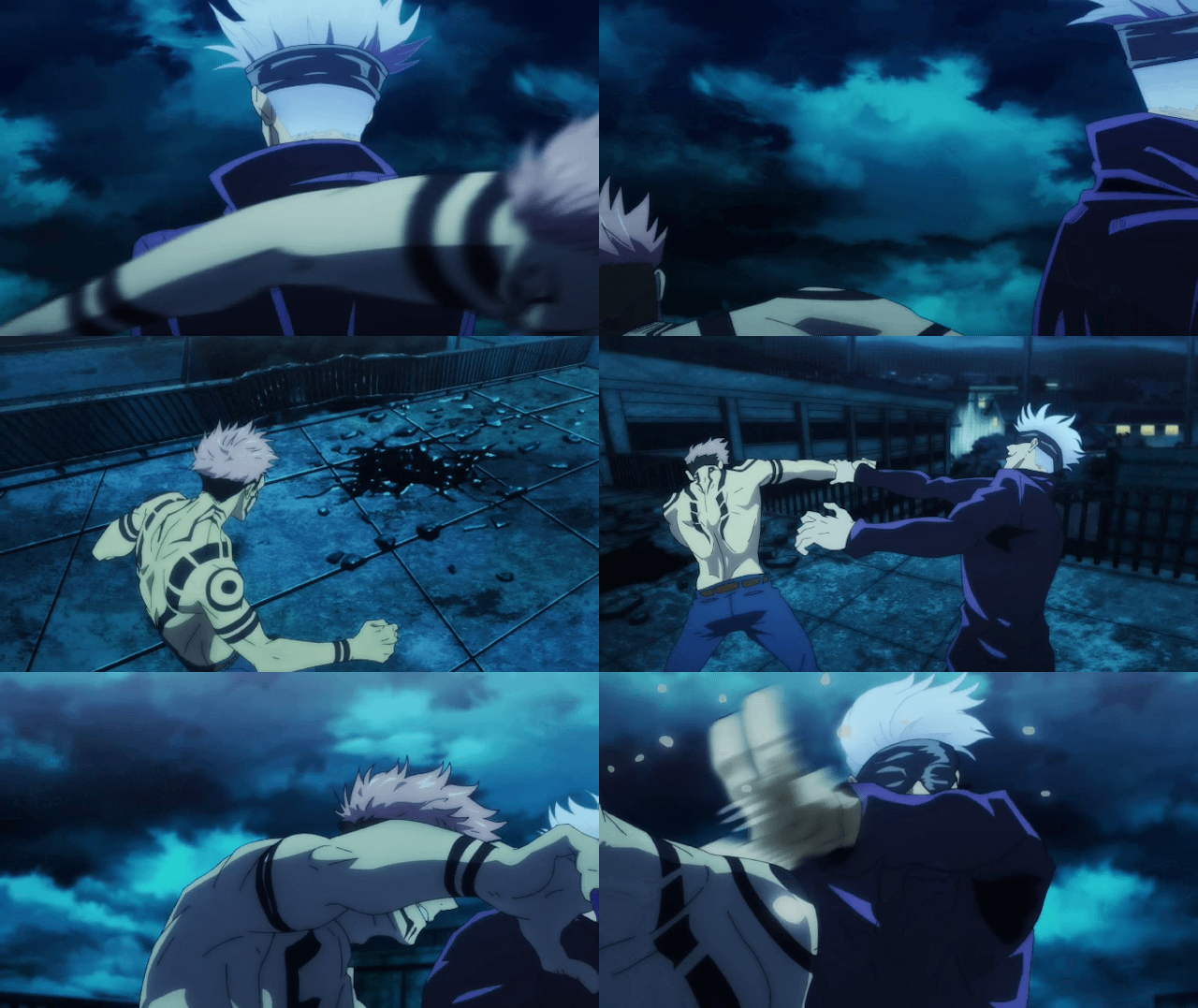
Comedy doesn’t only exist for its own sake, but often as a way for Yuuji to bond with other characters in the cast, such as Nobara or Toudou. It’s given a lot of creative expressions, and for characters like Miwa, where their design presentation is intentionally at odds with their character, it feels fitting and adorable. Even Gojou’s comical overpowerdness doesn’t purely exist to be a joke by itself fitting his troll mentor personality, or an excuse for the animators to flex to a stunning degree, but an element actually considered by the show’s antagonists. Some jokes don’t land, but there’s enough characterful personality and expressiveness to them for them to not feel out of place, separate from more serious points to come.
As for the horror elements, Jujutsu Kaisen’s animation does a great job conveying the darker atmosphere when need be in the early/mid-section of the show. It really gets that a major part of horror presentation is fear of the other, and more specifically, body horror of not-quite humans, with some excellent creature design animated in off kilter ways. As Gojou states, everyone at Jujutsu Academy is a little crazy, so it makes the major characters in the show lean into these crazier designs when channeling immense power, fitting for a series around handling curses. Thus, the show has its main villain, Mahito, use body horror to startling effect when creating his monster army. While I wouldn’t call the guy particularly deep so far, the show does present a playfully devilish personality and show his capacity to manipulate others in a reasonable sense. His powers to twist the composition of both himself and those he gets close to in uncanny, distorted shapes play into the show’s theme about curse power perfectly. The show isn’t that scary, but it adds an additionally unique element for itself with these fitting and well-animated leans to body horror.

99 out of 111 users liked this review
