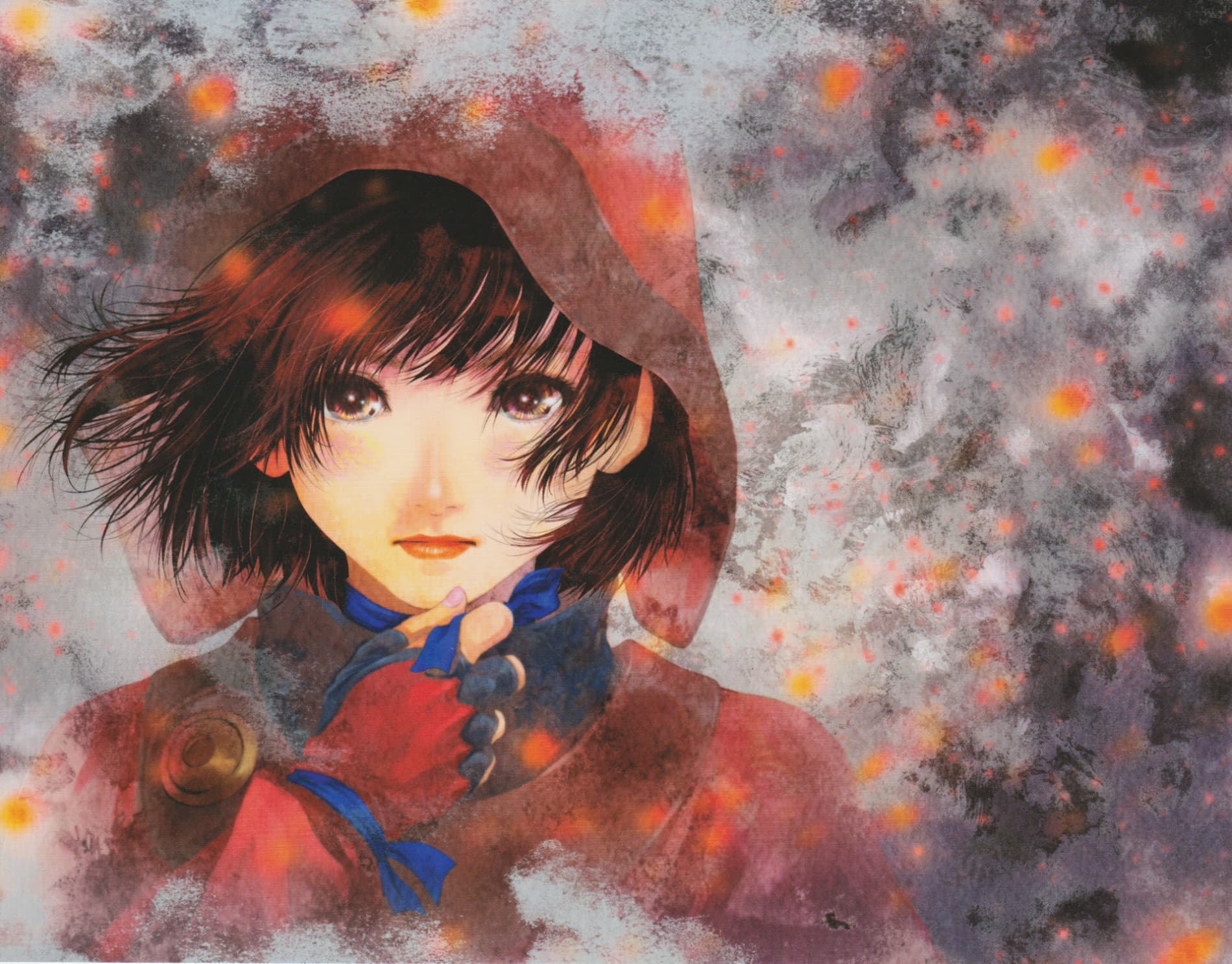


Some things are so campy they’re good. Or rather, entertaining.
It is this doctrine that has driven the success of dozens of B movies. You know it’s crappy, over the top and an all-round mess. But it’s for these very reasons that the likes of Faster, Pussycat! Kill! Kill! or Day of the Dead are so much goddamn fun.
And yet, B movies have a bad reputation (and the name) for good reason too. Regardless of how zany and self-gratifying they may be, they all too commonly suffer from flaws in direction, story and character development. Not to mention the shitty budgets.

Koutetsujou no Kabaneri proves that anime is no exception.
They're coming to get you, Barbara
Continuing with my trend of uncomprehensive and depreciative single-sentence premise rehashings, Kabaneri is about a group of zombie apocalypse survivors in steampunk feudal Japan. Oh, and they’re on a big ass train. If that doesn’t exude copious quantities of awesome, I don’t know what does. It’s such a ridiculous and outlandish concept that, ironically, I’m surprised no one had thought of it sooner.


In fact, the aesthetic in general, from the art to the soundtrack and from the fluid animation to the ridiculous setting, is really nice. All these elements work in tandem to establish an absurd but incredibly fun atmosphere, whilst the quality remains consistent. In this way, right from the very first episode, we know what to expect. It may not be the most astutely crafted of shows, but it sure as hell looks and feels dope.
#Out of the blocks
Indeed, Kabaneri starts off flying. We are instantly rewarded with gory, stylised action sequences, mounting catastrophes, cliché tragic backstories and beautifully over-the-top voice acting (damn these guys love yelling) complete with inspiring monologues that practically scream of badassery. It’s stupid and self-indulgent, but that’s why the show is initially so appealing.


The plot during these early stages is virtually non-existent and mostly centres on the themes of overcoming fear and paranoia and maintaining one’s humanity. The usual zombie subject matter. Although Kabaneri doesn’t really bring anything new to the table in this regard, its exploration of these themes never becomes boring and is handled tactfully enough such that they don’t become overbearing and detract from the show’s zaniness.
This is largely thanks to the show’s characters. Admittedly, none of them are particularly complex or original. The side cast are especially dull and only fulfil individual archetypes. That said, they are diverse and likable enough such that they never become too much of a hindrance, even if we never really end up caring about any of them. Also, Max Powers is friggen’ hilarious.

Even the primary duo in Ikoma and Mumei are fairly stock standard. Ikoma is loud, proud and obnoxious, spurred on by constant self-flagellation and a misgiving past. Mumei is loli ninja super assassin coming to terms with who she is in a world largely unwilling to accept her, not to mention her own unfortunate backstory. These inner-conflicts and turmoils have been tackled a hundred times before and far more effectively. And yet, it’s nearly impossible not to like them, simply because of how much raw energy and charisma they bring. Sure they’re cliché and pretty shallow, but we still want them to succeed purely because of how badass they are.


In this way, the first few episodes see the plot and the characters, lacking as they might be, work to reinforce the absurdity, stupidity and most importantly, pure entertainment factor of the show.
Then, an overarching plot was introduced.
#Do you ever feel like a plastic bag?
This coincides with the introduction of the main villain. In short, he is poorly-fleshed out, has hazy motivations, confusing goals and a cartoonish depiction. This may not appear to be too much of an issue, granted that most of the cast prior to his entrance were just as, if not more uninspired. I’d argue, however, that none of them are nearly as messy as Mr L’Oréal here.

Rather, the problem lies in his purpose. The show takes Biba and uses him as a thematic mouthpiece. These themes of fear, paranoia and weakness and strength in a world dominated by the dead had hitherto taken a backseat to all the action and yelling, but were relevant and handled carefully enough such that they were still somewhat meaningful. Immediately upon Biba’s entrance, the show takes these themes and starts forcibly shoving them in the viewer’s face. In other words, the series dramatically shifts its focus from the fun and the absurd to the serious and pseudo-intellectual.

This doesn’t work for a few reasons.
Firstly, it completely juxtaposes the show’s atmosphere and attitude in its first half. The transition is abrupt, jarring and comes with little to no warning.
Secondly, successful thematic exploration usually relies on successful character and story development. These were not Kabaneri’s strengths, nor do they suddenly reinvent themselves to be. If anything, the plot only goes downhill from here. Biba’s motivations are poorly connected to his actions and goals, or at least, a satisfying explanation is never really provided.
It also doesn’t help that the show begins taking serious liberties as far as logic and the suspension of disbelief is concerned. Why do the Hunters follow the clearly bat shit crazy Biba? Why can kitchen knives suddenly cut through 50cm thick steel cables? Why does every authority figure have the decision making capability of a retarded three year old? Why are there superzombies that scream with the force of a small nuclear bomb exploding? All of these small yet simple things somehow manage to break immersion, which is an incredibly difficult feat for a show as blatantly insane as this.

Finally, the show’s themes and messages are simply not as profound as it makes them out to be. They’re mundane and oversaturated, and only serve to distract the show from its actual strengths.
To the show’s credit, I would argue that the final episode does shine some light on Biba’s character and bestows upon him another layer of complexity and depth. This dude sums it up pretty nicely:
Spoiler, click to viewclick to hide

That said, it is too little too late. This fails to redeem the series for its previous misgivings or conclusively explain all of Biba’s prior actions.

And yet, despite all of this Kabaneri continues to be kinda fun. Sure it skews its priorities and is horrible at min/maxing, but at least it remembers its roots as an absurd, zany and entertaining gore fest. And sure, unimpressive and predictable thematic exploration may overshadow this fun, but Kurusu never stops Ayame-samaing, Max Powers never stops being hysterical and Ikoma never stops yelling.


Party's over
Kabaneri tries to take itself too seriously without the writing to back it up. This is why it falls flat.
And yet, I’d argue that it doesn’t completely derail (hey, I’ve held off from the train puns ‘till now). Ultimately, even though it loses focus, Kabaneri continues to be dumb fun – my second favourite type of fun. It’s just a shame the ‘dumb’ part got out of hand.