
This review will spoil the Attack on Titan manga. I do not consider this a series worth not spoiling, but it's clear many people do, so you have been warned. I will also be drawing comparisons with Berserk and Code Geass, so I expect the reader to be familiar with those as well, or just not care about spoilers for those series.
Attack on Titan is perhaps the most iconic breakout series of the 2010s, and was in many circles synonymous with anime and manga to casual viewers/readers at the peak of its popularity. This success happened for various reasons; the premise is immediately intriguing to audiences, with the idea of fighting against the gigantic menace that are the titans captivating countless people, with easily relatable emotions involving feeling trapped and enslaved. This was complimented by various mysteries and subplots which hinted at a deeper conspiracy involving the titans themselves, with countless organizations vying for political influence ranging from a religion, royal factions and military elements. All of this is capitalized in a final arc where the brakes are off and things finally, finally move forward at
rocket speed.
Despite all this, discourse on Attack on Titan has always been contentious, with some people arguing that it's the greatest thing since sliced bread while others claim it had jumped the shark. Where did the series jump the shark? Is it when Eren was revealed as a titan? Is it during the coup arc? Is it during the Wall Rose battle? The post-timeskip content? The actual answer is all of these things.
Attack on Titan was always a garbage series. It was never competent in its writing, its characters are an abysmal, bland collection of tropes, its themes are inconsistent and all over the place and more than anything, it's an absolutely tedious read for anyone not already invested in the wider narrative.
The artwork in Attack on Titan is awful. The character designs are all pretty poorly drawn - which is doubly astounding considering this is a monthly manga, not a weekly one. Many pages are drawn as if incompletely sketched, with constant mistakes in proportions, shading and locations; this becomes especially bad during fight scenes, where these flaws are further emphasized to high heavens leading to a series where there's no superficial fun to be had. What's noteworthy of mention is the way eyes are drawn in this manga; almost everyone has deadened eyes all the time, and this clearly isn't by design as even characters who may have brighters eyes in one scene would have them deadened in the next, with no real contextual reason as to why. While the background art improves a fair bit near the end, making portions of its final arc somewhat easier on the eyes, this was an ugly manga to look at from start to finish and considering that spreads aren't nearly as common as long, dull, expository scenes where talking heads are explaining information for no other reason other than for the audience.
Speaking of exposition, time to discuss this series' incredibly questionable scriptwriting. It's difficult to describe how awful the script is, but what doesn't help is the way the story is paced; Attack on Titan has no desire in telling a story in a manner that is coherent, instead opting to constantly jump between time periods. Long, long, long stretches of the story are about the local geopolitics within the walls, yet there's no real mention of a coherent political ideology - the infamous coup arc in the middle of the manga is a particular offender of this, with unbelievably shallow villains that the story focuses on yet gives little to no meaningful characterization beyond emphasizing their being evil to the audience. This is a bigger problem considering one of the story's themes, but all in due time; anyway, the manga's portrayal of politics is dull and uninteresting, often portraying conflicts in a black and white manner with no real nuance for much of the series. The series stretches this part of the story absolutely thin; entire chapters often have nothing of note happening, two random side characters are suddenly made into central ones, the conflict is dull due to the central characters having no meaningful and likable foils and it's hard not to feel like the time spent on this segment of the manga could have been easily spent on later parts of the series, which instead suffer from being too fast-paced.
One major reason why the final arc in particular is so disliked among portions of this manga's readerbase is specifically because of its fast pacing. Subplots are introduced and then dropped with reckless abandon, characters who are given little characterization are suddenly introduced only to be shelved later on - despite their presence being integral to the story. Eren undergoes a major character change (we'll get more into this one later) offscreen, and while his actions make sense they are nonetheless jarring. Characters in Attack on Titan do not speak to each other like normal human beings; the very first chapter has a laughably stupid scene where one of the Survey Corps screams at the mother of someone who just died that her son died for nothing. This kind of dialogue is littered throughout Attack on Titan, and it speaks to a comical lack of understanding of how human beings actually speak to each other. Eren is a particular example of this, and while this has a narrative purpose that's explored later in the story, it makes for a lot of incredibly stupid dialogue where characters are quite literally screaming information or emotions at each other. The fact this series is already poor on a technical level with its art does not help things, and it makes for many scenes that attempt to be emotional and fall flat at their face due to the excessiveness of it all.
Themes are an interesting beast to tackle with Attack on Titan. The story basically portrays its conflict as being via a binary; the humans, desperate for survival, and the titans, these monsters devouring humanity. This perspective is flipped before the timeskip, with the infamous scene where after the cast liberate the island, Eren points at the world after reaching the sea asking if the enemy is there. This sets the stage for Attack on Titan's core theme; Eren's a psychopath (though I wouldn't call someone who killed two people as a kid with no hesitation or remorse anything else) who sees the world in a laughably black and white light. His hatred of the titans has shifted to the entire world that left his people group in the Eldians to die due to their collective sin of being the descendants of Ymir and having titan powers. While this change of character is sudden, it's still an interesting one and leaves the question of morality in this setting - one where the world has oppressed the Eldians, yet Eldians are being fought for by Eren, a man who literally believes in worldwide genocide as a means to end - up in what appears to be a gray conflict. A scene that I thought was an interesting parallel was when Reiner and Eren were meeting together, with Eren saying he doesn't blame Reiner for the horrors he caused as Reiner stares in the ground, horrified at the monster he helped create. There are interesting ideas throughout Attack on Titan, and the execution for them occasionally is pretty alright.
This, unfortunately, is hampered by poor character writing. Character writing in all of Attack on Titan is poorly done - the series expects its readers to care about characters who often had miniscule presence, and kills them off with reckless abandon for shock value. Several noteworthy examples come to mind, such as the second timeskip the series has where it jumps a few years to after Eren and the cast become refugees in the interior of the walls, now trained soldiers. Characters are introduced, have maybe a few lines, then the Colossal Titan shows up again, kills a bunch of characters almost nobody remembers or cares about all over again. The more comical thing is that unlike the anime, the manga injects a flashback of these characters training together to be soldiers AFTER the wall is breached, not before that to transition, and this kind of baffling pacing is all over Attack on Titan. Characters often have characterization or moments to shine right before dying, and it is forced, predictable and hamfisted in a way that makes character deaths easy to predict before they happen. Hannes, Erwin, Hange and Petra are quick examples that come to mind, but one that had me laughing - which fans of the series constantly refer as one of the strongest chapters in the series - is the politician that died in chapter 100 who is introduced, gives reasons for why he's sacrificing himself, then promptly dies. This. Is. Not. Good. Writing. This is drivel that has no idea how to give meaningful characterization to its characters, so does the bare minimum then promptly kills them off.
Another problem is with the main cast's lackluster characterization outside of the confines of the story. One would expect, for example, that the exposition would be a chance for characters to constantly chirp at each other or just even speak to each other normally; instead, we have a lot of scenes where exposition is delivered in a dry manner devoid of any personality or flair, flashbacks telling us that oh, characters knew and cared for each other all along justifying their sudden relevance in the story and emotional involvement (Ymir and Historia's flashback during the coup arc is a particularly awful offender of this). Armin, Mikasa and Eren barely get any genuine character chemistry with one another, for example, yet their relationship is portrayed as though it is stronger than steel despite us never seeing any evidence of this - and, again, most of the backbone to this relationship being explained in flashbacks, often just before key story events. A particular example of this is early into the series, the very first time a titan eats Eren; clearly, the intended reaction is supposed to be horror as Eren sacrifices himself for Armin, but we've only been here a few chapters in and I have zero reason to care for either character.
Mikasa's flashback justifies her ties to Eren, yet despite this romantic subplot being incredibly important to both characters, they both have zero chemistry and virtually no interactions outside of the very limited confines of the story - this extends to the point where even the scene Mikasa confesses her feelings to Eren happens as titans are killing off all their comrades around them. Levi and Hange were the only exception to this rule, with a lot of scenes where both interact with each other outside of the confines of the story, yet even that is hampered by the existence of Erwin, an absolute jackass whose only narrative role is to be discount Griffith from Berserk in the Golden Age arc, with a similar arc surrounding the pragmatism necessary to accomplish a great goal and whose character is worshipped by the cast around him. What makes Griffith work, and Erwin fail as a character then? Well, Erwin has about as much charisma as a fruit fly, whose only genuine tactic is to constantly sacrifice people pointlessly in battle yet the ground he walks on is worshipped by people around him. He has no genuine interactions with people around him, which while makes him more militaristic than Griffith; while this makes sense, he is a laughably flat character whose only personality traits are his utilitarianism and stoicness. Griffith, on the other hand, is immediately charismatic, possessive to a fault, vengeful, is rather playful in private, legitimately intelligent in his approach to battle and politics yet aware that he must succeed no matter the cost, else in his eyes the sacrifices would not have been worth it. His approach to sacrifice don't only extend to self-sacrifice but also to how he approaches his own emotions internally, with him often feeling sick at how much he's sacrificing (including allowing himself to be raped by a rich lord) yet persisting onwards. By comparison, Erwin...I guess he occasionally screams mid-battle? Has no real personal involvement with his troops, and doesn't command a real presence, leaving that to Levi? Gets soldiers killed, yet somehow is never despised or resented for it by his troops (the only time he is is during a sham court case where we're supposed to sympathize with him because the government is corrupt during the coup arc)?
The character writing takes an absolute nosedive late into the series, with character relationships perceived as important falling by the wayside for no real reason. Marco is a character whose death is treated like a major tragedy, yet the context behind his death is revealed later into the series, killing any potential emotional investment due to the lack of time he was there. Sasha is killed, gets a flashback with her in a comedy scene after the fact, and is mentioned constantly yet the only pieces of characterization are her eating habits and saving a village earlier in the story (which does become narratively relevant when she is killed and the person who killed her has to confront the evil of their ideals). Levi shifts from being a major character for most of the story to being a side character. Historia gets impregnated willingly in order to support Eren's plans, yet had a love interest in Ymir before that as we jump to the ending where now she's happily taking care of a kid and married off screen, leaving her character arc unconcluded from the coup arc and a complete disaster in every conceivable way. Perhaps no character is as worthy of being addressed, as the one whose mere mention breaks the fanbase into a million pieces; Eren.
Eren's character arc is both the best and worst thing about Attack on Titan; his descent into madness happens off screen but is interesting, and him becoming the very monster he once fought against is an interesting character arc, as he schemes to make the world a better place for his comrades via genocide of those who oppressed the Eldians. Characters frequently criticize Eren, Armin and Levi being at the forefront of this, as he backstabs anything within sight to make the world a better place for people around him. The problem with Eren isn't that he's a schemer, rather it's the fact that everyone around him is a complete idiot who never figures out his plans, even when there are comically easy ways to avoid him, leading to a serious clash between setting, presentation and what's going on in the actual series. Eren's core plan involving his terrorist attack on Marley hinged on using a child to send mail to his comrades to support him, kickstarting the struggle for Eldia's freedom, and yet Marley is portrayed as this genocidal dictatorship that's so unhinged that Eldians are arrested for their children telling the police that their parents are dangers to the state. Yet...the police somehow never frequently check the mail, despite Eren sending dozens of letters. Sure. And this kind of writing plagues THE ENTIRETY of the final arc of Attack on Titan, only growing bigger and bigger in stupidity before finally we have the last few chapters, so laughable and atrocious that they're a joke.
Other stupidity surrounding the story involves a nonsensical time travel mechanic, the powers of the titans, historic revisionism, memories being wiped out and overwritten because of course that's an explanation for why everyone in this story is an idiot, Eren sacrificing himself for the good of his friends so the Eldians can live in peac- oh, right, I have to discuss the ending to this shitshow.
So. The Ending. The ending undermines any serious way to take the story seriously for various reasons; for one, Eren's death is glorified narratively despite the extent of his actions, as Eldians can now live peaceful lives free from persecution in their homeland...with the sacrifice being that suddenly all the characters that can turn to titans and as such die in a few years no longer do, giving all of them a force happy ending that - quite frankly - most of them do not deserve after their actions. I've seen comparisons being made between this and Code Geass's ending - with Lelouch even trending on Twitter in some countries according to some acquaintances - yet strangely, nobody discusses the differences in how both Lelouch and Eren are characterized. Lelouch never attempted global genocide, and often had a lot of characterization involving his relationships with his friends at school. We saw quite a bit of Lelouch's more introspective and considerate personality when interacting with friends, and his risktaking often stopped at putting people in danger in his personal life. He was acutely interested in politics and yet despite his mistrust of people around him - born from a background of being raised as a political tool and discarded when his mom passed away - he often went out of his way to trust his friends, specifically because he despised his upbringing and as an ideological stand against his father's Social Darwinism. We see a lot of what Lelouch is like as a normal person, and this matters because it makes it easier to empathize with him. Lelouch's sacrifice at the end of Code Geass very specifically had him punish the people dear to him, so that they wouldn't be misinterpreted as allies of his and free to live their lives after his passing; by comparison, Eren made sure that his friends...assisted him in a huge terrorist attack, leading to them being branded criminals and the war continuing after his death. Both endings are idealistic, certainly, yet Lelouch made sure to abolish state structures by the end of the series as to make sure the world was a united place; by comparison, Eldians would be more hated than ever before at the end of Attack on Titan, with the only reason the main cast didn't die were uh...because they're no longer titans. Amazing. There's no greater message in the ending of the series, Eren destroyed the environment and murdered most of the world over nothing, yet his death is romanticized because he did it for his friends. Sure.
Let's wrap up this review. Attack on Titan is an absolute catastrophe of a series, whose decent ideas are outshadowed by horrible execution, an unlikable cast of characters, terrible and nonsensical theming, awful pacing and a disaster of an ending, where the only comparable reception to was Bleach's. This was never a good series, and the fact it was held in such high regard despite being an incoherent trainwreck baffles me to no end. The series' positive reception undoubtedly has more to do with Studio Wit's excellent adaptation of its source material rather than any merit inherent to the series proper, which is beyond a shadow of doubt one of the largest trainwrecks in recent memory.
There's a lot I can say here, but I'll take this chance to speak to any Attack on Titan fans still reading this review for whatever reason, assuming they didn't just jump to the end and downvote my review.
Hello there. I've had series with which the ending disappointed me, and at times like this, I think it's only fair - after I made you read a review thousands of words long, even in your disappointment - to give some recommendations of series that may have elements you've enjoyed in Attack on Titan. There's a wide variety of things that brought people into this series, and I think there are stories out there that deserve to be checked out. Without further ado:
- Nier and Nier:Automata are fantastic games that both deconstruct the black and white fallacy and discuss the human condition; there's no way to mention more without diving into spoilers, but if you enjoyed the shift in tone between most of the series and Attack on Titan's final arc - something Yoko Taro, the developer for these games, similarly does when you replay them - then chances are you'd enjoy them.
- Grandia 2 is a scathing criticism of organized religion, diving deep into nihilism and religion's negative influence on human behavior. If you enjoyed the cult subplot and like engaging with why people often partake in religious extremism and apocalyptic discourse, this game would be straight up your alleyway.
- Dead Dead Demon's Dededededestruction is a fantastic manga courtesy of Asano that deconstructs the black and white fallacy and is a scathing critique of the impact war propaganda has on people - in this instance, a few teenagers - insofar as how people are often dehumanized even by otherwise good people. It's a scathing critique of far-right politics, and chances are that if one of the reasons you enjoyed Attack on Titan for its apparent critique of fascism, this would be your thing.
- RahXephon is a story about how the feeling of entrapment one can have in living day to day life, yet feeling nostalgic towards it once it's lost forever. It's a romantic story about the distance between people and how it often makes it more difficult to communicate with others, literally symbolized by Tokyo being isolated from the world around it; I've noticed a trend among many Attack on Titan fans of enjoying Eren and Mikasa's distant dynamic for similar reasons, and I feel this can help fill the void where this series disappointed.
- If you enjoyed the worldbuilding in this series, as well as the homecoming and found family elements of Attack on Titan - often portrayed by the soldiers' cliques and Eren, Mikasa and Armin's dynamic - then there's many places I can point to, but the Trails games stand out as a particular example of this, with those themes being at the very center of the narrative. If you want a play order, here you go:
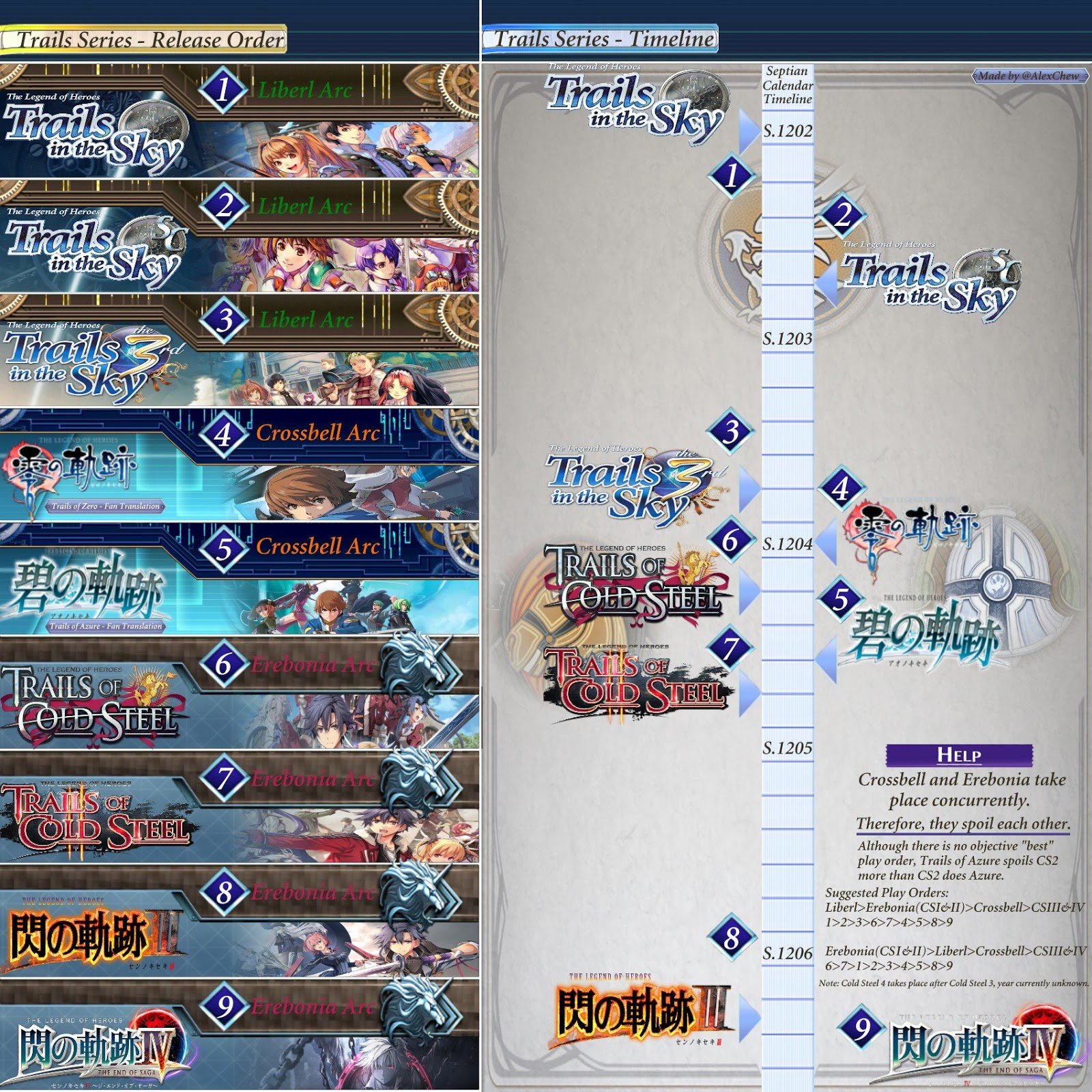 Seriously, just play Trails, it's one of my favorite things in the world and I love it.
- D.Gray Man is an excellent shonen about these shattered people desperately trying to connect to one another and make the world a better place in the face of complete annihilation by demons, with an excellent central cast of characters that have great chemistry with one another. While it falls into many a conventional battle shonen trope, if you enjoyed the series mostly at its beginning - during its more straightforward opening arc - then chances are this would be your thing.
- ACCA is an excellent series about government structure and characters attempting to prevent a coup, before eventually being about what exactly makes up a nation and a critique of federalism. It's incredibly wordy, but should you enjoy the coup arc in Attack on Titan, this should be up your sleeve.
- 86 is an excellent LN series about a group of dehumanized soldiers, desperately fighting for a cause that has been abandoned by the country they fight for. Racism, apartheid, institutional discrimination, the limitations of securitization and how exactly collective identities can often be dehumanizing are all central to its narrative; there's an anime adaptation airing Spring 2021, but regardless of the adaptation's quality I can at least vouch for the quality of the source material.
- Claymore is a series that almost definitely inspired Attack on Titan, and tackles similar themes. Read it, ideally blind.
Seriously, just play Trails, it's one of my favorite things in the world and I love it.
- D.Gray Man is an excellent shonen about these shattered people desperately trying to connect to one another and make the world a better place in the face of complete annihilation by demons, with an excellent central cast of characters that have great chemistry with one another. While it falls into many a conventional battle shonen trope, if you enjoyed the series mostly at its beginning - during its more straightforward opening arc - then chances are this would be your thing.
- ACCA is an excellent series about government structure and characters attempting to prevent a coup, before eventually being about what exactly makes up a nation and a critique of federalism. It's incredibly wordy, but should you enjoy the coup arc in Attack on Titan, this should be up your sleeve.
- 86 is an excellent LN series about a group of dehumanized soldiers, desperately fighting for a cause that has been abandoned by the country they fight for. Racism, apartheid, institutional discrimination, the limitations of securitization and how exactly collective identities can often be dehumanizing are all central to its narrative; there's an anime adaptation airing Spring 2021, but regardless of the adaptation's quality I can at least vouch for the quality of the source material.
- Claymore is a series that almost definitely inspired Attack on Titan, and tackles similar themes. Read it, ideally blind.If you've read my review to the very end, I salute you. It must have taken quite some effort.
If you're a fan and read my review to the end, I can't thank you enough for hearing me out. It takes quite the open mind to hear opposing opinions, and I hope that my recommendations - if nothing else - are something you can keep a mind for and hopefully enjoy.
Thanks to anyone and everyone who has read my review from start to finish, any and all feedback would be appreciated.