Sakura Namiki
a review by ladyfreyja
a review by ladyfreyja
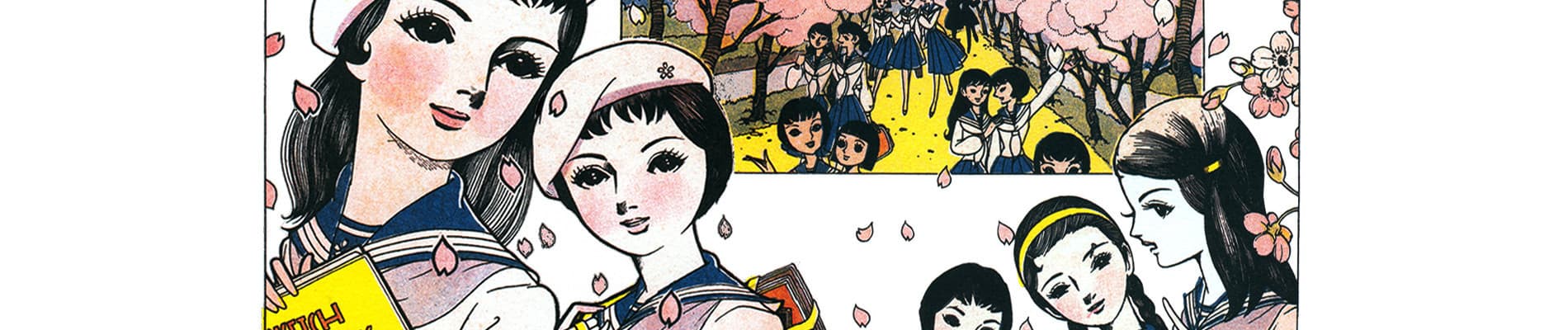
Sakura Namiki (さくら並木) is a S romance shōjo manga by Macoto Takahashi, published in 1957 for the kashihon market. Takahashi is regarded as the most influential shōjo mangaka during the 1950s decade thank to his stylistic contributions; Sakura Namiki may not be his most notable manga, but it is his most accessible one for non-Japanese readers. Nonetheless, this manga should be of interest to people who enjoy shōjo manga, yuri manga, or simply fine comics.

#Context
-------------
Macoto Takahashi, beside being a mangaka, is a famous illustrator. He started at age 19 to draw manga in 1953 with works such as Dorei no ōjo (奴隷の王女) or Akai kutsu (赤い靴). Most of his works were for the shōjo market, both rental (akahon, then kashihon) and magazine markets, although he did contribute a little to the gekiga scene too, with some stories inside the magazine Kage. I am not sure when exactly he stopped to draw shōjo manga; the last traces of his story-works I managed to find are in 1970 inside magazines like Shōjo Comic or Shōjo Friend; he thereafter focused on illustrations only for the rest of his life.
According to manga scholars, his most influential works were made a little after Sakura Namiki, published in Kōbunsha’s magazine Shōjo with ballet manga such as Arashi o koete (あらしをこえて) in 1958 or Petit rat (プチ・ラ) in 1961 for example.
Takahashi was heavily influenced by the jojōga illustrator called Jun'ichi Nakahara, famous for his illustrations inside pre-war shōjo magazines, full of flowery S stories.

According to the author, Sakura Namiki was specifically conceived as a tribute to Nakahara's world, most notably to Nakahara's own (postwar) shōjo magazines tilted Himawari and Junia soreiyu.
#The manga
----------

Macoto Takahashi's manga aren't known for their complex stories; Sakura Namiki features a simple and straightforward love-triangle inside a girls' school table tennis club: Yukiko, the protagonist, is in love with Maki, but Ayako is jealous and spreads mean rumors about Yukiko in an attempt to discredit her in the eyes of Maki. After some slight drama and a flashback, Yukiko eventually manages to clear the misunderstanding with Maki, and the story reach an happy ending with Yukiko and Maki being together.
Really, it is a simple, innocent, sentimental and almost nostalgic story, with nothing much happening; a gentle echo of a shōjo era slowly fading away. It is the art and storytelling which makes this manga standing out; Takahashi is an illustrator after all.


In short, we see the nascent stylistic conventions of shōjo manga; it is not polished yet, but it is still quite beautiful and skillfully executed.


Takahashi will continue to develop his style in the following years, joined by other mangaka like for example Miyako Maki or Eiko Hanamura, for laying the foundations of shōjo manga stylistic.
46.5 out of 47 users liked this review
