In my eyes, Madoka Magica is a story about balance. Every wish is mirrored by an equivalent curse, but all despair must similarly stand against hope. The world isn’t perfect, but it isn’t doomed either, and the only way forward is to acknowledge those ambiguities as you strive to keep that balance both within yourself and the world around you. And the show itself was similarly balanced, sliding slowly into the darkness at its core and rending apart with despair without ever losing sight of the hope that made its world and characters worth fighting for. There’s a reason that Gen Urobuchi’s stories remain so beloved despite the pain he puts us through; as dark as he gets, he never forgets to keep the lights on as well. And I would have been perfectly satisfied if the story had ended with the show, if the twelve TV episodes of Madoka Magica had been all the Madoka Magica we ever got. It accomplished everything I wanted it to and kept that balance wonderfully all the way. So when I went into the sequel film Rebellion, even though I was aware of the big infamous ending twist (which I won’t spoil here for your sake, so don’t worry), I genuinely wasn’t sure what to expect. And now that I’ve come out of it… I might be even less sure than before.
Yeah, my thoughts on Rebellion are kind of all over the place, and I’m still trying to piece them together even as I’m writing them up. But the one thing I am certain of is that this movie is lacking that critical component that made Madoka so special to me. In other words, it lacks balance. And with that guiding principle gone, it’s no surprise this film ended up as divisive as it did. This film is a fucking mess, sometimes in good ways, sometimes in frustrating ways, sometimes in ways that leave you unsure how to take it. I can’t say I hated it, or even disliked it; in fact, I’m pretty sure it’s overall a success. But if Madoka Magica was a perfect 2K sprint over the finish line, then Rebellion crosses the finish line stumbling over its own two feet and keeling from side to side every other second. It’s surprising and evocative and keeps you on your toes, but it also leaves you concerned and confused, caught between cheering it on and wanting someone to head over and make sure it’s doing okay. I give it credit for its audacity, if nothing else, but compared to how expertly the show proper was able to grip my head and heart, I can’t deny that I came out of Rebellion feeling kind of hollow. And that’s one emotion Urobuchi has never left me with before.
Perhaps a brief plot summary will help put my thoughts in focus. Following the TV show’s ending, Rebellion immediately lets you know something foul’s afoot by establishing a status quo that’s nothing like the one we were left with. All five girls are still alive, Homura is once again her pre-angst pigtail self, they’re all happilly fighting as magical girls, and their enemies are Nightmares instead of Witches or Wraiths. Also, Kyubey suddenly can’t talk and the witch who killed Mami is suddenly acting as her familiar. The message is clear: despite how idyllic it all looks, something is very wrong. I won’t spoil what’s really going on, but suffice to say, the plot involves Homura slowly waking up to the true nature of the mysterious situation and piecing together how we got from the end of the show to here. No points for guessing that the answers are all tragic, the vice is tightened on everyone like never before, and a huge swath of the drama revolves around Homura’s unresolved feelings about Madoka leaving her to become a god and watch over humanity. Make no mistake, this film is entirely Homura’s story, with the rest of the girls mostly static side characters who exist for her to bounce off of. More specifically, it’s the story of the choices Homura made, the choices she has yet to make, and the decision she ultimately reaches in regards to her and Madoka’s place in the universe.
It’s really fascinating what all these answers end up being, and I can’t say any of them were unjustified. Madoka has always been willing to let its characters make imperfect, even painful choices, and Rebellion lets Homura lean on that tension for all it’s worth. But that’s also all these choices did: fascinate me. Whereas in the show proper, when the characters screwed up or fell on their own swords, I was gripped from the depths of my soul. Rebellion’s problem isn’t that it’s needlessly bleak, or goes in bad directions, or fundamentally ruins any character. The problem is that it fails to justify its harsh turns with the same emotional balance as the show. It fails to capture the delicate dance of light and dark that made Madoka so powerful to me; instead, it’s a film of nothing but extremes. Extreme happiness and extreme sorrow, extreme kindness and extreme fury. Rebellion doesn’t weave these complex, human strands of feeling together in the same way the show does; it just lets them explode out and hit you without giving much thought to how they work together. And ironically enough, that just makes them have all the less impact.
The best way I can describe this is by saying that Rebellion essentially has two modes; extreme excessive fluffy Madoka fanservice or extreme gut-wrenching inescapable despair. The first third, while the “fake” world is active and stable, is essentially a chance to give the audience a taste of what a “traditional” magical version of Madoka would be like, where the characters are all living relatively normal lives and are all one big happy family (hence why Kyubey’s demoted to a monosyllabic mascot character as well). But Madoka to me just isn’t interesting as a normal magical girl show. It needs the darkness of its plot to give its characters and their struggles meaning, and without that darkness, frankly, none of the girls remain that interesting. I’m still not the biggest fan of the early episodes of the show before the darker elements start creeping in, and this movie only reinforces that sentiment. Later, as Homura figures out what’s really going on, the emotional journey she undergoes is almost infernal in its level of despair and helplessness. But it doesn’t land nearly as hard as it should without the gradual descent into the pits of darkness that the show managed so spectacularly. Then we get a massive final battle that’s yet more fanservice without a scrap of that previous pain, and when that final nasty twist comes, it hits right at the apex of the franchise’s most unapologetically sappy and sentimental stretch yet. It’s whiplash upon whiplash, either all easy answers or no answers at all, and neither of those extremes works nearly as well as both of them together. I say again, Madoka Magica just doesn’t work without balance, and by giving into excess, Rebellion proves how important that balance truly was.
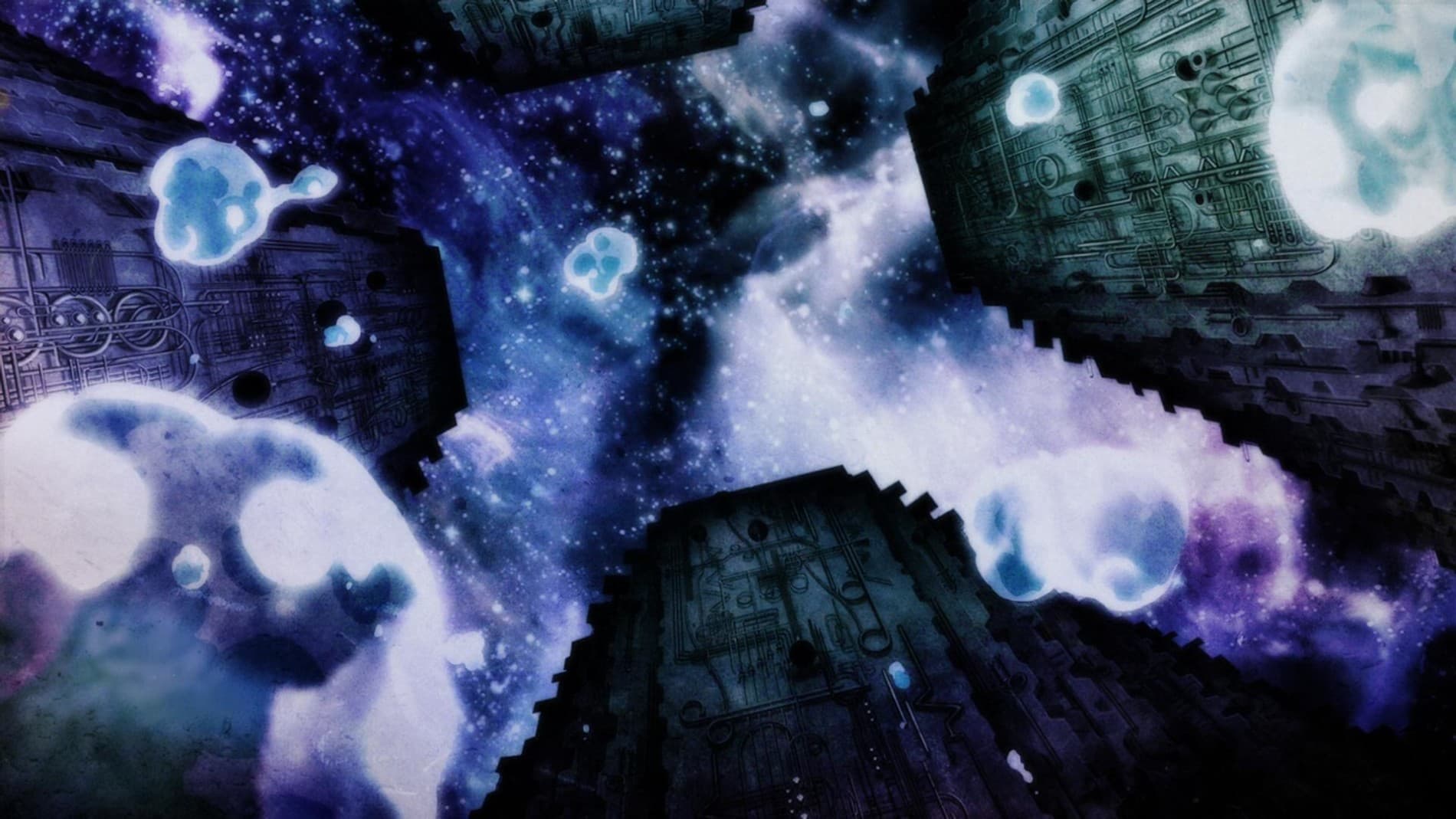
It’s a good thing, then, that at least some of that excess remains entertaining in its own right. Despite my relative disinterest in a “normal” magical girl version of this show, I can’t deny it was great to see all five girls finally together in the same place and bouncing off each other. Kyoko and Sayaka especially are gangbusters together, and turning their bitter grudge into a friendly rivalry left a real damn big smile on my face. But it’s the visuals that really carry the weight here, because good fucking god, this movie is an animation feast. The show was already beautiful enough, but now that they’ve got a film budget to swing around, Shaft is able to blow the whole thing up into a kaleidoscopic supernova. The character animation is seamless, every frame is packed with a million moving pieces, the world feels more fleshed out and detailed than ever before, the imagery is so mind-bogglingly surreal you’d swear you were on acid, the action is somehow even more gobsmacking than the show, and all of it is animated with a gorgeous, almost pornographic level of polish that makes you feel like you’re swimming in an ocean of Salvadore Dali’s most vibrant daydreams and nightmares. There’s a fight between Mami and Homura near the movie’s midpoint that utilizes Homura’s time-freezing powers to stop and start absurdly massive volleys of gunshots, and the level of detail in the chaos left my jaw on the goddamn floor. That might genuinely be the best fight scene in the entire franchise; even after the movie was over, it took a long time before I stopped reeling from how goddamn cool it was.
So on the whole, I can’t call Rebellion a failure. It’s big and messy and it goes in a million different directions, but there’s no denying it sets off some truly astounding fireworks in the process. Still, the more I think about it, the more crushed I become that it wasn’t better. To me, Madoka Magica’s final episode was the end of the story, and this big unwieldy sequel is just a intriguing “what if” to consider. Maybe the next movie in the series will finally come out at some point and bring this roller coaster to a fulfilling stop. But until then, Rebellion remains a fascinating, flawed, ambitious, and achingly unsatisfying reminder of just how important balance was to this show’s success.
57.5 out of 100 users liked this review
