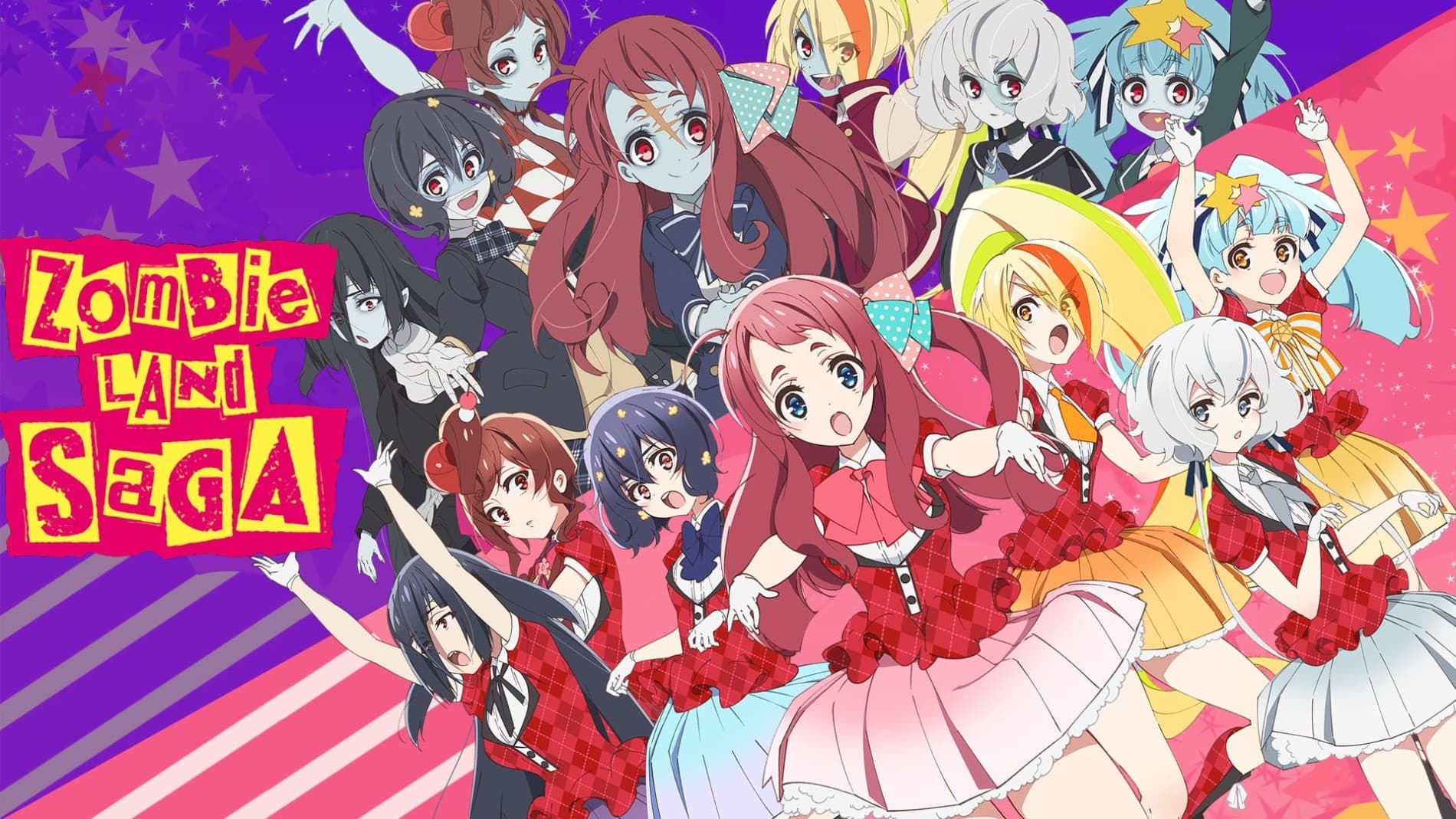
ZOMBIE LAND SAGA
a review by Dxvid
a review by Dxvid

Every once in a while, I come across an anime that takes my expectations and shatters them, becoming something much more than I thought it would be. I've always loved visual flair, vibrance, and outright ridiculous plots in anime, and Zombie Land Saga came at a perfect crossroads between insane style and the ever-so-lovable idol genre.
Zombie Land Saga feels like a perfect blend of aspects that make me love the medium of anime, and it does everything I love about the idol genre. In the span of only 12 episodes, ZLS manages to not only provide the kind of spectacular, flashy (and funny!) experience that kept my eyes and ears glued to the screen at all times, but it also provides a surprisingly grounded and triumphant story that knows how to hit you with emotions when you least expect it to.

Once the initial chaos of the premise calms down a bit, the rest of the cast (minus the legendary Tae Yamada) reawakens with a conscience and the ball gets rolling with some of the wildest occurrences springing Saga to life. Whether it's a full-blown rap battle in the middle of an argument during a performance, the group naming themselves "Franchouhou" because of a sneeze onomatopoeia, a slasher film parody in a hot spring, or even the group filming a commercial in chicken suits to promote a real-life Saga restaurant in-universe, there's no shortage of random and comedic events that mark the first half of Zombie Land Saga.
Chaos is all fun and games, but where Zombie Land Saga truly started to shine and become a special anime to me was when the overarching theme of the show and the drama became more apparent, and that's during the second half of the show. Early on, Franchouchou is presented with various challenges, as do all idol groups do in the early stages; After all, they're consisted of girls from different time periods with vastly different personalities and clashing values. However, once ZLS let their characters actually become characters instead of instruments for comedy, the emotional value and my attachment to the cast upped itself tenfold. Once the circumstances behind the girls' tragic deaths are revealed, with the help of each other they continue to perform and overcome their trauma in very satisfying and emotional ways. This not only strengthens the girls as individuals, but helps them grow together, progressing as a group as they grow in popularity at the same time. There's a scene where one of the members, traumatized by lightning because of her own death, is helped up by another in one of the hardest-hitting "I got your back" moments, and overcomes her trauma to deliver an electrifying performance in a thunderstorm.
And that's where the "special" aspect of Zombie Land Saga's story comes from for me: Despite the trope of "overcoming obstacles as people and as a group" from idol anime being present, it's executed in such a great way that it feels like a perfected formula. These girls have to live in almost constant adversity, having to adjust to life as zombies whilst still holding the burdens of their previous life and preserving the relationships they left behind on top of trying to take over the world as an idol group. At its core, Zombie Land Saga is a story of triumph, a story of a group of undead misfit girls coming together and overcoming hardships in their quest to get a second chance at life, a chance to leave behind a legacy greater than the ones they left behind as humans.
As of the time of this review's writing (4/21/2021), ZLS Revenge, the second season, is currently airing, so I included no details from it. A review for Revenge's story will come at the end of that season.

Explosions of color, Franchouchou's diverse character designs and outfits, shots of real-life footage, and overall aesthetic is ZLS's calling card. Perhaps the greatest example of visual flair is the series' opening, which has quickly become one of, if not my favorite, anime openings I've ever seen. It's a very fitting opening for the show: Armed with an uplifting monologue, flashy visuals of the girls killing a kaiju dog in crazy outfits with "Adabana Necromancy", a grand and bombastic song showing off each of the girls' vocal ranges, blasting in the background, it's an opening so overwhelming that sets the tone perfectly.
The only real downside to the visuals was the usage of 3D/CG models during the performances, which can definitely turn people off of it. I'm used to seeing CG performances as it's prevalent throughout Love Live, and so it didn't bother me, but it didn't feel out-of-place either, as the movements were relatively fluid if not for a few hiccups here and there. I feel like 2D-animated performance sequences would have been better for the art style and made it more unique, but nonetheless the dynamic camera angles and movement were an okay trade-off.
As for the audio...the sound design was great, but what was truly phenomenal was the series' music. Music has always been a strong point for idol anime (as it should be, duh), but having listened to "Franchouchou the Best", their debut album, in full, after watching the show, there's just so much to love about it. The insert songs throughout the series kept their lyrics relevant to the characters, and the instrumentals were absolute earworms. For Franchouchou themselves, each of their voices compliment each others', as there's a mixture of deeper voices (Asami Tano, Maki Kawase, and Rika Kunagawa) and the higher pitched voices (Kaede Hondo, Risa Taneda, and Minami Tanaka) that blend together really well throughout the songs.
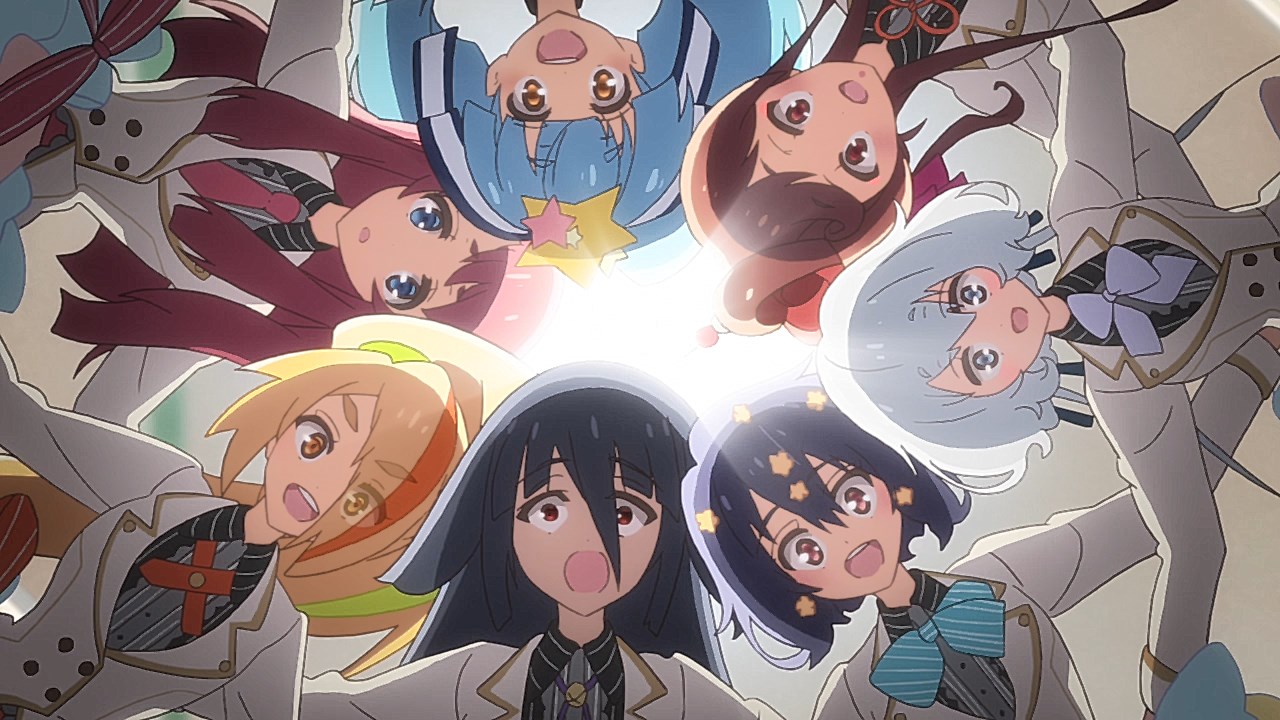
The "main character", Sakura Minamoto, is the heart and soul of Franchouchou, despite not carrying a "Legendary" tag like the rest of them. Offsetting the quirky natures of the others, she provides a sense of "normalcy" and relatability that the others don't. She's a great character who gets even better by the end of the show, and one that I continue to gain appreciation for even after watching it.
Kotaro Tatsumi, the madlad producer voiced by the legendary Mamoru Miyano, is BONKERS. He's a passionate and impulsive beast of a man, not afraid to be loud 'n' proud at any given moment. Most of his lines are coke-laced yelling and unpredictable quips, but he manages to keep an mysterious aura around him throughout the season as well. He's the one pulling the strings on the Franchouchou puppet show, and there's no shortage of funny moments coming from him.
Saki Nikaido, The Legendary Chief Biker, is full of the angst and brashness we've come to expect from biker-gang characters, and is a source of chaos much in the same vein as Kotaro. She's a character I loved before and after she got her spotlight, and the duality of her most prized trait of courageousness also being her fatal flaw made her character arc one of the best in the season. She's also voiced by the same VA who voiced Sarah Kazuno from Love Live's Saint Snow, which is just icing on the cake.
Ai Mizuno, The Legendary Heisei Idol, was a lead singer for an idol group while she was alive and acts as the "guiding hand" and veteran presence of Franchouchou, as being resurrected granted her a second chance at becoming an idol. I love her character because the writing parallels with the overall theme of the story, as she treated failure as something to grow from and her constant work ethic and efforts carried the group at times.
Junko Konno, The Legendary Showa Idol, was another idol when alive and the first girl to get a proper spotlight shined on her. It was shocking to see a character as timid and shy as her have the most powerful and impressive voice of the group, and the portrayal of her struggle to adapt to a new era of idols was a great introduction to the character-focused side of ZLS's story.
Yuugiri is a character I don't have much to say about, because she didn't get an individual episode, but she had her moments. She was a nice change of pace, as she was so chill and accepting about everything that she provided a calming presence to the group.
Lily Hoshikawa, The Child Actress Prodigy, is a memorable character, not only for me, but for many people, as she's the first canonically transgender character in an idol franchise. Not only did it make me happy to see trans representation in such a well-received and well-known anime, but she's also a great character herself, as her focus episode was the only one in the series that actually made me shed tears as her acceptance by the group and subsequent performance was emotionally moving.
Tae Yamada is legendary. 'Nuff said.
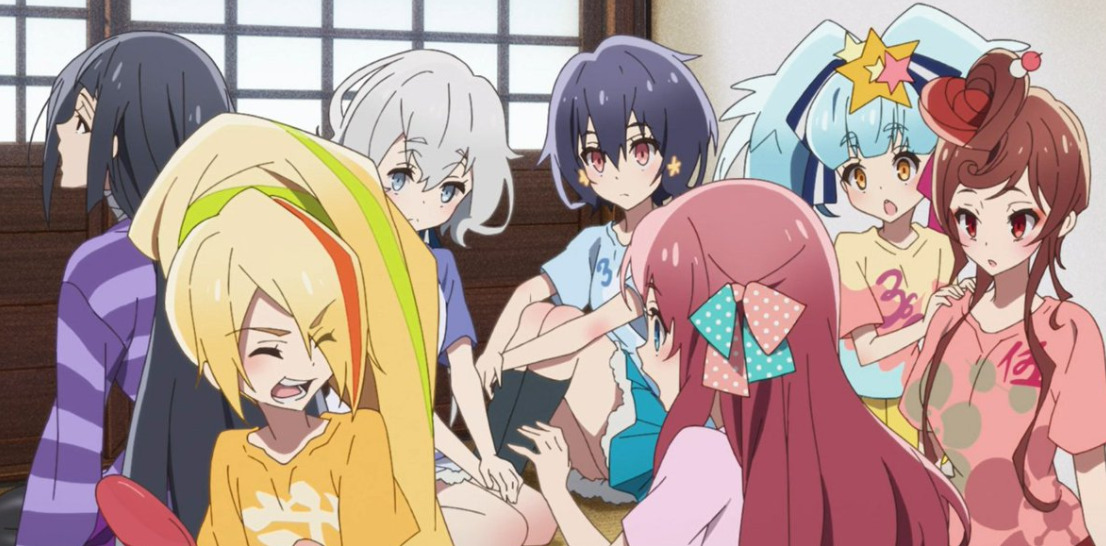
If you love crazy fun, absurd anime with great music to boot, then Zombie Land Saga is the anime for you.
86.5 out of 89 users liked this review
