
Introduction
I don't write reviews. I'm not good at writing nor is it a good use of my time given my current circumstances but after concluding the Saekano series I've been left to ponder on its characters, and what It set out to achieve, and I don't believe it deserves to stay within my internal thoughts. This is more a spoiler-filled deep dive into what was being planned from the beginning that allowed the film to really prosper as the "Crown Jewel" of the series, so I suggest watching both seasons and the film before reading this in its entirety.
The TV Series
Saekano: How to Raise a Boring Girlfriend is a light-hearted romantic comedy at a surface level, with an easily likeable cast of characters that are introduced in a "prologue-Esque" episode 0. This episode is chronologically set well into the series but still successfully introduces all the characters and their archetypes, bar one; while at the same time easing in the plot and the goals of these characters without any "spoilers" despite its position narratively in the story. I don't know whether fan service was the key goal for this episode but I believe that it did its job in displaying the characters in a positive and welcoming light that allowed the audience to quickly fall in love with these characters.
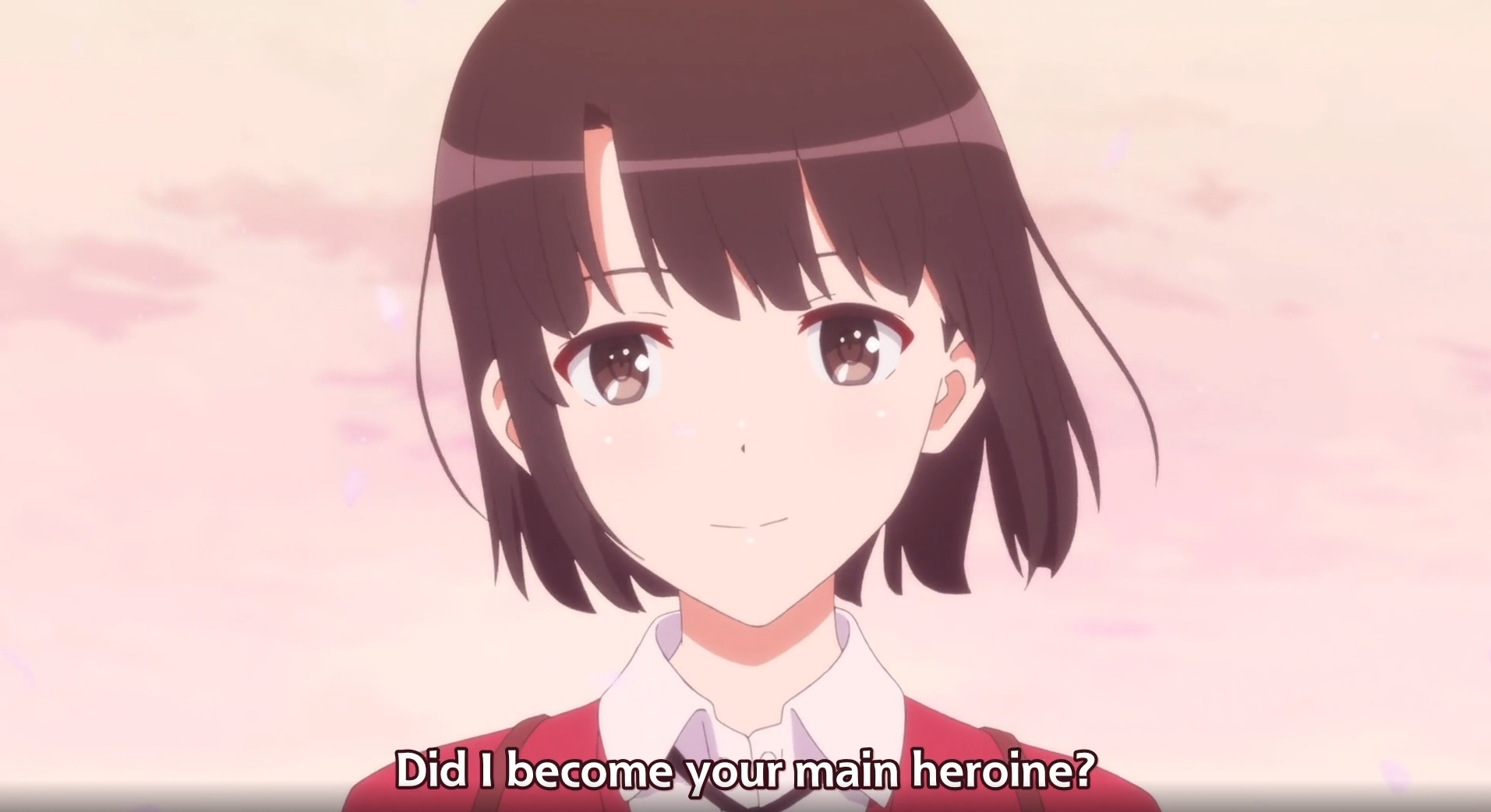
While I knew the title of this anime, it wasn't something in my train of thought while watching this pilot episode. My reaction during episode 1 when I realised what this story planned to tell was quite astonishing, having been introduced to Megumi Kato (a name you'll read a lot during this review) a somewhat mysterious character within the pilot and at many times throughout the television series; I began to believe that we would delve deeper into her as a character. However, this didn't happen. At least not in the way I'd expect.

The TV Series main goal was clear cut, as a groundwork for the series as a whole, fleshing out main leads Utaha Kasumigaoka and Eriri Spencer Sawamura. Both characters from the beginning of the pilot possessed clear archetypes. Archetypes that are commonly explored deeper to show a much more different character inside. While these characters are examined at a much more thorough level this is done mostly through their past with Tomoya; as a way to show the development of their relationship with Tomoya but also highlighting their flaws and wrongdoings, events which still burden both female leads throughout the series. This is somewhat juxtaposed with Kato, who doesn't have an established archetype but is a complex character with a multitude of thoughts and feelings shown in every scene as her dialogue is very commonly not aligned with her complete and true opinion or notion. The TV series doesn't give the audience the same treatment with Kato as the other girls, instead choosing to acclimatise you with Kato's enigmatic character to ensure you not disorientated come to the third act of the series.
By the end of season 2, I believe this is well achieved, And I believed they were solid anime on their own that I sadly couldn't appreciate enough until I had watched the film,
Tomoya
If there is a key pillar of this series I believe could’ve been done better, at least adaptation-wise, it would be Tomoya. Tomoya is used to solely drive the plot forward and be a catalyst for the girls; who in my opinion are more the protagonists than Tomoya is himself, with him being the glue that keeps the group together. A position I originally believed to be more fitting for Kato quite early in the series.
The Crown Jewel
The Film is the most important piece of this puzzle; not just because it the final instalment, but because this is what the series was building too. This was never really a series with multiple spikes of climax, the 2 TV seasons were a clear build-up for this eventual climax in film form. With everything the audience has witnessed over the 2 seasons, Cloverworks (Formerly A1 Pictures Kōenji Studio) is finally able to go all out with Fumiako Maruto's story. This film is able to test the cast, most notably Kato and Tomoya in a much more bare and visible presentation. Previous hardships between these 2 characters, most notably Kato's disappointment with Tomoya over a lack of communication; was delivered with much more obscurity, choosing to keep Kato off-screen with her thoughts and feelings of the situation until it was too late. Cloverworks throw this out the window with this instalment, choosing to rightfully display Kato dwelling with her emotions with the use of excellent cinematography.
Cloverworks went above and beyond with this film when it came to the choices of camera angles for some of their cuts, all of them successfully giving off the intended feel that Maruto clearly envisioned, it’s quite surprising to believe this was the same studio that worked on the previous 2 seasons. The choice of splitting the 2 most important scenes (one of them being Kato's clear acknowledgement of her feelings for Tomoya to Izumi and Michiru) within the film was also something unexpected but something I grew to enjoy; it gave the scenes a hot/cold feel to it as both parts of each scene was extremely important yet differed so much.
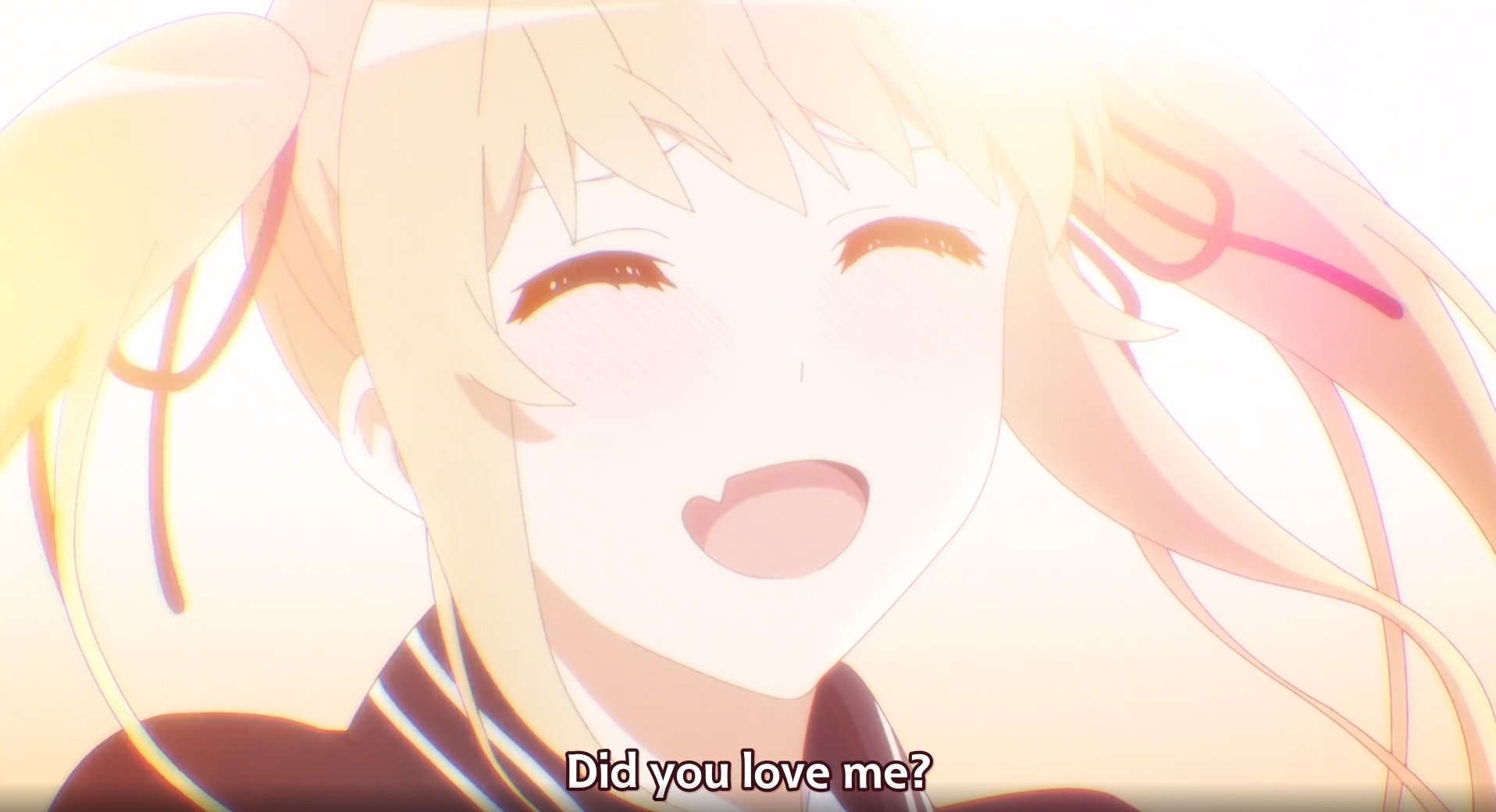
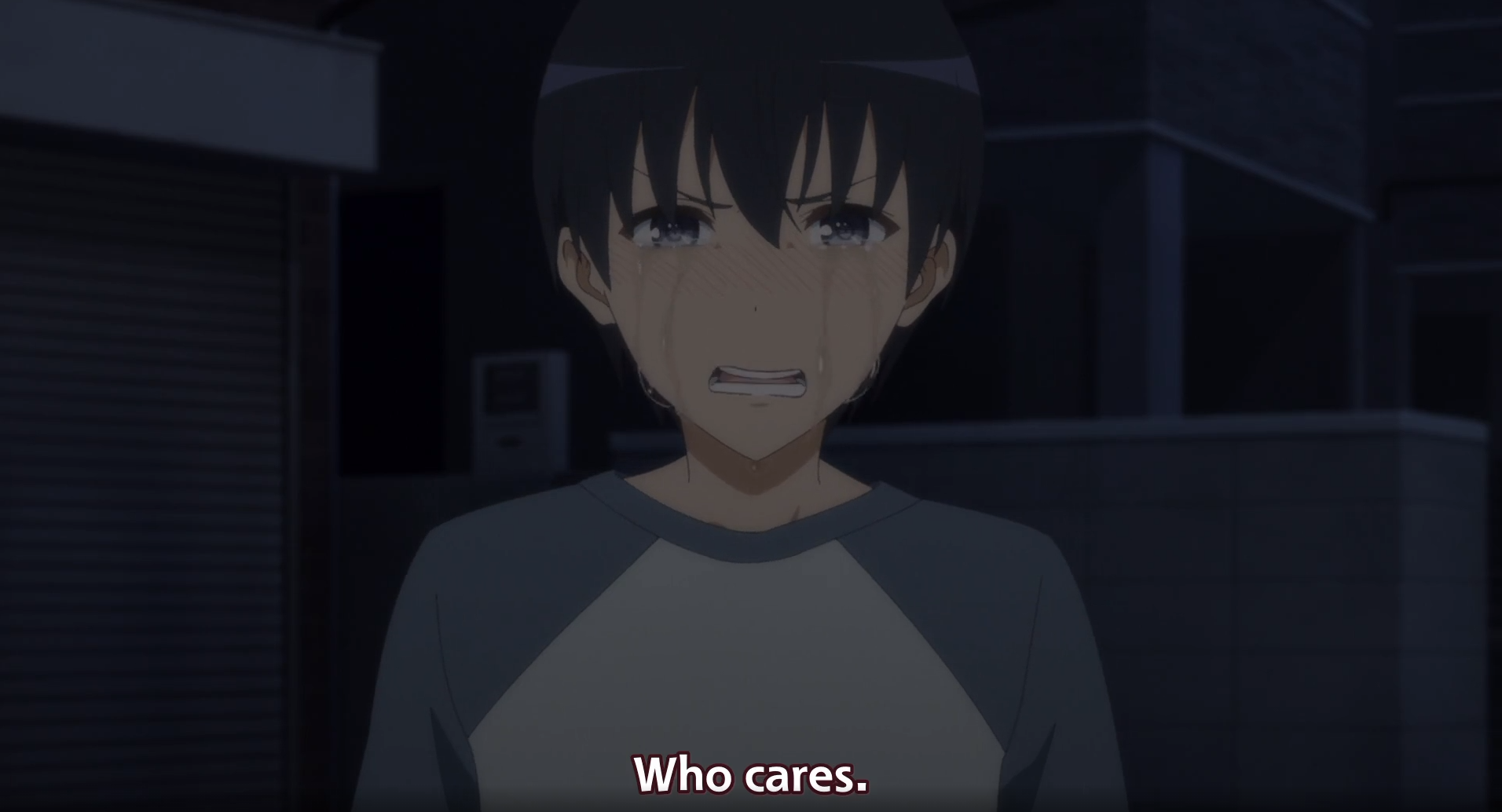
Closure was without a doubt something that had to be achieved, and in the other important scene; Utaha and Eriri are given a "choice" in which to help Tomoya with his game but also relinquish their romance for him. A decision that was arguably their only option and didn't need any deliberation from the 2 leads due to their experiences over the series. This was handled in an extremely natural way for both characters, with Eriri's stubbornness and lack of full acceptance leading to a heart-breaking scene with Tomoya under the night sky. This scene allowing Eriri to gain closure with Tomoya's implied response but also further display the negative effect of Eriri's actions on Tomoya in the past. Although this scene was sad and quite brutal, it wasn't shown in a completely negative form. With Eriri's question, bright yellow illumination fills the screen and paired with the Guitar OST; this scene gives off a sense of melancholy and saudade, almost a "what could have been" for both characters. This scene works to do multiple things at the same time, with the last allowing Tomoya to move on from his hardships with Eriri. The film's closing stages work as a send-off for these characters as they progress on in their lives, a conclusion that leaves me well satisfied.
Conclusion
Do you know that feeling that rises as you come up to the final episode of a series? Its conclusion?
As for the series as a whole, I believed it was the characters, especially the female leads that made this shine bright, as said previously I didn't think much of the first 2 seasons critically, I wasn't satisfied with where it was at and I was scared a short 2-hour runtime could be a real disaster for a story that had yet to reach its peak. I was very much wrong. I'm sorry that this is more of an analysis of what the show did right than more of a review and there are numerous things that I didn't explore within this "review" notably the OST which I thought was solid but not exactly memorable (except for OP2 and the insert song Glory Days) as well as the side characters who I believed fulfilled the supporting role well and more screen time for Michiru being my only ask as she was almost like a potential window into Tomoya's past that could've allowed for more exploration of Tomoya's character.
It's not often that I feel a void after finishing an anime, I unexpectedly had this "pre-void" feeling after I finished the second season knowing the end was next, it's never a great feeling yet something I seek for time and time again, and it's only the great ones that achieve this. This was a series that made me laugh with its comedy and resonate with its hardships, the journey was a ride and I was definitely on it.
Everyone that watches anime has those moments that stick with them from certain shows, Kato's run up the hill as she speaks not to the "audience" of players, but Tomoya, as the entire series comes full circle, beginning with my realisation of what this show set out to achieve. Kato asks a simple question, this question in relation to a goal set from the very beginning. After hearing this question, I realised it wasn't just for Tomoya, but for myself too. And the answer was unanimous.