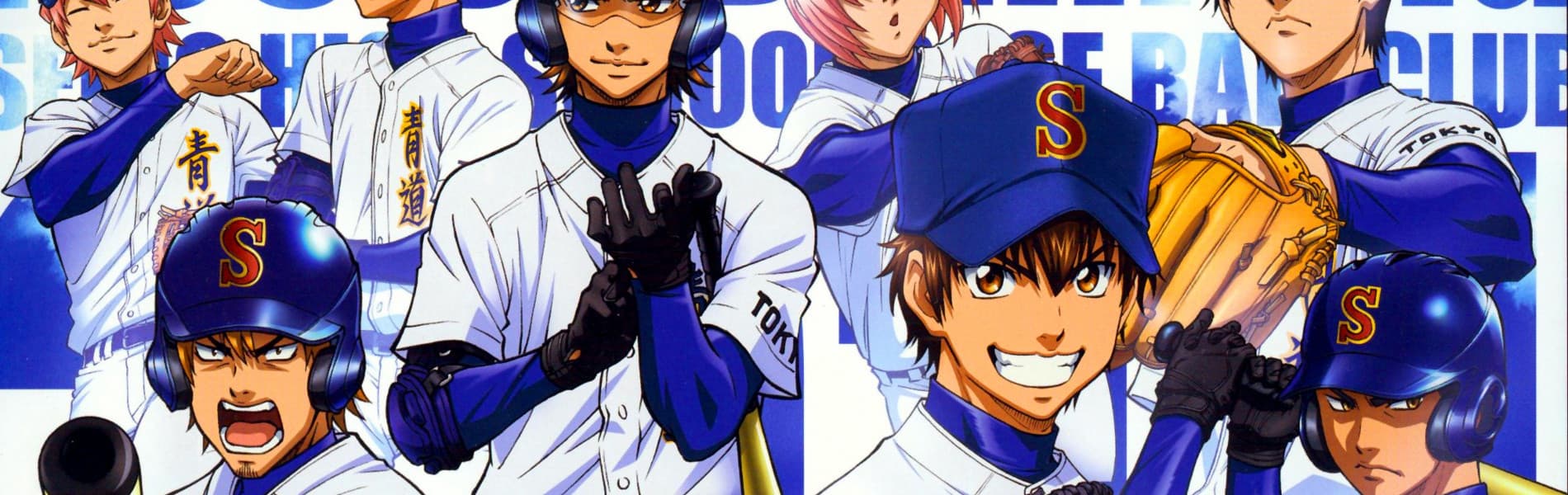


I’ve divided my review into parts, but my rating for each category isn’t weighted the same in the final score. I might sound a little pretentious because, again, I’m mostly used to writing essays for people I really have to suck up to, so please take everything I say with a grain of salt.
``
#
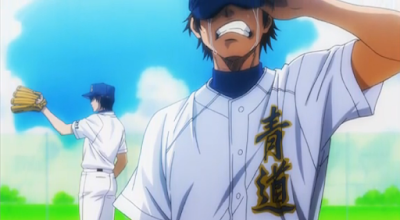
At its core, Ace of the Diamond is about competition — both between teams and within them. Sawamura Eijun, the series’ protagonist, fights tirelessly to become Seidou’s ace, and he’s confident that he wants it more than anyone else. On a competitive team like Seidou, however, this is no easy feat — especially with Furuya Satoru, a pitcher made of “pure baseball talent” in his year, blossoming right before the team’s eyes.
The story revolves around Eijun as he moves to West Tokyo to attend Seidou, makes his way up to the first-string team, and pitches in tournaments. It explores the nature of competition, companionship between teammates, and, in a very general sense, overcoming obstacles. All of these components are pretty standard for sports anime, but I think Ace of the Diamond hammers them down in a really effective, if long-winded manner. Part of this is due to the dormitory setting, giving lots of time for team bonding between games and practices, in addition to the overall likability of Sawamura Eijun as a protagonist.
``
#
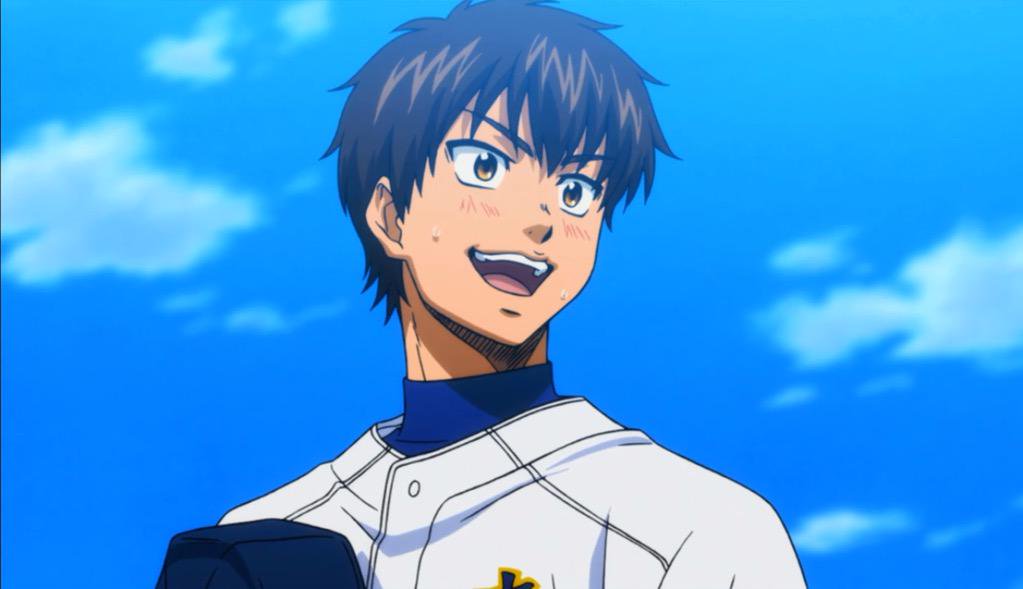
A boisterous first-year who exceeds expectations, respects his seniors, and puts his all into everything he does, Sawamura Eijun is an excellent protagonist. You’ll feel good when he succeeds, you’ll cheer for him when he’s down, and maybe you’ll cringe a little when he does something embarrassing. He’ll grab you by the heart and pull you into his corner once you’ve known him for about ten minutes, just like he did to Miyuki Kazuya and the rest of Seidou. I prefer him to a lot of protagonists in similar series because of his goofiness and kindness, but it’s his single-minded conviction that’s most inspiring.

I almost don’t possess the words to describe Miyuki Kazuya. As Seidou’s catcher and the series’ deuteragonist, he takes up his fair share of screen time. At the same time, he’s also kind of elusive. With an endearingly shitty personality, an affinity for provoking his allies, and an unbridled love for baseball, he simultaneously embodies the series’ themes and provides great comic relief. You can’t help but want more from Miyuki, just as Eijun does every day during practice.

If you love Eijun as much as I do, chances are, Furuya Satoru will frustrate you. Furuya, the tritagonist, seemingly always succeeds when Eijun struggles, which causes a lot of narrative tension in the earlier arcs. This tension can be frustrating to watch, particularly since Furuya does not have a very dynamic personality. His backstory, though sad, does not help his lack of discernible traits beyond liking polar bears and muttering “stamina roll” to himself. He’s definitely not the worst this series has to offer, but you’ll almost always root for Eijun when they go head-to-head. If you like him, though, more power to you!
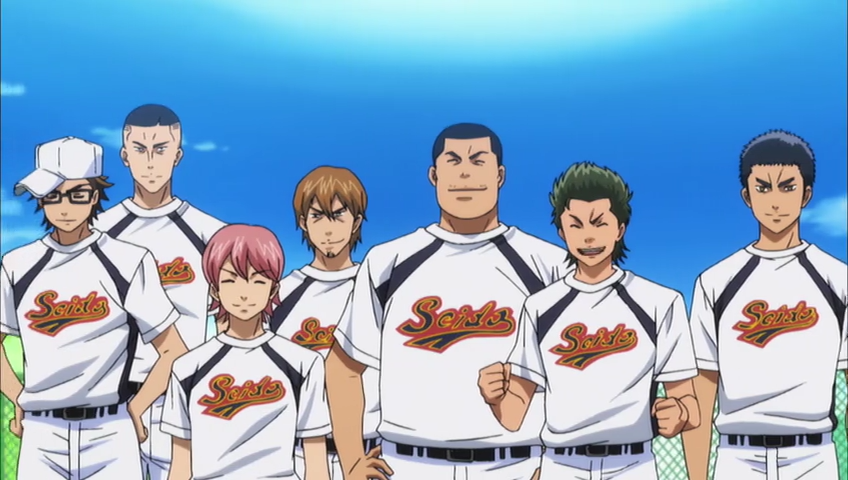
This series has so many characters. A lot of the great ones are on Seidou’s starting roster, like Kuramochi Youichi, Kominato Ryousuke, Yuuki Tetsuya, Isashiki Jun, etc.. Chris and Kataoka, one of the team’s managers and coaches respectively, are also vivid and dynamic within the plot. Most of the backup players really aren’t anything to write home about, though, and it can be a bit awkward when the narrative seemingly focuses on them out of nowhere.
As for characters on opposing teams, Narumiya Mei and the rest of Inashiro Industrial really stand out, as well as a handful of characters from Yakushi, but the series definitely focuses most on Seidou. Occasionally, the Seidou-focus will result in antagonists being reduced to one or two personality traits (i.e.: Tachi from Kiryu’s creepy smile, Todoroki Raichi’s strength and hunger). This in and of itself is not bad writing, but if you’re expecting something like KnB, this element might require a bit of an adjustment.
I only viscerally hate three characters: Ochiai, the coach that’s brought in about three quarters of the way through the season, and the two reporters who spectate nearly every single one of Seidou’s official games. Unfortunately, those three have a lot of screen time between the three of them, which can make for some really frustrating episodes.
``
#Music - 10/10
The underscore is fantastic, by far the best execution I’ve witnessed in a sports anime. Between the catchy melodies, intense rhythms, and dynamic swells that fit corresponding scenes perfectly, it does not get much better than Daiya, period. As someone who usually hates the sound of guitars, this series made me love guitar. Normally, I’d recommend listening to the OST before watching the series to see if you like the style, but I actually think you’re missing out if you don’t hear the songs for the first time while watching the show.
The composer also works well with leitmotifs. Their skill is particularly apparent with Eijun’s theme, Grow Stronger Day by Day — you’ll hear this tune/chord progression overlay in a number of other tracks in varying degrees of subtlety. The soundtrack does well to reinforce the series’ themes of hard work, determination, companionship, and defeat.
The openings and endings, too, are very thoughtful and fitting for this series. For the first season, my favorite opening is the third one, Hashire! Mirai, but all of them are excellent. While the second and third endings are a tad brash volume-wise, the visuals are adorable. Endings 4-6 feature some of the voice actors singing in their characters’ voices — always fun to listen to — making for a really relaxing break from some of the tense matches.
``
#

I wasn’t expecting much, and the result was unsurprising. There aren’t any notable women in the entire story. At the start, we meet Wakana (one of Eijun’s middle school teammates), Takashima Rei (the assistant coach who scouts Eijun), and Eijun’s mother. Of the three, Takashima definitely has the most presence in the story, but she’s mostly sidelined during practices in favor of Kataoka and, later in the season, Ochiai (Though she does seem to have more presence than Oota, the club president who’s obsessed with Kawakami). Wakana, Takashima, and Eijun’s mother are all understandably tied closely to Eijun’s arc early in the first season, resulting in them having no significant influence over the storyline.
Aside from those three characters, I can only recall four girls: Seidou’s managers. I enjoy their dynamic with the team, but they all seem very stereotypical and one-note. The only significant screen time they get is during the endings, and even then, Eijun always steals the show.
That being said, it’s very refreshing to watch a male-dominated sports anime where the women aren’t sexualized at all. I found this to be a huge problem in Kuroko no Basuke and parts of Haikyuu, so in that regard, I was actually pleasantly surprised.
``
#
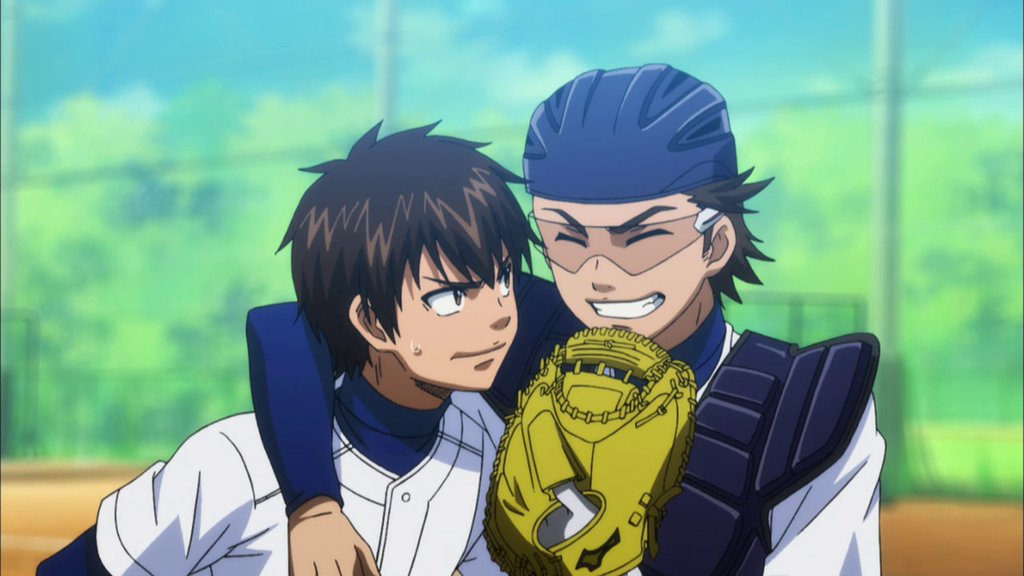
The only things that ever got in the way of my enjoyment of Ace of the Diamond were a handful of characters, drawn-out recap sequences, and occasional moments of secondhand embarrassment on Eijun’s behalf. The pacing can be a bit tiring at times, particularly with so many suspenseful scenes placed back-to-back, but taking breaks or watching at 2x speed can be helpful for some of those episodes.
In case it was not apparent by my walls of text, I adore this series. Please watch it if you like baseball or sports anime even the slightest amount. I know that 175+ episodes over three seasons sounds daunting, but it’s a ride well worth taking.
Thank you for taking the time to read, and I hope you have a nice day :)