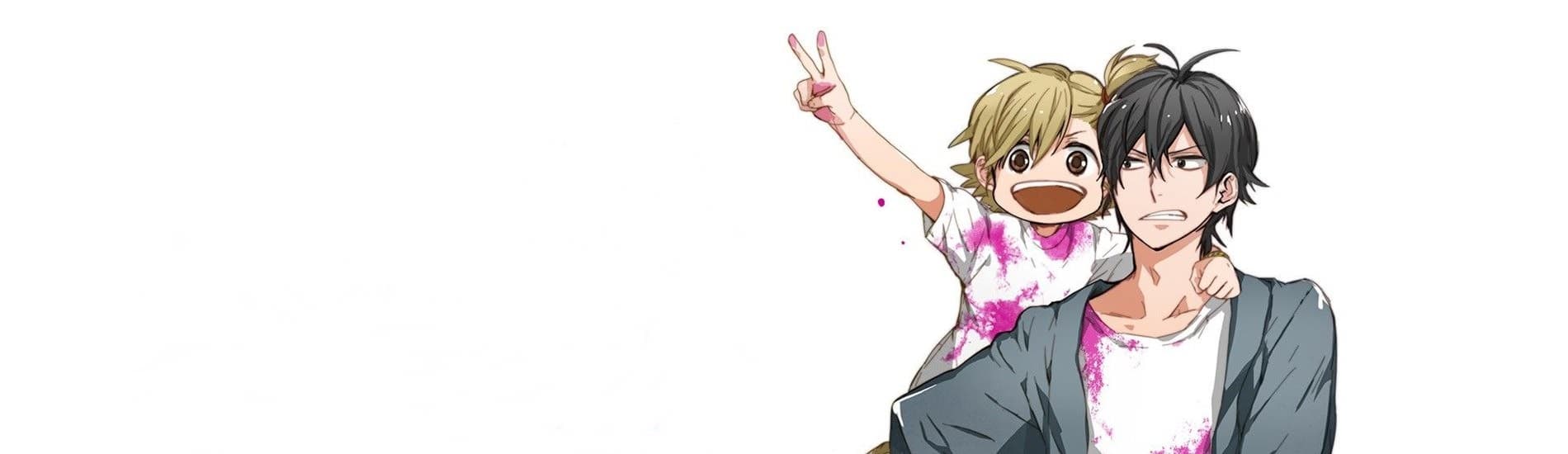

Barakamon is a manga I've known for a while. I've owned the first volume for many years, but never actually read it until the beginning of 2021. This was mainly because it didn't seem appealing to me for a while, and I eventually left it to rot on my shelf. For those unaware, Barakamon is a series about a calligrapher named Sei Handa, a city boy who is very fond of the fundamentals of calligraphy. This leads him to punch an old curator at an art gallery because he told Handa his art was uninspiring and unoriginal. His dad makes him stay on an island, so he can reform and grow as an individual.
Of course, when I received the first volume as a gift, I was very much into shonen, much more than I am now. I also remember choosing what anime to watch based on potential waifus. Yeah, I know. Pathetic. But I was young and didn't know much better. So it was a no-brainer that this slice-of-life manga with no waifu material felt uninteresting. Now I've grown, and of course, I've experienced my fair share of grim days, and I still do. Now I'm constantly adding things to my worldview, and how I perceive life. And I have to say that this manga did quite a bit for me.
The thematic facet of Barakamon is in my opinion one of its strongest elements. The power of words and communication, the influence of kids and the importance of youth, loneliness, the feeling of being lost, following your dreams, and the meaning of life are some of the many topics that Barakamon covers. This series taught me that living is about the relationships you build with other people and the significance of forming a bond to unite with the world and with yourself. This is reflected in every chapter of this manga. From a man having his relationships based and neglected by the task that was forced on his shoulders, or a girl who has always lacked a proper family circle, and has had to adapt in order to not fall into the deep void of social deprivation. And this central idea ramifies into all of the other concepts that it tries to implement. How kids are influenced by the words of an adult who doesn't know how much he means to them, and how he himself feels fulfilled by the smile that reflects hope and the little details that make his life that much more meaningful. The dread of not knowing where to go, and the encouragement to keep moving forward. The pursuit of an ambition is propelled by the belief and aspirations of others. The purpose in one's life, what, and why. The demeanor of a soul searching for light, lifted by the warm current of faith and love.
Am I good, or am I bad? What is that I strive for? What or who do I keep living for? Can I give meaning to my existence? Is it enough?
These are all questions that the characters in Barakamon struggle with. For some, success and fame is their only goal, but for others being able to help is more than enough to fulfill their heart. Because is it that bad to exist without a set purpose? Do I really need to undergo what society expects of me in order to declare that I am important? Is it not receiving a smile back enough of a goal to feel like I've accomplished something grand, for me, or for one special other? The meaning of life is a very present theme and the arguably most important one in Barakamon. I love seeing this shown through the perspective of every character, and not just the main cast, but also the lesser plot-important characters, that still serve a purpose, maybe in just one person's heart, but that is ok and don't let others convince you otherwise. Because everyone in Barakamon is essential, from Handa and Naru to the most incidental of characters. You are important, that's why you should act like yourself. After all, I'm not you, and you're not me. That's why you ought to become the best version of yourself.
A topic I would also like to touch on is how youth is presented, and it relates to all that I've talked about. We see all stages of it, from the innocent kids like Naru and Hina. I love the idea of them as people that act like they do because that's how they are, and there is no further reasoning for their actions and beliefs. It is a very impactful aspect to see these kids being themselves because they can't be anybody else, they don't need any reasoning to love, things just are the way they are, and that is an aspect of youth that is integral to the development of one's own self. We have other kids like Miwa and Tama, who are middle schoolers, and they show us how that part of our life has much more than we could give it credit for. Miwa and Tama both have their struggles, and their personal battles with themselves and the world surrounding them make for a perfectly fitting battle in the world of self-esteem. Then the not-so-kids like Hiro and Handa, and their struggle to give meaning to their own life. Fighting against what society expects of them, and what they themselves expect their own actions to fulfill their ambitions. This battle is very significant in the understanding of letting one's own inner child flourish.
The characters and character development are nothing short of praiseworthy. All of the characters have something to offer, and their evolution occurs thanks to this concept of self-discovery in relationships. The characters all go through various struggles and seeing them overcome their adversities is something Barakamon does incredibly well. Handa is a character that undergoes deep development from start to finish. Even visually, in the beginning, he looks so lifeless, but slowly, you can start to see his eyes, fill with emotion. A city boy like him starts to fit into the rural lifestyle, and it all starts with the little details like greeting the islanders every morning. This makes him appreciate himself and his surroundings a lot more. Another character that I love is Naru. Naru is everything that Barakamon illustrates, heck, the series is named after her, an energetic and overactive child. She wears the themes of the series so well. The depth that isn't all that visible in the anime, comes to shine in the manga. A complex background with deep emotions, because Naru's got it hard, but she still gives it her all for everyone showing a smile so others can do the same. The relationship between Handa and Naru is probably my favorite thing in this manga. They compliment each other in a fashion that demonstrates the idea of relationships and makes even you, the reader feel better. It also portrays the fact that Handa needs to connect with his inner child because he was prived of a normal childhood thanks to calligraphy. This all comes back to the thematic values of Barakamon, it is a series that captures its essence so well via the themes it portrays, everything comes full circle.
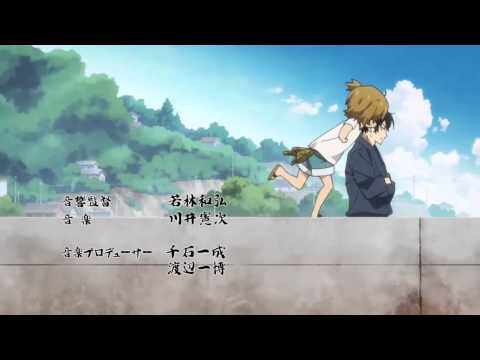
On that note, I'd like to briefly talk about the opening and ending of the anime, 'cause damn, they are truly perfect for the show.

So go out there. Find yourself, and have fun while you're at it.

75 out of 76 users liked this review
