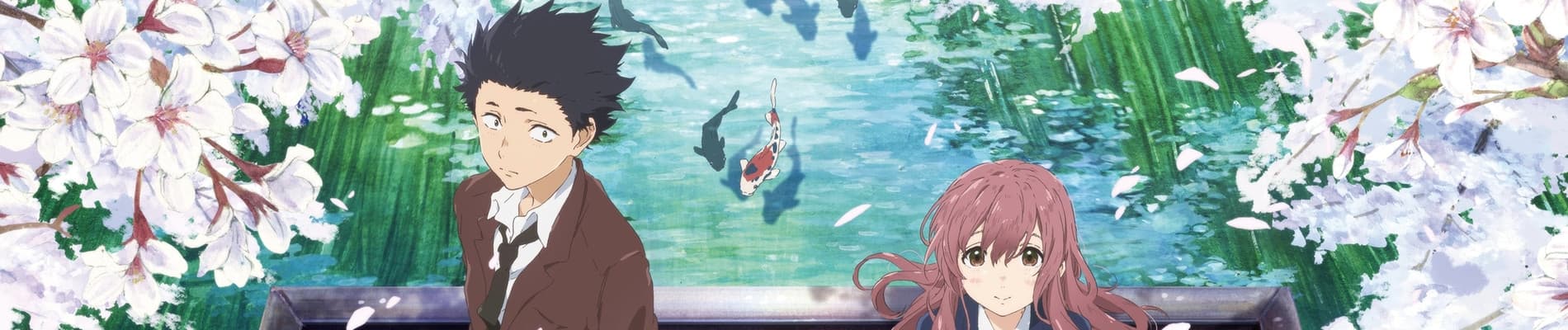

I should preface this review with two things: this is a rewatch and after almost four years.
A Silent Voice is a movie I originally perceived as a masterpiece, 100/100 series, and while my perception has changed four years later, I unironically came out with so much more to love about the movie...and some more criticisms too.
Rather than write some generic review telling you it's visually beautiful and a great character arc, I rather dive a bit deeper into the great characterization of Shoyo Ishida and solid characterization of other characters, the main duo's dynamic - how it plays off of their characterization, how the combination of sound direction, general directing, and production, create a CINEMATIC masterpiece, and some smaller things people tend to overlook that make the movie great.
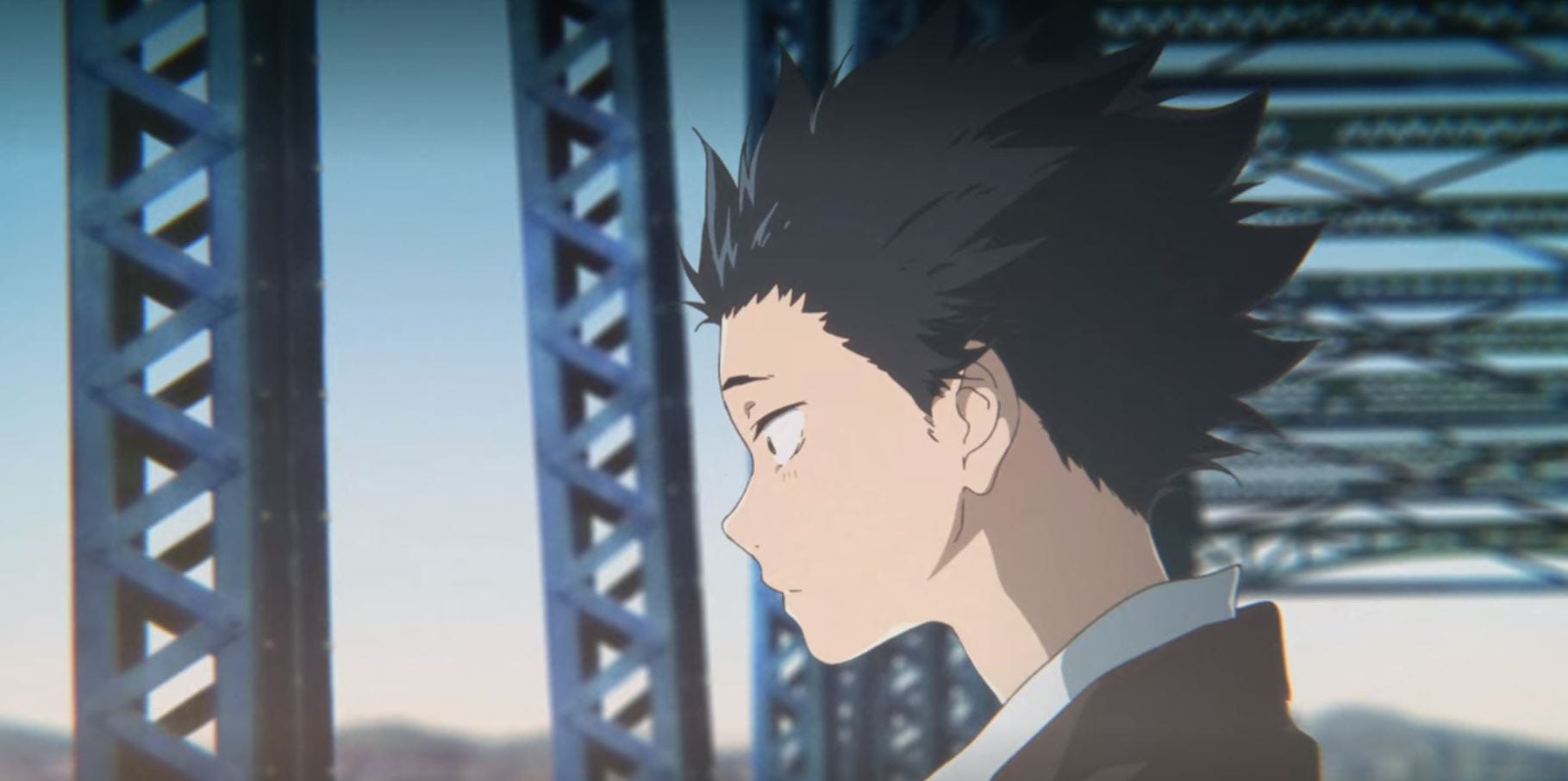
Shoyo Ishida: The movie starts out with a bang, we see Ishida doing various activities to gain enough money to repay his mother. He then proceeds to stand by the river as he plans to kill himself. Immediately we understand he has lived a deep life of regret, a life where he sees no purpose in living. The movie commences the major flashback and one of the highlights of the movie. We see kid Ishida doing reckless things with his friends and can tell he is a reckless child, who doesn't think about how he or his friends getting hurt may affect others. He's a naive but not inherently bad child and this becomes clear by the fact he didn't immediately bully Shoko. At first, it was pure curiosity and it wasn't until the girls started talking behind Shoko's back, and Shoko's special privilege. that Ishida would bully her. He was mad that this new deaf girl was getting special privileges from adults, that everyone was forced to help her even when it wasn't of their own accord, and despite that she continued to, as he perceived, bother him and his girl friends. With some instigation from Ueno, he begins bullying Shoko without understanding there could be repercussions for his actions. He was naive but everything came crashing full circle at him when he realized for the first time, that his actions had repercussions, that they could and would affect others. He realizes this when he was told that Shoko's earpieces he would often break, were very expensive items. He immediately thinks about his mom, who works hard cutting hair to earn money. He feels instant regret and it only continues to double down as he sees his mom retrieve over 1.7 million yen to pay back Shoko's family. From that point on his living situation only got worse as he was bullied and turned into a social reject. During those years of bullying, he was able to reflect on his actions, realizing how terrible they were and how they affected others. He began deeming himself as a horrible irredeemable human being, leading to a self-depreciative mindset, and eventually his planned suicide. The funniest thing about this paragraph is the fact I could likely go on for longer and in more detail but even I know that would be too much to read
Other characters like Ueno, Kawai, and Shoko have solid characterization but nowhere near to the degree of Ishida, likely because his redemption story was the focus of this movie. Still, that leads me into my brief description of the other characters
Shoko: A girl often misunderstood by the people around her. She is simple-minded and only wants one thing, to be a normal girl; she wants to have friends, be a part of a friend group, be treated normally, participate in class and activities normally. We see this clearly in the flashback that shows her desperately trying to fit in with the girls in her class. Despite that, others around her deem her as annoying or attention-seeking. Worst of all they began bullying her and she couldn't understand why, she did nothing wrong but knew there had to be some reason. This caused her to apologize on multiple occasions because she wants to avoid major confrontations and make sure her relationship with these kids isn't beyond repair.
Back to the present, she meets and becomes friends with Ishida. Through Ishida, she is able to experience love, while also being a part of the friend group she had always desired. This was working perfectly fine until Ueno confronts her and blames her for Ishida's suffering and the break up of their friend group in 6th grade. This moment coupled with the drama revolving around Ishida's new friend group and the group's temporary break up, Shoko begins to assume all the blame on herself. We also begin to learn she has always hated herself to a degree, likely because of helplessness and how that affects others. In a similar manner to Ishida, she assumes a self-depreciative mindset, and hates herself and all the trouble she causes for others; eventually leading to her suicide attempt. An act of selfishness that she did to "benefit" others, not realizing her death would only hurt those around her to a much greater extent than anything of the past
Depictions of Toxicity
Ueno: A display of the negative traits of a schoolgirl. She gossips about others, instigates bullying, has others to do her dirty work, and never assumes blame. Ironically she blames Shoko for the mess that happened in 6th grade but Ueno herself was the cause. She started the shit talk, she basically gave Ishida the idea and okay, to bully Shoko, and she jumped on the bandwagon to put the blame(at the time) on Ishida.
Her most toxic trait is her ability to constantly blame others
Kawai: Shown as a simple but sweet girl but in reality, she's a bit self-absorbed in herself. She thinks she can do absolutely no wrong, so when accused of anything she becomes extremely defensive. Beyond defense, she begins playing the victim card so the accusor get ridiculed and everyone else sympathizes with her
Her toxic trait being her victimization
Nagatsuka: The best friend type and his loyalty to Ishida can be funny and endearing at times
Yuzuru: The younger sister who seems to have some guilt towards her sister(seen in a quick flashback), and she tries to stick to Shoko at all times because of it. That also likely allowed her to presume why Ishida was trying to make amends with Shoko at the beginning, likely because she understood how it felt to feel guilty.
The rest of the cast is there, and I'm not mad at it. The side cast overall sort of acts like plot devices but I'm happy they aren't one-dimensional characters.

I love the dynamic with Shoko and Ishida. Their dynamic was interesting from the start because it plays off their characters well. The naive Ishida bullies Shoko because he dislikes how she affects his class. After experiencing bullying himself, he realizes how horrible his actions were and learns sign language. After meeting again Shoko runs away until Ishida uses sign language to signal he wants friendship. Shoko's eyes light up as she realizes he likely learned because of her and after several years, he wants to become friends. From that point on, Ishida tried meeting her in an attempt to protect her in a sense, he didn't want to see her cry ever again, and he didn't want to see others hurt her. While he did this, he still felt he could never directly do enough to make up for his past, not realizing that simply his presence changed Shoko's world. Because of Ishida, Shoko reunited with her best friend Sasahara; because of Ishida, Shoko was a part of her first friend group; because of Ishida, Shoko was able to experience love. Ishida and his presence abled Shoko to live a life more akin to a regular girl. He was fulfilling her desires without even realizing it. And in that span of time, they were able to build a deep bond and understanding of each other; two people that hated themselves for the pain they caused others, two people that assume all the blames for said pain, two people who saw no merit in living at some point.
Regret: Seen through most of the cast and best seen through Ishida.
Consequences to your actions: Also associated with what comes around goes around, seen again through Ishida and how his acts of bullying ruined his social life and made him the subject of bullying. The greatest part about it was the fact that every single form of bullying he subjected Shoko to, was done to him
Loving yourself: Shoko and Ishida hate themselves because they focus on the bad aspects or specific parts they hate. They don't understand their value to others and the simple fact that we have to love the good and bad parts about ourselves, our past and present self.
Selfishness: Pretty much the entire cast is a depiction of this theme. Ishida originally making amends to relieve his guilt - also his attempt at suicide, Kawai blaming others to protect herself, Shoko's attempt at suicide, Ueno's entire character.
Having the characters show they are selfish, added another layer of realism to the film, made them feel more human because humans and the root of their action - good or evil - are selfish.

Easily some of the best directing I've seen in anime. From there use of gaussian blur on the sides of the screen, the camera movement(especially when Ishida was walking in the halls at the start), the panning and zoom choices, the slo-mo for the fireworks suicide scene, and so much more. This movie is filled with moments that show off how phenomenal the director is... if you don't believe me, rewatch the final scene when Ishida looks up
https://www.youtube.com/watch?v=UY0Wt5pp7AII can't really put into words how great the sound direction is at times. The choices to fade the sound in and out on, the use of background chatter and mall music rather than blasting ost at all times, the choice of absolutely no music in some scenes, and the right idea of when to use the ost, picking the proper and fitting track
The production was done by Kyoto Animation, self-explanatory... it's beautiful but really excels when combined with such masterful general and sound direction.
These three aspects in combination made some scenes absolutely chilling, I got literal chills on several occasions during this movie.
The atmosphere of the movie was great, it felt somber and mundane, allowing for an immersive and engaging yet calm experience.
The use of Xs to show Ishida's social ineptitude and anxiety, a great choice that showed how closed off from the world he was.
The transitions that cleanly took us from one event to the other or from a flashback to the present seamlessly
The structure of Ishida's redemption tale: Guilt and Regret - attempts at atonement - slowly becoming normal again(with friends) - changing his mindset after a near-death experience - asking for forgiveness - finally being able to move forward - making strides towards fixing his social anxiety by understanding his worth, that outside perspectives don't matter, and he has friends by his side.
Smaller issue: Wish the side cast was fleshed out a bit more, I see a lot of potential in Kawai and Ueno but they acted more as plot devices despite there being established layers to their character and more room for growth.
Amazing movie that is a cinematic masterpiece and a great redemption tale with a great message.