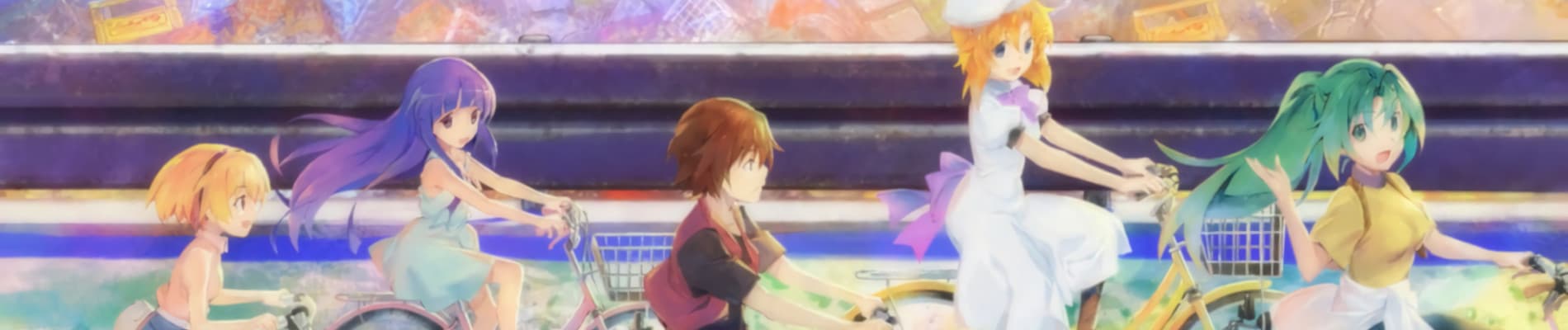

Out of literally any piece of media that I have experienced, and even those that have been released, the existence of Higurashi Gou stands out as a strange anomaly. A sequel to Higurashi, which already had a perfect conclusion with the end of Kai/Festival Accompanying, would strike many people as pointless. There have been sequels to anime that have already had perfect endings before, but in the way that Gou does it, there is nothing that is comparable. This is the point where the marketing of the series comes in, since it is basically inseparable from the season that it's attached to. The bait and switch with the lead on that it was a remake before the second episode came out was honestly a terrible idea in the short-term no matter how you look at it. Higurashi is a series that should definitely never be spoiled under any circumstance, and to have them shoved in new viewers’ faces at the beginning of Episode 2 can’t be regarded as a wise idea from any angle that you look at it. On top of that, the first three arcs of the series initially seem weird retellings of previous arcs that can turn many people off. While these elements may seem like they would make for a bad season, with the knowledge of what happens in the second cour, they work in this season’s favor. When I said that Higurashi Gou was an anomaly, it was not only because of its bizarre approach to nearly everything that it tries to attempt, but also because of how conscious decisions that initially seem to make its story worse, actually make it way better.
Major spoilers from this point onward

With every passing arc, Higurashi Gou depicts a growing contrast between two fundamentally opposing ideologies, as represented by two characters, Satoko and Rika. Despite what Satoko might say about the two of them, Satoko and Rika have the same goal. They each want to be in each other’s company for the rest of their lives. However, they each want to accomplish this goal in different ways. Rika wants to live her life with Satoko in new and surprising places, while Satoko wants her and Rika to just spend their lives in Hinamizawa forever. What makes the final arc intriguing to watch is to see how this contrast slowly manifests between the two of them. Their roles in Gou play off of their already established character traits and show how they are tested under the looming passage of time that was once absent from the series previously. While Rika is just as well written as a character as she has always been, the levels as to which Satoko is developed puts a new spin on her character throughout the entire series. Higurashi has always excelled at showing a character’s descent into pure madness, and with this slowly happening with Satoko bolsters her intrigue as a character greatly. Satoko desperately grappling onto a past status quo that no longer exists makes her character even more complex and interesting than it already was. It makes her turn into an antagonistic force more believable, because the events that happen around her play into her deepest inner fears. The contrast between the two is deeply ingrained into the deeper messaging of the series, with the pitting of the two concepts of miracles and certainty together to create something that adds a new layer of depth to the entire series.

The mystery derived from this contrast between Satoko and Rika can only be appreciated in hindsight. What is truly unconventional about Gou is in how it presents its mysteries in the first three arcs. It can be a bit of a slog to get through the first three arcs of the series, because most of the content seen is just remade scenes from the original season. What makes these arcs vital to the story however is in the points that they diverge. While a lot of it is copy and pasted content, the divergences change the inherent nature of the mysteries to better suit the story of Gou. Despite being original content, the fourth arc follows in line with providing clues that point towards the answers to the greater questions at play. It leads to the eventual Satoko reveal in Episode 17 to be extremely well foreshadowed, due to the signs already being there many episodes before it is finally unveiled. Like the seasons that precede it, Gou manages to be a satisfying mystery, due to it being intricately plotted out at nearly every step. Even if answers for the short term mysteries in the first four arcs haven’t been shown yet, the revelations involving the point of the existence of this entire season have been so well handled by the final arc of this season, that I barely have any worries about how Sotsu will go about handling the act of providing answers.
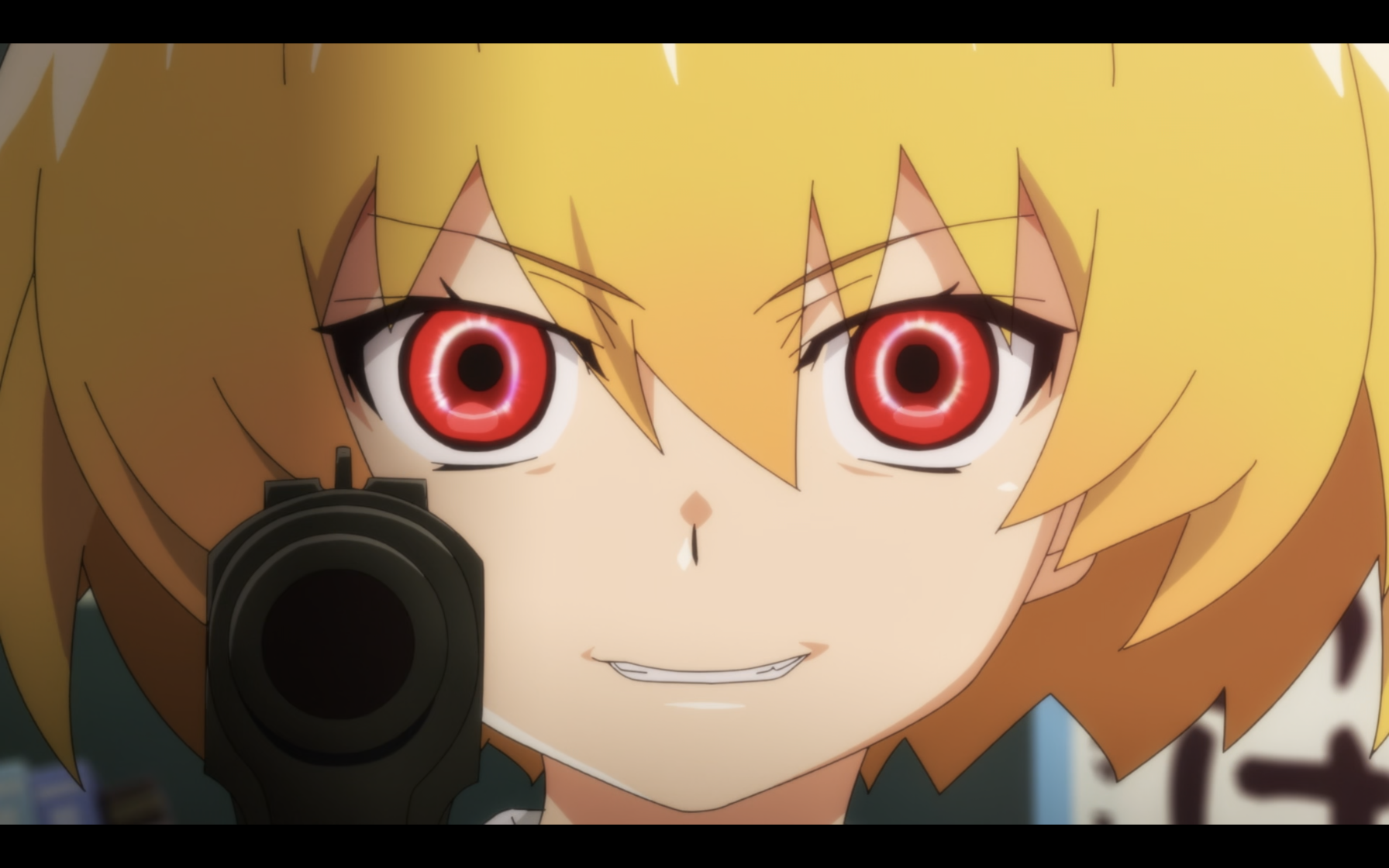
If there is anything to criticize this season about, it would have to be involving how lacking the production can feel at times. While the character design and visual direction are each fantastic, the actual animation is static and rigid for most of the time. It doesn’t exactly feel like Passione was exactly trying their hardest for most of the runtime of the episodes, since it felt like a story that I would prefer reading the manga for. The one exception to this is with the gore scenes. It felt like Passione went all in with depicting graphic details of the human body, making some disturbing scenes that are stuck in my mind. The entrails scene of Episode 16 has stayed in my memory constantly, due to how every detail builds the scene to be one of the most horrifying scenes that I have ever had to experience in an anime. I wish that the rest of the scenes were animated that well, but it doesn’t bog down how resonant the whole story is. As for the general audio component, the music is subtle and doesn’t get in the way of any scenes. This helps to sell the more atmospheric aspects of Hinamizawa, the Sea of Fragments, and St. Lucia. Since I first experienced Higurashi through the manga, this was my first time listening to the voice acting, and I can confidently say that each voice fits their characters amazingly, and gives them each more personality than the ones that I came up with in my head. While there is a lot to be desired in certain aspects of the general presentation, I am generally satisfied as to what is actually there.

Going through the Higurashi series for the first time over the past few months has given me a fresh outlook on this entire series. Gou received a generally mixed reception from most viewers judging by its average score. This can be chalked up to the fact that a lot of viewers didn’t exactly see the point of Gou’s existence, due to it following up one of the best conclusions that I have ever seen in anime. To many, Gou was just an unnecessary tacked on addition to a series that didn’t need another follow-up. Since I was a new viewer, I naturally had a much more open mind to what Gou generally was. Gou was just another step in the story of Higurashi, and it is an incredible one. While it is unnecessary in the grand scheme of things, it adds new amounts of meaning and mystery to a story that was already full of it. Gou is Higurashi in its finest hour, a tragic mystery that is simultaneously horrifying and heartbreaking. Sotsu has a lot to live up to with the expectations that this season has set for it, and I am wholeheartedly excited for what it has to offer.
