No matter their genre, whether they are animated or live-action, short or feature, films can serve many purposes:
And some don’t seem to make any sense. Might be because of a confusing and hard-to-follow storyline, because the reference material is hardly accessible, or because the creator wants to mess with his audience, or all three and more. Does Adolescence of Utena belong here? I’d say yes and no.
Ikuhara can be a trolling creator and a fan-proclaimed madman, but also one of the most social-aware people to grace anime industry. Let’s begin the review, there will be no spoilers.
a) Adolescence of Utena can be watched standalone, but I don’t recommend doing this. This comes from a person who watched a few episodes of the series, then went for movie, completed the series and then re-watched the movie. Some original series’ elements will fly over the viewer’s head, some parts are affectionate references to iconic and memetic scenes and much character context may be missed. And on top of that, some scenes supplement or build upon certain ones at the series.

b) This movie thrives on visual storytelling, employing imagery themselves as a narrative tool. Although the case with every work directed by Ikuhara, here the usage of metaphors and symbolism is uninhibited, and surrealism reaches extreme heights. There is also bizarre and offbeat humor at parts, that contributes as part of the film’s charm.
Best not to take anything too face value, especially during later parts where any semblance of literal story is drowning in a sea of allegory and madness. I would also recommend against nitpicking details on first watch, but to go with an empty and open mind intuitively absorbing information.
c) Many people recommend approaching this movie as metaphor after metaphor for growing up, and might be fine to direct the viewer and not confuse them too much.
In my opinion though this may also peg down the mind and not liberate it enough to provide for alternate interpretations and explore the thematic richness behind. With enough patience and imagination, one can appreciate more than just a deranged coming-of-age story or yuri romance. One of my favorite interpretations is an intrapersonal one, e.g. bridging and integrating our personality traits no matter if considered more “feminine” or “masculine” by society and tear down delusions that don’t serve us and hold back our potential.
Outside thematic interpretation, I guess the film can be seen as a sequel, a parallel universe, or even a separate microcosm depending on how one views it.
Given it’s a compact retelling of the series not all will be fleshed out, and on top of that understanding some requires the series as a point of reference. Original concepts from the parent series remain present, like the Rose Bride or the duel to drive, as is the prince.
Utena and Anthy are different from their series’ versions, Utena being more masculine-looking, introverted and reserved, whereas Anthy is more assertive, and more openly displays free will and emotions, and boasts a different if still feminine appearance.
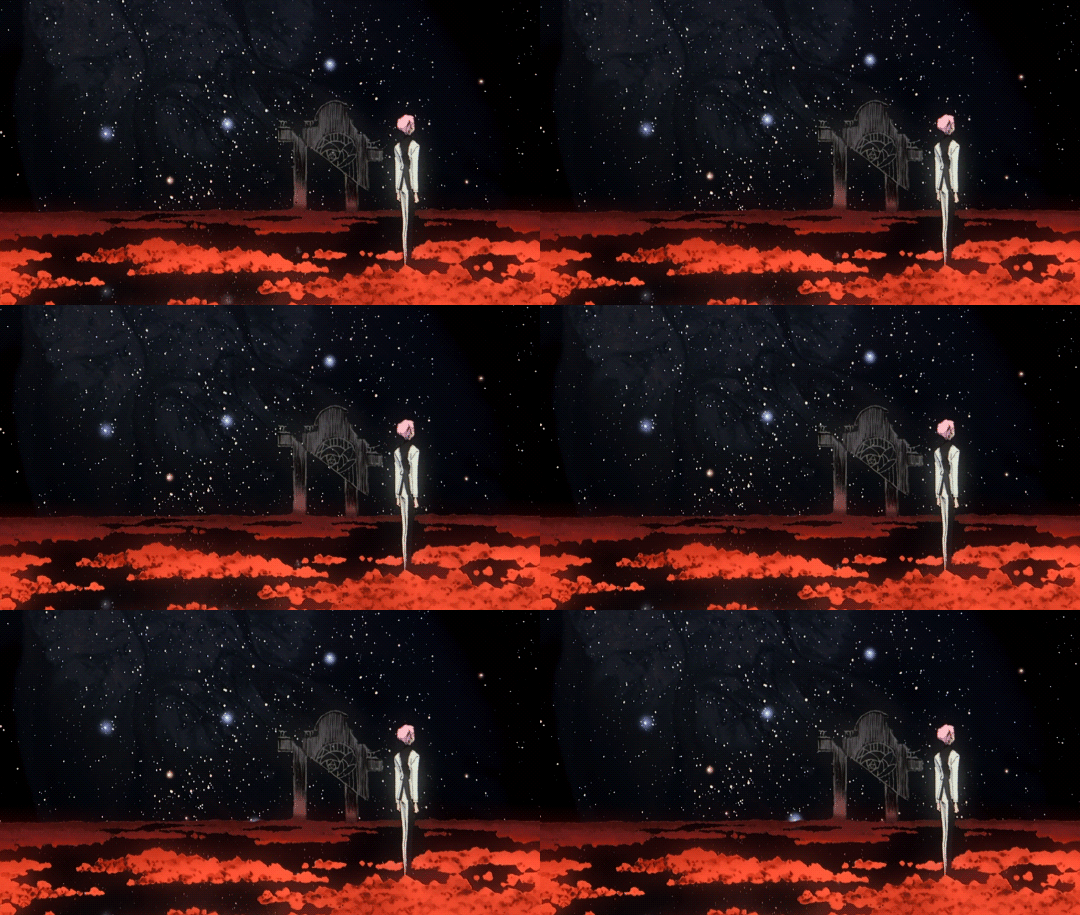
Other characters are mostly limited to few but very memorable scenes and their roles are either changed from the original series or “flanderized” to an extreme. Some operate more as symbols; however it is noteworthy that the presence of one of those can probably shed some light into an important character of the series and how he came to be raised this way.
a) Visually it’s way much of an upgrade from the series, the most animated Ikuhara work by far and eerily beautiful. Going hand to hand with the extreme surrealism, Ohtori has been transformed from an already atypical school to a Hogwarts-like landscape.

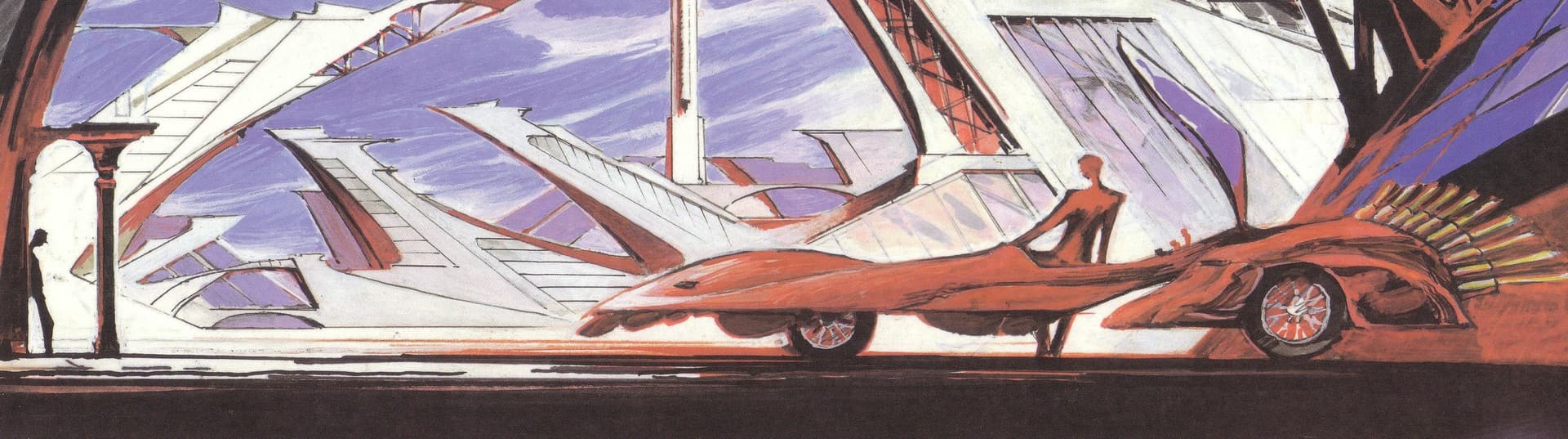
The resulting architecture blurs the line between a sci-fi setting and an almost schizophrenic dreamscape, including among others shifting animated segments and overlapping classroom boards. Colors are more vivid, camerawork is dynamic and fluid, and whatever fencing scenes present truly feel as action scenes, and the car scenes are nothing short of a majestic narcotic.
Unlike in all Ikuhara’s series, there is no repeated sequence made to create a pattern. It goes without question that there will be tons of imagery used as symbols in very creative ways, and Ikuhara’s stage play direction shines only second to Penguindrum’s.
b) On sound, I don’t feel I need to say much. The music is largely choral rock and orchestral pieces, but what makes them distinguishable is sound direction, for they blend better into sequences in comparison to the series.

If I am to distinguish two tracks, it’s a ballad playing during an iconic scene, and a unique insert version of Rinbu Revolution, both sung by Okui Masami.
26.5 out of 29 users liked this review
