
86 EIGHTY-SIX
a review by Magenta
a review by Magenta
In terms of themes to center a story around, the general conflicts and effects that arise due to a war are ones that need to be treated with a type of care. It has been documented in many brutal periods of history that war is when the worst of humanity can come out. If any war story wants to be honest in its depiction of its subject matter, then it has to be absolutely unadulterated in its representation of it. In this aspect, 86 is definitely trying to get there. There are many aspects that show attempts to portray these horrifying concepts as they should. However, 86 mainly falters in how it hesitates to go all the way with its depictions. It is in these hesitations where flaws emerge that undermine what was accomplished by the attempts to depict a brutal war. While 86 did have potential in its earlier stages, it is eventually squandered by its reluctance to truly take its concepts to the extremes that it needs to.
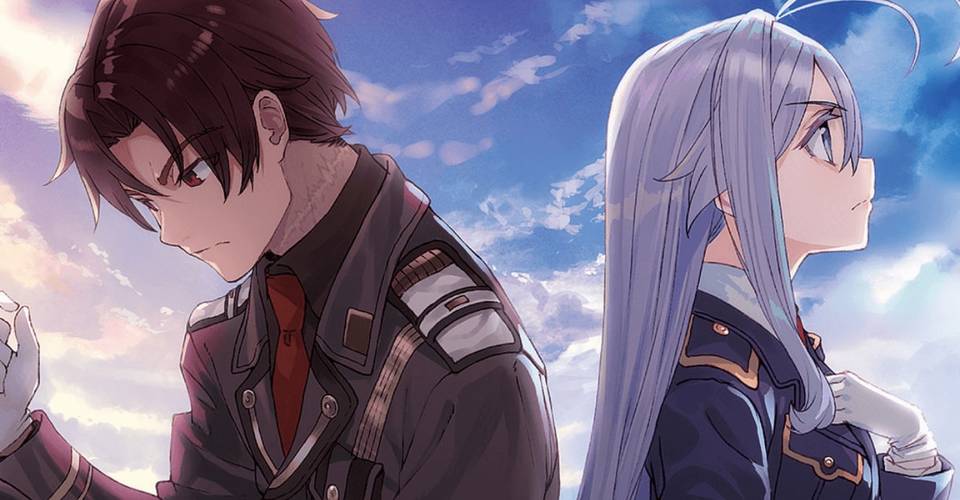
86’s two main sections, the ones taking place in District 86 and the Capital of San Magnolia. Both of these sections of the story both fall victim to this problem of reluctance, but they each suffer very different effects because of it. The reluctance to portray war in a more real manner affects District 86 far more obviously and concretely. In the earlier episodes, the sections were the most engaging to watch. Between the major Eighty-Sixers exhibited, there was a type of camaraderie exhibited between them that actually made me care about them at the start. While the slice of life elements weren’t the greatest, I initially forgave them due to what it set up. By emphasizing the brief moments of levity at certain points, that when the story got to its more brutal aspects, then they would be amplified due to the fact that I would actually care about these people. This is a common tactic pulled in most other dark stories of this nature. However, this type of symbiotic relationship crumbles in the face of the botched execution of nearly everything around it.
I can’t exactly pinpoint when it happened, but there was a certain point when I realized how misplaced 86’s priorities are involving these scenes. That certain point was when I realized District 86's slice of life moments were becoming way too frequent than what was necessary, and in way too many episodes, started to eclipse the brutal scenes of war. While this is a useful technique that darker stories could leverage, most of the time, they don’t overshadow the actual brutal elements that the series was based around. These are moments of levity because they are supposed to provide breathing room from the sheer brutality of everything else going on. The slight bit of air that you have to breathe gets less meaningful when you have too much of it.
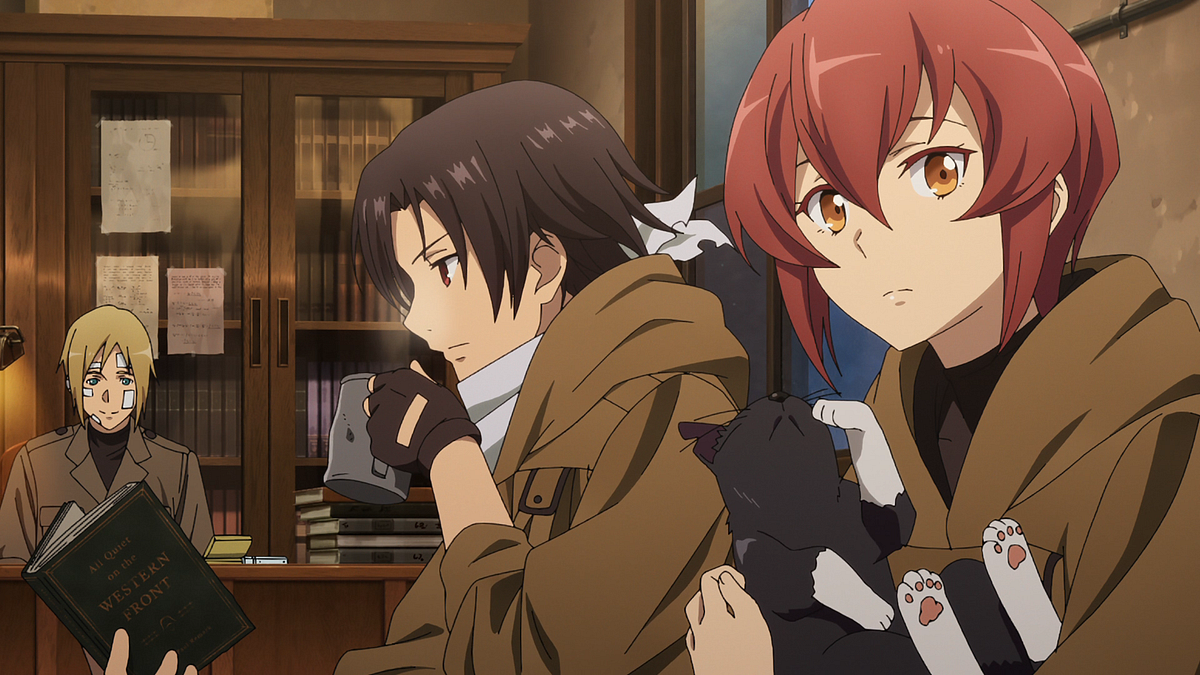
What compounds the problem even more is the fact that the brutal scenes that they are even trying to serve don’t sell anywhere near the intended effect as they should. There are too many Eighty-Sixers to even keep track of at the beginning, and they end up being killed too quickly so that I can really even care about them. When they die early on, I am still trying to learn their name, but I can’t do that when they are dropping like flies. Yet another problem that makes it even worse is in the aftermath of the battle scenes. After any scene that takes place on the battlefield, there is rarely any grief in the air in the Eighty-Sixers’ headquarters felt over their deaths. It is mostly just the Eighty-Sixers mildly feeling sad over their deaths and being a little bit philosophical over the nature of their fight, and then just moving on. While there was one instance where grief was shown at the end of Episode 3 and beginning of Episode 4, this moment was short lived. With this type of behavior being constant, The Eighty-Sixers end up feeling unsympathetic, due to how it is framed in the show as if they are apathetic over the deaths of the ones closest to them. Even with the justification for this behavior provided late into the series, it feels more like duct tape to a gaping hole. Nearly every one of them except for Shin exhibits some type of emotion of joy during the slice of life scenes, but it is rare to find this type of strong emotion pushed in the other direction. Most of the grief felt over character deaths is mostly from Milize, which should not be the character that is experiencing this type of thing in her position. While it does say a lot about how poorly the Eighty-Sixers are written, it equally says as much about how Milize is implemented into the story. Her character over in the Capital of San Magnolia also gets affected heavily by this series’ persistent reluctance greatly.

Along with attempting to show a war from the perspective of the battlefront, 86 also shows the war from a more political perspective. Usually war stories only show one of these two perspectives in their story, so I can appreciate the attempt to take on both of them at once, even if I believe that both of them are botched in their own ways. The depiction of a society centered around a singular race is actually done really well. While there is an obvious racism between the Albans and Eighty-Sixers, it isn't explicitly done in a way where it is constantly reinforced by every Alban. There is just a lack of acknowledgment to the horrible atrocities being committed, which is what makes it truly terrifying. The conditioning of most of the people of San Magnolia to turn a blind eye to the hypocrisies of the government is realistic in a type of way that I haven't exactly seen before with a fictional society as its kind. As well as the world building of San Magnolia is, there is one major aspect of these sections that brings down what has been set up here significantly, where nearly all of the nuance setup here completely vanishes. This aspect is the character that we view this section of the story through, Milize.
Milize as a character strikes me as odd from nearly every perspective. In the society that she is a part of, she sticks out like a sore thumb. With the pure indifference of nearly every Alban towards the persecution of nearly every other race, Milize is the only one who shows any type of empathy towards those other races. It isn’t even a little bit of empathy too, she has a visibly large heart for the people that she commands. This is her central character trait, and it causes a lot of problems for any part of the story that involves her. While it isn’t really out of the question for there to be Albans that advocate against the actions San Magnolia has taken against non-Albans, what leaves it off putting in the early stages of this season is that she is the only one that is like this. The society of San Magnolia draws a lot of parallels to real ones, and part of the reason why is the subtle type of subconscious assumptions about other races. However, Milize’s beliefs remain unmoved by the society that latently tells her to change them. A society that emphasizes a singular flaw, the people typically carry that flaw, but Millize finds herself free of it. She is already the shining example of a good and pure nature in this world already, which makes her feel completely shallow as a result. Her character is already in a position that she would be in after a character arc had completed, which gives her character little room to grow.
As much as I have complained about Milize’s character, the issue of her being naive would be fixed by how the story contextualizes and justifies it. However, its approach to actually doing this is extremely inconsistent. By how Milize got this way, the flashback involving it is incomplete. At this point, I will state that I am anime-only, and I don’t exactly know the full story of this flashback. However, from what has been shown, she doesn’t exhibit a full character arc from it, but just that she got the beliefs that she had from the people around her projecting their ideals onto her. In terms of actually giving her flaws that compensate for her important lack of ones in a certain area, she doesn’t exactly have one persistent enough to make up for it. It would be absolutely untrue to call her a Mary Sue, but she is more so just too much of a good person for a story like this. Maybe it is unrealistic to want a more flawed character, but for a premise like this, it was practically begging for a very flawed character that was in the position that Milize was in. However, this story just didn’t get it. The reluctance to portray aspects in this story as unadulterated as they need to have near opposite ways on the two sections of the story. However for both of them, they always ended up in disappointment because of how they ended up.
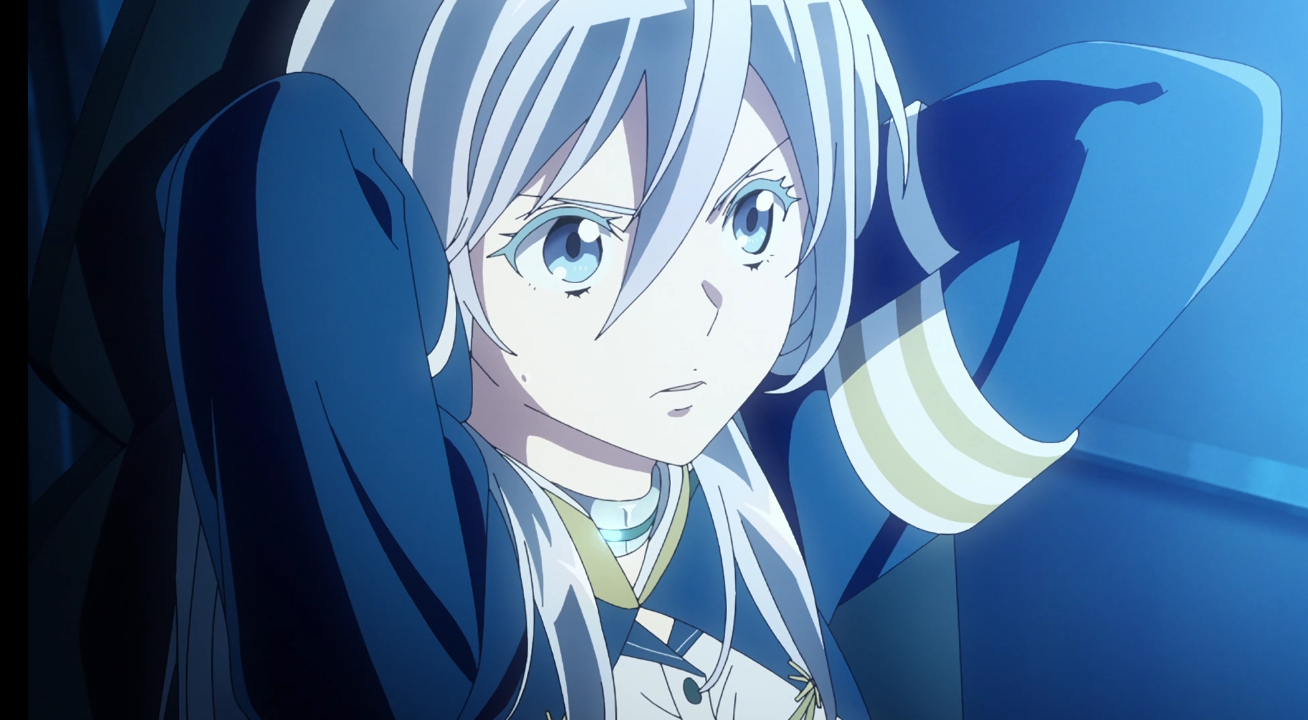
As hard as I have been on the series up to this point, I still liked some aspects of it. Shin’s subplot with his brother was pretty well done compared to everything else. I don’t really have a full blown analysis of it prepared, but I will say that it got me to care at least a little bit about Shin compared to the pieces of cardboard that surrounded him. The general presentation was really great. The visual direction was really stunning even with the CGI Paragons and the editing being a bit awkward at times. The OST was great, mostly due to Hiroyuki Sawano doing Sawano things. However, the first season of 86’s greatest accomplishment is that it leaves me wanting more. Yes, I just complained about how much I didn’t like it for 6 comprehensive paragraphs, and I want to watch more of it. But the series has done a great job at leaving a promise that it would get better. With the direction that the story is going, it is promising to stamp out the major flaws that it already has with the second season. It is weird to end a negative review on a positive and hopeful note, but this series started to show just a slight bit of promise just as its first season ended. While I didn’t have hope for other series that I didn’t enjoy to get better, I am willing to give this another chance when the second cour starts.
Thank you for reading to the end of the review if you did. I really appreciate the willingness some of you have to get to the end of a review that probably disputes your own opinion. If you have any criticisms with how this review was made, you are free to message me to critique what I had to say.
187.5 out of 272 users liked this review
