SPOILERS BELOW. YOU HAVE BEEN WARNED.
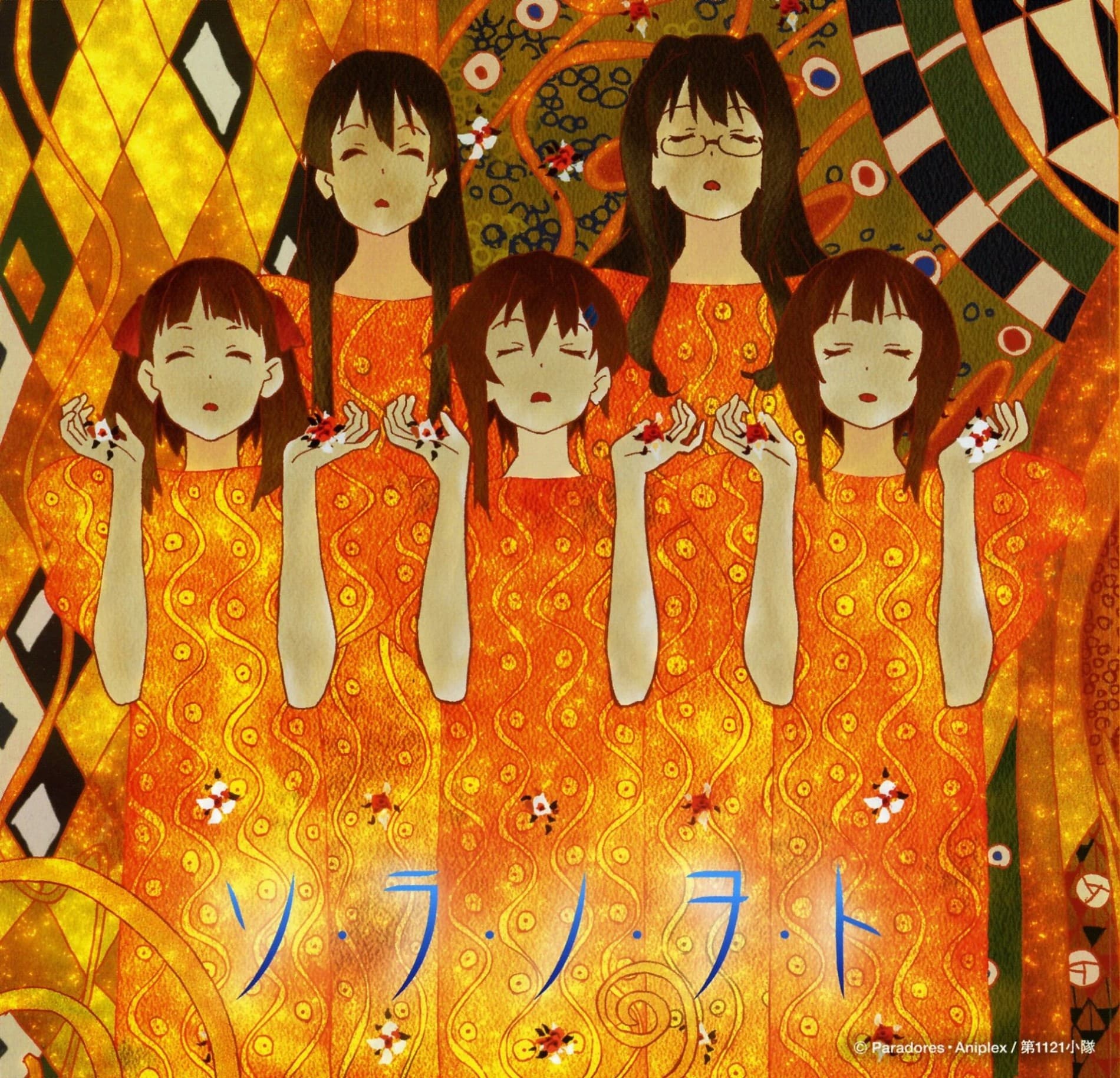
So. Ra. No. Wo. To. The sound of the sky that pierces the heavens. Yet another anime set in a post-apocalyptic world, but this time with some moe appeal to brighten up your day.
Sound of the Sky is an interesting anime. Rather than being adapted months or years later from a successful manga or light novel, it actually aired along with its manga serialization. Consequently, it features the blessing and curse of being an original, one that forges its own path without the pressure of living up to its source material’s reception.
With no better words to describe it, I found the Sound of the Sky to be a disappointing anime. The opening, performed by Kalafina, is truly killer, and actually does an excellent job of prefacing the post-apocalyptic world in which the cast finds themselves. The ending, while certainly playing more off the moe aspect of the show, holds its own as well. The animation, furthermore, while nothing special, is never poor enough to be distracting, and even includes some very nice scenes. The real issue comes with everything else – the story, the characterization, the pacing, and the ending.
Without betraying too much of the plot, it is important to realize that all of the show’s cast is characterized explicitly, rather than implicitly. Very rarely are the viewers given something to chew on. Even simple devices like foreshadowing and allusion are missed in the straightforward character-builds that frequently follow an episodic path. As you watch this anime, the characters are shoved directly at you. They’ll tell you what they want you to know to be true about them, and nothing more. I can’t think of a single example in this show where subtlety is used as a mechanism for developing character traits, or where a lane for fantheory (laugh if you want) is given a space to grow.
So Ra no Wo To builds on the simple, idea that all of the show’s cast are different representations of the MC’s character. Kanata is a seemly optimistic, determined girl who wants nothing more than to learn the sound of the sky that brought her hope during her war-torn upbringing. The other four main characters – her peers and superiors in the 5-woman platoon – serve as the symbols of the conflicting emotions that hide deeper in her mind. An oversimplification, though not an inaccurate one, reveals that Kanata is not able to escape the dystopian, depressing reality that is her continued existence. The happy, positive mind is a facade covering the depression that characterizes almost the entire cast. But rather than being instructive, So Ra no Wo To seems to embrace the “that sucks!” mentality. Life is nasty, poor, brutish, and short, as soon as one steps beyond the borders of cozy Seize or the walls of Kanata’s positive outlook. And this isn’t even subtle or thoughtfully done throughout the course of the show, nor is it instructive. Each of the remaining platoon members exhibit little character beyond their usefulness for unwrapping Kanata’s optimistic front.
All this could be forgiven, though, if only the show possessed some message in its storytelling. What about the Sound of the Sky drives one past the depressive reality and into a new day? Obviously, it’s love, friendship, and playing Amazing Grace on a trumpet so well that two warring armies throw down their weapons and celebrate the end of a war. For a show that so badly wants to be a slice of life inspired by a certain after-school tea time (seriously, there’s even a scene where Kanata envisions the whole platoon playing music in high school together), it offers a conclusion that’s laughably unrealistic even by slice-of-life standards. It’s not instructive, it’s not redemptive, and it leaves the viewer with no better sense of what to do when the darkness of the world seems overpowering.
And with such there’s several other places where this show struggles. For some reason the writers, having spent most of the season on small sub-arcs that went nowhere ranging from water fights to illegal alcohol distillery – feel that it is a good idea to introduce a brand new character, and to start a war that conveniently concludes in the platoon captain becoming a princess and saving the day in Disney-esque fashion. It’s almost as if the writers, believing for so long they were writing a normal SoL, are found out that they aren’t following the show’s military-esque premise and told to draw some mecha tanks and some massive explosions, along with the stereotypical “evil military dude who has a bizarre backstory with one of the cast” all in the final two episodes. It’s so forced it is almost funny, but there’s not suggestion the pacing is supposed to be comedic by intent. Combine this with the entirely overly-characterized cast, and you have something that’s only memorable because of how forced and unnecessary it all is. To make matters worse, some other themes, such as the legends and lore that surround the city and the almost spiritual nature of the land’s history, give viewers a sense of hope in the first few episodes that we might see some actually interesting development, just to have all hopes quenched in the poorly-paced, directionless story. It’s disappointing. There’s also some really bizarre impure yuri that seems to be placed in there mainly as a form of fanservice but does absolutely nothing to assist the already-struggling story.
So my final rating is mediocre. It would be a full point worse, but the absolutely excellent opening singlehandedly saves its rating. If you are the spoiler-reading type who read this review in an attempt to find out if this show is worth you while: I don’t recommend it. If you’re looking for the SoL that this show really wants to be, go watch K-On! If you want the military story that this show may appear to be, there’s an absolute wealth of excellent anime to choose from that do it so much better. But feel free to listen to the opening on YouTube whenever the desire comes.
29 out of 49 users liked this review