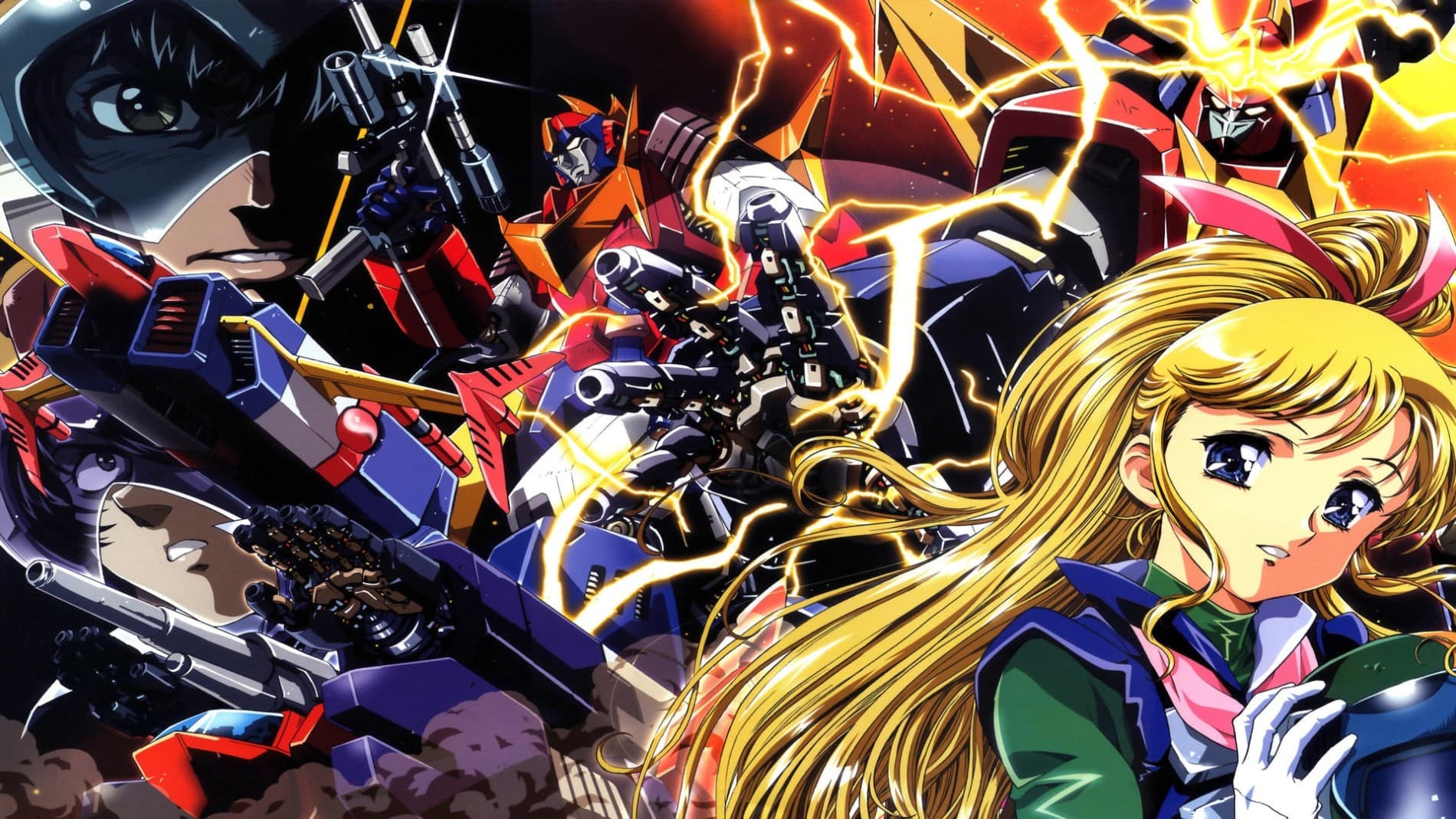

Please note, this review contains untagged spoilers for Muteki Choujin Zambot 3. I could tag spoilers, but this review would end up just being a big "Click To See Spoilers" box if I did that. If you want a spoiler free take on this series, I will say that it's an interesting insight into war and its effects on people caught up in the middle of it. It's 23 episodes long, and while some of those 23 episodes are repetitive, it manages to maintain a charming consistency alongside a very interesting narrative and enjoyable cast. Now, on with the actual review.
▶ VideoWhen I finished Zambot 3 just a week ago, I was utterly baffled. While I had completely expected the typical Tomino ending (albeit with one caveat I will talk about later), the confrontation with the main antagonist left me feeling wanting. There were a lot of conclusions reached that felt very phoned in, both compared to what came before and as conclusions to other ideas that had been built up by the anime. It certainly made me think about other ideas I hadn't thought of at the time, and maybe I just missed these on my initial watch, but I'm more inclined to believe there were production issues of some variety (especially given the prior content of the series and the odd episode count (you rarely see 23 episode anime even today)).
Zambot 3 is most certainly a bridge between the super robot anime of Getter Robo or Mazinger and the eventual real robot anime of Mobile Suit Gundam and Ideon. It's this connective tissue, delving into the more "real" concepts, things like the horrors of war and the collateral damage of it, while also maintaining an air of the super robot era, and even somewhat dissecting it. You can read Getter Robo and see all this death and destruction, but the heroes just keep on going forward most of the time (I'll be fair, I have yet to read Go and Arc at the time of this review). Obviously, I'm not saying Zambot 3 did this first, there was almost certainly a manga or anime that capitalized on these ideas before it, but it still acts as connective tissue in this way to Tomino's later anime.
It manages to weave a story of humanity's innate distrust of the supernatural and the odd- yeah, Butcher and his crew are evil and destroying cities, but isn't that the fault of the Jin family? They're the aliens, why should we trust them? The first two thirds of the show showcase this really well, nobody ever stops to thank the heroes, whether it be for the amount of damage they help cause or for misplaced blame. As the series goes on, even the main character, Kappei (albeit briefly), becomes disillusioned with their battle, seeing it as a just the root cause of all this destruction and death he is receiving the blame for. This public resentment also feels like it's tied into a theme regarding the public resentment of soldiers, as seen during the American-Vietnam war, though I don't know how deeply Japan feels about this concept, so it could be projection on my part.

But, as I alluded to earlier on, a lot of other ideas feel half-baked to say the least. In other Tomino anime, things like child soldiers and abandonment of moral compasses to continue fighting are ideas given a lot of gravity. Hell, his next two major anime, Ideon and Gundam (yeah, I'm shafting Daitarn 3 here), have a focus on both ideas, in particular the idea of child soldiers, so it's weird to look back on Zambot 3 retrospectively and see the same ideas brought up and used almost haphazardly. There's no real meat to the crew of the Zambot 3 all being children (though I'd love to read what anyone has to say on the subject), they just are.
This further ties into the ending itself. Zambot 3 kind of just ends, in a typical Tomino fashion. What I mean is, everyone left on their ship dies, and the two copilots of the Zambot 3 perform a kamikaze attack so Kappei can confront the big bad. Even the dog dies, it's a really horrific ending. But, during the confrontation, a lot of new ideas are introduced. The main antagonist was in reality essentially an AI trying to eliminate all evil lifeforms, like the race the Jin family is a part of and humanity in general, despite allying itself with blatantly evil people like Killer the Butcher. Despite approving of tactics like human bombs. It's very odd to say the least, and while I like the ideas thrown around here, and while there seems to be set up, it still feels remarkably out of left field.

And as Kappei falls back to Earth, he thinks on what the AI said to him, he thinks about the evils of humanity and if he did the right thing, which is a very interesting concept. His final lines, "Did we do it? Did we fight well? What we did wasn't a waste, right?" really tug at your heartstrings and push these ideas further, but it feels like there was supposed to be more. I don't want to assert ideas, I don't want to sit here and say "This was cancelled and Tomino should redo it", because if it was cancelled, Tomino likely would've just made a film duology to give it his preferred ending. I'm just left confused and wanting more from this ending, while also having a lot to think about in the aftermath. It was a good ride, I highly recommend it, and I hope to see more discussion on it in the future. I hope if you read this whole review, you have actually seen the anime, because I just spoiled all of it. If you haven't, I still highly recommend it, just know that you spoiled it for yourself.
Also, this is a plea for more /m/ friends please. I promise I will watch more /m/anime.
▶ Video