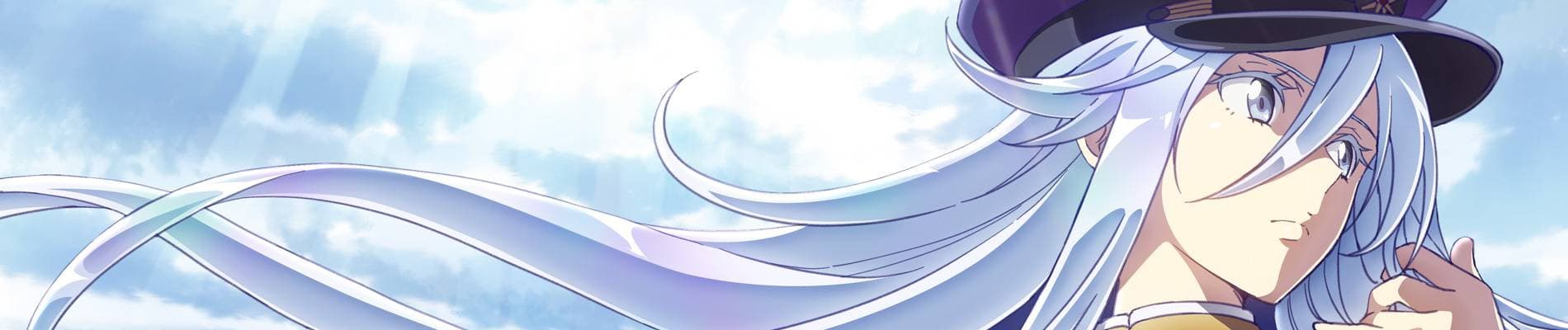
86 EIGHTY-SIX
a review by imrannasir16
a review by imrannasir16
I was browsing through the new releases for the spring anime season, and this show popped up on my radar, so I decided to do more research on it.
I found out the show is an adaptation of a light novel of the same name. But it wasn’t just any light novel. It had already received critical acclaim and many of it’s readers had professed their love for this story, as well as their seal of approval for the anime. Once I learned more about what the story was about, I understood how much potential the show had and I knew I had to watch it. A war drama with a compelling story, well-written and complex characters, as well as an intriguing premise seemed right up my alley anyway.
My interest turned into excitement, and once I finally got into the show, I knew I was watching something special. Having finished it now, I honestly believe that 86–Eighty-Six is an amazing rarity of a show, and it deserves a place among some of the best anime I’ve ever had the pleasure of watching.
Part 1: Characters
One of the first few things that struck me was how character-driven the show was. Normally war dramas or mecha shows have a tendency to rely a lot on action to sell a show to its audience, sometimes to the point where it’s a matter of style over substance. This isn’t that kind of show.
Here, action is used sparingly. Most of the scenes that take place in the battlefield don’t even last more than 3 minutes, and if I remember correctly, only 3 episodes had prolonged action scenes. Instead, most of the runtime is dedicated to developing the characters and showing their relationships and interactions with each other. The show is not afraid to slow down and show these characters living their lives together and showcase their bond. I could tell that the characters were always the focus when Asato-sensei first wrote the light novel, and that’s something I really admire and am very glad to see.

“I was the last one left back then, and that's how it's always been till now. That's why I have to take them with me. I'll take everyone who fought and died alongside me to my final destination.”
The leader and field commander of Spearhead squadron, Shinei Nouzen is a very stoic and enigmatic character. He generally keeps to himself (and his books) and doesn’t talk much to others. This can be attributed to what he’s experienced over the years. A battle-hardened survivor, he’s seen countless of his comrades die on the battlefield, and often he was the very last man standing.
As a result, he takes it upon himself to carry on and honour their memory. We see exactly what that entails in the 1st episode, and we can only imagine how that had an effect on Shin and his mental state.
Despite his quiet demeanor, he deeply cares about his squadmates and tries to protect them, often at great personal risk. It’s clear he doesn’t have much regard for his own life. But while it seems foolish and reckless of him to take on waves of Legion by himself, if anyone can come out of it alive, it’s Shin.
He may be one of the most skilled Processors alive, but still, it’s heartbreaking to see that someone who has already been through so much is cursed to bear such a heavy burden alone.

_“Even if we die, our Reaper will take us there. I know he will take me there, but... But then, what about Shin? Who will carry his heart?”
~ Kurena Kukumila_

Vladilena Milizé, or Lena, is Spearhead’s handler. A Major for the Republic of San Magnolia’s military at only 16, she acts as a commander and tactician for Spearhead.
Unlike most of her fellow Albas, Lena actually treats the Eighty-Six with decency. She is disillusioned towards her homeland due to the atrocities they have commited and genuinely wants to help the Eighty-Six survive and regain their freedom and dignity as she believes they should be treated equally as human beings.
Lena is steadfast and vocal in her beliefs, but also far too naive and idealistic. She tries her best to make a difference, but doesn’t realise she’s way in over her head.
Not to mention, because of her own privilege, she was painfully unaware of her own hypocrisy in the way she treats the Eighty-Six.
_“You think that if you just act nice and talk to us every day, that counts as treating us as human, don’t you? You’ve never even asked us for our real names!”
~ Theoto Rikka_
She comes to an important realisation that serves as a wake-up call for her. In that moment, Lena starts to grow as a character. She stops preaching about her beliefs and ideals to others,
and takes the first steps to form an actual meaningful bond with Spearhead, one built upon mutual respect and dignity.
Her position as handler brings her a lot of grief. Every death under her command, every truth she learns about the real world utterly devastates her. Despite that, her conviction to help Spearhead only grows stronger, to the point where she won’t hesitate to use unconventional methods to achieve her goals. She’ll do anything in her power to keep them alive, even if it means getting herself into trouble. That’s how much she cares.
Lena is growing into a competent and formidable commander, but more importantly, she is starting to affirm her beliefs with not just her words, but her actions. Her character development has been phenomenal, and this is only the beginning.

“I’ll fight...until the moment when fate finally comes for me.”
The side characters have their own unique personalities and stories that add to the show, creating a very endearing ensemble of characters. From Raiden, Anju, Kurena, Theo, Daiya and Kaie (to name a few), they each have their own charm and bring something to the table.
Even the two main Alba side characters, Henrietta Penrose and Jerome Karlsthal, are intriguing and complex, with a considerable amount of depth to them. They may be Alba, but you can tell they are disgusted by what the Republic had done to the Eighty-Six. Annette is also ridden with guilt and self-hatred, while Jerome laments the Republic’s fall from grace. However, they both feel that it's pointless to side with the Eighty-Six.
The side characters definitely don’t receive as much focus and don’t have as much depth as our main duo, but they fulfil their role as the supporting cast very well.
If anything, the show does a great job of getting you to particularly care about the Eighty-Six in spite of that, and that’s all thanks to the show’s exceptional writing and focus on the characters. It’s really a joy observing the squad’s dynamic and how the characters interact with each other, because while they are soldiers and comrades to each other, at the end of the day, they are also teenagers, and each other’s friends. The show does an amazing job of getting me to feel for them, to experience their pain, sadness and those rare, precious instances of happiness. It’s been a while since I genuinely cared this much about a cast of characters and was this emotionally invested in their journey.

Part 2: Story
_“The two fight, each on their own battlefield.
She fights against her tears.
He fights against his death.
They fight on, never seeing each other's faces.”
~ Asato Asato, 86–Eighty-Six Light Novel_
There are two sides to every story.
86–Eighty-Six follows Lena as she gets appointed as the handler of Spearhead squadron, and Shin as he leads his squad through their missions. The story constantly shifts between their perspectives, and we often get to see both Lena and Shin’s point of view on the same events. Their relationship develops over time and their interactions and dynamic are easily some of the best things about the show.
The show prominently features themes of racism and discrimination, shown particularly through the atrocities the Republic of San Magnolia commit against the Eighty-Six. Their dynamic is similar to that of Marley and the Eldians in Attack on Titan, but worse, considering that the Republic outright lies to its citizens about there being no casualties in the war against the Legion, let alone the fact that the ‘sub-human’ Eighty-Six are being used to fight that war as pilots for ‘unmanned’ weapons. It serves as a grim reminder of our own ugly history, drawing parallels to Nazi Germany or even more recently, Israel’s occupation of Palestine.
But as we progress through the show, we realise that things are not as simple or black and white as they seem.
As much as the Republic is painted as oppressors, not all of the Alba are bad. In episode 7, we learn that most of Spearhead have even had a meaningful connection with an Alba. Similarly, not all Eighty-Six are good either.
But despite the show telling us this, every revelation in the show has only taught us that the true extent of the Republic’s barbarity is worse than we thought. Perhaps this was always bound to happen.
“It’s a country of fools and villains, who executed Saint Magnolia for their own wealth and greed. What can you expect of them?!
_Humans were not ready to have freedom and equality, Lena. And I don’t think we’ll ever be.”
~ Jerome Karlsthal_
I really admire the level of complexity and depth given to the story, and this can really be attributed to Asato-sensei's decision to tell this compelling story of war and conflict from the perspective of both the Alba and the Eighty-Six, the oppressors and the oppressed.
“The world is cruel and merciless, but it is also very beautiful.”
The story of 86–Eighty-Six is one of tragedy and pain, and finding the will to move forward and continue fighting. From the very first episode, we are shown how cruel and unforgiving this world is towards the Eighty-Six. They were discriminated against, had their basic rights as humans stolen away, and were forced to fight a war that was based on a lie until they finally die.
But that cruelty only becomes fully apparent when we witness the first casualty on the battlefield. A casualty in a ‘war without casualties’.
As more and more of the Eighty-Six die right before our eyes, it becomes clear that it’s not a matter of if, but when these characters will meet their end. Death is not used as a cheap way to shock the audience, but is presented to be part and parcel of war. We see people die left, right and centre. And no one goes out in a blaze of glory or in some sacrificial standoff against the Legion.
They might have been caught off guard for a split second against their cunning enemy, or simply overwhelmed to the point of helplessness. In their last moments, they might have thought of someone they deeply cared for, shot themselves in the head to avoid dying at the hands of the Legion, or mustered the courage to admit to themselves: “I don’t want to die.”
As the audience, you eventually expect to see more deaths and try to prepare yourself for when the moment comes. But that doesn’t matter. Most of the characters who die aren’t even the ones you are meant to care for. Their deaths won’t make you emotional and burst into tears. But what makes their deaths impactful is their weight.
Every moment in the battlefield could be your last. Every soldier dies an unfavourable, ugly death. Peace can only be obtained through sacrifice. That is the harsh reality of war.
But within all that pain and suffering, there are moments of levity sprinkled between it all. Those simple, beautiful moments where the characters just live their lives together and enjoy each other's company. This contrast makes every moment of joy and grief, beauty and horror, all the more impactful.

They’ve been through hell, but I’m glad they at least had each other along the way.
The show also poses an important question. “Why do you fight?” Why do you continue to fight when all it brings you is more pain and suffering?
Lena fights for her beliefs. As for Spearhead:
_“Just because scum treats you like scum, doing the same makes you no better. If the only two paths are to die fighting the Legion, or die giving up, we’ll survive till the last moment and go down fighting. That’s the reason we fight. That’s the source of our pride.”
~ Raiden Shuga_
From a technical standpoint, the show’s writing and direction is honestly one of the best I’ve seen in an anime.
Some might find the show’s pacing a bit too slow or boring for their liking, and I can understand why they would feel that way. The show is a bit of a slow burn at times. However, it is also purposeful and methodical in its storytelling. It takes the time it deems necessary to develop and tell a compelling story with compelling characters, which I really appreciate. If you expected fast-paced storytelling and constant action, you came to the wrong place. Again, this isn’t that kind of show.
Because of this approach, the show excels at building up the story towards great emotional payoffs and climaxes at certain points in the story. In just 11 episodes, the show manages to achieve what most anime require whole seasons or even their entire run to accomplish.
The show is able to maintain the quality of storytelling throughout. The initial episodes were already pretty good, but with episode 3, I was convinced I was watching something truly special. And from that point onwards, the show still manages to improve with each passing episode. Every single episode is great in their own right, but even then there are standouts like episodes 7 and 9 (my personal favourites) where the show just elevates itself to a whole new level. The ending doesn’t quite reach the incredible heights of the earlier episodes, but as I’ve learned, that has something more to do with how the light novel was written rather than it being the show’s fault.
Speaking of which, the first cour only adapts the first volume of the light novel. In a world where many anime adaptations rush through or entirely skip critical parts of the source material, a show like this is a rarity. From that fact alone, I can tell that the staff at A-1 Pictures are serious about doing the story justice. The meticulousness that goes into crafting this adaptation is evident.
It was also a pleasant surprise to learn from light novel readers that the studio even added plenty of anime original scenes into the show to further expand on the story, especially the sections of the story which could have used more development. In fact, episode 10 is almost entirely anime original. The only aspect of the light novel that couldn’t completely be adapted was its detailed and intricate worldbuilding, which is understandable considering the time constraints of the medium.
Nonetheless, I do hope we get to explore the world of 86–Eighty-Six more in upcoming seasons, and learn more about how things came to be the way they are in the show.
Otherwise, it’s clear the production team are going above and beyond to improve upon the original story, and not just dish out a ‘copy and paste’ adaptation. I can feel their love and passion that went into making this show, and it really is heartwarming to see. Take note, this is how an adaptation should be done.
Part 3: Animation and Sound
A-1 Pictures really did a fantastic job with the show. The animation itself looks quite true to life. The colours are appropriately saturated and vibrant, while the lighting has moderate contrast with little exaggeration when it comes to the highlights and shadows. This makes the show feel rather grounded in reality. The character designs look great, and the show’s more scenic environmental shots look absolutely stunning.

The CG Juggernauts and Legion look great and blend in seamlessly with the 2D elements. The few action set-pieces are also well done and feel very fluid. After all, the studio has a reputation for making great action.
I briefly mentioned the show’s direction in the previous segment, and really, this is one of the rare instances where direction actually stood out to me in an anime because it was just that good. Toshimasa Ishii’s direction really manages to elevate every scene. There is great emphasis on showing and not telling in his directorial style, and with that comes great attention to detail. The characters’ expressions, and even their environment, can help to tell the story together with the already great dialogue.
And while the animation itself might seen unremarkable based on how I described it, Ishii and Masaharu Okazaki’s (director of photography) masterful use of cinematic composition has led to the creation of many beautiful and artistic shots, all of which were faithfully brought to life by the animation team.

Overall, Ishii was able to bring many elements together from the animation, storyboarding, editing, music, voice acting and sound design, and take every single scene to the next level. I’m not that familiar with his past works, but I am aware this is the first time he is in charge of an entire show as a series director. And wow, did he do an amazing job.
Of course, I also have to talk about the amazing score by Hiroyuki Sawano and Kohta Yamamoto. At the time of writing, the full album has yet to be released. But I have listened to the preview for the album, so I know which particular tracks were made by which composers.
I’m a huge fan of Sawano’s work on Attack on Titan, but personally I felt that most of his tracks in this show weren’t that special, especially the typical Sawano beat drops you hear in action scenes. However, I did love ‘8SIX’ which was featured when Shin takes on an entire group of Legion in episode 2.
What did impress me however were his hauntingly beautiful and melancholic piano pieces. The EDs, ‘Avid’ and ‘Hands Up To The Sky’ are also really amazing songs, and I loved hearing the melody for ‘Avid' being given different instrumentations and used in other tracks like ‘pianoVIIIVI-i’ and ‘Voices Of The Chord’.
The truth is, from the preview I actually enjoyed Kohta Yamamoto’s tracks more than Sawano’s. Yamamoto’s best tracks lean more towards subtle synths and mellow strings, which give a nice contrast to Sawano’s heavier, more sophisticated orchestration, electronics and percussions. But that is not to say that Yamamoto doesn’t have any tracks which are more bombastic and upbeat like Sawano’s. There is a huge variety in the sound he produced too.
Personally, I love the mellow strings in ‘同じ空の黄昏’ (Twilight In The Same Sky according to Google Translate) which also feels very reminiscent of Evan Call’s incredible music for Violet Evergarden.
Oh, and if you thought the amazing music used during episode 9’s climactic scene were done by Sawano, you’re dead wrong. (The track names are ‘hear my voice’ and ‘Alive Today’).
From my observations online, quite a lot of people thought that some of Yamamoto’s best tracks (such as those) were composed by Sawano.
It seems that Sawano’s name tends to overshadow Yamamoto’s whenever they work together, and probably for good reason, considering Sawano’s past works.
But after hearing Yamamoto hold his own in Attack on Titan: The Final Season, and his work here in this show, I have to say, Yamamoto absolutely deserves more credit as a composer. Put some respect on this man’s name.
Of course, my opinion on the score is so far only based on what I can remember from the show and the album preview, so it can only get better once I listen to the whole album and discover more tracks I love from both composers. But from what I’ve heard so far, the score for the show is already exceptional, and full of emotion.
Conclusion:

It’s been a while since I fell in love this much with a show. A show that is so depressing and melancholic yet within all that, therein lies beauty. A show that is able to do what any good work of art should do: make you feel something.
The first cour of 86–Eighty-Six is a masterfully told story. It portrays the struggles of war and themes of racism and discrimination in a way few anime can do, and tells a meaningful story of finding the will to live on and continue fighting through pain and suffering, be it for what you believe in, or simply for your pride. I really cannot recommend this show enough.
Should the team at A-1 Pictures go about adapting the rest of Asato-sensei’s story with the same amount of care and respect, the show is bound to only get better from here. I hope that in time, it might even become a true masterpiece.
Till we meet again.

37.5 out of 40 users liked this review
