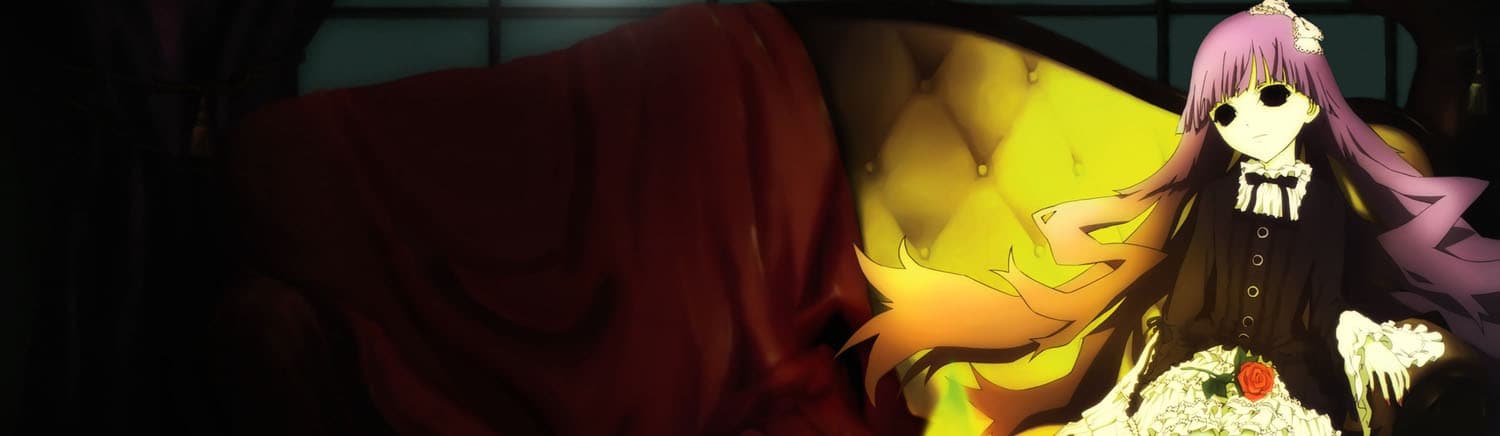
Lord Ruthven had been roaming the night for about 40 years by the time Capital made the metaphor explicit. Vampires are—traditionally—aristocrats and landlords, beings unable to create (produce), devoid of life, that can only exist through taking it from others. Class is as much a part of the myth as the garlic or the mirrors, and Shiki manages to follow up on the tradition with confidence to then put an interesting spin on it, all while telling a complex, engaging story and keeping the human element intact.
From now on, this review contains general spoilers. The show is good, you can watch in peace.

Hostility in the small town of Sotoba isn’t a consequence of bloodshed. It dwells in the fog, the water and the humid summer heat. Maintained by the same families over many generations and isolated from modern metropolitan life, it follows its own set of rules, imposing a role on each inhabitant. For those that don’t fit the mold, said rules—born of an ignorantly conservative lack of contact with the outside world—constitute a suffocating relational hellscape. For the show’s teen characters, it means alienation and a perpetual spotlight; calm but relentless criticism from an entire community. For the undead Kirishiki family, outsiders to the village despite their apparent wealth and foreign to its infrastructures*, it means the denial of their very right to exist.

Their condition is a secret to the characters, but not to the audience; a family of vampires living in a western-style mansion atop the village is basically genre canon and the show’s take on vampiric features is very traditional. Megumi Shimizu, an egocentric teenage girl with dreams of the big city and nothing but contempt for Sotoba's daily life, becomes their first victim at the very start of episode one. More deaths follow, quiet and seemingly unrelated, making for an early air of mystery as the village’s monk and doctor begin to investigate. The show uses its early stretch to paint a clear, detailed picture of the decaying town and its inner workings, not with the intention to scare, but to construct a physical space, full of real people that can operate both as individuals and collectives. It jumps playfully between giving the audience a bird’s eye view of the conflict and dedicating time to the character’s emotional response, adding extra weight to dialogue that always feels like buildup and payoff at the same time. The irregular flow of information and the high personal stakes make every exchange feel tense and suspenseful. Nothing is arbitrary, and it’s a joy to watch the pieces fall into place as Sotoba slowly gives in to decay. It’s never too dense, thanks in no small part to the presentation, which isn’t “horror” either, but a chaotic blend of street fashion, ridiculous hairstyles (the character designs are pretty much 1:1 versions of their manga selves), funky music and clinical exposition, all seen through dramatic boards that bring out the core of Dezaki anime through weird early 2000s digital-isms. It’s deeply strange, but it lets the show get away with the wild emotional shifts that grow in frequency as tension rises over the course of its 22 episodes.

After being forcibly exposed, the Risen (vampires) become the protagonists as Sotoba’s residents come together to try and hunt them down. The villagers’ methods are far more brutal and ruthless than the newcomers’ original plan. It’s a war of extermination and any doubt about who the real monster is vanishes as soon as the blood starts flowing. Vampires are looking for a place where they’re allowed to exist, but their mere existence is a tragic breach of rules that—to the villagers, anyway—are far too obvious to question. The new dichotomy is hegemony-minority. Most of the cast, living and undead, accumulates—knowingly or not—regrets and resentment over that small town conservatism, and it’s their relationship to that system that drives their development. It would've been easy for the people of Sotoba to collectively feed three vampires without losing anyone—the series' exposition makes it painfully obvious, it’d mean life for the Risen and a minor inconvenience for the village—but the idea was never on the table. For the vampires, being understood is unthinkable. For the villagers, accepting the vampires is blasphemous. People don’t really think about the roots of their worldview. It just makes sense to think it’s always been there. It operates on a scale so grand that it can become invisible; taking a literal bloodbath for the Risen, the minority, to become fully aware of the extent of their oppression. They’re not directly condemned by the system, but forgotten by it. Not punished, but completely erased from possibility. God remains silent, but does the silence even mean anything? Is he even aware of their existence? By the time one of the main characters comes up with a firm answer, coexistence is a distant ghost.
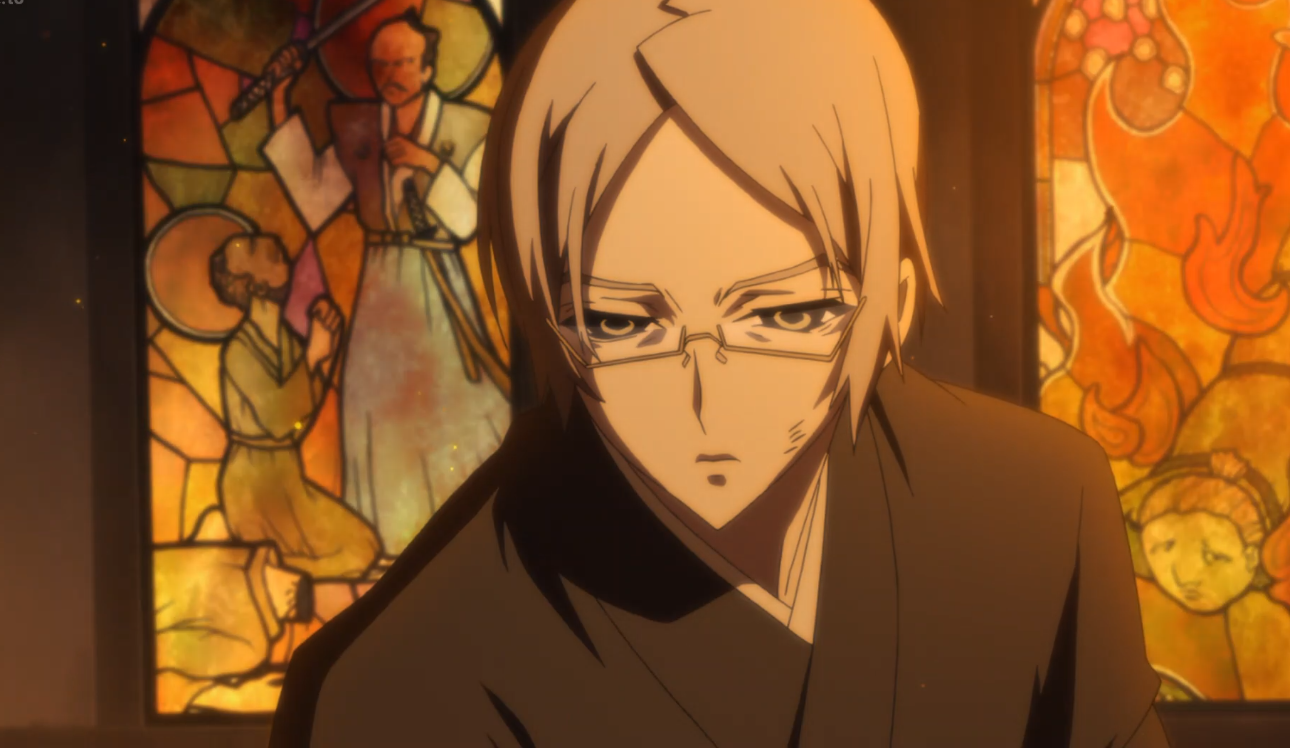

Shiki would need only a couple of stylistic adjustments to become the best version of itself. It delivers great mystery, tragedy and drama from beginning to end, playing into its pulpier elements while carefully expanding on its themes and weaving them into the characters’ personal stories, all of it punctuated by its sharp sense of pacing. Then, when all is said and done, it comes to a perfect conclusion. The final episode is both cathartic and clear about its stance: crime is a consequence of alienation and ostracism; punishment only breeds more hostility. A system that doesn’t account for your existence has no business judging you. Unless people shatter the illusion of natural law, the cycle will repeat until everything has turned to ash.
Definitely not applicable to any other context.
_____
Thanks for reading! You can comment on the review here if you feel like it.
34.5 out of 36 users liked this review
