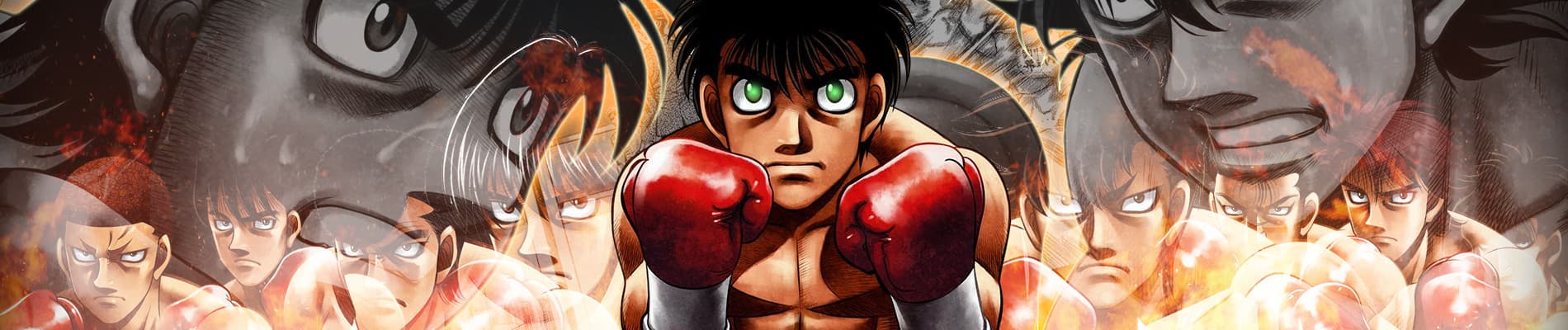


These words alone proclaim such a robust, yet genuine expression in the first episode of Hajime no Ippo. A subtle testimony, simple, yet effectively impelling, illustrating a young man’s relentless thirst for personal growth. As his own journey unfolds, evolution, discovery, and self-reflection become apparent, marking an experience that gradually embellishes his unrealized love for boxing. A sport where the stakes are aggrandized to higher quantities while evaluating one's existence… and most particularly, the spirit within.
George Morikawa’s story is simply a billet doux to Shounen, where each character is fully grounded in growth. Sometimes in a steady, uniform manner when it needs to be, and passionately energetic and strenuous when the moment is ripe. Although Ippo is the core of it all, the people surrounding him possess distinctive traits, because of what boxing means to them and Ippo’s influence towards their own goals, vice-versa. Even the side plots dedicate a remarkable amount of episode length to characters like Miyata, Sendo, and Vorg, showcasing their struggles, their means of achieving fulfillment, their differing perspectives, and their technical weaknesses, both inside the boxing ring, and when they’re not.
And within the heart of these athletes, all their motives diverge with one another, every intersection eventually setting foot within the distinguished ring. The most brilliant aspect of it all resides within writing that prioritizes impact over innovation and ingenuity. Ippo’s strive for greatness may seem simple, though overtime, you never realize how nuanced and significant it becomes until the day of the match. Each athlete becomes influential to Ippo and each other, more than what meets the eye. Albeit, What differentiates Hajime no Ippo from most stories lies within its aptitude to substantially highlight the consequences of attaining glory and eminence, making each match not only entertaining, but an opportunity to generate a source of investment from the viewer. Even when there isn’t a match on-screen, Ippo’s story transitions into a Slice-of-Life framework beautifully, by means of adding a dose of more interest or substance in characterization.
Comedic solace is arguably the production’s greatest surprise, as it manages to implement a sense of sincerity in character traits. Kamogawa’s gym members are supplied with chemistry that comes in many forms, manifesting in well-executed sentimental responses, Takamura’s over-the-top penis jokes, Aoki and Kimura’s lively voice acting, and Ippo’s cluelessness. Immaturity tends to gain a questionable response from viewers in most Shounen, but in Ippo’s case, it’s utilized as a product of appeal due to appropriate placement and avoiding stereotypical punchlines and gimmicks.
Aside from impactful storytelling, this tale has a breathtaking musical score, one that intensifies tension and recesses faintly when silence immerses one's attention. Usages of striking rock n’roll guitar riffs, catchy in-tempo drum beats sound incredibly authentic, bass reverberations compliment the tone, and the melodic chord progressions are just as affecting as the story itself. Although, vocal production is most noteworthy. Passionately expressive, brimmed with inspiration. Triumphant, yet poignantly crafted during the time of self-reflection. Ippo’s three opening themes are adrenaline-pumping, as if it was made to be the music as an athlete triumphantly marches into the ring, accompanied by roars, praises, and shouts of the audience that encircles them. In contrast, the ending themes naturally incorporate a melancholic sustenance, though the feeling isn’t overdramatized. “Eternal Loop”, Ippo’s final ending song, is a timeless tune that vividly describes the sensation of a boxing match and most admirably, the fighting spirit of an athlete.
Despite being produced in 2000, MADHOUSE is known for their international achievements. Aside from incredible sound production, Ippo has clean animating, where each punch thrown is pressurized by white, directive air, capitalizing on impactful movement, actual heavy-hitting jabs, and consistently detailed facial expressions, showcasing the heart-aching pain in each blow. The wisp of air fluttering time and time again, followed by merciless swings being thrown, is adrenaline boosting. Ippo’s fluid choreography oozes mastery, despite being an anime ahead of its time.
This story is the definition of "inspirational.” Reason being, it methodically structures the technical elements of boxing without getting carried away, and focuses on maintaining it every episode, essentially prioritizing coherency over shock value. Although unpredictability is sometimes sacrificed for this, predictable match outcomes aren’t necessarily a negative, more so a positive from a general perspective in Ippo’s case. The value of each match may seem to hold more value than one may think as the prevalent thought of defeat is more devastating than usual, due to the things at stake. Various topics like retaining one’s pride (or letting go of it), an obligatory win to improve the life of one’s mother, or a seemingly simplistic promise towards young children wherein one will buy each of them a prize if one obtains victory, bears more meaning than the accustomed stakes at hand.
Hajime no Ippo is a tale devoid of any pretentious shenanigans. Makunouchi Ippo’s journey in continuously refining his techniques, gradually building up his own fighting spirit, and understanding the lives of his friends and foes on a personal level, is wondrous. The relationships formed throughout are a method the production utilizes effectively to connect the viewer with each athlete. In Ippo’s world, sometimes the bully who tortured you during high school may later on develop into a significant source of emotional support. Sometimes your own opponent may be the only way of obtaining fulfillment. Sometimes the sport of boxing may put all the odds against you. Sometimes the sport itself may be immensely fear-inducing. Sometimes the amount of potential risks and sacrifices included may not be worth it in the end, hell, even the countless hours of hard work and dedication put in only to possibly sink in defeat…
Although, regardless of each possibility, individuals who enter the ring stand as a monumental art, a passionate form of liberation wherein one feels alive more than ever before.
"Then go and fight. Win against that man. The answer will come to you naturally."