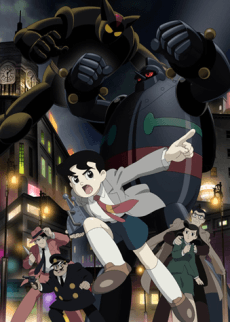
Tetsujin 28
a review by UsoEbbing
a review by UsoEbbing
Consider giving some time to the enigmatic Yasuhiro Imagawa's follow-up to his direction on the landmark OVA Giant Robo - The Day the Earth Stood Still. The underrated Tetsujin 28-go (2004). Tetsujin is the middle child between the grand Giant Robo and the more divisive Shin Mazinger Z. Not having the resources or energy to match Giant Robo or the rough, Go Nagai fueled insanity of Shin Mazinger Z, it falls back on Imagawa’s strength for storytelling that made his writing respected throughout his career.
This is a reimagining of the great Mitsuteru Yokoyama's groundbreaking manga and the anime adaptation that came to the West under the name Gigantor that codified the idea of giant robots in Japanese pop culture. It's anchored by its interpretation of the original child detective whiz kid Shotaro Kaneda. This Shotaro is a genius detective, marksman, better than the average driver of his care, martial artist, and whatever else you’d need a child private eye do. Imagawa's touch from how he challenges Shotaro's wits as a detective and his still undeveloped ideals. He's forced to grapple with the moral failures of his allies made in the name of winning the war and his responsibility for the massive Tetsujin's potential to become a destructive weapon in the wrong hands.
Tetsujin’s setting is a Post-war Japan that’s barreling towards its bright future through the powers of science and industry, but the war‘s aftershocks continue. The titular robot is the most obvious leftover from the desperate insanity that the war brought even the best of people to do. Shotaro is then confronted with a series of tragic and depraved individuals facing the consequences of their actions or manipulating the mistakes left behind for their nefarious benefit.
There’s more to Tetsujin than melancholy and war crimes. Akira Senju whose resume includes anything from Fullmetal Alchemist Brotherhood to the Japanese adaptation of The Magic Treehouse. His music evokes the optimism of the recovering Japan as well as the might of the titular robot. Senju's renditions of the OP and ED are arguably the definitive versions of those tracks
What will endear anyone to this anime are Takashi Nakamura's (who coincidentally adapted Akira's Shotaro Kaneda and other characters) designs. The cartoon charm that Yokoyama’s manga characters remain fully intact and even the robots have that early manga aesthetic.
The combination of all these creates an ambitious show that’s willing to take chances, even with the limitations of the budget. There are some minor blemishes (occasionally "economic" animation) and a weaker set of episodes after the show peaks around the late teens, none of it is enough to spoil the experience. It's a show that any fan of animation can find something to appreciate if they're willing to give it the time.
Check it out here on Crunchyroll subbed or dubbed.
Please, ignore the movie for your own good.
16 out of 16 users liked this review
