Wow.
Wow.
I know, it sounds okay: high schoolers, relationships, pretty standard, right? I saw a lot of positive buzz for this when it premiered in January 2021, so I expected I would like it, but it only took one episode for me to fall, hard.
It’s so well done: the animation, the story, the characters, the dub script, the voice actors.

What stood out to me was how the characters felt real. The joking, the teasing, the fake arguments that turned into real ones, it all felt like I was hanging out with my own friends.

How to explain the appeal? It’s a fantastic mix of humor and emotion. It’s not that Hori and Miyamura are trying to be people they’re not at school, it’s just that they have “public” selves and “private” selves. Hori isn’t faking any conviviality in the classroom, but she never volunteers that after school she’s the sole guardian of her kindergarten brother and takes charge of housework and mealtime. Miyamura’s presumed-gloomy demeanor is partially due to his introversion, but is also calculated to help hide his multiple piercings and tattoos that run afoul of strict school dresscodes.

So when they inadvertently let the other see them in their after-school state, and with Hori’s younger brother enthusiastically attaching himself to Miyamura, they get friendly. And soon, that spills over into school, forging new friendships in the classroom even as they continue to keep their non-school selves apart from existing friends.
And the friends get their own time in the spotlight! The narrative circle expands, first to Hori’s two closest friends, then the student council (who, contrary to normal anime narratives, are not evil or scheming), then to Miyamura’s contacts. And each time I thought, are we finally going to run into a problem? And each time I was wrong.

Because one of the things that impressed me most about Horimiya is the lack of villain. I think it’s worth a minor spoiler: there is no big climax where both protagonists’ private selves are revealed to everyone else. No, the main point, if there is one, is along the lines of accepting one’s public/private selves, and the potential for hurt–but also potential for connection–when you let chosen others see your private self, whether that person is a lover or a friend.
That’s not to say this is a series with no drama or tension. It’s a romcom, not one of those “iyashikei/healing” shows I detest where nothing happens and everything is gentle. But the drama and tension is mostly between decent people and other decent people who are struggling with a crush, or not reacting well to someone else’s actions, or figuring out how to handle their emotions because emotions are hard, dude.

Hori and Miyamura aren’t the only ones who have this public/private dichotomy, even if they’re the main focus. Friends Tooru and Yuki also get the spotlight on their own lives (as do almost every other named high school character, to different degrees), and if the Hori/Miyamura pairing is expected from the beginning, the other pairings–or ones that don’t happen due to other crushes or turning people down–might come as a surprise.

And the English version was amazing. Because while many of the themes and relationships felt universal, some of the things that came up were decidedly Japanese: characters differ in levels of formality when speaking, and refer to others by different ways–more than once the issue of calling someone by their last name vs. first name came up. There’s a character who refers to herself in the third person and somehow it worked in English to convey the character’s childishness, which just amazes me looking back. Kudos to the translator and scriptwriters for creating something that handled these concepts and aspects in ways that felt natural in English.
And on top of all that, along with all the feelings and fantastic story, is also humor. Despite how I waxed poetic about the more serious aspects, it’s also just very funny.

Verdict
English dub? Yes, and it’s fantastic. All the voices are great, but especially the title characters’. Absolutely amazing work.
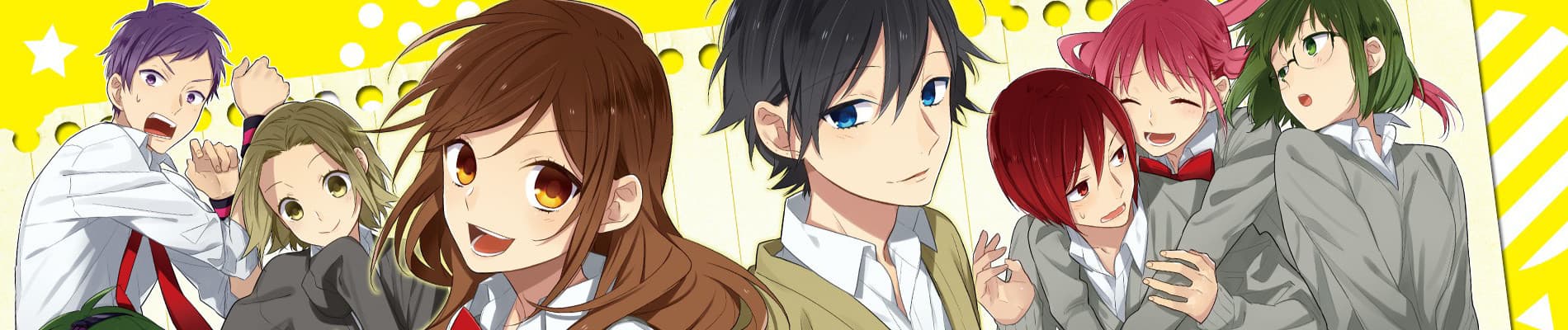
Visuals: Very pretty, clear lines, beautifully-animated character designs. All are distinct from each other, and the series as a whole was lovely to behold.
Worth watching? Yes. My gosh, yes. Complete at 13 easily-managed episodes, this is absolutely ranking as one of my favorite things I’ve watched in years.
I’ve now acquired the manga from my library (volume 15 of 16 came out in English in June 2021, so just one more volume until the entire series is available) and within a couple books, it’s clear that the anime cut a lot of stuff. And that’s not a bad thing: the anime creates a full story in its 13 episodes, and did so without making me think I was missing anything. Reading the manga now, I’m glad I can envision the voices, and I think it’s doubly fun because now I get to experience the story again, with extra content.
65 out of 86 users liked this review
