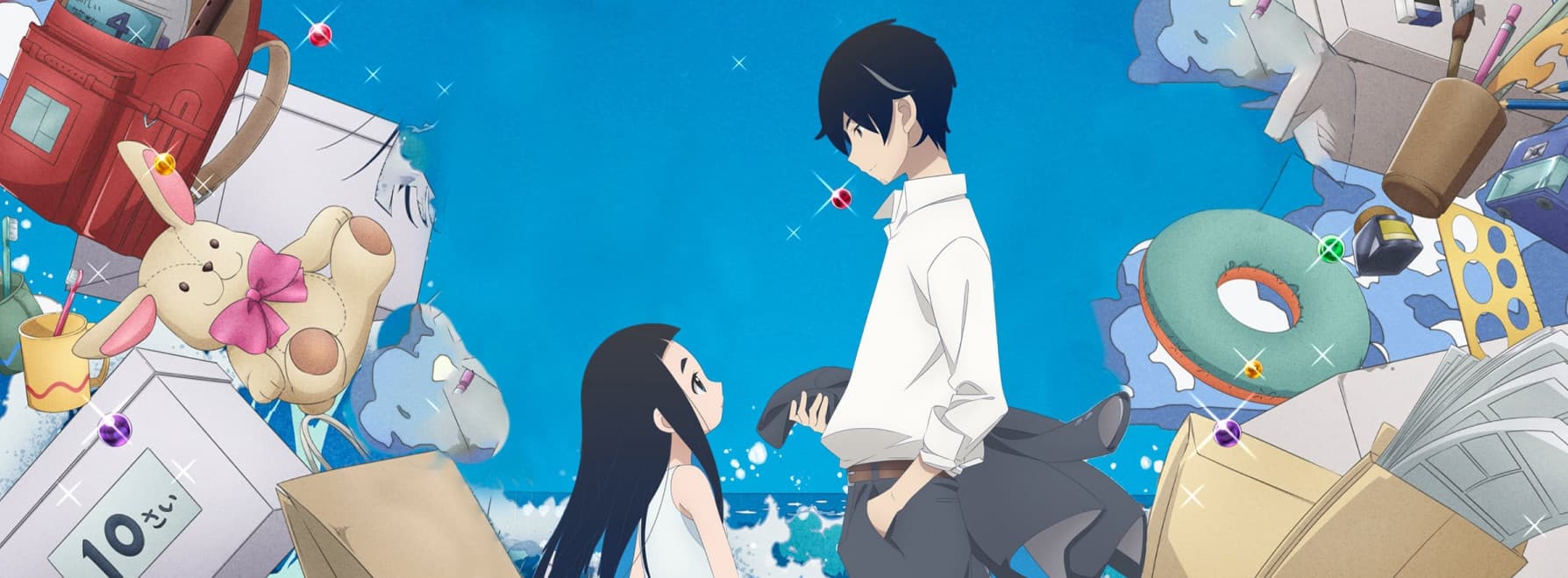
Kakushigoto
a review by Kalladry
a review by Kalladry

This was a recommendation from a friend, and I’m so glad that happened! I wouldn’t have picked it up otherwise, because I assumed from the description that a lot of jokes would be sexual in nature.
But no, the joke of the series isn’t that Kakushi makes his living drawing dick jokes, the joke is that he’s a bundle of overthinking anxiety bouncing between “my daughter must never be embarrassed” and “my art is crap” and “if I don’t learn how to fry chicken my daughter will never enjoy life” and “my art will never meet my expectations.”

(He’s very relatable if you’ve ever done any art whatsoever.)
There’s a definite wink-wink jokey feeling in the multiple bits that deal with the manga industry and artists: whether it’s attempting to use pencil sketches as the finished product because inking always takes something away, asserting that All Manga Artists are degenerates, explaining “it’s an editor’s job to make sure creators don’t get what they want” because creators given free reign will produce something with too-niche appeal, etc. Since the series was originally a manga, I’m assuming that the creator was having a great time spoofing his own job.
(Or, as a review on Anime News Network put it: “[That’s definitely the hook for the show. Come for the cute father-daughter bonding content, stay for [original creator] Kōji Kumeta roasting his own profession like he’s tailgating.](https://www.animenewsnetwork.com/this-week-in-anime/2020-06-04/.160228)”)

(Luckily for those of us not in the know about manga-as-industry, helpful voiceover explanations are built-in to explain the jokes, but in an intentional way that just adds to the humor.)
Kakushi essentially has two lives, and the series follows both: first, his professional life as a manga artist, run out of an apartment studio where he and his 4 assistants work; second, his home life with daughter Hime, an adorable and kindhearted—though somewhat airheaded—little girl whose father, as far as she knows, is a generic businessman who leaves the house in a suit and tie every day.

Kakushi is determined she have the best life, and that with the presumed death of her mother at some point in the past (we don’t get details until the final episode, but it’s clear early on that the mother is out of the picture and has been for a while), he does his best to make sure Hime gets all the normal support and events expected, even though society is set up to assume a 2-parent heteronormative household, which sometimes throws a wrench in his plans–like when he’s not allowed to take a cooking class because too many men were signing up to hit on the instructors.
And yet, Hime continues to be a happy, healthy child, and Kakushi continues to draw manga while refraining from murdering his semi-useless editor.

Verdict
English dub? Yes, and the voice acting is excellent, particularly as needed to convey Kakushi’s wild games of connect-the-dots. My friend watched the original Japanese, and said the English version did a great job matching the same tone.
Visuals: Pretty, clean lines
Worth watching? Heck yes. It’s a recent show (2020, with the dubbed episodes being completed only a few months ago) and complete (with a good, wrapped-up ending) at 12 episodes. It was extremely worth watching, very funny, with enjoyable characters. For all of Kakushi’s specific anxieties and jumping-to-conclusions about how something might affect Hime, he was a fun, smart, snarky character. Kakushi’s not alone–a lot of other characters similarly jumped to conclusions in very fun, comic ways.
There are a lot of jokes in the series, and hats off to the translation and writing team that had to make them make sense in English. The series does a good job explaining things when needed, and I never felt the need to look something up for more clarity. (At the same time, after finishing the series it was fun to read the Wikipedia page that explains how many character’s names are puns, something that just doesn’t work in English.
For example, “Kakushi Goto” is a double pun first on a word for secret (“kakushigoto”) and working as an artist (“kakushi-goto”). His daughter Hime’s name is another word for secret (“himegoto”), assistant Ami Kakei is word for cross-hatching (“kakeiami”), etc. A subtitle does explain the Goto puns in the first episode, but I forgot about that until now. Not getting those puns did not in any way lessen my enjoyment, though, since I found the show hilarious without them.
31 out of 31 users liked this review
