Sunny
a review by Togentokyo
a review by Togentokyo
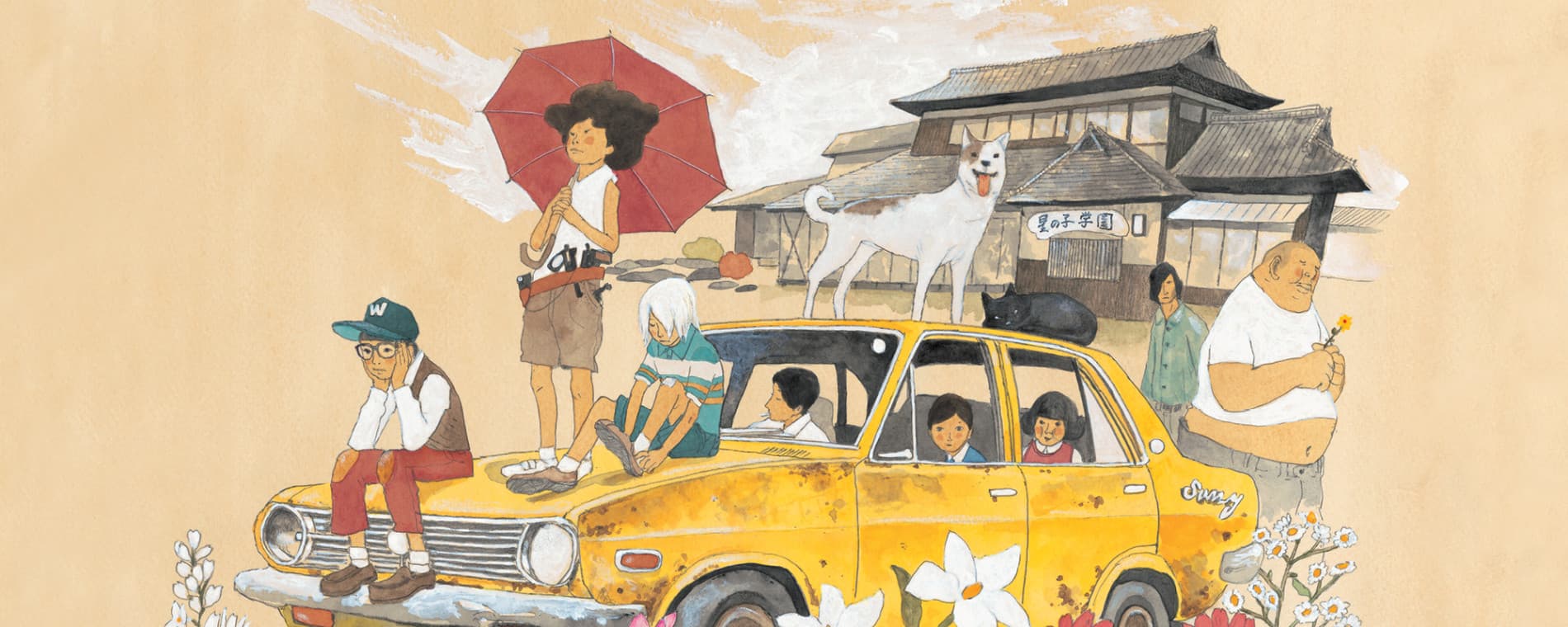
This is my second work from Taiyo Matsumoto and so far he has been absolutely stellar to keep up with as a mangaka, my feelings on Matsumoto have definitely brightened far higher than I could have imagined so alas, this will be my note on the manga "Sunny" by Taiyo Matsumoto. If there was one word to describe sunny then it would be "melancholic". The manga is about the journey of a group of children inside a chaotic family home and just one little Sunny 1200 at the centre of it all. The lives that permeate inside this rustic home are souls that were lost behind, discarded, by the ones society expects to nurture them into respectful individuals ultimately left to rot, fending for their very own existence. This is the world that "Sunny" thrusts you into, blaring itself into chaotic disarray from each panel onward entrusting you the purpose of finding maturity in such a disarray'd state of being. Now, let's meet each of the souls that inhabit the claustrophobic, yet merry home.
The first is Harou, he is a bratty child who causes large ruckuses and began instituting a terrible name for all his other "family-mates". He classifies himself as and all his fellow family-mates as "dumped" children who are simply a casualty of the undesirable of society. Though, this nihilistic outlook on life is a simple little lie formed by a deeply distraught boy. Through this inattentive persona, cracks begin to form displaying a truly proper image of him; a boy desperate for his family to re-unite once again, trying to shed tied with the ones he has currently. That is his truth, his instincts for his family is given a personified material in the form of the Nivea cream that his mother gave him. That animalistic instinct to re-unite with the ones who don't even want you is what makes this manga so deeply heart-wrenching. His character conclusion is so fitting for an individual who finds semblance in dis-semblance.
Our second main character is Sei, the newest child to join this foster family. His affection towards books and academia make him an inspiring figure who soon realizes that life is not just about the presence of persisting into greater heights through the world of academics. Sei is desperate to go back to his only known method of life, always being discouraged by Harou, who begins to comprehend the absolute state of their existence; that they were dumped. A beautiful bond arises through the perilous challenges they conceive due to their social standards. Once the two who hate each other, begin to find heartwarming brotherly love through their odds with such a tilted society that views them as "hopeless". Yet sei never stops, he still searches for his family, trying inconceivably hard to have that life he wanted, hating the comfort provided by his family home knowing fully that nothing, not even his parents can cast such an affectionate shine.
Lastly, we meet Kenji, the final of the three main characters who we are confronted to in this narrative. He is a bright young boy, filled with tenacity hoping to be able to reach higher peaks in life, unfortunately, muddled down to the depths of despair because of his alcoholic father and inattentive mother. The consequences of being born and setting aspirations become an unfortunate obsession to him, he thinks "why was I like this? Couldn't I have been a fucking sushi chef?". Here we begin a descending into anarchy as he begins to imbue his slothful father to raise himself up, yet always failing to do so. His story, while not as tumultuous as some of the lesser side characters, is significantly harder to ignore. In the end, Kenji is my second favourite character in the series right behind Harou.
Those are the three main characters but the manga masterfully uses the lives of all the characters to draw connections to the themes of: loneliness, negligence, disorientation, dis-satisfaction and escapism. About the artwork, I was definitely put-off by the wacky character designs and unequal facial structures but it begins to grow on you. The almost "watercolour" texture of Matsumoto's artwork permeates through the volume artwork and intricately woven single panel layouts that often depict landscapes. Unlike the recent work, "The climber" by Shinchi Sakomoto which is intended on generating harrowing portraits of the human and mountains In order to stay realistic, Matsumoto uses a far different art style accomplishing a fascinatingly similar affect. The claustrophobic panels and chaotic spreads breathe life into the realistic tales of all these individuals utilizing a completely unrealistic art style.

Lastly, the term for whence the manga's name comes from, the "Sunny". The "Sunny" for all these tattered individuals holds a beautiful value. For Harou, it's to enact adrenaline-filled action sequences, to Sei it's an eloquent method to practice the route back to his parents so the he never fails to remember the route for his "paradise", to Mugumu it's a gentle reminder of the car her parents owned before their unfortunate death, to Junsuke it's an escape to seek self-pleasure through porn magazines and lastly to Kenji it's a silent escape from this discriminatory society. That is what the sunny reminds all these people and that is the world which we view them, beautifully cathartic in all it's presentation, Matsumoto knocks it out of the park once again.
Overall, should you read "Sunny"? You should, this story is about a rare spotlight on the individuals we discard in society, the ones who silently face so many inequalities and having no figure in their life to share their inconceivably tough lives. Taiyo Matsumoto is a master at character dramas, being able to evoke some of the most human images to ever be illustrated on the pages of manga, yet what can he not do? Please read this manga, it's quite great.
20 out of 21 users liked this review
