
To Your Eternity
a review by Magenta
a review by Magenta
I think that I speak for a lot of people when I say that the day that the first episode of To Your Eternity released, the emotions that it managed to draw out in most of us was very unexpected. In the realm of repetitive seasonals that show the sheer uncreativity of the anime industry on full display, To Your Eternity managed to stand out from the rest by telling a very resonant story in just the span of 25 minutes. It is an extremely rare sight to see something with such a limited timespan make a sizable portion of its viewerbase break down into tears. The only other episode off the top of my head that I can think of that I can compare it to is Violet Evergarden Episode 10. Out of nearly any anime that I have seen, To Your Eternity was one that easily made one of the best first impressions. It is very easy to see why it gained so much attention by just the first episode. However since then, To Your Eternity hasn’t really captured the same amount of attention as it did in its premiere. It isn’t like it was no longer popular after the first episode, but it never managed to spark the same type of emotionally driven passion in the anime community as it originally had. To Your Eternity after its first episode never really captures the remarkable impression that it originally left. There are still moments of the series that capture the quality of that first episode, however those moments of brilliance stand alongside ones of pure mediocrity and ones that are completely baffling. To Your Eternity is inconsistent to an astronomical extent, and it is honestly a remarkable feat that it even manages to encompass so many different realms of quality.
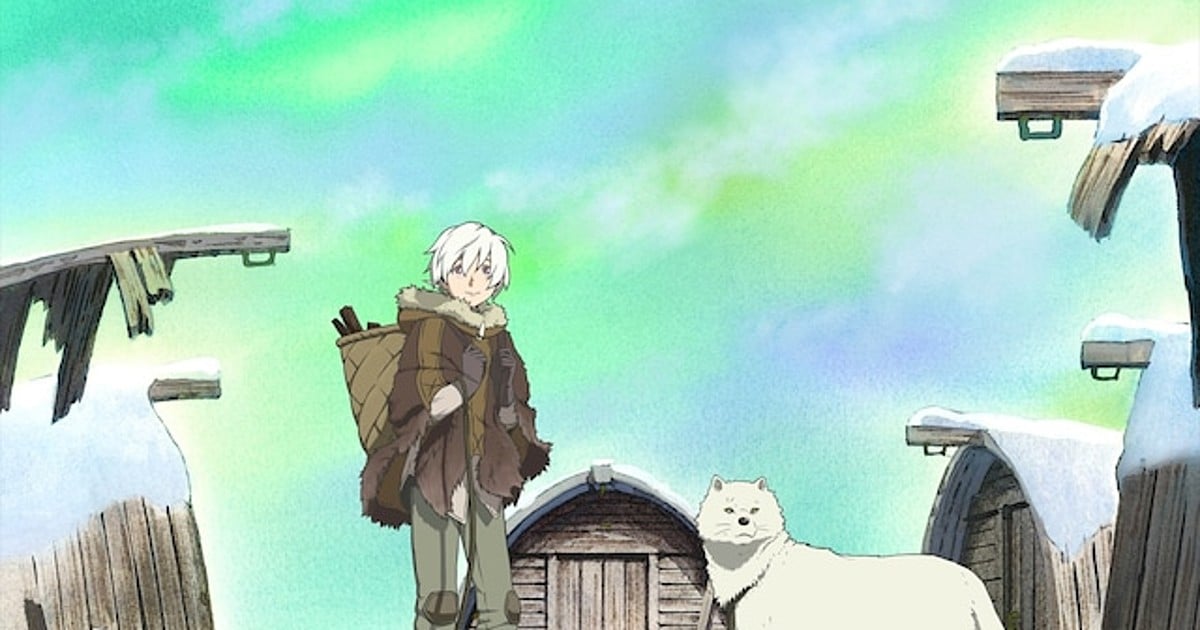
The first episode is definitely a smart way to start the series. It isn’t exactly dishonest about what the strengths of the series are, but it manages to frame itself in such a way that it makes its biggest weaknesses basically invisible. The first episode manages to be so strong, because the biggest strength of the series is its ability to create extremely sympathetic characters. It is a strength that the creator of To Your Eternity, Yoshitoki Ooima, has demonstrated fully well in her most prolific work, A Silent Voice. Ooima’s character writing makes the protagonists of her stories feel extremely likable and relatable to the audience in their introductions, which she eventually uses to create extremely heart wrenching emotional payoffs. The first episode of To Your Eternity is possibly the most distilled version of her version of a character arc, since it manages to fit in the initial characterization for the unnamed boy and the final emotional payoff in a singular episode without feeling at all rushed. With how tight the first episode’s narrative is, it sets high expectations. Maybe even a bit too high.
Now, when I say this, I am not saying that the arcs that succeed the first episode don’t have good character arcs in them. As a matter of fact, I’d say that the arc that comes after the first episode, the March Arc, has just as meaningful of a story as the one told in the first episode. The thing that drags the arcs down compared to the first episode is that every single story arc (which includes the first episode) has about the same amount of material that they want to say. Despite this, each arc gets progressively longer as the series progresses. This means that the watertight narrative that helped the first episode thrive gets generally lost as the series goes on. At the end of the day, To Your Eternity tells simplistic stories with simplistic characters, which is fine, but the length of each arc fails to compliment this. It isn’t really helped that each story arc typically only really contains one character arc in it along with the greater arc of Fushi, compared to the multiple arcs contained in a story like A Silent Voice. The series increasingly has to stretch itself more and more thinly as it progresses, eventually making each arc feel more sluggish, eventually culminating in the absolutely godawful pacing of the Jananda Island Arc. While the increasingly sluggish pacing of the story arcs isn’t inherently the most awful thing at first, the ways that the series tries to relieve that pacing with padding spawns a whole new cavalcade of problems that way down that later parts of the series even further down into mediocrity.
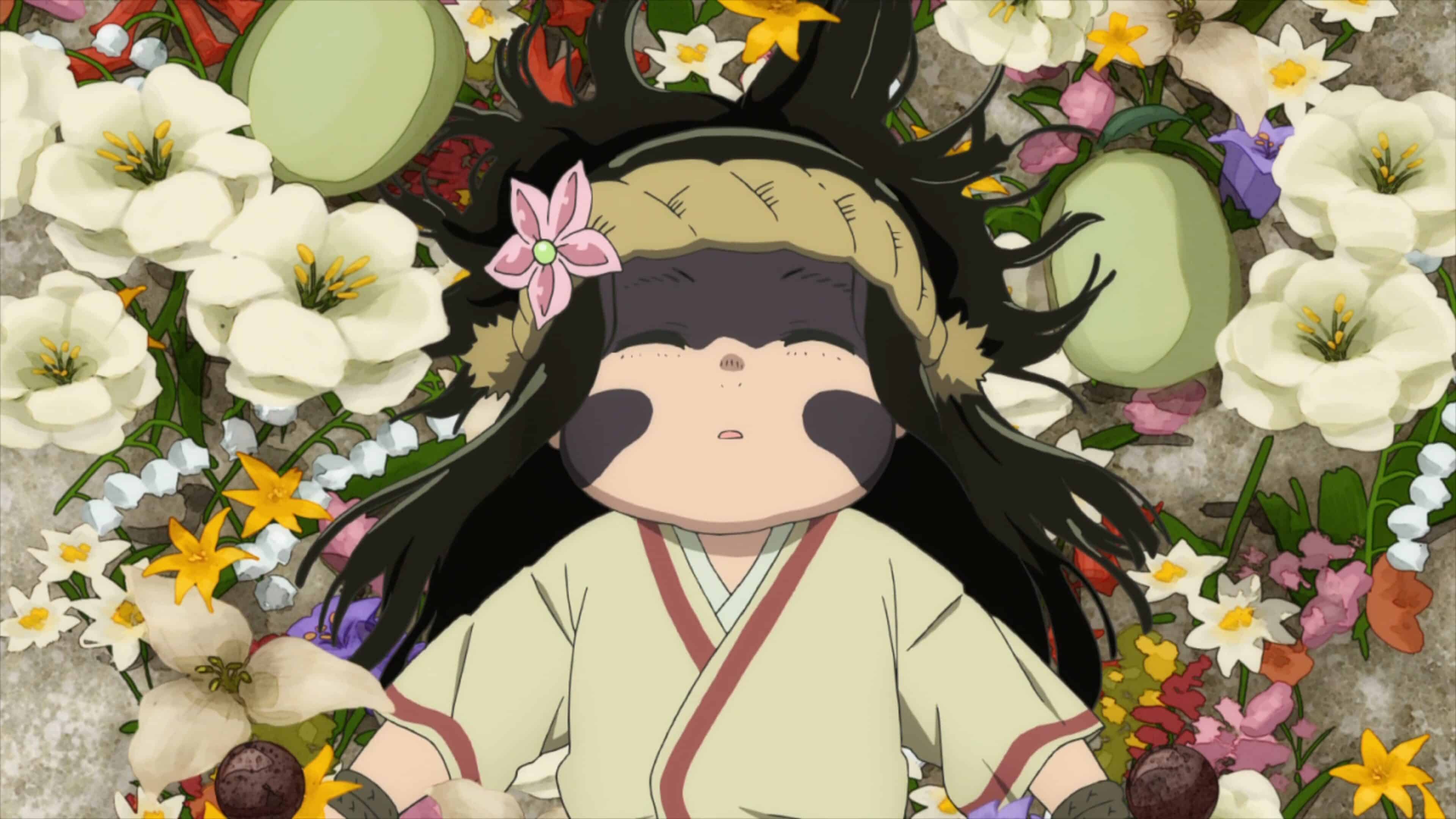
As I said before, the March Arc’s story is one that is just as strong as the one told in the first episode. Compared to the first episode, it is only weighed down by the lack of multiple character arcs being told and the slower pacing. However, the arc is brief enough for it not to really be a problem in the grand scheme of things. It is the Gugu Arc where these problems start to really become noticeable. While Gugu’s story on paper should be a grand slam, it is also when the problems of the length of the arcs starts to work massively against the series. Out of all of the arcs, the Gugu arc definitely shines the most in the initial characterization phase of developing itself. Gugu is a very well developed character in the time that he has, and that is thanks to great dialogue scenes that flesh out his relations with the world around him. However, the emotional payoff ends up getting botched due to previously built up problems over the course of the arc and the fact that it felt more coincidence driven than emotionally driven. The series kept stopping itself with speed bumps of varying degrees that make the arc feel more dragged out than it really has to, this arc introduces a physical manifestation of the problems that this series has, the Nokkers. In a story that should be driven by its characters, the Nokkers being a literal emotionless husk used as a plot device to either add a fight that just pads for time or as a way to cheaply progress the plot completely spits in the face of ethos of the character driven story that the first episode built the series on. However, the Gugu arc only really provides a small glimpse into what the seeds of To Your Eternity’s problems would truly grow into compared to how much it affected the Jananda Island Arc.
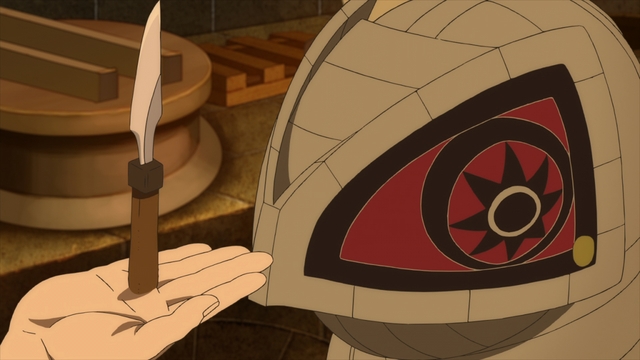
The Jananda Island Arc is an anomaly compared to the rest of the show it is attached to. The arc’s very existence confuses me in a series like this. By the Gugu Arc, I would assume that the strengths of the series have already been very well established. It should’ve been well established even way before To Your Eternity even started to serialize based on what A Silent Voice accomplished. However, the Jananda Island Arc is at a lot of times the antithesis to what makes Ooima’s writing work so well. The main cast of the arc is expanded to the point that none of the people that we are supposed to care about in the arc get enough time to get fleshed out so that we care about them. It feels like, for the most part, the main characters of the Jananda Island Arc aren’t as complex as any other main character of other arcs. This leads the emotional payoff to completely fall flat, since I really don’t care about what are effectively cardboard cutouts with notes written on them that could potentially be seen as character traits. The only mild exception to this is Tonari, who out of any non-Fushi character gets the most development, however she can’t get a proper emotional resolution due to being drowned out by all the white noise masquerading as actual substance. Hayase is brought back from the March Arc, but instead of her just representing an oppressive system that is difficult to escape from, she is turned into one of the most baffling one-dimensional villains that I have ever seen. There are honestly so many problems with the Jananda Island Arc, that naming all of them would make the review so long that it would seem like I was rambling. For all the small and big problems with the arc, the one throughline for all of the problems is that there is an absolutely callice disregard for how to actually develop characters satisfyingly and for what the strengths of the series actually are. What truly puzzles me about this arc in particular is that I can’t think of a reasonable reason as to why the series would end up with such a stand out section of it. It isn’t like this series needs to experiment to succeed since the general formula it set up for itself was so versatile. I really don’t know how the series that produced the absolute slog of these 7 episodes also made the incredible beginning of it.

Thank you for reading to the end of the review if you did. I really appreciate the willingness some of you have to get to the end of a review that probably disputes your own opinion. If you have any criticisms with how this review was made, you are free to message me to critique what I had to say.
Also, please don’t like or dislike the review without reading it.
317.5 out of 394 users liked this review
