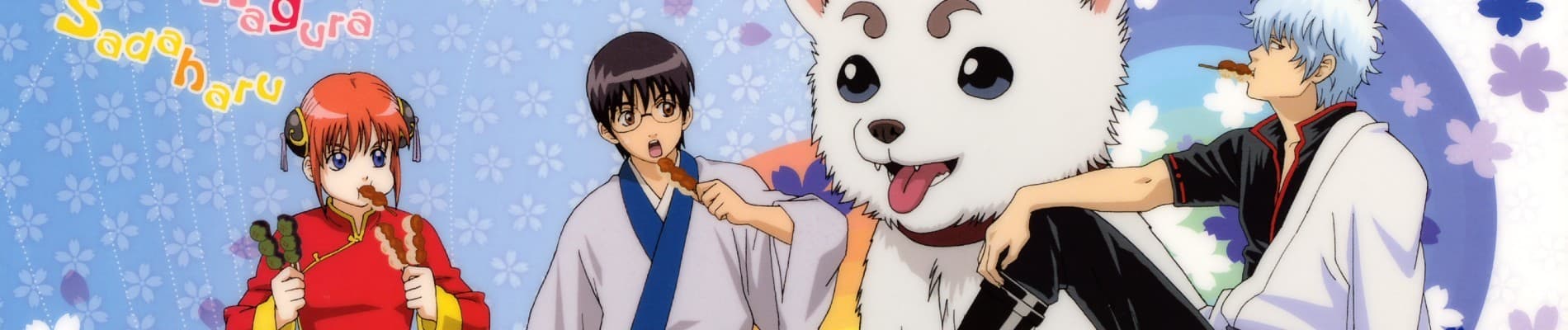
Gintama
a review by EpicSponge101
a review by EpicSponge101
This review will contain no spoilers unless further warned, and only cover season 1 of the show.

Gintama was a series I had incredibly high expectations going into, anticipating battles and victories to rival the other Shounen greats-- which wasn’t quite what I got. Yet somehow, it was equally beautiful. To set the stage, Gintama is a comedy at its most core element, with the occasional emotional moment or even more sparse battle Shounen arc. The labels here don’t really matter, though, because what Gintama has in spades is soul; which is ironically a recurrent thematic motif of the series. Through some of the cleverest comedy I’ve seen in anime, and some fantastically melancholic to heartwarming plotlines, Gintama manages to catch a balance no other show quite can. This gives the show a sense of heart and soul like no other, making for an incredibly memorable experience beloved by millions. Of course, charm and comedy isn’t the only thing the show has, there’s plenty of serious arcs and amazing character development sprinkled throughout. However, the only issue is people go in expecting the show to frequently be this, or this to be the main appeal-- and it’s simply not. Perhaps in later seasons that ramps up, but the first season is a gag-driven comedic bombshell, and should only be viewed with that intent. Otherwise you will be sorely disappointed, as expectations often make a show like this for many. Before I get into the meat and bones of this review, I’d like to note Gintama is a show of gradual appeal. If you’re like me, you’ll probably hate it at first, but it’s truly worth sticking. You’ll slowly see your complaints evaporate over time, as the author improves and confounds upon his writing ability.
For a little background on the setting, Gintama takes place in Edo, Japan, the land of the samurai. Well, what was once the land of the samurai, as a new-age Amanto(alien) government takes over and integrates far more futuristic technology into society, winning their war against samurai and banning the way of the sword. So, we follow a post-war veteran bum who refuses to pay rent and uses kids to make money doing odd jobs-- Gintoki Sakata. Despite Gintoki appearing to be such a worthless person, he makes many friends and earns a large amount of respect for his character-- mostly due to a shining samurai soul that guides him in life. That’s neither here nor there, however, as the basic point is we follow a samurai in a world evolving out of such times. This creates for interesting conflicts between samurais of the old age and the new age, naturally leading to political intrigue for the viewer, even if our main character usually takes a passive stance on this matter.

Gintama comedy is a wide array of things depending on the episode, though it is usually character-driven. It dabbles in many things such as absurdism/surrealism, meta humor, black comedy, sentimental comedy, romantic comedy(kinda), word-play, spoofs, blue comedy, deadpan comedy, and gag-based comedy. This wide array of comedic styles keeps the humor from getting stale across 201 episodes, as they constantly evolve the formula and mix styles. The show’s ability to construct creative situations for the characters to interact in never fails to impress me, as it's fun to watch an episode’s core recurrent gag evolve to get funnier and funnier every time. On this note, most episodes have a satisfying comedic punchline to subvert the expectations of the viewer at the very end. Now that I’ve explained why I generally like the comedy, I’ll get into the specifics that I think are notable.

One of the most memorable things about the show is its wide array of vivid and unique characters, each subverting their own molds or evolving their formula throughout the run of the show. This strong, lasting characterization is part of what makes the show have such an abundance of heart and sentimental appeal. I would be a liar if I didn’t say the cast captivated me, and the execution of each of their arcs is sublime-- noting the fact they are mostly un-concluded by the end of season 1, however. Now, for a more thorough analysis, let’s look at one of my favorite characters in the show-- Yamazaki Sagaru. He is an incredibly minor character without much relevance in the grand scheme of things, but characters like him are the roots of the show’s success. His contributions to the show are of an indescribable flavor, as he meshes in with the rest of the supporting cast to make a phenomenal experience. For the character himself, he plays the role of straight-man for the Shinsengumi which is sort of its own sub-cast within the show, with the occasional subvertation of this expected role. He gets into various bizarre situations throughout the show, and as a straight man, he usually reacts and calls out what is happening-- which is generally entertaining, and fortunately not patronizing to the viewer with this character. We see him form relationships with the other characters adding to his chemistry, as he forms a kinship with Shinpachi(another straight-man) and is constantly the punching bag of the Shinsengumi. Each individual episode focusing on him expands upon this existing dichotomy with other characters, gradually developing not only Yamazaki himself, but the comedy over time. In arcs like the Popularity Poll arc, we get to see his character expand from just another straight man balancing the cast to a vivid and memorable character of his own. It's hard to get into specifics without spoilers, though.
Now take this basic concept of development through comedy and apply that to every minor and grand character of the show, as they all begin to flourish in the latter half of the 201 episodes. I mean it when I say almost every character experiences this in some way as well. Along with comedic growth however, there is a single baseline for every character-- the recurrent gag, or in more primary characters several of these. Yamazaki plays tennis; Hijikata likes Mayo and cigarettes; Gintoki likes sweets and has curly hair; Kondo is a stalker gorilla; Shinpachi is nothing but glasses; Madao is nothing but glasses and also homeless, and ect. My point in case there was to highlight each character has a central motif that separates them from the rest of the cast, bar the overlap of Shinpachi and Madao. Even that is used to great effect though, which I’ll get into later. Anyways, these gags get more complex over the runtime and are boosted by creative situational writing. They shockingly almost never get stale bar a few episodes, and are constantly innovated upon-- and when a joke has thoroughly run its course, it's replaced with something better. So, in essence, the development through comedic evolution and the constantly recurring gags are what make the cast truly special-- plus the consistency of such development to even the lower levels of the cast.
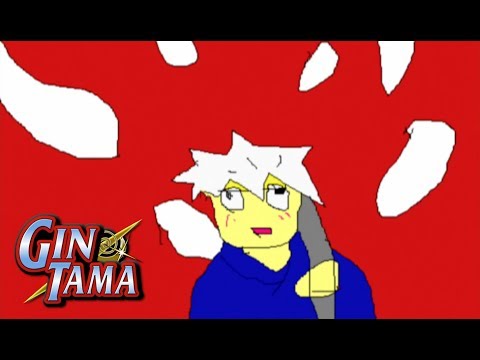
For absurdist humor, it’s just another testament to Sorachi’s creativity in his art. The bizarreness of some of the comedy within itself is general enough to make one laugh, but this is fortunately not over-used and is constantly compounded upon by other forms of humor. Usually the punchline of a joke, or the evolution of a joke over an episode, is what breeds Gintama’s absurdism however. For example, we go from a simple episode where the gang catches colds to a character absorbing all of the colds and becoming the being known as “Ill Smith”. We get to see the gang get abducted by aliens and turn into screwdriver people, having to force themselves to accept it and take up driver-related jobs with melancholic music playing for the better half of an episode. The constant influx of borderline ludicrous ideas at play never ceased to shock me, and I was thoroughly entertained every time the show tackled this sort of comedy. On this note, however, it made it even more disappointing when Gintama did eventually fail. Like the episode where Hijikata and Gintoki get handcuffed together falls into the most cliche, boring comedy a show like this could ever produce. Anyways, the video above is another example of this-- yes, the MS Paint OP is official. What a beautiful idea.

Gintama has mastered the art of parody and reference, being a celebration of anime culture while simultaneously being an integral part of it. It constantly makes fun of tropes you would see in a different genre of show, deconstructing them while executing them perfectly. To bring up Hot Fuzz again, it manages to parody shows while managing to be a good version of said shows within itself. If Gintama parodies a romance, it will not only thoroughly make fun of and subvert things within said genre, but it will also be a convincing romance within itself. That is the key to the parody in my opinion. The goal is not to point and laugh, but hold hands and laugh, it just creates for a better product all around. As for the referential aspect of this, Gintama manages to go as far as referencing semi-niche things like classic ecchi such as To Love Ru, while making jokes everyone can understand and appreciate. This is essential for proper and non-pandering reference humor, I believe. It's a general principle the show follows as well, with some episodes such as Hijikata’s tobacco-filled adventure to a DBZ universe parody being a fan favorite, even for those who haven’t watched DBZ. If a joke is made that involves outside knowledge of a franchise, there will almost always be a secondary joke to make up for some viewer's information gap, or at the very least it will be brief. I would also like to note the wide range of parodies Gintama performs, I think it’s great.

“Whether I go or not, I’ll die anyway. I have an organ more important than my heart. Although you can’t see it, I feel it going through my head down to my feet, and I know it exists within me. It lets me stand on my feet, it lets me walk forward without trembling. If I stop here, I feel like it would break… My soul will break.”- Gintoki Sakata.
Gintama, at its core, is about standing up for your own personal values and protecting what matters most in life, whatever that may be to you. Usually for the characters in the show, in a semi-cliche way, this is their friends and family. This is simple in concept, but it is portrayed beautifully on multiple occasions throughout the many episodes Gintama harbors. A common motif is that the soul is what a samurai consists of, depicting samurai as devout beings who take up swords to protect what’s important-- usually being their country, friends, or moral code. Those who are truly beautiful and said to shine brighter than any other are those of our main cast, who exhibit traits of compassion and empathy on multiple occasions. My favorite example of this would be in episode 188, where we see Madao throw away his own chance to get out of the hellhole his life is for the sake of reconciling a broken family. I won’t spoil it, but that episode is a comedic and emotional masterpiece that perfectly conveys this theme. Anyway, though this is the core theme, Gintama manages to use its many storylines to convey other purposes depending on the episode. It tackles stuff like growing old, secular devotion, loss of self being cowardice, and the new generation overtaking the old. All of which is delivered to various degrees of impact and success, across various characters. I look forward to seeing how this is compounded upon in later seasons especially.
I touched on how samurai’s souls “shine” in the paragraph above, however, I didn’t go into specifics-- which I would like to do here. For example, our main character Gintoki Sakata shines because he represents the present. He lives by his own rules; he doesn’t conform to society, nor does he fight it unless it hurts what he needs to protect. This is in stark contrast to a character like Takasugi who remains constantly caught up in the past, never moving forward and constantly fighting for a battle long lost. Then, for another layer, Katsura’s philosophy of change without violence directly contrasts Takasugi’s more volatile methods as well-- which I really like. I enjoy how every character has their own justified life view and philosophy, employing various methods to cope with or change the world they live in. Of course, to complete the set, I would be remiss to not mention Sakamoto who looks toward the future and accepts change. So, in essence, that is what makes the concept of samurai in Gintama special.

The production of Gintama is slightly befuddling; it is quite different from any other show I have seen. The budget is low, the animation is cheap-- but this often enhances and accentuates the show, leading to fantastic visual gags or meta humor. Not quite to the level of something like Cromartie Highschool, though. The show will constantly reference its own production and things surrounding that field, making fun of things like the show remaining in 4:3 ratio despite that method being outdated. The show even deliberately admits to stalling for time with skits like Gintoki being paralyzed and unable to move, mostly so they don’t have to animate it and can just use voice acting-- which really exhibits how limiting what one can do can lead to creative solutions. On this note, it would be good to transition into the voice actors, which fit their characters perfectly. Every cast member has a decent range of emotion and sounds like you imagine their characters would, which is a huge plus. You’ll have likely memorized some of the voices by the end of the show. This is referring to the sub of course, considering the dub is incomplete. The OST bangs as well, incrementally getting more memorable as you hear certain tracks play during certain scenes. They usually fit the tone of a scene, and generally bolster the atmosphere-- I have nothing bad to say on this front.
The Achilles heel of most battle Shounen of that era is the filler episode, as I’m sure we’re all familiar with. To my shock, though, Sunrise somehow pulls filler episodes off with finesse. One of the most memorable episodes is a filler episode going through various ways on how to end the show; which was absurd and fucking hilarious. I was very much pleasantly surprised by how often the filler was quality— bar the first 2 episodes, though. Seriously, skip the first 2 episodes.

A vital part of Gintama’s soul that I’ve spoken of previously is it’s heartwarming to bittersweet plot lines sporadically placed around the episode catalogue. Many of these are unexpected, and placed in between random comedy episodes, while others take form in “serious arcs”. One of the most memorable episodes of the show is completely unexpected, being episode 188. Anyways, Gintama manages to ground the show with strong showing of various emotions through various plot lines, generally each with their own moral point. The show doesn’t hold back too much, either, with characters permanently dying and some episode conclusions being downright depressing-- even if it never quite loses the tone of a fun Shounen. I don’t have much to say here beyond that it does it very well, though, and there’s plenty to look forward to.
As previously mentioned, Gintama bolsters an array of arcs that follow a more traditional battle Shounen formula-- with a main antagonist, a final battle, a low-point for our protagonist, and just about everything you would expect. For lack of a better term, these have just been dubbed “serious arcs”. As I’m sure most of this review has highlighted, I believe the strongest aspect of Gintama season 1 is the comedy. However, most believe the benchmark staples of Gintama to be these arcs that punctuate the story-- so I figured why not discuss them? The spoiler marking will include short reviews for Benizakura, Shinsengumi Crisis, Yoshiwara In Flames, and Red Spider.
There will be spoiler reviews for Benizakura, Shinsengumi Crisis, Yoshiwara In Flames, and Red Spider below.

This arc is constantly hyped up for new viewers as the first serious arc, which sets a sort of special precedent and expectation for new viewers-- unfortunately for me, it didn’t quite meet such a standard. However, the arc still banged in various ways. Assuming people have already seen this if they’re reading this, I won’t bother with a recap. The core themes of Benizakura consist of these: moving on from one’s past, and senseless violence and greed leading to destruction. We obviously see Nizou’s self-destruction, but the thing that hit me the hardest in Benizakura was Gintoki’s final line. Katsura pulls out a journal from their past, remarking he’s surprised he still has it, so he asks Gintoki where his is-- as to which Gintoki replies “Oh, that? I spilled a cup of ramen on it and threw it away.” This is incredibly encompassing of Gintoki’s personal philosophy in my opinion, as he focuses on the present in front of him as opposed to the past that can’t be changed. Obviously, as I mentioned in the thematic section, this is put in opposition to Takasugi’s methods as we see him resort to terrorism for past grudges, never moving on. For another note, the second strongest moment of Benizakura would be when Otae leaves Gintoki her umbrella, knowing he would go to save his friends despite himself and despite what she wished. The “shining soul of a samurai” really permeates in this scene, showing Gintoki’s personal resolve. It also highlights the trusting yet understanding relationship between Otae and Gintoki in a semi-subtle way, which adds a lot to their characterization. My only complaint is that Nizou isn’t too memorable a villain, and nor was the blacksmith chick. I think Kagura and Shinpachi got very good characterization by going out on their own without Gintoki as well, which is something we see persist in later arcs. Very good arc overall.

Shinsengumi’s first half is some of the best referential humor I’ve seen in anime, directly tying To Love Ru into the plot for hilarious effect. Obviously, the implication of Hijikata being a weeb in the first place is funny due to the usual stoicness of his character, but this is confounded upon by the show referencing anime pop culture such as “2D vs 3D”. I think bringing Shinpachi’s idol faction was a nice touch as well, being a nice example of recurrent character gags. As for the themes, though, I think they were executed perfectly in the final episode of the arc. The main theme being the bond between comrades and the loneliness of shutting them out. We see the Shinsengumi stand up and protect each other throughout the course of the act, really accentuating the bond between all of the men-- which I think was really nice, as it played directly into Ito’s character arc. Ito was a pretty great character, and I appreciated the idea of his cruel actions stemming from a childhood of high expectations. Though it seemed cliche at first, the superiority complex really blossomed into something else, mostly due to the concept of his real issue being loneliness. His high expectations from others and himself set him up to be distanced from other people, and he never learned how to truly bind and make friends with others. This is why its fucking beautiful to see the figurative threads connect him to the rest of the SC in his final moments, allowing to feel accepted and gain what he was missing for the first time in his life. Being slain by a friend for a samurai’s death is really poetic as well, I enjoyed everything about this scene. It makes for one of the most memorable episodes in Shounen, and it's really got me looking forward to future arcs. So, for now, this arc sits as my favorite “serious” arc.

For Yoshiwara In Flames, the Night King Hossen was a really cool character, and I liked all of the thematic relevance of the sun- literally making his death by thematic combustion lmao. But the issue with that is it was kinda beat into the ground, and made some parts feel very slow and predictable. The arc of his character obviously being creating a paradise to run from reality, a message on escapism-- I think you can generally apply this theme to alcohol in real life. A big issue with the arc was the sheer amount of bullshit, though. Like the Tsukoyo convincing the Kunoichi’s to turn to her side felt really forced in the moment, even if her being the underground moon that lit and inspired the hopeful flames of Yoshiwara was cool. Like, they had already riddled her with kunai, and after two dialogue lines they’re standing over her treating her wounds. Still a powerful moment, but it felt eh. Same for when Hossen almost killed Gintoki, and head smoke covered his face. The fact that the show acted like we didn’t know he was alive was really annoying. Sieta was cool and was necessary for the arc-- certainly nothing great-- but good. I just can’t see him being too great later in the series, unless they introduce a new arc for him. Especially since he’s just kind of bland as a character outside of his thematic relevance in Yoshiwara. Also, Kamui had a cool introduction. Nothing to really complain about, I feel like him targeting Gintoki adds much needed stakes and plot direction for the series. Plus, his relationship with Kagura is pretty good. The two core two messages were pretty strong, and conveyed well aside from a few hiccups and overplays. The whole sun metaphor worked really well, and made The Night King’s death a lot more powerful. Plus, the thing about family was well explored(mostly Sieta and Prostitute.), and makes you think more about other familial relationships- obviously mostly Kagura.
Other flaws that particularly drag it down for me is the pacing, with there being 1-2 episodes too many. They really dragged on the arc, which only added to the thematic redundancy-- but this a nitpick at the end of the day, and I’ll certainly remember the arc for the good it did as opposed to these nagging and inconsistent flaws.

Red Spider was very self-contained and quaint plot wise, without a lot of branching plot threads compared to something like Yoshiwara In Flames. First of all, the comedy was pretty solid. Wasn’t anything special and probably below the average Gintama arc, but it still wasn’t bad— the Red Spiders stealing fish cakes or whatever was funny as fuck lmao. Then the joke about Gintoki touching Tsukuyo‘s boobs was kinda shit. Part of it was good, but it ended with the expected and typical sort of punchline of “You touched my boobs?! Now I’m embarrassed and will hit you!.” Too bad the last 3 episodes didn’t have that much comedy at all, when generally Gintama manages to find a nice balance in its serious arcs. As for the plot itself, I dug it. Jiraia’s motivation and character was fun to decipher— and it had a satisfying conclusion. The idea of losing your sense of shelf to block yourself from pain actually being cowardice isn’t exactly original, but it was nicely executed here. He was just generally a good character. I also like that we got some expansion on Zenzo’s character, who sorely needed it to be honest. Plus, we really got to see Tsukuyo finally grow up, a satisfying conclusion that seeds were set for in Yoshiwara In Flames. On the note of characters, Shinpachi and Kagura were just there. The moment where they cut threads was kinda cool, however, there was a minute or so in episode 2 where they tried to sleuth information on Jiraia from thugs. That was entirely useless, and felt like it was only put in because they had to have Shinpachi and Kagura do something in the arc. They just forgot it even happened and got no information. The fight itself was very cool; I liked the effects they chose to use and animate it. The production definitely increased, and it was generally a very guttural fight. Very quality stuff. So, yeah. It wasn’t anything mind-blowing and I don’t have a lot to say, but it was a hella good time. I’d like to point out that Red Spider is more consistent than any arc, though.

For the most part, I have doted on the genius of Sorachi’s writing throughout this review, which I feel is a bit inaccurate from a critical perspective. Gintama has many, many flaws that constantly nag it down, though one of its core strengths is ironing out said flaws over time. For example, though I often give love to Gintama’s creativity, about one out of every 15 episodes is incredibly uninspired and trite. The most pertinent case of this in my mind would be episode 166, which follows all the typical cliche conventions you would imagine with an episode about “Me and my rival got handcuffed together!” When Gintama fails in this field, it fails hard, with no amount of recurring character gags being able to save the predictability and eventual monotony of the episode. That is an ailment to all comedy shows, however, and I would like to note Gintama has a relatively solid ratio of good to bad. Just don’t go in expecting to be enthralled and entertained with every episode, especially ones earlier in the series.
Lots of issues pop up in individual arcs involving cliche writing decisions, particularly in emotional ones. It’s really hard to muster up the care for a plotline when you can already see what’s coming a mile away, or have already seen it before. It’s also a detriment to the experience with how Gintama uses the battle Shounen cliche of obscuring your ability to see if a character is actually dead or not with smoke or a screen cut, then acting like the viewer should be shocked when said character turns out to be alive. That kind of cliche just insults the intelligence of the viewer and bogs down the pacing of an episode, unlike the cliche writing conventions of some one-off emotional episodes which are far more forgivable. In the field of predictability, jokes can often fall flat for calling back to a character gag without innovating upon the original formula. The idea of Hijikata liking mayo isn’t funny within itself, but it naturally blooms to being funny when the joke evolves over time-- which is why it's in stark, negative contrast to the occasion Gintama falls back on a gag with no originality.
(If you’re wondering what the image represents here lmao, I just think that was a really unfunny joke in the show. They made him grope a chick’s boobs on accident without subverting the cliche at all, it just fed into it by her hitting him.)

All in all, Gintama season 1 was a wonderful ride filled with dizzying comedic peaks and an incredibly solid emotional background. The various samurai inhabiting the futuristic land of Edo, Japan and their tribulations will likely stick with me for a long while, especially characters like Madao and Katsura. So, overall, I thoroughly enjoyed my time with the series, and I am definitely looking forward to seeing how the show develops in the second season. If you are interested in getting into it, skip the first 2 episodes and hop right in-- preferably taking your time with the show, as episodic comedy is best enjoyed in my opinion. If you’ve already seen the show, feel free to message me your thoughts on the review or the show itself, I’m always down for discussion. Peace!
91 out of 100 users liked this review
