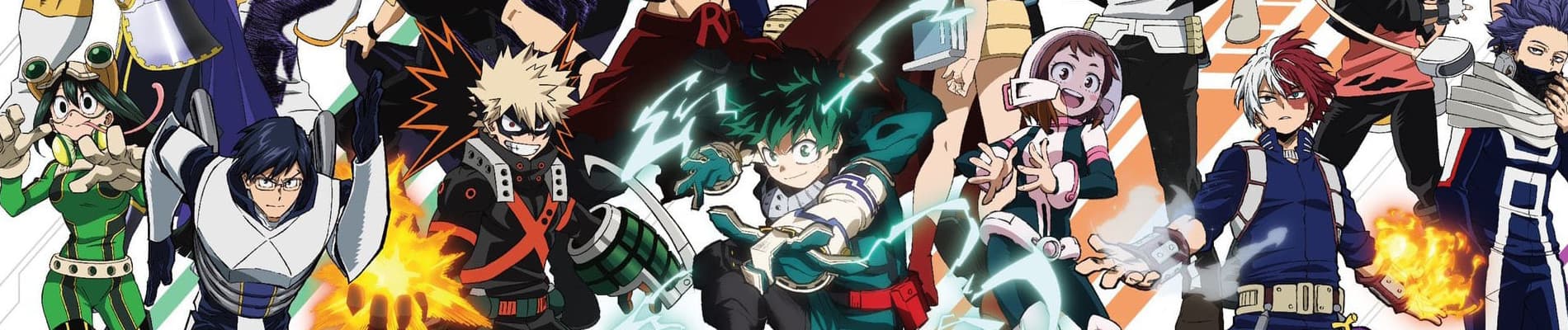
It feels like every year, we do the same song and dance. A big shonen anime comes out, everyone thinks it’s the greatest thing since sliced bread, and it gets overhyped into oblivion. It gets so overhyped, in fact, that basically everyone even remotely interested in anime ends up watching it, exposing it to a wide enough audience that its flaws, invisible to those initial fans, become much more obvious. Those flaws begin to dominate the conversation, people begin to turn on the show, and what was once so fresh and exciting becomes old-hat normie garbage. After that, it’s only a matter of time before a new big shonen blows up in much the same way, and everyone starts acting like this new show is so much better than the last one and totally won’t suffer the same cycle of overhype and overcriticism. It happened with Attack on Titan, it happened with My Hero Academia, it happened with Demon Slayer, and you can bet it’s gonna happen with Jujutsu Kaisen once the Chainsaw Man anime comes out. Shonen, it seems, lives and dies through mass exposure, a genre inevitable doomed to reappraisal and mockery by the same forces that make it a cultural juggernaut. It’s almost depressing how predictable it’s become watching it all play out.
On the bright side, knowing about this cycle means it’s easy to get ahead of it. You can skip past the process of overhype and overcriticism, stop worrying about how many people are talking about it, and just focus on the show itself. That way, you’ll know way ahead of everyone else which shows will actually last the test of time, and you can enjoy the spectacle of watching everyone else come to the conclusion you reached ages ago. I remember when Attack on Titan was losing cultural prominence and people were losing interest in it, but I never doubted for a second that it was gonna stick the landing. And lo and behold, season 3 part 2 came out and suddenly the show was more popular than it’s ever been. Not all mega-popular anime deserve to be mega-popular, but inevitably, the ones that do deserve it will win out in the end, and all the time people spent bitching about its low points will be so much dust in the wind.
All this is to say, don’t be surprised when My Hero Academia once again becomes the most beloved shonen on the planet heading into its final stretch. Because this show has far from run its course yet.
Yes, even after all these years, I still maintain that My Hero Academia is really that good. It takes superhero tropes and spins them in fresh, exciting ways. It’s constantly shaking up its formula and finding new stories to tell within its world that advance the grand narrative. It’s the rare shonen that actually balances its oversized cast well, giving them all interesting things to do. And at its core, there’s a real, inspirational heart dedicated to exploring the concept of heroism, and what it really means to do the right thing in a world that commodifies virtue and monetizes good intentions. Was it overhyped at the beginning to the point that people were blind to its issues? Definitely. Is it so over-criticized now that people can’t seem to appreciate its strengths anymore? Absolutely. MHA was never perfect, but it’s a damn lot better than it’s currently given credit for, and it continues to be one of the best vanguards modern anime could ask for. And I will be damned if I’ll see it dragged through the mud because we’re overcorrecting for being too nice to it at the start.
In the interest of fairness, though, yes, season 5 has not exactly been this show’s best season. The overall animation quality continues to slip, with fewer Wow moments and much more dead air. The first half feels a little too long, while its second half feels a little too short. You can feel the show dragging its heels through long stretches of this season, waiting too long to get to the point as it fills time to make up the required 25 episodes and reach an acceptable stopping point. On average, it’s probably the weakest entry since season 1, and it’s definitely the most inconsistent season production-wise. Clearly, the demand to make a new tie-in movie for every season is taking its toll on Bones; every great animator they sacrifice to work on the film means another scrap of passion must be subtracted from the show itself, and the consequences have never been more visible. And in contrast to the clear thematic arcs of previous seasons, season 5 feels kind of unfocused. There’s a lot of stuff going on, but very little of it connects with anything else. It feels like a season of table-setting, putting a bunch of pieces in place so future seasons can take them and run with them. If so, I hope those future seasons really step things up, because nailing the payoff on a lot of things this season is setting up is bound to make it feel stronger in retrospect.
Honestly, though? Most of these issues are only really a problem in the season’s first half, the Class A-1 vs Class B-1 training session. This is the most wheel-spinny MHA has been yet, mostly existing just to throw a bunch of cool superpowers against each other for ten episodes without much of consequence or character development until the final match. And it’s not really bad on those terms; MHA has a strong enough cast that it can survive just bouncing them off each other mindlessly for a bit. It’s just lackluster and mostly unimportant, especially when the production isn’t strong enough to really bring the battles to life. Once we get to the second half, though? Hot damn does this season pick up fast. And from the lows of this training arc, we springboard into two fantastic arcs back-to-back that put this show right back on track.
The first of these arcs is my personal favorite: Endeavor’s redemption. Over the course of my anime-watching “career,” I have seen so many shows try and tackle the subject of abusive parenting, and so few manage to avoid shooting themselves in the foot. But the way MHA grapples with the consequences of Endeavor’s abuse, the effect it’s had on his family, and his struggle to come to terms with the damage he’s done, may genuinely be the new gold standard for abusive parenting arcs in anime. It’s raw, it’s nuanced, it pulls no punches, and it genuinely commits to making Endeavor work to atone for his mistakes. It doesn’t use his desire to be better as an excuse to handwave all the ways he’s hurt his wife and children, and painted such a complex understandings of all the different ways people can react to domestic trauma. Do you want to run from an abuser and never see the again? Do you try to fix them? Are you willing to give someone a second chance if they’re genuinely committed to changing, or is it better if you leave each other’s lives for good? There are no easy answers here, but watching the characters grapple with those questions- and the ultimate conclusion they reach- grabbed me by the balls and refused to let go. It’s really fucking good.
The second arc, of course, is the much-hyped My Villain Academia, the moment where Shigaraki and his League of Villains take over the protagonist roles in a battle against a new, dangerous third party. Essentially, it puts the show’s antagonists through their own personal shonen arc, complete with tragic backstories, last-minute power-ups, intense emotional breakthroughs that push them towards self-actualization, and, of course, enough Power of Friendship to power the entire east coast. Not only is this idea brilliant in concept, but it also ties in perfectly with one of MHA’s biggest themes: no one is born a villain. Almost everyone who’s turned evil in this world is a victim of circumstance, someone who slipped through the cracks of an imperfect world that didn’t give them the tools to save themselves before it was too late. This world is build around the veneration of heroism, but in these villains’ stories, we see how its construction of heroism falls short for the less fortunate... or, in some cases, actively contributes to their descent into darkness. Shigaraki’s backstory alone is some of the most haunting shit I’ve seen from anime in a long time, a wrenching portrait of a boy abandoned by everyone and everything that could’ve saved him, leaving him vulnerable to manipulation by those who wanted to turn him into a monster. I’ve never been this invested in the show’s villains, nor this excited for the moment Deku and his classmates finally face them head-on. And judging by the cliffhanger ending for this season, that moment may be sooner than we thought.
It’s easy to be down on a show like My Hero Academia. With every bit its production slips and every moment it doesn’t live up to the heights of season 2 and 3,you can’t help but hyperfocus on everything it does wrong instead of continuing to appreciate everything it does right. But its high points are still too high to ignore, and it’s still doing too many things well to write it off. Season 5 may be a low point in its history, but the fact that its low point is still so damn high is a testament to why this show deserved to conquer the world in the first place. My Hero Academia is still good, and I’ll be happy to say “I told you so” when the final seasons blow everyone’s socks off and make them fall in love with it all over again.
Oh, one last point in its favor: this season had the least Mineta out of any season yet. That, folks, is what we call progress.
48.5 out of 61 users liked this review