Sonny Boy
a review by AnimeDweeb
a review by AnimeDweeb
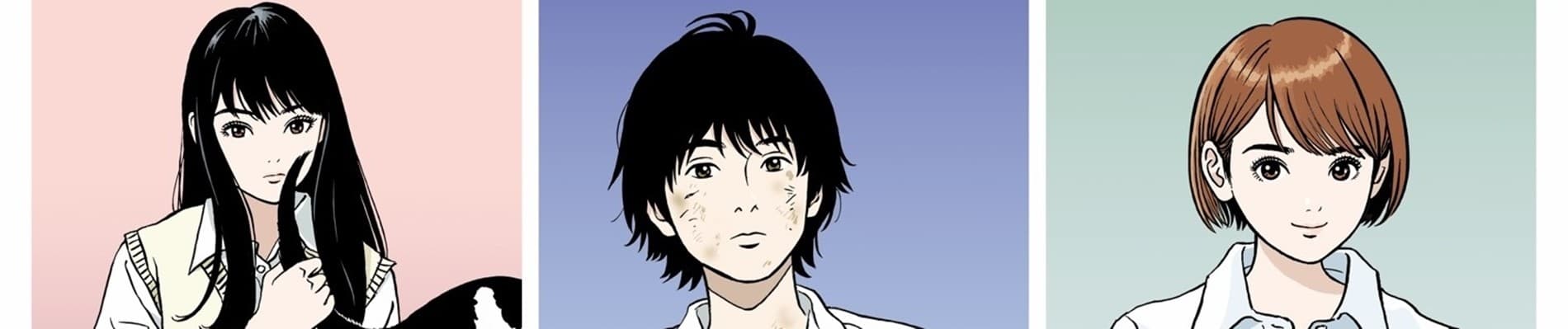
Having set the gold standard for action sakuga with One Punch Man S1, Creator Shingo Natsume is arguably one of the most well-trusted talents in the industry today. So here we are presented with something completely out of left field: an original series, written and directed by Natsume himself. Creative freedom is naturally to be expected, yet Sonny blows any and every expectation out of the water regardless. Photorealistic visuals are ditched entirely in exchange for the abstract. The unrefined and sometimes unidentifiable visual aesthetic feels less "Madhouse" and more reminiscent of Science SARU, no doubt due to Natsume's experience with storyboarding under the tutelage of Masaaki Yuasa. The community isn't exactly raving over the animation cuts the same way that viewers hyped up OPM back in 2015. That being said, the free-flowing animation and imagery Sonny manages to conjure up makes for brilliant eye-candy. Sound design adds to the odd ambiance, with a restraint that sneaks up on you during pivotal sequences. It's a weird yet refreshing approach to presentation, and an art style befitting of this cryptic show. Believe me, things are only gonna get a lot more strange from here on out.
An unexpected incident sends a Japanese high school adrift in an alternate dimension known only as "This World". No one knows how they got there, nor how to get out. "This World's" inhabitants consist only of the students stripped from the real world. There is no adult in sight. In the familiar hallways of their school campus, some people begin developing all sorts of unexplained psychic powers. Such supernatural phenomena govern "This World", as well as the many other worlds within this unknown universe. Featuring cross-dimensional space travel, mysterious pocket dimensions, spontaneous clones, physics-breaking landscapes and a chimpanzee baseball tournament; Sonny 's strangeness is imaginative and awesome to take in. Our ragtag classrooms of kids are tasked with making sense of this unfamiliar environment, all while doing all they can to make it back to the one World that matters: Home. Amidst the chaos and disarray is Nagara, the titular Sonny Boy. A withdrawn teenager with no powers, Sonny's got a long way to go in this new, unwanted life.
While weird and wild, there is a certain method to Sonny 's madness. Released from the constraints of a real world, Sonny gives a fresh take on real-life concepts through vivid imagery and allegory. Allusions to Robinson Crusoe may have you believe that this is a story about basic human survival, but Sonny soon reveals itself to be more akin to a sci-fi Lord of the Flies. The portrayal of groupthink is heavily present throughout the series, as the teens latch onto beliefs and narratives in order to make sense of "This World". The introduction of random psychic powers for a chosen few also results in a discussion on class identity. Elite powers that distort space and reality are possessed by the strong and fawned over by the weak. The uncanny nature of certain abilities are seen as likely methods of returning to Earth, motivating followers to hail the strong as Messiah-like figures. Conversely, students who were blessed in their past life but not in "This World" have to cope with being valued less by peers. Finally, those who happen to be outcasts in both lives find themselves further shut-out from society. Both groupthink and class hierarchy are a few of the ways Sonny tackles the topic of social perceptions. How we see ourselves, how others see us, and how we want others to see us. The ways in which we influence others to side with us, in order to gain control in a crazy, crazy world. The stories we tell in order to quell our fears and insecurities. The ideals we cling onto, even as the rest of the world mocks our naïve beliefs. The reasons why we choose to help and hurt those around us. Sonny 's certainly a strange show, but not without rhyme nor reason. Rather, the mysteries surrounding This World are designed to take advantage of its creative setting to reflect the chaos and uncertainty of real life. Sonny is as much about This World as it is our own.
Instead of a huge arc, the series is made up of individual vignettes, where continuity between episodes hardly matters. Each instalment hits like cold water to the face, reigniting the disorientation Sonny has been known for since its premiere. But while we may start (and admittedly end) each episode wondering what the hell is going on, Sonny manages to impart a series of thoughtful discussions and insights with every subsequent chapter. The series doesn't shy away from thorough scrutiny of personal belief systems, science, religion and authoritarianism. Compelling themes include insecurity, manipulation, war, destiny, and regret, among other things. These broad ideas are tied together with some truly mind-bending sci-fi writing. Natsume's brilliant manipulation of space, alternate dimensions and time gives an immense sense of scale and awe to the many metaphors at play. Even if it's tough to articulate precise meaning behind Sonny 's imaginative endeavors, at least a handful of the series' spectacles are bound to leave you in awe. Watching this social commentary is made all the more fascinating thanks to the psychic society: the strong-willed optimist Nozomi, the spoiled but supportive Mizuho, the freakishly intelligent Rajdhani, the sullen superhuman that is Asakaze, and the shrewd pragmatist Hoshi; all of whom are doing their best to get by. And then we have Nagara himself, whose role is key to fully appreciating this fantastic story.
Alright, I think I have a ton of explaining to do. Sure, I've thrown around big fancy terms like "social commentary" and whatnot. But how would you like for me to prove to you that these crazy episodes actually make sense?
Why keep these details hidden? Simply put, I don't think they're essential to Sonny 's core message. Plus, I kinda bit off more than I could chew as a demonstration. I'm more than sure that I've missed out on at least a couple of esoteric insights. Even the stuff that I did "decipher" are guesses at best; I'm pretty sure I got a ton of the sci-fi plot devices wrong. The show's design leaves itself open to interpretation, and I've seen amazing fan theories for the details Sonny refuses to say out loud. But even though dissecting Sonny 's indirect storytelling is a major source of enjoyment for me, the same can't be said for viewers who prefer a more passive engagement with their Japanese cartoons. Thankfully, I believe that audiences don't need to work too hard in order to appreciate this series, because none of what I've mentioned within the tags really matters much in the grand scheme of things. The way these metaphors are presented will confuse any viewer, but your understanding of these ideas will not largely determine whether or not you enjoy the show. If anything, there's a case to be made for the lack of explanation actually enhancing how certain scenes play out, such as the jaw-dropping mid-season finale in Ep 6. Plus, there are plenty of individual scenes carried by brilliant execution alone, thanks to an all-round solid OST and unique visual direction. Most importantly, in contrast with the vague modern allegory discussed thus far, the heart of this show is out in the open, and poignantly so. Let's talk more about the Sonny Boy himself.
Set to the backdrop of existential dread and socio-political unrest, Nagara's coming-of-age tale brings much-needed relatability and optimism to the series. In this manner, Sonny avoids turning into a nihilist counter-culture dystopia, and instead blossoms into a story of a teen finding his place in the world. Nagara enters This World alone and in low spirits. The peak of his youth sees him lying on the floor, as time quietly passes by. Sonny's never understood the world beyond his ceiling view, and his youth has grinded to an uneventful halt. But Sonny's gonna meet friends, and slowly open up to their kindness. Sonny's gonna accept that even in a world with great thinkers and superhuman idols, he has value. Sonny's gonna believe the positive affirmation of his worth by those around him. Sonny's gonna understand that he has responsibilities - things that only he can achieve, and things he should no longer run away from. Sonny's gonna grow. Sonny's gonna grow up real fast, and learn all kinds of things. He's gonna travel the world (or should I say "universe"), and meet all kinds of communities. Sonny's gonna observe what it's like to live bound by submission, manipulation, isolation, rhetoric, envy, vengeance, and regret. Sonny's gonna reject those convenient ways of life, and find meaning elsewhere. He's gonna change his habits of running away, seize the moment and move forward. He's gonna repay the kindness he received whenever his friends start to lose hope. Sonny's gonna hold his treasured memories tight to his chest, even amidst grief and setbacks in life. Finally, Sonny's gonna take all that he's learned and run. And maybe, just maybe, Sonny's gonna change this world.
I don't want to be mistaken for a gatekeeper here; if anything, this review is my attempt at begging readers to give Sonny a fair shot. But this written description of my time with Sonny doesn't really matter as much as whether or not you can make a personal connection with this series. People not resonating with Sonny seems to be a common case, given the number of times I've seen community comments along the lines of "I don't get it" or "Should I pick the show back up?" And I absolutely agree that Sonny is confusing, sometimes to its own detriment. The series frequently jumps back and forth between backstories, without any clear indication that any flashback has occurred. Unknown stretches of time elapse between episodes or even entire scenes, which certainly caused plenty of head-scratching for weekly viewers. Further frustrating is Sonny 's abject refusal to explain details that it deems is unimportant. Stuff can be so surreal to the point of leaving behind only a single reaction: "Huh? " The pseudo-science exposited in certain occasions are bound by the language barrier, justifying the fear of details getting lost in translation. And phrases that do make it in can appear cryptic and vague. All this added guesswork demands that audiences stay on their toes, while they may already be struggling to keep up with several of the series' esoteric metaphors. Even if Sonny 's confusion is intentional, that doesn't make it significantly less annoying. There is merit to shows that make stakes easily understood or take the time to explain what's going on, because at least it can consistently be appreciated on some level. Because this series doesn't lend itself to casual viewing, all bets are off. I simply can't guarantee that you will appreciate Sonny to the extent that fans and myself have. Furthermore, the recent letdown of Wonder Egg Priority's conclusion probably had a part in dooming the reception of a similarly-esoteric anime-original, even if the two shows don't share many similarities aside from this comparison. Look, all I'm asking is that you give the series a chance, while knowing that there is some hidden subtext worth exploring. Probably the most disheartening reaction I've seen towards this intellectual bundle of joy is that of people disregarding Sonny as some Lord of the Flies ripoff devoid of substance, failing to recognize how this series manages to turn a somber dystopian premise into an optimistic allegory for growth and self-acceptance. I respect viewers who wish nothing more than easygoing entertainment from their anime, but Sonny is well-worth the extra effort. There is an order to Sonny 's compelling chaos, and I urge anyone interested to take up the challenge and step out of their comfort zone. Out of all the anime in 2021, no single show rewards attention, reflection, discourse or creative interpretations as much as Sonny.
At the end of the day, I can't attest to fully understanding this show. But Sonny taught me that it's OK to not know everything. The series' subject matter is dense and difficult to parse through. Yet Sonny eludes explanation and ignites imagination, all while somehow making perfect sense. Evocative animation, powerful climaxes and an uplifting story culminate for a unique experience fit for the visual medium. It was... fun.
I don't understand Sonny Boy. But I sure as hell am gonna keep trying to.
At the core of quite possibly the strangest show this year, lies a coming-of-age tale. Sonny Boy revolves around finding purpose in an unfamiliar world. Social commentary marks Sonny 's attempts at trying to understand the world our characters inhabit. Confusion within the series is rarely cynical, since Sonny keeps its head high through telling the story of Nagara's growth into manhood. Shingo Natsume's direction and script make the project truly his own, resulting in some of the most brilliantly executed moments of anime this year. The complex manner in which its ideas are communicated can be daunting to reckon with. But with the animation medium being pushed to its absolute limits, viewers might find that giving this experimental series a chance may prove worthwhile. 9/10~
Castaways, we are castaways... Thanks so much for getting lost with me through this pretentious wall of text. I only hope the journey was well worth it in the end. Before I use my "Escape", you know I gotta plug! If you happen to like my verbose rants, feel free to check out my other reviews for seasons past and present. I also frequently post writeups under my list updates, so definitely take a peek if you'd like to see me mald over anime as they hit the airwaves. Peace~
424 out of 435 users liked this review
