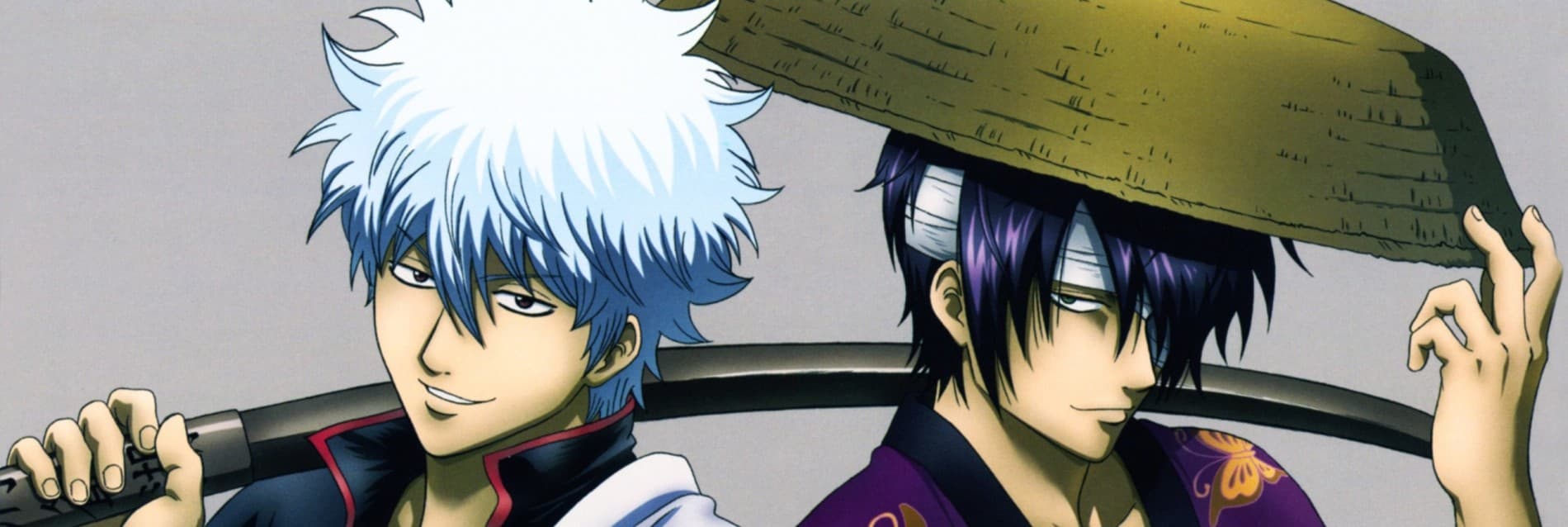

This review will contain spoilers for season 4 and analyze the events within it, but nothing after. If you want a more general review covering Gintama’s writing, go read my season 1 review. This will just over the arcs as my last 2 reviews have, so thanks; have a good day.

Gintama season 4 is perhaps one of the most hyped up seasons in anime, and for good reason. It’s the mark of a pivotal change in Gintama’s story structure, as we begin to shift from comedy-filled episodic escapades to serious arcs cascading over the rest of the show. So much comes to a head and develops; it was hard to write about, honestly. Even the production value significantly improved along with the season. You’re 4 reviews in at this point, though, so there’s no point dicking around— I’ll just get right into it.
The Reaper Arc

The Reaper Arc I had no prior expectations going into, and I would like to say I was pleasantly surprised. It had a neat moral baseline that fit right in with the core thematic motifs of the series; I loved every bit of it. Asaemon learns to protect what she wants to protect like a samurai, as opposed to following the rigidness of law. The idea of humans being the only ones able to redeem each other is a beautiful thought as well, and it ties nicely into the executioner gimmick. Our characters all reflected different ideas and were very poignant for the arc. The former Yaemon lived like a samurai, for his own values, and Asaemon’s arc had her learn to live like that. Meanwhile, the 18th Yaemon killed to protect the family name, but only sullied the ideals behind it. I feel like the development of characters and themes was well done, and the character design reflected that. The skull Asaemon had ended up serving as neat symbolism as she shed her reaper identity and lived by her own merits. She executed herself to be born anew, and that was the perfect ending.
The death of the 18th Yaemon was also nice in multiple ways. His character development in saving Asaemon was a bit drastic and sudden, sure, but I can accept the philosophical shift despite its jarringness. On the flip end of the scale, Yaemon’s death turned into the perfect introduction for Nobunobu as a character. It set him up to be super intimidating as a figure and was just generally shocking. Not to mention it set up his motivation and personal philosophy super well, with lines like “I’m going to cut the head off of this antiquated country.” On top of all this, it was somehow made even more impactful by immediately tying him to the Kiheitai.
Shogun Assassination
This arc has many moving elements to cover, and god damn are they all interesting. I’ll be segmenting them to cover it, and this way it should be easy to skip around to the parts you care about if you would like.

Who would have guessed Gintama would go from a goofy comedy Shounen to a political thriller? Well, hopefully everyone, because this has been building up for a long time coming. 300 episodes of forces moving in the background of the show come to a major head here, and damn is it beautiful. We immediately begin with an assassination attempt on the Shogun’s head, setting a precedent for this arc like we’ve never seen before. Of course, in this scene, the Shogun explains to his sister Shoyo that he wishes he could stay under the moon in moments like this forever. Of course, this sets up a nice emotional impact for later, and the final scene which I’ll get to. As for the beginning of the Oniwabanshu, we get to develop Zenzo and Sachan’s philosophy a solid bit— which in my opinion was heavily needed for their characters. We learn of Sachan’s devout loyalty and sense of duty and then are given the red herring of Zenzo aiding the side he finds more fun, which is later subverted into the idea that Zenzo is betraying the Shogun to protect the country. This sets an interesting conflict for the viewer by framing a decently liked character as a villain, which I would like to say is excellently done. Sachan’s disappointment with him feels guttural, and the lighting and framing of the fake Shogun assassination scene make a shocking and imposing moment. Naturally, though, all of this is reversed by the twist that Zenzo actually assassinated his friend in the Shogun’s stead— which felt kind of bullshit at first, but it was decently executed, as the person’s sacrifice for the Shogun holds genuine weight. The Shogun as a character holds the philosophy of protecting his nation with his own life, which is of course reflected through the dialogue “The duty of the Oniwabanshu is not to protect the Shogun. It is to protect the Shogun's duty. And a Shogun's duty is to protect his people and his country even if he must risk his life to do it.”
I think this quote is well implemented into the Shogun’s backstory, and we get to see not only his connection with the Oniwabanshu, but his deep-rooted kindness and respect for others. The Shogun idolizes the life of the Samurai and their ideologies, so I think it makes perfect sense for him to come to the naive conclusion of disbanding the Shogunate. He does not feel fit as a ruler for such people, and he realizes the only people worthy are the people themselves. This also generally creates a good twist as we see him tell this directly to the Tendoshu and Nobunobu in the darkest hour of the show, which is honestly beautiful. It was the perfect setting; it made it hold great levity.
If we backtrack back to Zenzo for a second, his willingness to sacrifice himself for the Shogun accentuates their relationship and reliever for each other. He will sully his name to save his dearest friend; I think that was a nice stroke of development for Zenzo. It shows that a ninja and a samurai don’t have to be so different after all, as they can both protect what they value. The entire Oniwanbanshu faction going to war with the Kiheitai also gives some life and meaning to their faction as a whole. My only complaint is that it kind of came out of nowhere, and I wish we had at least been introduced to the village of ninja properly beforehand. Usually, Gintama has the sense to subtly implement these things through one-off comedy episodes.
Finally, I think the Shogun’s internal strife of having to run away instead of fighting directly for his nation is awesome. He wants to protect as many people as possible, but jeopardizing his own life would make all of that sacrifice pointless. He does what he can and even demonstrates his kunai technique, eventually, of course— but in the end, he has to run away from even Edo itself. He has to mature and run away to ever have a chance of facing anything in the first place, which I think is awesome. Then, unfortunately, we enter the final scenes of this arc. The Shogun, or now Shigeshige, is assassinated. The way it happens is near poetic, and it perfectly concludes his characters and adds nuance to the themes of the arc. We see him abandon his heavy guard in favor of making connections with people as Shigeshige, as a fellow samurai, as opposed to “The Shogun”. It’s a picturesque notion that perfectly falls in line with his character, but alas it’s fatally naive. Gintama pulls back on its ideal of the samurai and kills him— with no silver lining in the concept. It’s a tragic end to a hero; it gets the message that ideals don’t win a war alone across. It went far darker than I expected it to, and I appreciate it. Most similar Shounen would end up hoisting the themes of the story over the realism of the arc, but Gintama lets the idea of the correct ideals not always winning in the end flow. Really cool shit.

Shogun Assassination is truly an arc of build-ups, for perhaps the most tantalizing mystery in the entire series has been Gintoki’s past. It’s been parodied and joked about constantly through the course of the show, and we even got a little tease in Courtesan of a Nation— but the truth comes out here; it’s pretty great. The mystery was incredibly well-executed, and the answer was satisfying. I suppose I proceed myself, though. I think it would probably be important to note Takasugi's presence in the arc in general first. Him and Kamui teaming up with Nobunobu was imposing as hell, and it set the stage for the most chaotic political storm possible. His and Gintoki’s confrontation was slowly built up in the arc, and Gintoki’s charge down the mountain to face him was incredibly hype. As was the battle in general, as they really let the animation budget go for this arc. The direction of the fight is generally superb; its structure, too. It’s tied in with bits of Takasugi, Gintoki, and Katsura’s past with Shoyo, which gives us a greater understanding of the characters fighting. Then the build-up to the twist of Gintoki executing Shoyo himself was super well-executed, making us simultaneously be shocked and understand Takasugi’s hate of Gintoki. Takasugi despising the government and wanting to destroy the government makes sense because of what they did, and Takasugi hating Gintoki while not understanding his actions is perfect— and of course for not rebelling against the Bakufu. Gintoki killed Shoyo to protect Shoyo’s will and ideals, on top of saving his comrades. He tried to protect Shoyo and Takasugi but ended up sending Takasugi down the wrong path, and as we learn in Farewell Shinsengumi— killing Shoyo was for naught. How ironic.
Anyway, Takasugi develops in this fight, as he understands Gintoki’s intentions more. He understands why he saved them instead of Shoyo, and his conviction only goes stronger for it. They’re both samurai with things they value and need to protect, and these ideals are highlighted by their convictions only being strengthened here. Where most Shounen would redeem a villain and have him flip perspective, they simply have Takasugi understand but disagree here— which I think is pretty fucking epic. Gintoki continues living in the present for his ideals, and Takasugi continues fighting and grieving over the past. There was a lot of nuance for a segment that only stretched over 2 or so episodes.

Hijikata, Kondo, and Okita all get solid amounts of development in this arc. We see them defend their ideals like true samurai, and just generally generate hype. The parting between the Odd Jobs and Kondo’s group on the bridge was pretty impactful, drawing on things like the Shinsengumi never requesting the Odd Jobs up until this point. On top of this, Matsudaira developed phenomenally in this arc by establishing his motivations. Sure, we knew he was assigned to protect the Shogun previously, but it fleshed out why and how much he respects him. He even respected him so much as a friend he let him meet with no guards, which tragically ended up being the Shogun’s death. That’s just depressing, honestly. Then, finally, I would like to note how imposing Nobunobu ended up being. He used the main villains built up for the entire show as his puppets, killed the fucking Shogun, and got the approval of the Tendoshu. What a villain. He feels slimy, childish, and despicable— he is one of the most hateable villains in anime for sure. I don’t want to proceed myself, though, so we’ll wait until Farewell Shinsengumi.
In conclusion, this was the single best Gintama arc up until this point. Some insane developments accompanied by the most hype political thriller I’ve seen since Code Geass, and god damn did everything pay off. Episode 305 isn’t considered the best episode in Gintama for something, and I’m sure it’s etched into the hearts of most who watch it. Super fucking cool.
Farewell Shinsengumi
Directly following Shogun Assassination, I’ve hit another mega arc I’ll have to split into segments— so here we go.

Farewell Shinsengumi begins with bombastic music, showing every rippling effect of the Shogun’s death— and this is perhaps my favorite start to an arc in fiction. There is an insurmountable amount of development for many characters in such a short amount of time. We see Zenzo grieve over having killed his friend and fought a war for naught, we see Katsura promise to change the nation in his deceased rival’s stead, we see Yorozuya hit their lows after failing to save someone for the first time, we see the Shinsengumi split up under Nobunobu’s iron fist— and the individual fragmentations of that. Kondo takes the role of a martyr to let his men live on, as Hijikata tries to accept this. Eventually, however, the Shinsengumi conclude that there is no point in living if they can’t protect their values and their chief— which falls into the motif of samurai. Gintoki also gets nice development on this stroke as he gives Hijikata advice on what to do, having made a mistake in a similar situation— referring to Shoyo. Otae learns how important Kondo was to her all of this time, calling back on old gags to turn them into serious emotional beats, mostly with the stalker stuff. Anyways, this brooding tone cascades over our main cast as Nobunobu takes over the shogunate, and damn is it impactful. In the scene where he antagonizes Otae and others with his newfound power it’s extra cathartic to see Gintoki deck him because of our hero’s recent loss. Everything about this is just incredibly well executed, and Isaburo even taking the piss on him was a nice touch. Of course, this isn’t all, for there’s more development in these first two episodes than most one-cour shows. We get to see Matsudaira hit his all time low, even contemplating assassinating Nobunobu to avenge his dear friend. This emphasizes Matsudaira’s relationship with Shigeshige better than anything until this point has. Finally, to cap off this section, we get to see the Shinsengumi and Joi Rebels abandon their previous grudges and statuses to join as samurai with common values. It had been a long time coming, and this really accentuates the idea of positions pitting pretty like-minded people against each other. The core idea differentiating them before the Shinsengumi disbanded was a lawful attempt to protect their values as opposed to a rebellious one, obviously.

Nobume and Isaburo were incredibly underdeveloped as characters before this arc, so I’m glad they got what they sorely needed; it was great. The backstory was well interwoven with the fights raging at the time; Isaburo’s fight against the Shinsengumi was hype and climactic for the long-time feud. I think the general direction and color palettes of the backstory scenes were done super well. The actual plot itself was well constructed mostly due to the story structure, like with the timing of the reveal of Nobume’s name being what Isaburo was going to name his daughter. The depiction was just neat in all fields, and it really helped us understand Isaburo as a character— as a father, and as a samurai. His suicidal, hopeless notions of wanting to end such an era of violence and made sense for his character and was unexpected. Nobume’s love for Isaburo being explained by his fatherly relationship with him, as well as her duty of guilt to kill him worked away my previous problems with her character expeditiously.
Directly after the entire backstory scenes they drew parallels between Kondo and Isaburo as leaders— which was to great effect. They were both samurai with their own things to protect in life, and Isaburo respected Kondo for that. Kondo’s advice had once helped him after all, even if it had backfired and he lost his wife and daughter anyways. It was a nice way to wrap up their relationship before Isaburo’s death; on that note, it was a great conclusion to his character. He knew he would never be able to change a thing about the world in the end, but he got to raise and love Nobume. He sacrificed himself for her in the end, which is the perfect conclusion for him. Then, the send-off the Shinsengumi, Mimawarigumi, and Nobume give off with the salute was really emotionally poignant. They saw their chief off; Nobume sent off her father. The cell phone being thrown over the edge was a nice touch too. Pretty impressive development for one arc, I would say— and yet again there were plenty of twists that made events worthwhile.
As a little bonus and afterthought for Thorny, I was surprised to see Tetsu get great development at the end of this arc. Even if they never got along, he wanted to impress his brother, and I think that was gratifying to see. I’m glad his character wasn’t entirely abandoned post-Thorny.

In one of the most hype introductions I’ve ever seen, Utsuro enters the final quarter of the battle, tearing our protagonists to shreds. He eviscerates Gintoki with his ship, pummels Kagura, breaks Okita’s arm, and severely injures several people on the playing field— all while this menacing OST is blaring in the background. His presence is given weight for being one of the Tendoshu heads, and obviously just how powerful he’s shown to be. This is confounded upon when he’s revealed to be Shoyo, which not only sets up a solid mystery, but makes him all the more imposing and impactful. You can see the ripples of emotion this sends through Gintoki as he tries to process what he’s seeing— and it’s pretty fucking cool. The OST, the framing, the lighting, and the animation all make Utsuro seem next-level as a villain. He wipes the floor with some of the strongest people in the show up until this point, and is only another threat to stockpile on top of Nobunobu. This certainly promises to affect Gintoki’s character tons later, which I look forward to. My only potential issue is how cliche it is to bring back a dear friend who’s been taken over or is being controlled by something else entirely, so I really hope they take this in the correct direction. This section was shorter, but it was an important development, so I figured I’d cover it.

To touch up on some things I missed talking about during the arc, I would like to start with Kondo. I think he and Katsura both developed phenomenally as they dropped the pretext of being a rebel or cop, and joined forces as samurai. We also got to see how much Kondo’s men truly love and respect him, attempting to save him and even abandoning themselves in such a dire situation. Hijikata’s depression upon Kondo’s death accentuated their dichotomy, and Gintoki incurring him to rage and fight also showed a lot. The scene was really cool, even if we got baited on Kondo’s death. Then, for the Shinsengumi’s actual conclusion, god damn was it beautiful. Otae and Kondo’s farewell used previous comedy to create emotional beats; it was to great success. The Shinsengumi left Edo, officially disbanding— though their ideals as samurai would still live on, which is what made them Shinsengumi in the first place. Odd Jobs taking over the protection of Edo in their stead was also superb in concept.
So, finally, Farewell Shinsengumi was perhaps the most emotional saga in Gintama so far. It has events which will be felt later into the story, and had conclusions that capped off characters well. I can see why this arc is praised so highly; damn, it was a good time.
Conclusion

I know it seems a little brief to only cover 3 arcs, and only serious ones at that— but I genuinely don’t think any comedy arc in this season is worth noting. Some were really funny and some were duds, sure, but I don’t feel there’s anything I need to analyze that I haven’t covered a similar thing on before. I’d just like to say that some characters like Kyubei and Saitou got great development, and that’s really all. So sorry if you guys wanted to see something on Feigned Illness. It would really just be me saying how they took a cliche formula and subverted it for great comedy, which I’ve already talked about Gintama doing before. Anyways, this season was one of the best, and damn, it gets me hyped for more. Signing out, and always feel free to message me your thoughts— they’re very much appreciated.