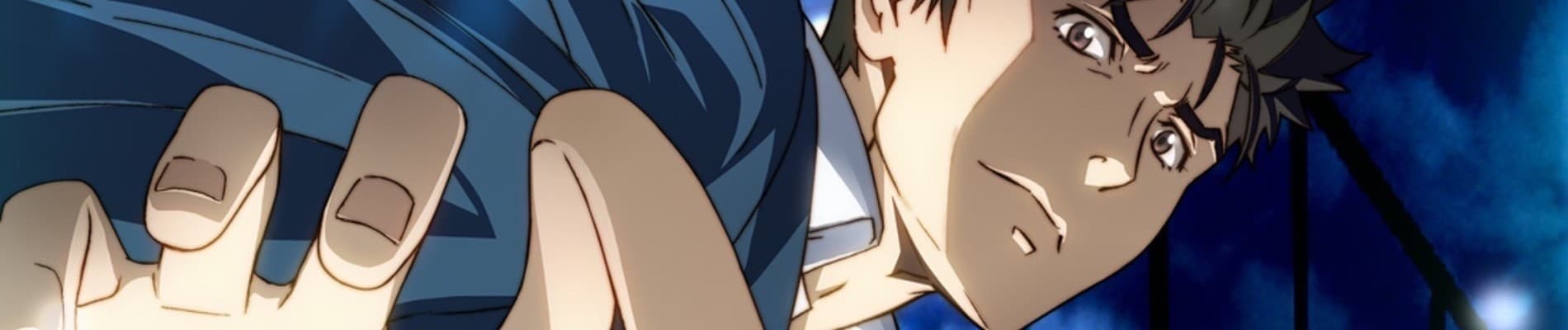
"Why don't you admit it? Prioritize the lives of all beings above the human race. Only then would you prove to be a superior species. You imbeciles, claim that justice is on your side. What justice is this to which you appeal? We inhabit the human and we take on the role of the balance preserver of all life. It's the damn humans the real infestation of usurping animals. Better... A parasitic life form."
[HIROKAWA, Takeshi]
SPOILER WARNING
Kiseijuu is a shocking experience. On the one hand, it gives a serious story of urban fantasy. A bloodthirsty sci-fi universe, ruled by body horror and by which the protagonist, Izumi Shinichi, wanders as a victim of inevitable involvement. On the other hand, it turns out to be something else. A story that delves into the nature and behavior of the human species and subverts its themes into a philosophical, though not difficult to access, message.
As an adaptation of a 1989 manga, Kiseijuu inherits features from pre-2000 horror and sci-fi classics such as Alien. The narrative starts from mysterious beings, whose identity and precise origin remain hidden throughout the plot. After all, nothing contributes more to terror than not knowing precisely the origin or nature of an element. At some point, these creatures take control of the human brain and metamorphose, blending into contemporary society. Acting as cannibals towards humans, they are responsible for the "mincemeat murders", which would come to terrify the Japanese population (and the world) in the next stages of history.
Our protagonist, Shinichi Izumi, is another poor victim of these beings. Except for the fact that, unlike other humans, it's not his brain that's completely taken over by the parasites, but his right arm. To the detriment of this failure, Shinichi is forced to live with 'Migi', as he calls the parasite, and see him as an ally in the fight for survival. And that, ladies and gentlemen, brings us to the first great merit in history.
Izumi is a person described as sensitive, as initially noted by Murano. As a human being, one of his greatest qualities (and his greatest downfall) is his constant sentimentality and the way in which his passion clouds his judgments and makes him make logically wrong decisions. There is a stark contrast between him and Migi, who, devoid of emotions and a maturing way of life, is cold and logical in the sense of guiding his actions and thoughts about his own survival. Migi initially lacks a sense of species and collectivity. None of the parasites do. All they think about is survival itself, as in a wild and savage state or, better said, in a food chain. Migi is unable to understand Shinichi, who sustains a sense of responsibility and assumes selfless behavior that gets him into trouble, in disadvantageous situations. Migi cannot understand empathy. And the same path works for Shinichi, who repeatedly blames and angers the parasites for the misfortunes that happen around him.
However, as the narrative progresses, there is an escalation of the tragedy. Eventually, the parasites reach Shinichi and those close to the protagonist. Shinichi loses his mother to an unfortunate encounter, and even facing the certainty of her death, his reaction is as human as possible. He refuses to accept the loss, and his continued restraint behavior undermines Migi's efforts, resulting in both of them nearing death. If you ask me, I would say that this way the author treats Shinichi is very proper and real. After all, recently involved in an incident of such proportions and still bearing the guilt of agreeing to his parents' trip, he can't be expected to make the most logical and appropriate decision. Normal people aren't like that. Humans are not like that.
Psychology tells us that the act of going through near-death experiences can bring about drastic changes in a person's behavior. Psychological shock confers an adaptive transition and the appreciation of certain things that were not before. Well, in the case of Kiseijuu, this is true, not only in the psychological sense, but also because of the plot factor itself that makes Migi's intervention entail physiological effects. From the incident with his mother, Izumi develops as a colder person and gradually watches her emotions fade away. Although his altruism is still there, there is constant self-doubt on the part of the protagonist and an identity crisis. Gradually, the fragile and emotionally unstable human's face is replaced by a silhouette ever closer to Migi, the entity he called a monster. Izumi recognizes himself as closer to those he abhorred. Details that the director and the author himself put on the spotlight show this. Even those close and loved by him see this transition. From the horror of not knowing the origin and nature of the parasites, Izumi now no longer understands the nature of himself.
On the other hand, parasites mixed with society show very heterogeneous progressions. True, many give in to cannibalistic behavior and meet Shinichi, sooner or later, surrendering to the apparent nature of the species and representing what we initially know of them: bloodthirsty masses of destruction. Others who survive longer develop nuances of behavior. They question superiors' decisions, take action and organize themselves, as happens with the group that tries to assassinate Ryouko Tamiya. And, speaking of it, there are those who go through a deeper development and decide to fully integrate into society.
Ryouko Tamiya is one of these parasites. Interested in human behavior, she takes a different route from her fellow species. Although it is given as a hint that she was never able to fully understand such emotions, Ryouko awakens traces of empathy by following up on one of her experiments: she becomes a mother. At first, humanity was not expected from her, and Shinichi himself verified the statements that the human child she had with A was just a victim of her experiments. But, as the plot progresses, Ryouko herself finds herself laughing at certain situations. Her genuine representation of emotions takes on even greater contours, so that at the end of the story, in her last moments, she really cares for her child, consolidating the presence of the maternal instinct.
In addition to this surprise, Kiseijuu increasingly pushes the deconstruction of the references she initially establishes. In contrast to Shinichi, Migi is perhaps the greatest example among parasites who acquire empathetic tendencies. It's almost metaphorical and ironic that Izumi and Migi are one. Both progress as a mean between their initial states of personality and empathy as they learn about each other and try, albeit incompletely, to assimilate the other species' views. And it couldn't be different, since the message and the path the author wants to take are really these.
With the discovery of the parasites and the ensuing government investigation, human beings show the true face behind empathic and altruistic fragility. We've spent nearly twenty episodes learning and getting in touch about how parasites are murderous monstrosities and creatures that threaten the limits of our species. Although the piece gradually makes us question the boundaries between humans and parasites through the sad progression of Shinichi's psyche, as well as thinking about the possibility of coexistence through Tamiya's actions, all we see is a poor protagonist sneaking into deal with that. Humanity's collective efforts to confront the parasites have yet to be seen. Their interventions have not yet been expressed.
And human interventions, just like in the real world, are cruel.
Kiseijuu, in addition to a story, is a reflection. The work makes us reflect on how human beings are cowards, they are selfish, but unlike works that address the social relationship and these manifestations among ourselves, Kiseijuu focuses on how we subjugate the different. In certain cases, like Izumi's, we can care for our preservation. There is the sense of species, the sense of altruism and collective survival. However, this arm extended to people is the same one that takes away from those who are different, from our neighbors of other species that we subjugate. It is possible to understand the reality of an equal. However, we lack when the challenge is to empathize, assimilate and understand the vision of a different, another being.
Kiseijuu, paraphrasing what the author himself tells us, is proof that human beings are the real parasites. We create laws for the preservation of our planet, but the real concern that gives root to this thought is nothing more than our own preservation. We subjugate parasites because they are killers, but there is nothing more murderous than ourselves. And this unquestionable fact is stamped in front of us, as we watch the chaotic government intervention and its atrocious operation, slaughtering innocent people in order to eliminate the "greater evil". I mean, how hypocritical can we be? How many corpses would we resign ourselves to walking on to exterminate the "potential threat"? As Migi projects, if the operation were to fail, the next steps would likely be Napalm, missiles or nuclear weapons.
Until the last one perished, we would kill more and more civilians. And most frightening of all this is not its gore or graphic horror, but its veracity. It is this scenario that happens in wars. It is this panorama that is seen in terrorism hunts, in the most recent geopolitical scenarios. How many civilians who had nothing to do with the matter were murdered when the hunt for Osama bin Laden was launched? How many victims who had nothing to do with the frictions of war have not been wiped out by nuclear weapons? That is why there is no way to defeat human beings: for nothing can overcome not our intelligence but our unscrupulousness.
Despite its engaging and incredibly clear message and its qualities that I recognize, I also have criticisms of Kiseijuu. In this text, I focused more on the central and most important characters in the work. As you can see, I really like the progression of some of them and the illustration that others represent. Shinichi's father and his family drama associated with recovery difficulties and alcoholic tendencies makes a great and emotional representation of how easily we are shaken by loss. Detective Kuramori and his thirst for revenge add a lot to the deconstruction that, at that time, was already underway. However, it must be said that not everyone is like that.
While they are important representations, some of the parasites and other characters are shallow. The prime example of this factor is Gotou. His greatest merit in the work is to reinforce the issue of fragility and deconstruction that Kiseijuu prints. However, when it comes to the main villain, he adds very little to the cast or the story as a whole. We know little of his way of thinking and he's reduced to the simple concept of parasites, which doesn't make him so great as a villain, let alone as the ultimate opponent.
Uragami is at the top of that list, being a negative milestone in the show in my opinion. The appearances he makes, for the most part, are to get the script moving, and his psych goes into the details only by explaining his recognition ability and, later, his obsession with Shinichi. Not only is the origin of his criminality barely explored, he is also marked by being the only caricature in Kiseijuu that I consider out of place. In a show permeated by graphic horror applied when necessary and seriousness, he became a negative example with his caricatured expressions, sticking his tongue out and passing on the stereotyped image of psychopathy that is not very proper for a serious seinen, let alone a of this caliber.
Other characters like Kana and Murano are competent and humanized in my view. Although they don't play as important a role as Shinichi and Migi, their observations contribute to the central theme and it's understandable why they like Shinichi through what is exposed from each other's psyche. However, I need to point out that Kana's sensitive ability, despite yielding unpredictable and inconvenient moments in the plot, is not properly explained. Other girls, like Ahiko, harbor feelings for Shinichi and this too is never explained, unfortunately.
I could comment on several other characters in the anime or delve deeper into the ones I just mentioned. As you can see, I have a hard time summarizing things and that would be to my liking. However, for reasons of extension, I preferred to leave the rest of the cast and most of the characters open as only superficial comments.
If there's one factor that Kiseijuu doesn't miss, it's suspense. The apparitions of the parasites occur at the most inconvenient times possible and cause significant damage to Shinichi's life. From the character's difficulty in reconciling his romance with the sense of duty in being the only one to know about the parasites that surround him, to the loss of his mother and the need to save Murano and Kana while hiding his secret. The sense of danger is constant and decisions matter, since the author is not afraid to kill important characters, and this obviously works in favor of the anime.
Although not like Gyakkou Burai Kaiji, Kiseijuu also applies strategies that sometimes go wrong. Migi, though extremely intelligent and observer, is bound by the host's limitations. At certain times, the psyche and traumas acquired by Shinichi make a difference and his difficulty in calming down and facing the situation rationally balances Migi's ease. Besides, even at the end of the anime, strategies like the one used against Gotou don't work perfectly. It is a work that does not lack resistance in its plot, so to speak.
Adapted by the Madhouse studio in its glory years, Kiseijuu contains a visual identity suitable for a seinen, I would say. With the exception of the Uragami caricature, the characters have clean and more serious looks, and the studio does very well the body horror scenes, a necessary element for this story. Despite that, I personally find this production a bit weak for Madhouse. While the director manages well in foreshadowings and scenes that require less elaboration, such as in Migi's speeches and demonstrations, the presentation leaves something to be desired in the action scenes.
As someone who consumed the work thirsting for the reputation of its philosophy and the presence of the element of psychological suspense, I wasn't particularly impacted by this factor. However, those thinking of watching Kiseijuu for the action will likely be disappointed, as the battles are much more strategy oriented than choreographed and visual presentation. In some cases, these are repeated clashes between the parasites, like "whips" colliding in the same way. Some crowd scenes also feature poor CGI usage, and this hurts the animation's impression a bit.
The soundtrack, on the other hand, is quite competent. From the piano sounds that play in sadder moments to the good use of the "It's the Right Time" ending in some of the episodes, Kiseijuu evokes a good sound collection to complement its audiovisual effects in the sad and tragic moments that surround the work. And, of course, it doesn't fall short in moments of suspense and in creating an atmosphere of strangeness and in sustaining the mystery of the parasites, making use of strange and exotic sounds or classic melodies with a heavier atmosphere. Personally, my favorites from this collection are "Next to You" and the episode preview song "Choir".
Some director's choice moments are a little weird, in my opinion. The most emblematic example is the scene where Shinichi meets Uda. Desperate for the presence of a parasite next to him, Shinichi runs to meet him, in a moment of suspense, while "Next to You", a piano score more suited to sad scenes, is employed. Despite this, these are rarer slips and likely to have little impact on the viewer's experience.
The opening and closing themes are of a more personal assessment, as far as the music is concerned. However, I must draw attention to the fact that the symbology of the opening lyric, "Let me Hear", expressively reiterates the main message that the anime covers. I mean... Generally, the opening lyrics meet the symbology for the anime, since the vast majority are made for the show itself. However, when it comes to Kiseijuu, it specifically caters to one face of the show, and that is its philosophy.
Since the first time we have contact with opening, there has been questioning about the relationship between species and a letter that constantly points to human nature and its anomalous position, isolated from the food chain and natural selection. In that sense, seeing Let me Hear's lyrics is well suited to fans at the end of the anime, and it more adds or reaffirms the story's message, rather than just offering musicality. Unfortunately, I don't appreciate its visual choices in the same way and I don't consider it a brilliant presentation or as rich in terms of visual symbolism, although we can see a few.
Watching Kiseijuu was a rewarding experience for me. Despite having some problems with the work and some more evident with the production, I could see the author's passion for conveying a proper message and evoking a reflection in his readers. Living up to what's expected of psychological suspense, my favorite genres, this work more than deserves a place on your list if you're a fan. And for comparisons that point it as superior to his Pierrot "cousin" Tokyo Ghoul, I completely agree.
31 out of 35 users liked this review