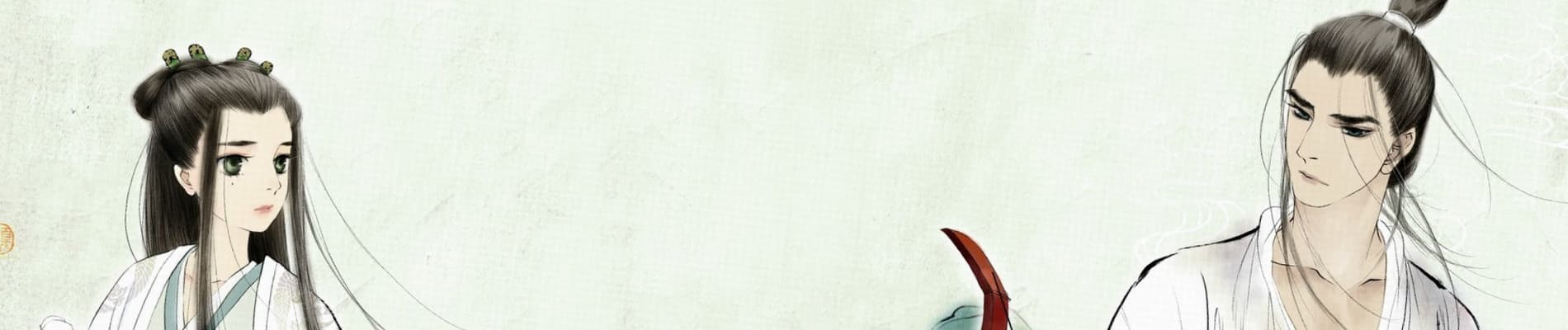
Chang Ge Xing
a review by Cookiefudge
a review by Cookiefudge
Consumers of East Asian comics read primarily Japanese comics and manga. Recently, Korean comics, manhwa, surged in popularity with many popular titles, leaving the third lesser-known one in the dust. Chinese comics, manhua, suffer from a lack of heavy-hitting titles to elevate them to the same playing field as the other two. This being the case makes it even more of a delight to discover Song of the Long March. A true gem in the manhua sphere that is a little rough around the edges.

Warfare is a powerful selling point for any media and there are many ways to go about it. This manhua depicts many different battles that take place during the early Tang Dynasty era in which the story is set. While there are a few scenes that depict the actual battles, they are usually concise. Instead, the manhua focuses on intrigue and politics in the Tang Dynasty from the perspective of both nobles and commoners. The first couple of chapters focus on warfare tactics and present the protagonist's ability to assess the situation and devise a plan, while in later chapters, the more complex and intricate politics takes place. It gets overbearing sometimes but works overall.

Coming into this manhua, I did not expect the author to explore Taoist philosophy in such an intelligent and interesting manner. By the time of the Tang Dynasty's existence, the people had formed a common sense of an existing “Taoist identity”, a concept explored through the protagonist Chang Ge Li. Tao(path) is at once the beginning of all things and the way in which all things pursue their course, a so-called "flow of the universe". What Tao means and what implies is something that the manhua delves deeper into so I won't explain more but the protagonist exhibits that one can also find the Tao(path) immanent within themselves. This was a very important pivotal part of the story that affected the main protagonist throughout the manhua. It was a clever way to create valuable character development using the time and cultural setting the author put themselves in.

Chang Ge Li: the protagonist is intelligent, vibrant, and compassionate without being unrealistically perfect. Initially driven by revenge and desperation to survive, she cast aside everything from her former life. Through novel experiences and many failures, she displays many character flaws and self-reflection but shows that she can learn from them and improves. Although her original goal doesn't change, the reason for pursuing that goal changes slowly as the story progresses, and her relationships with other characters have a profoundly deep impact on her perspective.

A point of conflict is the artwork. Visually, it is pleasing, and the architecture is especially beautiful both in terms of exterior and interior. However, the art can seem inconsistent and some parts are messy and difficult to comprehend. Character designs are simple and elegant, but some of the less important side characters look very similar, and at times sloppily put together.
Finally, the Song of the Long March is undoubtedly one of the best works produced in terms of manhua, sadly it is currently on hiatus and it is uncertain if we will ever see a proper ending to the story. The last chapter was in a way a decent ending point, even if the manhua never gets picked up again. I highly suggest giving it a read if you are interested in intrigue, politics, warfare, philosophy, and a hint of romance or simply a great female lead.
22.5 out of 23 users liked this review
