86 EIGHTY-SIX
a review by sushiisawesome
a review by sushiisawesome
The first season of 86 is a scathing critique of ethnic nationalism and its connotations, those being that it lends itself to the mistreatment and othering of groups of people that do not fall under the main (or dominant) ethnicity of the state. It shows the incredible ease at which people not only accept racism against another group, but also are willing to neglect doing the right thing (even when such a thing is readily obvious for huge segments of society) for the sake of wider conformity. This multilayered approach to how racism, discrimination and war is portrayed - complimented by excellent writing, phenomenal direction and fantastic sound design - makes 86 especially compelling. Perhaps more than anything, 86 keeps war drama tropes on the characters it focuses on to a minimum, with characters that possess a more black-and-white perspective on the world portrayed negatively and nuance being something the narrative promotes above all else...but I'm getting ahead of myself.
86 is many things, its nuanced discussions on racism notwithstanding. It's a story that discusses what exactly makes up a nation, whether it's its populace or the values it adheres to, and discusses how the very soul of what a state may stand for may be stripped bare even with the aesthetics of that remaining. The Republic of San Magnolia is the example provided by the narrative in the first season, with everything from its foundation to its flag celebrating its diverse heritage, yet throughout the fridge horror experience that is episode 1, it becomes readily apparent that this is a façade kept alive by a government that was willing to collectively punish a group of its citizens for belonging to the wrong ethnic background, with this disgustingly racialized notion of what it means to belong to the Republic having been normalized and accepted throughout the state - with the persecuted non-Alba citizens, the 86, being regularly dehumanized in all of the Republic's institutions. This extends so far as to have said 86 have their citizenships stripped from them and serving forced conscription in the military with the promise of gaining citizenship back for themselves and their families should they serve their full terms. Like many an oppressive dictatorship, this is a lie propagated with the intent on sending the 86 near the end of their service - all while intentionally undermining their military capacity and underfunding them - on a death march that bears more than a passing resemblance to infamous instances of genocide, ranging from the Trail of Tears to the Armenian Genocide to the Nakba. And yet, 86's nuanced enough to neither portray Alba citizens of the Republic as full monsters nor innocent bystanders, instead showing the painful complicity through which ordinary people might be in the persecution of their fellow man. More than anything, 86 possesses the nuance to show just how easily can the tables turn on the opposite direction - what with 86 themselves often treating the Alba or half-Alba within their ranks (who were often themselves political dissidents of the new order in the Republic) with the same contempt that was showered on them. This understanding of racism as being conditioned rather than simply something people do because they're evil helps paint the series in a more mature light, whereas the author has a clear understanding of the subject matter that she is tackling.
There's more to 86 than merely what it has to say about racism. Perhaps just as important is on the sentimentality the series portrays about life in the midst of chaos, and how being conditioned that you might drop dead on any day so radically alters one's life to the point of being unable to imagine much in the way of well, living, beyond what is temporary. Many conversations are had - usually between both main characters Shin and Lena, but also among other members of the cast - on what exactly purpose even means in such a radical situation, and what comes after the fighting ends, if it even ends. That last point is key, because the cast are so used to fighting tooth and nail to survive that they can't visibly imagine a world where the end to their journeys don't come with their brutal deaths on the battlefield. Shin himself is an exemplary example of this, being someone whose purpose in life had become his role as a death reaper carrying his comrades' reminders to whatever final destination he finds as well as his own grudge against his brother, trapped in a Legion who he seeks to both liberate from his suffering as well as take revenge on for his own scars. Perhaps a more symbolic analysis of the Legion in this context - and one complimented by later events in the light novels - is that they are walking, symbolic reminders of trauma and how they can haunt the suffering of those alive now, that the past isn't simply something you can tow away to be forgotten once you're no longer part of it. Much of Shin's purpose in such a context - one that's also complimented by Raiden, Theo, Anju and naturally Lena - is how exactly to take meaning out of people who simply are no longer around, what with someone existing here and now. It's difficult to describe where this goes without spoiling events in future seasons and volumes, but needless to say that many of 86's finest moments are when it rubs home that it's perfectly fine to pursue happiness for its own sake, without perceiving the past as a burden but rather something that can compliment and empower a person, even through all the pain someone had previously undergone.
Both the underlying themes exploring racism and sentimentality tie insanely well into what it has to say about memory and what that means to its cast of characters but also its setting at large. Historic revisionism is at the core of why the Republic does what it does, and yet characters struggle with how their own perception of history clashes heavily with that of the state, where instead of the 86 being monsters whose country of origin brought forth the Legion to ransack and torment the world, they're...otherwise ordinary humans who are not responsible for what the Glad government that existed at the time had done. The 86 remember having fellow Alba serve alongside them who similarly are not the xenophobic ghouls that they consider them as, serving heroically in battle alongside their fellow 86 kin against the Legion and in spite of their atrocious government. And more than anything, memories of people who had died, irrespective of who they were in life, are frequently shown via photos contrasting them with the people they are now (or were when they died), in one amazing instance with video footage summarizing the entire journey these characters took together until the end. Shin's own self-perception is also explored, what with him perceiving himself as a dead man walking yet having that thrown into question, and the same applies to Lena's own memories of being saved by an 86 when younger. Memory - both memory politics and insofar as deeply subjective perception of events present and past goes - is at the core of everything in 86's story, and it's this hauntingly fascinating yet human understanding of how perception is flexible to change that makes 86 such an amazing story.
The cast of characters are wildly varied in both the screentime they receive and their characterization, but the characters that the narrative focuses on the most are incredibly multilayered and complex. The Spearhead Squadron as a whole are a fun cast whose chemistry is just always a joy whenever they're on screen, Shin being the character who receives the most focus over the course of the series. Raiden, Anju, Kurena and Theo all also receive a lot of characterization, with Lena also receiving a lot of characterization (her internalized racism and self-righteous attitude being viciously criticized by the narrative, with her growing increasingly attached to the Spearhead Squadron heralding in her being outright antagonistic towards the Republic by the end of S1). Annette and Jerome are both cases of characters who act as contradictors both to information Lena believes about the Republic as well as her own memories involving people she holds dear, all while putting her convictions to the test considering their opposition to her ideals. Even minor characters like Daiya, Lev or Kaie get decent amounts of characterization despite their comparatively minor roles in the story, and characters who are merely mentioned in passing or hardly feature at all still have their deaths affect the overall story with lasting impact being felt.
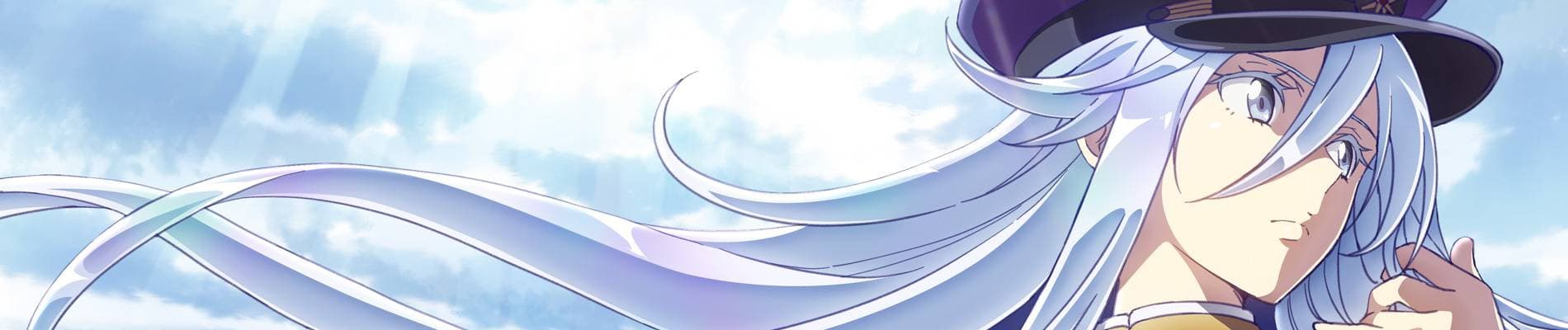
The character designs and artwork are a noteworthy but understandable step down from Shirabii's gorgeous illustrations in the light novel volumes. Much of the detail had been sacrificed in favor of simpler character designs, but this actually stood to benefit the series rather than detract from it; the animation is fantastic from start to finish, with facial animation and expressiveness being absolutely amazing and always reflective of the tone of a scene or more importantly, how a character feels in a given moment. They're dynamic and fluid, and it helps set the stage for just about anything the series is trying to do; these are complimented by gorgeous backgrounds, excellent use of CGI for the mechs, phenomenal voiceacting (with relative newcomer Ikumi Hasegawa being worthy of particular praise for her excellent role as Lena, a worthy followup to her also amazing role as Minami in Bottom Tier Tomozaki-kun) and a great soundtrack courtesy of Hiroyuki Sawano, even if not a soundtrack I'd consider among his best (that would go to Gundam Unicorn). The direction - both visual and sound - is fantastic from start to finish, and there's very little to say on this front that wouldn't be self-described by the series itself - episode 1 is a fantastic example of how to perfectly set up a story while keeping exposition to a minimum by contrasting both the 86 and the Alba in the Republic's day to day lives as well as their reaction to something as mundane as dropping food on the floor, with excellent transitions and shots layered throughout.
The only reason there somehow isn't more to discuss involving 86 is because, well, volume 1 (which season 1 covers) acts as a sort of prologue to the entire story, with more to discuss in subsequent arcs. I cannot await how future arcs will be explored in future seasons hard enough. 86 is a marvelous story that tackles just about everything exceptionally well, and perhaps more than anything is a reminder after the relative drought the mecha genre suffered during the 2010s that the genre has not run out of fantastic new stories to tell. I cannot recommend this highly enough.
Thank you for reading, any and all feedback would be appreciated.
100 out of 116 users liked this review
