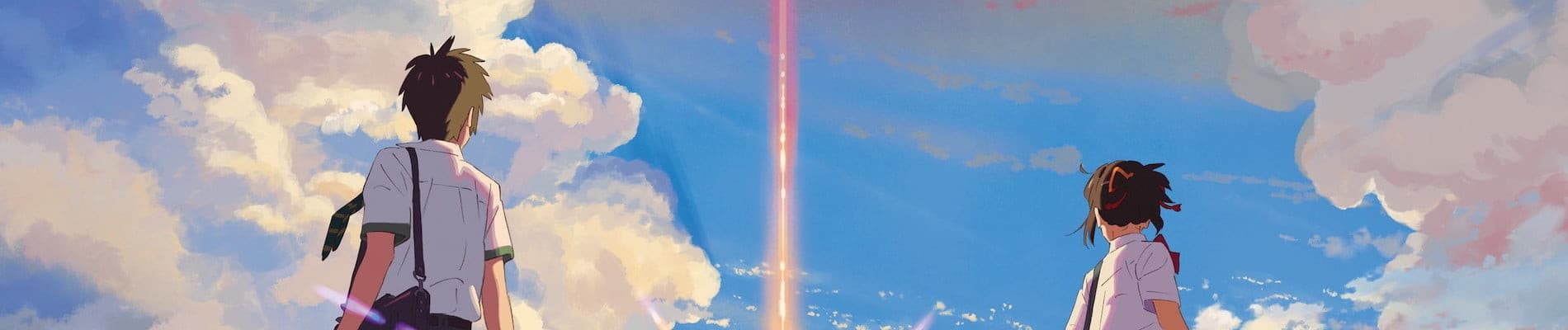
Your Name.
a review by TheTimoo
a review by TheTimoo
The days when animated films were intended primarily for children are irretrievably over. And while "Kimi no na wa" features teenage heroes, and while kids can certainly watch this movie and certainly like it, the design complexity isn't primarily for kids, and they're probably not able to fully absorb it. Today's animated films can more than boldly compete with adult movies and can be more than profusive competitors – "Kimi no na wa" is proof of that. Animation perfection is now more or less taken for granted, but in this case we cannot mention its impressiveness. One of the significant pros of the film is the transition between the different "planes of severity" of the film.
This escalating procedure gives the viewer the feeling that, until now, it was nothing serious compared to what is going on now; each additional plane brings a higher severity than the previous one. The film begins as a more or less relaxing story of two characters of the post-pubestic age – Mitsuha and Taki, who seem to be connected only by being dissatisfied with their current lives.
The first transition to a higher plane of severity begins when they both realize that their consciousness is transferred to each other's bodies on certain days. This is a powerful interference with the identity of both individuals, which they are trying to deal with in some way. The next move to a higher level of severity comes when Taki discovers that Mishuhy is one of many victims of the meteorite that hit the city of Itomori, killing most of its inhabitants. And the next stage is even more serious, because it is about saving Mishuba, but also all the inhabitants of the city. And finally, as if arcing, the film actually returns to the beginning to show the intertwining of dreams and life... All of this is put into images, taking place at different times, as well as with varying degrees of remembering one's own dream experiences, all with different places of consciousness in the bodies of Mitsuha and Taki.
I also see added value in the fact that the life situations of the two main characters are similar to those of their "non-Japanese" peers, but they differ to some extent from them, which is achieved by the non-violent instlipation of Japanese mentality, customs, feeling, culture or history, which can be an interesting enrichment for an ignorant European.
All of this together creates a very original composition that fully benefits from the advantage of animated film: Animation usually creates a kind of inner feeling of "fairytale" in the viewer, and subconsciously it is much more willing to accept fictions that would probably feel violent or absurd in the film. Finally, a personal note: "Kimi no na wa" is one of the films for which I would recommend double viewing before any review, so that one can fully capture his message and symbolism.
83.5 out of 105 users liked this review
