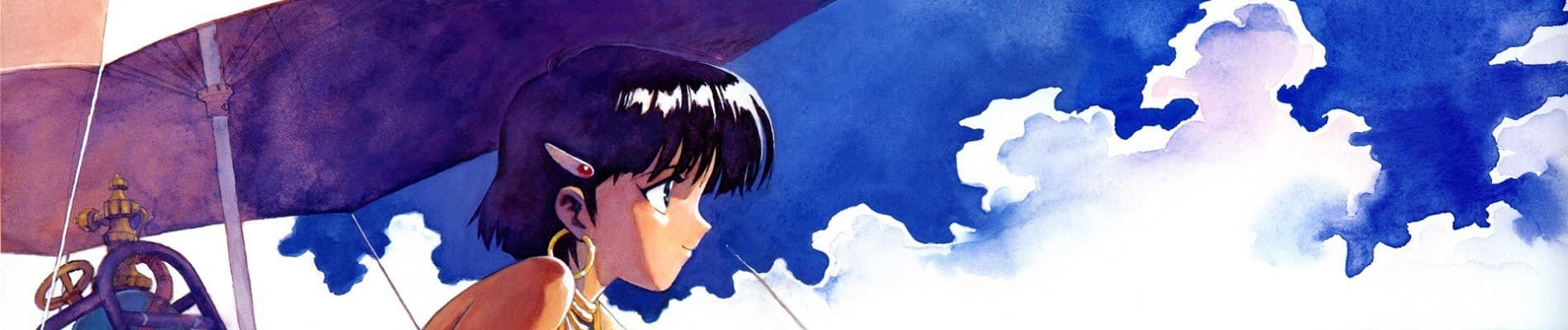

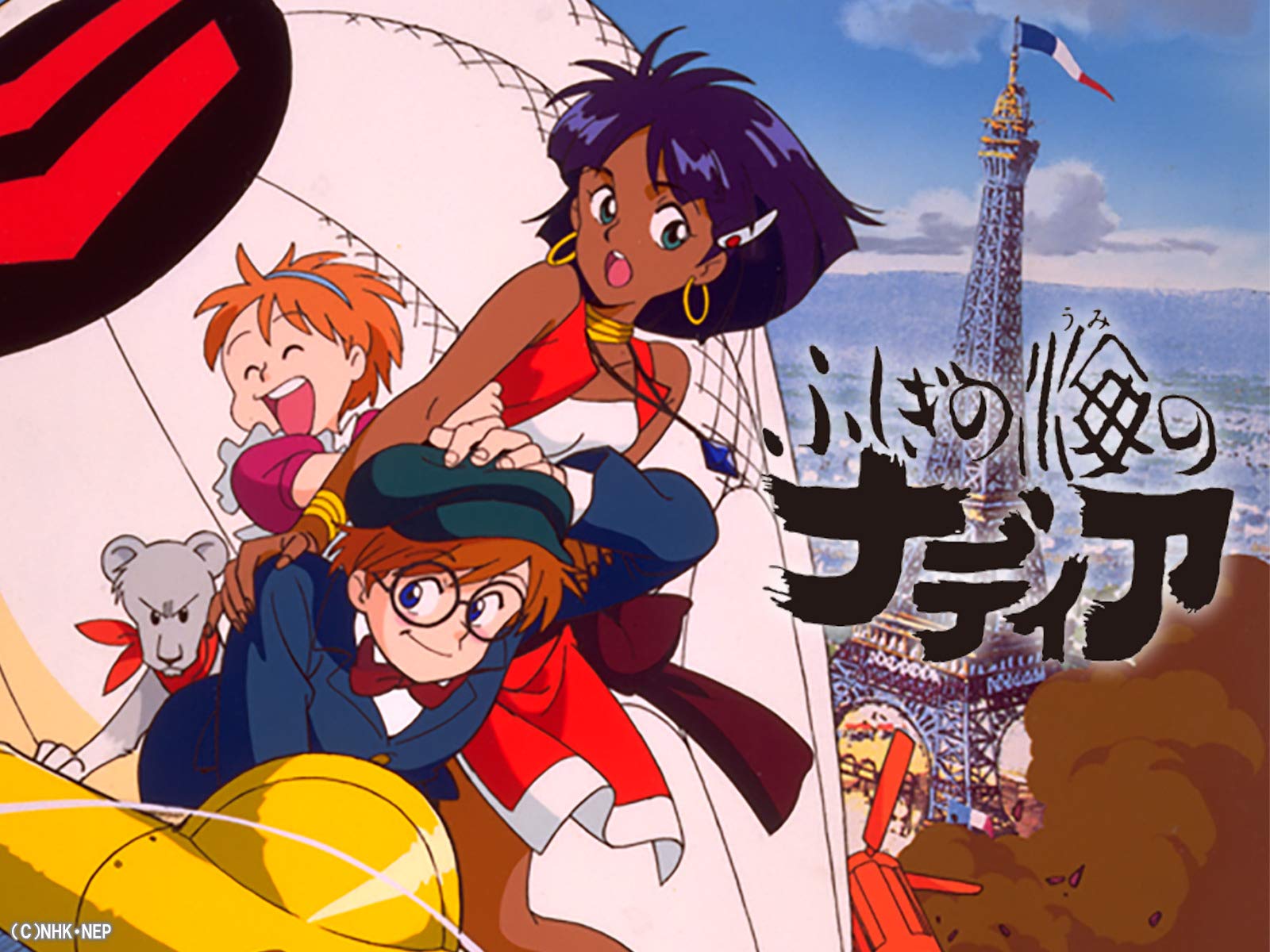
Nadia The Secret of Blue Water is a show that ever since I started watching anime, filled me with curiosity, with its colorful pallet in both scenery and character designs that gave me the impression of being Japan's response to our western Saturday morning cartoons, and thus, gave it a weird nostalgic aura to the whole thing. I do not mean this as a jab against the show at all, in fact; after finishing it, that visual appeal I was talking about pretty much stays true to the narrative constructed on its 39-episode runtime. The twist here is that this show also brings forth strong thematic approaches to the way said narrative unfolds. After all, we are talking about Hideaki Anno's previous work before the atomic bombshell that Neon Genesis Evangelion would become 5 years after this.
Yes..., I am going to address the elephant in the room right away, in order to discuss my list of things that I personally enjoyed (as well as those that I didn't) from this show. Now then, people who are deeply familiarized with Gainax or Hideaki Anno's work are aware that this show was a literal nightmare during its production; with lots of issues both inside and outside of the studio's control, that, eventually took a mental toll on Anno as a creator which, in many occasions is given as a reason why he created Neon Genesis Evangelion in 1995. Moreover, it's almost as if this show has gained its legacy as a little side note next to Evangelion's –well deserved–, success. However, I think Nadia the Secret of Blue Water deserves way more recognition for its strengths as one of the industry’s classics than staying in Evangelion’s shadow forever. Now that we have this out of the way, let’s take a dive into what Nadia the Secret of Blue Water has in store for us…
We are introduced to the show’s world through the eyes of Jean Roque Raltique, a 14-year-old boy living in Paris during the peak of the Second Industrial Revolution in 1889, a time where the curiosity of mankind –idealistic in nature—, could run wild thanks to the sheer quantity of technological advancements the world was going through in the late 19th century. We don’t see this situation better explained than through Jean’s optimistic nature as an inventor. He loves his craft and is so absorbed by it than he can’t help but keep trying to push himself above and beyond even though he’s still just a kid. Soon enough we are introduced to the namesake of the show, Nadia and her pet lion, King. On the surface she just seems to be a stubborn, yet gentle girl that has a deep conviction of living and letting live; which more often than not, puts her at odds with other people. She has garnered a considerable resentment against people after living all of her childhood working as an acrobat on a circus, working for people who, in her eyes, are all selfish and ill-intentioned by nature. That is until Jean lays eyes on her and both get to know each other that their weaknesses and strengths as characters shine the most. In addition to our main kids, we are also introduced to the initially cartoonish, rocket team-esque antagonist gang composed by the living chad, Sanson; Hanson, the inventor; both of them led by the explosive Miss Grandis Granva. The Grandis gang are dead set in taking for themselves Nadia’s necklace which holds a mysterious rhombus-shaped rock known as the Blue Water.
After a series of unexpected events in their escape from the Grandis gang, we are soon introduced to the actual villains of the show, Neo-Atlantis, a secret organization full of masked men led by Gargoyle. At the same time we are also given time to know the third kid in the show, Marie, an orphaned kid who has lost her parents victim to Neo-Atlantis’ persecution after they tried to escape their slave labor life. In direct opposition to Gargoyle’s plans we have the fantastic submarine Nautilus and its crew led by Captain Nemo himself. This is all expertly covered in the first 5 episodes of the show with the aim of establishing the game as well as its players.
This is perhaps one of the show’s strongest suits and one of the things that kept me hooked to Nadia until the end. It is no exaggeration when I say that there’s not a single character in this show that isn’t likable or unnecessary. (perhaps with just one exception) I loved the way they are written in a manner that makes them all develop further thanks to their interactions with everyone else. Jean is a young, highly intelligent, yet sometimes blindly optimistic kid that can literally see no evil in the hearts of other people. He’s invested so much in his inventions and has a strong believe that technology and human ingenuity is intrinsically a force of good. However, thanks to the experiences he goes through, as well the ones he is witness to like Nadia’s and the Nautilus crew, he realizes that just as human progress is capable of doing good it is also capable of being used in awful ways, like the way it was used to kill his father. The one person responsible for his devotion to inventing things in the first place. Nadia, on the other hand; as I mentioned earlier, is more suspicious about other people and struggles to build up trust, however thanks to her interactions with Jean she slowly gets to know a warmer and kinder side to the human race that she never thought could be possible, she also has a lot of sympathy for Marie ever since she met her in such a sad moment and quickly becomes along with Jean, two sibling figures to her and make her life happier after losing her parents.
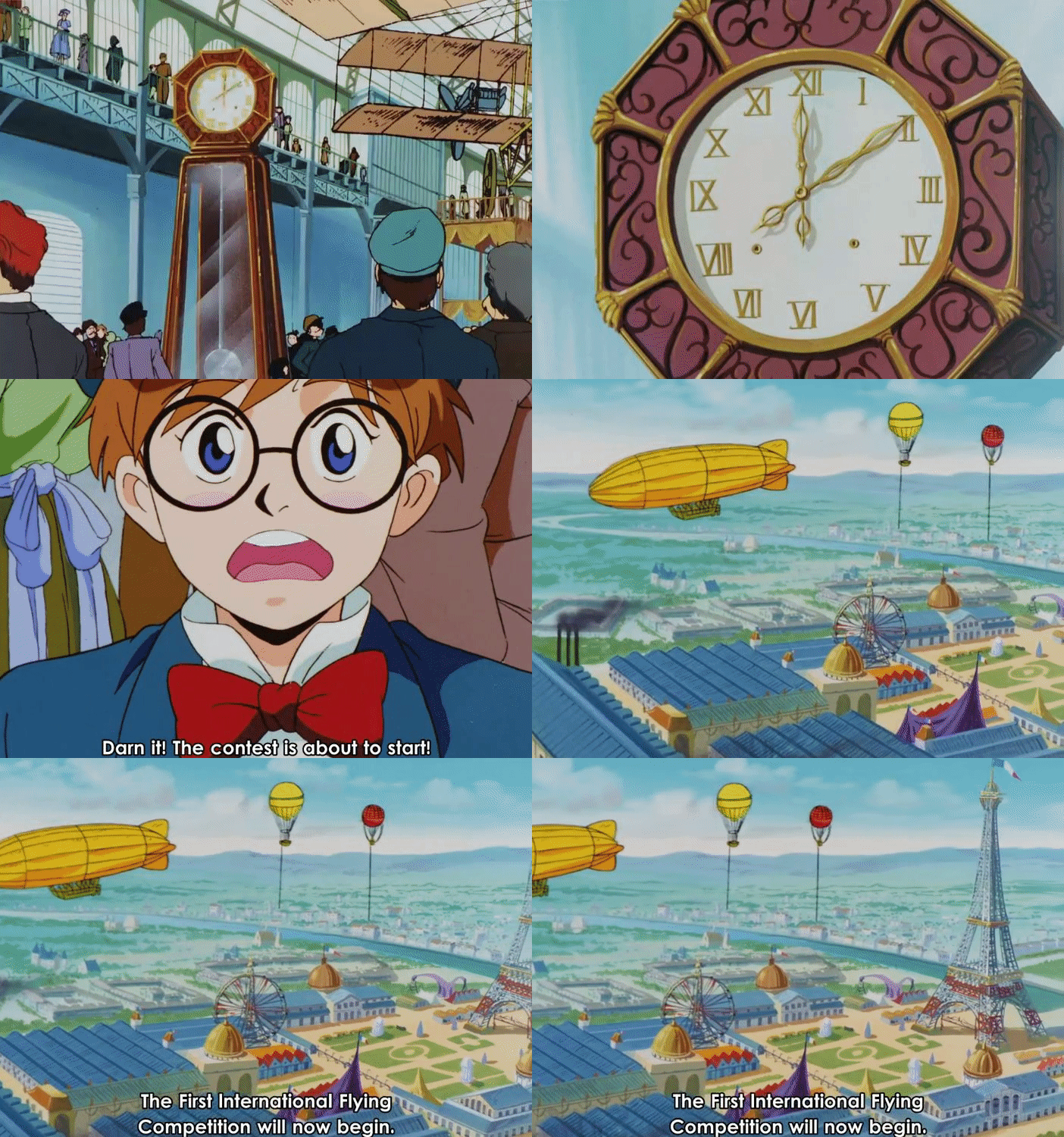
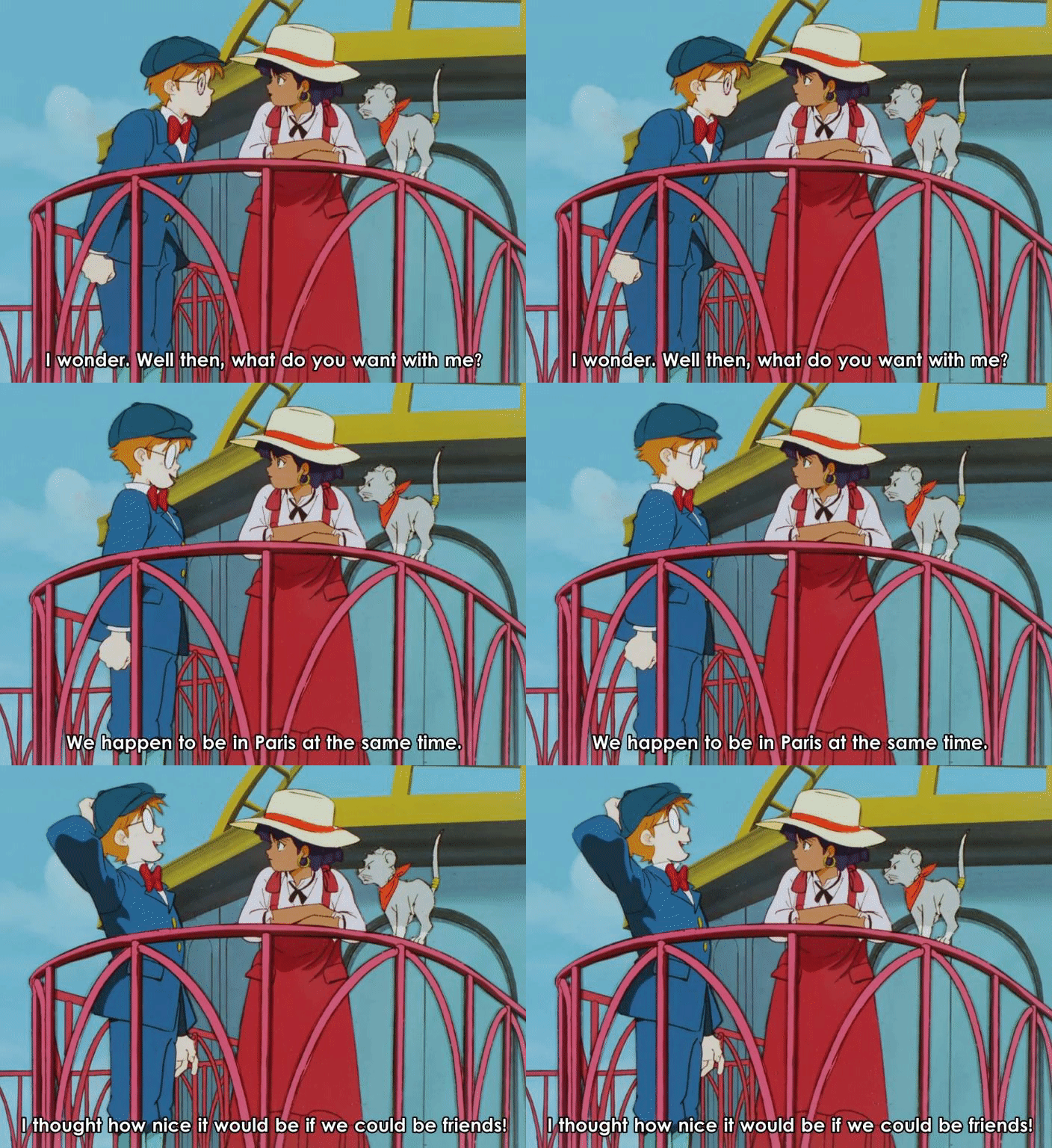


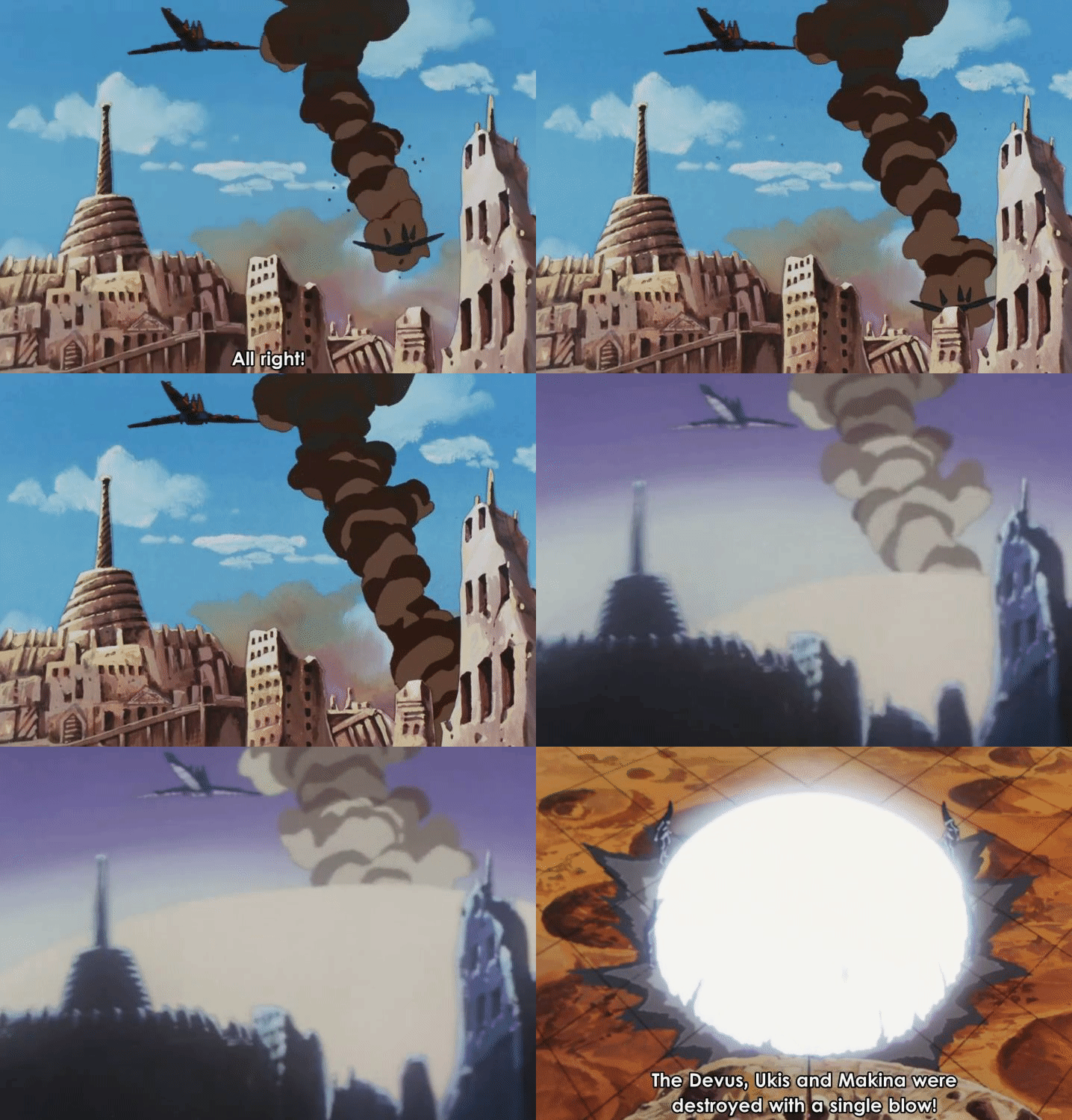
I am a sucker for old animation, I love Yoshiyuki Sadamoto’s character designs and most importantly, I love how well the animation holds up to this day. As and Evangelion fan and of Anno’s work in general, trying not to bring this up during this review is a chore harder than you might think because of how much of Anno’s style oozes all across the show. There’s a lot of dedication put to the battle sequences, this time instead of angels and biological mechas, we have underwater battles between giant submarines. Everything about these battles feels satisfactorily mechanical and realistic, if that makes sense. Explosions are particularly over the top as they always have been in Anno’s other works yet, detailed. You can’t help but feel the scale of destruction thanks to brilliant use of shots and animation sequences. Also, we cannot miss the use of fast-paced jump cuts to quickly establish context as well as tension. I loved the overall aesthetic of the Nautilus, its clear homage to Space Battleship Yamato; not to mention Gargoyle’s fleet of hardware like the Garfishes or the Flying Battleships.
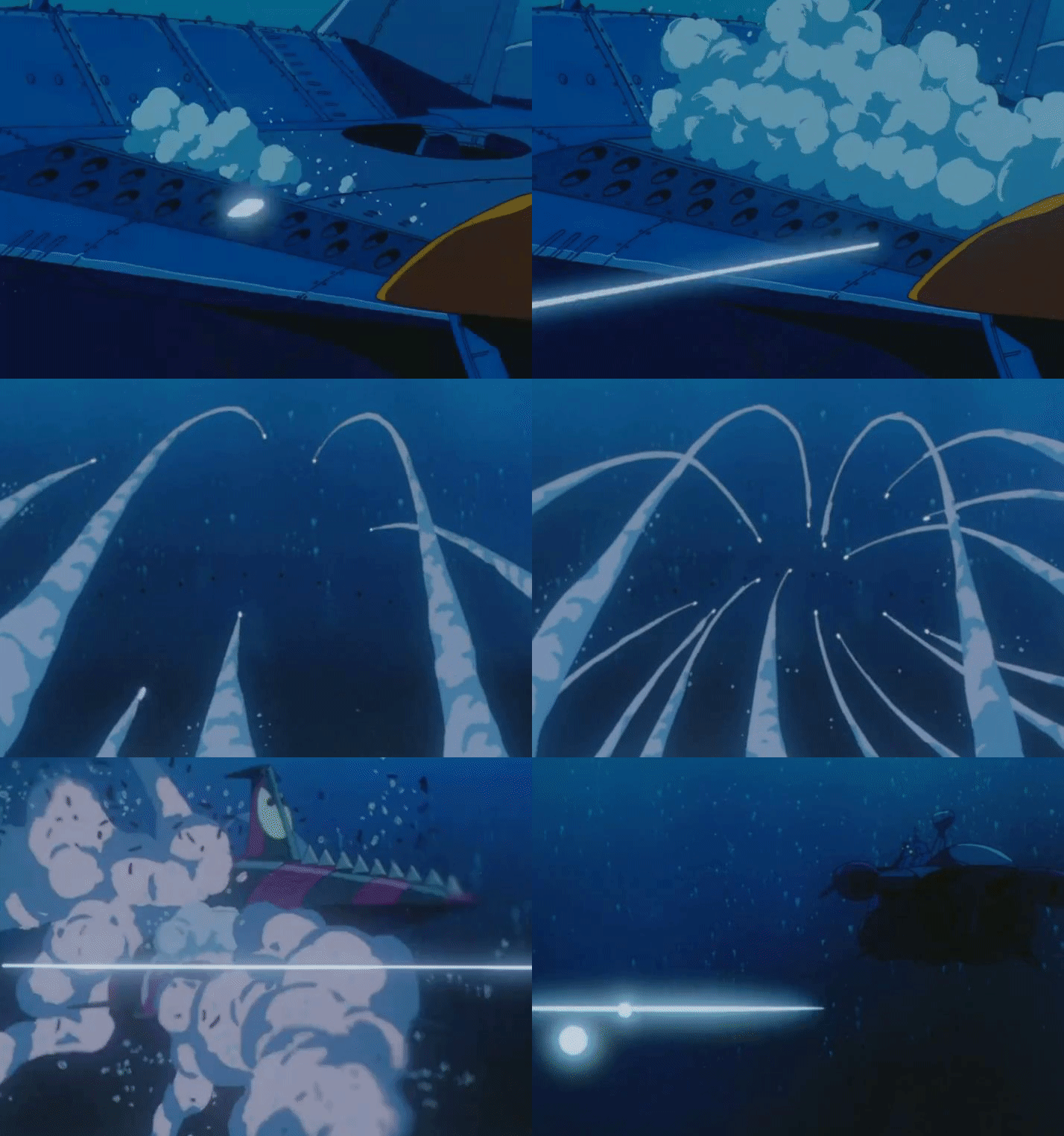
The musical score composed by Shiro Sagisu also reeks of what we have come to expect from Anno to the point that I can’t tell if it was Sagisu’s or Anno’s choice to make NGE’s soundtrack similar to Nadia’s. Even so, it is worth pointing out that this OST is great and adds a lot value to the overall production even when it was beginning to wane. (which I will get to soon enough)
Also, fun fact for those who don’t know: in the 3.0 movie of the Rebuild of Evangelion tetralogy, the song that plays when the Wunder flies for the first time is an homage to Nadia.


These are the aptly called “infamous” island episodes that have tarnished the reputation of this anime for so long and even demotivates new fans from giving this show its fair chance. However, I can understand why most people would totally get angry and dismiss the show for the lackluster handling of these episodes –if there ever was a point for their existence in the first place—.
What’s even worse is that this string of filler episodes come straight out of the emotional climax of the second act of the show on episode 22 when it seems that Jean and Nadia have reached rock bottom in their despair after losing the Nautilus, Captain Nemo and the Grandis gang. Then, on episode 23 until episode 29 the tone radically changes to a comedy and slapstick hell on the animation budget equivalent of Patrick’s belly button.
Spoiler, click to viewclick to hide

Completely derailing Nadia’s character development to the point of making her annoying. The story then picks up again for episodes 30 and 31; that is, till we reach the Africa episodes. (eps 32-34) That have been described as one of the worst in the entire show.
Now, I can’t say for sure just how bad these episodes are because, plot twist: I skipped them. Prior to my first watch I was aware of the infamy of these episodes and how much they hurt the cohesion of the story, so I did some digging before and after watching episode 22. Little to no convincing was needed on my part after watching episode 23 and realizing for myself how much tonal whiplash there was. Like, I remember Nadia saying –when asked about the disappearance of the Grandis gang—, that they “where bad people so they had it coming for them”; after literally 20+ episodes of them bonding and opening up to each other on board the Nautilus. What. The. Fuck.
Without giving it much thought, I decided to skip episodes 24-29 and 32-34. I just couldn’t bring myself to ruin all the momentum the show had been building up until then and to make things worse, bare witness to the protagonist of the show have her character be done so dirty.
Maybe.
Do I care?
No.
Was it worth it?
I think so.
I’m not going to get into the details of why the show took this direction because you can look it up yourself and this review is getting too long. But the bottom line is, that none of this had to do with Anno; the filler arc was mostly given to a different director and the animation decline was due to Gainax outsourcing it to Korean studios.
Nadia the Secret of Blue Water is a show that, with all its flaws; has earned a spot in my heart. The characters are beautifully written, extremely likable and relatable. The story is heartwarming as much as it is tense and gut-wrenching. The animation and direction holds up for the most part. The soundtrack is captivating, even though they really overused one specific song by the end. I really regret not being able to give Nadia a higher score, if it wasn’t because of the cohesion problems due to the filler episodes, I would’ve gladly given it a higher 9 or a 10 but the damage is done even if you skip the filler. We are talking about 10 episodes of wasted time that could’ve been used to give the third act a little more time to breath and let the story flow more naturally from episode 22 onwards. But, ladies and gentlemen, what’s done is done…
I don’t want to imply that Nadia was a letdown by any stretch of the imagination; even after all the empty space between episodes 22 and 35, the show manages to comeback on its animation to the levels we were used to beforehand and keeps the interesting narrative that it was building up to. To conclude, Nadia the Secret of Blue Water is a journey about many things: self-discovery, the path between being a kid and reaching adulthood, technological progress and, of course, humanity’s equal proclivities to produce good and evil. I think this last theme is the one that could resonate more with what Evangelion would do later on; the main difference being that Nadia presents this on a bigger scale, using the medium of technology as an example to prove its point of humans being able to achieve either a lot of good or a lot of evil when given the power to do so, while Evangelion does this on a more personal level, appealing to a more existential angle about life as a chaotic state (bad things and good things happen, without us having any say in it) that can only be given sense by our appreciation of it.
Nadia is a show that deserves to be seen more, to have bigger audience. Whether this anime is better than Evangelion or anything else Anno or Gainax has done before is completely up to the viewer. However, regardless of how you feel about Nadia, seeing how the Rebuilds served as a gateway for new fans to revive Evangelion after a long time; if there ever comes a time where “Rebuild of Nadia” becomes a thing, (granted that it’s given to Anno or any person qualified enough) I would welcome it with open arms.
