86 EIGHTY-SIX
a review by Lownar
a review by Lownar

Let's start off by getting one thing straight, I am a casual fan of this series who picked it up like 3 weeks ago. I have not read the light novels, I do not know what is going on in S2 (which is currently airing) and I had missed the original hypetrain when this first released. Point being I have no preconceived notions or concerns about this anime prior to watching it and I am not affected either way by the outcome of this adaptation. Aigh lawyer stuff outta the way, lets talk some EIGHTY-SIX
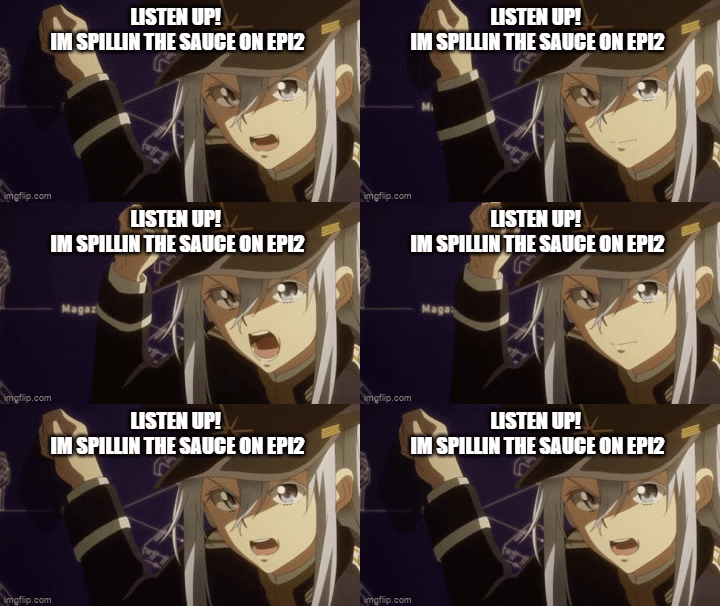
Lena is introduced as an extremely caring and sympathizing individual, and she is alienated from the other alba because of her ethics. Even though she could have an extremely easy life (enhanced by high family status) Lena keeps opting to walk a rockier, but more noble life path. She isn't satisfied by virtue signaling; we watch Lena's story as she tries to find ways of turning her desire to aid the 86 into actions that will actively help them. In epi2 she takes over her classroom to explain to the other alba students (and the audience) about the true history behind the government’s classification of the 86. At first Lena seems to be the only alba in her society that is concerned or even aware of the mistreatment of the 86. The 'official' story is that the 86 are processors fighting a robot war with zero human casualties, but Lena lets us know that the Republic has redefined the other human races not have rights and relocated them to the 86th district, where they are conscripted into processors to fight. Now that doesn't make Lena a saint or perfect, that just makes her factually correct.
From a more pessimistic perspective, Lena is also portrayed as an innocent, naïve, bleeding heart. Her first big “we are not the same” moment was when she inadvertently asks the members of Spearhead for their pet cat’s name before asking for the soldier’ names. She says, "I wasn't treating the you as humans, and didn't even realize it." Lena comes to understand that her personal prejudice isn't based on malice or superiority or twisted sense of survival; but that she has her own type of bias based off of unconscious innocence and ignorance. Lena’s second epiphany moment is when literally every single person in the story knows that the 86 are on an unredeemable death march, but Lena doesn't recognize all the signs and can't take the hints. Only until she is sat down by the adults in the room who tell her the obvious truth to her face (over the paraRAID w.e) does she finally get it. Lena's optimistic outlook blinds her to the reality that everyone else sees, which is that no help is ever coming for the 86. And lets be real, this was a reveal for me as well as Lena; I was just as innocent as her. After rewatch, it's painfully obvious how cringey her positive words sound to the people who know what empty promises she's making, and I'm embarrassed I was standing in Lena’s shoes at one point... so don't feel bad Lena, I'm just as naïve as you.
As Lena tries to assist Spearhead more and more, she mentally starts to consider herself one of them, like a fellow teammate. First she draws a collection of post-its with Spearhead's faces so she can visualize the real people as she talks to them. As episodes pass, Lena starts sacrificing more and more for Spearhead; sneaking into classified areas to steal information to help as their handler, then smuggling them supplies and bribing guards with her own money, eventually disobeying the military authority she is serving under entirely. Both her uncle (and superior officer) Jerome and bestie Annette implore her to stop focusing on the unfair treatment the 86 endure. They tell Lena it is impossible for her to make meaningful change so her efforts will not only end in vain, but are also destructive to herself and harmful to other alba around her. That her actions will only result in her own disappointment, resentment and guilt. Annette's "I hate you" moment was an outburst caused by how Lena's continuous pursuit of helping the 86 was undermining a decision Annette made a long time ago, which was that, "there is nothing I can do to help those people." Annette’ guilt is always brought to the surface whenever Lena is around and she hates Lena for making her constantly re-examine herself and her decision.
Lena's confrontation with Jerome during epi8 was the breaking point of her arc. I think they had three confrontations before this one, but their disagreement was always defused by of their respectful familial bonds. This time the gloves were off, and each side went for the killshot. The two were positioned opposing each other with Lena wrapped in sunbeams and her uncle draped in shadows. Jerome reveals that the reason all the 86 have to die is so the government can shed their oppressor status after the war is over, in other words, erase the evidence of their actions. Lena’s final fall is when Shin tells her not to call him anymore. The moment you loose everything is the moment you have nothing left to loose. So what do Lena do? She disobeys direct orders and guilt trips and blackmails Annette to get her to help save the lives of Shin and the final members of Spearhead. This is Lena' arc; finding a way to unbecome someone who just cares and to become someone who acts. Lena at the end of S1 has become an alba that will give it all up for the cause, just like the alba who took care of Raiden and Shin and like OGLaughing Fox and Lev and especially her father. Now things don't end the way Lena expects, but I'll talk about that later.
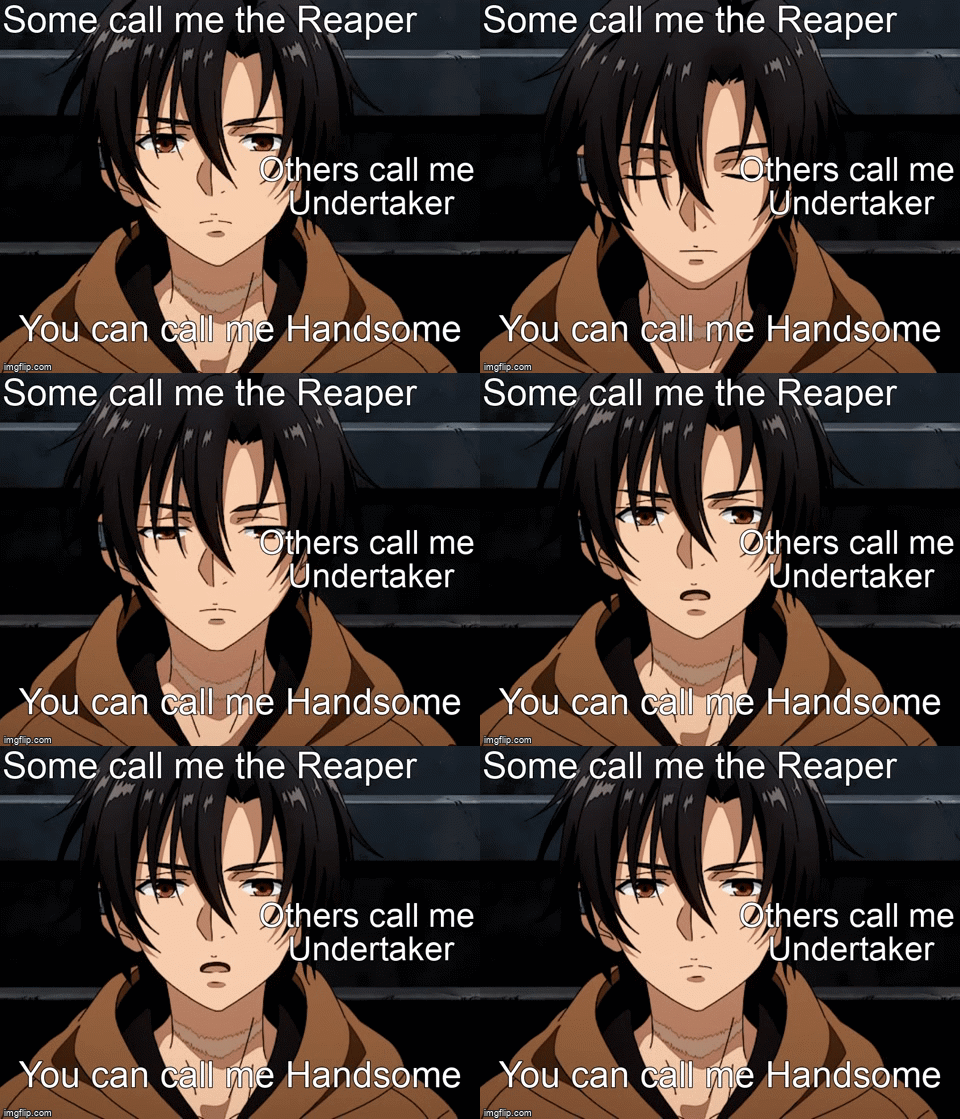
Our deuteragonist is the mature stoic type and the commander of his squad, Spearhead. He manages to stay focused on his own goals while still being a true leader by mentoring his comrades along his own journey. Shin is the type of guy to focus on his men and their wellbeing, while considering his mission reports to be busywork and sends in the same ones bc he knows the higherups don't read them. Shin also has some sort of supernatural telepathy and can ostensibly hear many types of things mentally. The first important type of thing he can hear is the static processing of the Legion. Shin is able to sense telepathically the location of the Legion and their moments better than the alba technology can, and he prepares his team accordingly.
Now the terrifying thing about the Legion is that their CPU are compatible with the neural systems of human brains, and the machines copy human brains to increases their processing power. The 86 call these Legion "Black Sheep" and Shin has taken it upon himself to kill them. He fears when one of the Legion harvests an undamaged brain, calling these Legion "Shepherds." Shen isn't just mercy killing his comrades, he is making sure the Legion aren't running around with a bunch of undamaged human brain. The second important thing Shin can hear telepathically are the dying thoughts of his fellow 86 whose brains have been harvest by the Legion. Shin should be the most psychologically unstable person in the anime, not only because of all the death he has witnessed, but because of all the voices he hears in his head. When the alba around Lena introduce the audience to this guy called Undertaker, they makes it sound as if Shin would “break” handlers verbally or show them visual carnage that an alba couldn't stomach. But what was actually happening was Shin using the paraRAID to sync up and share his sensory experiences with his handler and it would drive them mad. We see Shin do this with Lena once she agreed and the other 86 cut the line; even Lena went bananas.
Now I guess Shin's parents were citizens of the Empire that hosts the Legion, but some time they must have came to the Republic, only for Shin and his family to be reclassified as 86. Each member of his family gets conscripted, until it is Rei's turn, who is Shin's brother. Rei is unable to control his pent-up rage at the powerlessness he feels for his situation, and in a moment that Rei will regret for the rest of his life and that will scar Shin for most of his, Rei unleashes a torrent of violent hate onto Shin. While simultaneously internally denouncing his own behavior, Rei chokes Shin out and scars his neck. This scene is the most psychological intense moment of the show and sets the terms for Shin's arc. The third thing Shin can hear telepathically are the thoughts of his brother, who has become a shepherd. While shepherd Rei seeks to repent for his past actions by "saving his brother" using means of assimilating Shin into the Legion, Shin seeks to "save his brother" using means of killing Rei consciousness (or w.e is left of it) so he may rest in peace. With a lil help from his friends, Shin ends up victorious. During the end of epi9 and epi10, you can tell visibly that Shin laying his brother to rest and escaping conscription has brought him an inner peace not seen in the show until this moment. Shin always wears a scarf around his neck to hide the scars, but after his brother is freed from the Legion, Shin now wears it on his arm. With shots of the scribbled out pictures of Rei finally starting to come into view, we feel the closure to Shin's arc.
Shin acts much happier now, almost relieved or maybe even removed. Raiden is concerned that Shin has no more purpose, who walks around with little care for his own well being like he has a death wish. When Fido takes a bullet, Shin says goodbye to Fido by leaving his box of dogtags with him. It was like Fido had carried the memories of Shin’s comrades his whole life too and when Fido fell, Shin decided to leave the dogtags with the real holder of those memories. This is the behavior of someone putting his affairs in order before… After that moment, the remaining members of Spearhead face a quick decline of resources, running out of ammo, running out of food, running out of chances to avoid the Legion, running out of mechas that worked or fuel to operate them, running out of time in their borrowed lives. Epi1-9 was like a long movie, with Epis10,11 feeling like an epilogue, or more likely a bridge between the climax of S1 and the events and story of s2. I really hope this isn't the end of Shin's story, but that's where we end for now.
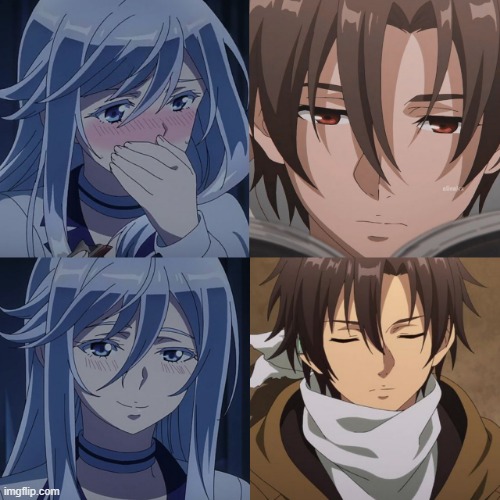
The official reason the handlers communicate via voice is to make the job easier for alba by distancing themselves from becoming attached to any 86. For most people this would help keep a distance between work and morality, but for Lena the voiceonly communication is doing something else. The late night phone calls every night or at predictable times, always being semi-connected with Shin, enough to share her feelings but from a large enough distance she knows it’s safe and nothing would ever happen buuut…
There is something very romantic about having voiceonly communication during war times and this is best exemplified during the changing of perspectives between our two main characters. It's easy for Lena to build up romantic feelings even though she fights her impulses to indulge in thoughts of being two star crossed lovers. My fav romantic moment was when Lena is uncomfortable at her uppity party and Shin calls to check on her. Her excitement to sneak away and talk to him was palpable. Also Idk if this is romantic but I really liked when Lena whispers into Kurena’s ear, “I don't want to him to die either.” Two girls who like the same guy teaming up to save his life, maybe not romantic but they def had to put ego aside or Shin would have died otherwise.
But it's obviously more romantic for Lena because of her caste; she has the (at the most, luxury, or at least, opportunity) to feel this way. Shin is ready to die any moment, and lives for a purpose that has nothing to do with Lena. Now you can tell Shin really enjoys talking to Lena and spending his time that way too, and I think it was epi10 that the remaining Spearhead remarks how Lena comforted Shin with their late night chats. But for Shin, I think more than anything he enjoyed having someone to talk to that he knew wasn't going to die tomorrow. Lena was starting to fall for Shin, as well as having strong attached feelings of finally being a part of something and belonging. And when it was time for Spearhead to move on past her, they didn't hesitate to say a kind goodbye and not turn back. In the end, no matter what Lena did for the 86, she wasn't one of them. This was Lena's third virgin moment.
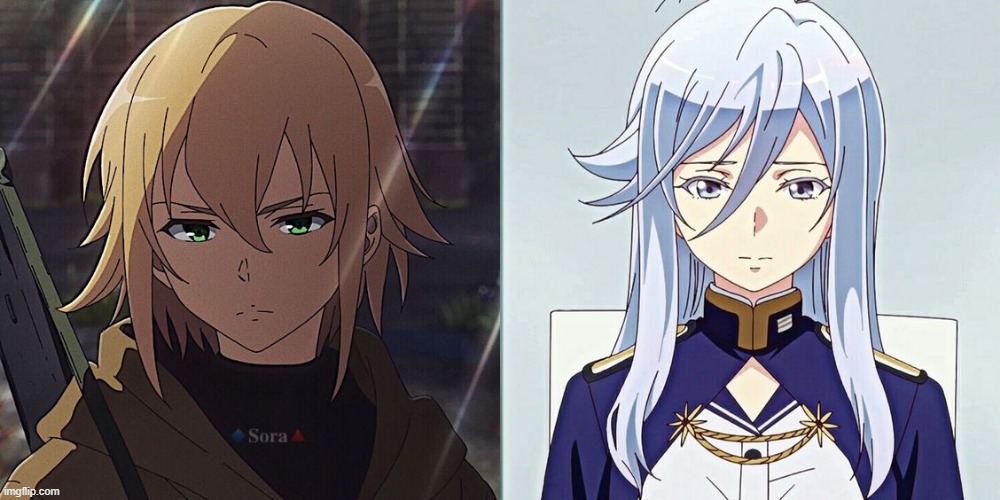
“So whose fault was all this? Who should we blame? Who should we hate? Who are the bad guys? Well its obvi right, blame and hate the alba, they are the bad guys. They are the ones that subjected the other races to form the 86 in the first place! And each member of the alba society is either willfully ignorant of the atrocities done by their government or they know but turn a blind eye. Even though not personally responsible, ninety nine percent of the alba don’t do anything about the circumstances they were born into to help the 86. Now technically most alba are told convenient truths that they don't question, which might not make them evil, but does make them guilty! …I mean I guess there are a few good apples since we learn that Lena's father was the one who instilled these ideals in her, so those two alba are at least not the worst… But even they are guilty of some complacency! They only pretend to care and they don't try hard enough! Unlike some of the other alba that give up their livelihoods entirely and fight alongside the 86, like Theo’s commander and Lev. Those are the alba that care. They gave everything! ...so I guess a few alba are good after all... And ofc there are some members of the 86 that are half alba like Anju and (I think) Haruto and they aren't bad guys… Actually, now that I think harder about it, a lot of the 86 can be mean and unfair just like the alba. And Anju isn't like those mean alba... OGLaughing Fox wasn't like that.. so wait… who are the bad guys again?"
Did you follow my soliloquy? Its easy to hate 'the other' generally, but if we think about things a lil harder, its not so black and white. Blaming all the alba collectively is along the same bigoted thought patterns as the way 86 are being treated by the alba. This is one of the biggest morals of the story, and it was most accented during Theo’s moment with Lena (but it is repeated again and again.) How hating the people who have wronged you is the same as to become like them. I love how this anime depicts anger transitioning into regret. When Theo approaches Shin and asks him if he thinks OGLaughing Fox would have verbally abused his handler like he did, Shin says that OGLF would not have, and Shin is sayin so because that is what Theo believes.
Later Shin tells Theo that he would regret his choice of words if not their meaning. This is the big moment where the author wants the audience to see how holding a grudge against a whole group of people would be self-defeating for Theo and Spearhead. While Lena is struggling externally to find a way to help Spearhead, Theo and other 86 are struggling internally to accept it. When Shin reminds Theo that he can stand up for his point while still picking better words or tone, Theo tells Lena something close to, 'know that even though you are trying to help, no matter what you do, as long as you are inside the walls that you are not the same as us and never will be, and that it's best to learn this lesson right now.' This moment is foreshadowing Lena’s heartbreak at the end of epi9, but the narrative is also focusing on the 86 not returning the hatred that the alba have for them. This is because it breeds the attitude inside you of feeling better than those other people. And that those feelings will make you act like your oppressor.
______

My fav part of EIGHTY-SIX is this anime's story telling structure and when choices are made for when to cut back and forth from Lena’s to Shin’s perspective. Not knowing what is going on the other side of the coms until rewatching the same scene from the other person’s perspective is one of the best narrative tricks to create suspense that I have seen in a long time. Quiet often, the audience will get to see from Lena's or Shin’s perspective a specific scene or a moment and be left wondering, “wait, what was really happening over on the other side?!? I'm missing context!” But we have to sit and wait in suspense and deal with the perspective we have, just like in real life. The anime will cut much much later and rewind and the audience gets new feelings on the same scene or moment because we rewatch it with a new perspective. This is done every episode (except the last 2?) to great effect and adds a lot of minor mysteries to the larger ones.
The bigger mysteries that are dripped are done so more conventionally, that is via plot reveals. Every couple episodes there is a new reveal that changes the way you look at the past few episodes, for example: how the processors fighting the Legion are actually real people, how Shin ‘somehow’ knows when the Legion are coming before the alba do, how the Legion uses human brains as husks for better fighting, how the 86 formed into unit to never return, Who is Rei and then how Shin almost died from his brother’s assault, how Annette’s friend was Rei all along just before the races were segregated, how Shin is actually trying to kill Rei the whole time. Each time you get a new reveal you feel like the story has really progressed, and when reveals keep coming you stay engaged. Most of this information coulda been told to the audience at any time during the story, but instead its dripped strategically to you in a really steady way. I think this is a very gratifying and honestly an underrated part of storytelling in general, because when and where the author decides to infodrop can dictate pacing. If its too much info all at once or all show and no tell, the audience can get lost. But if it's too slow for plot to be pushed or all tell and no show, then the audience's attention will likely wonder.
EIGHTY-SIX succeeds in this aspect most notably and with flying colors.
______

Other symbolic moments I noticed are shots of spiders when the legion is around or being discussed. Pieces of Lena’ uniform slowly falling off as she continues on her journey. How headless knight(Shin) is the one removing everyone else’s heads. How the 86 female soldier who got the old maid in her card game was the next one to die. Still frames of Lena’ food remaining untouched at lunch because she has no appetite, or the wide shot of an empty 86 cafeteria on the morning of the final mission. When Shin takes off his scarf and rei’ figurative hands around Shin’ neck disappear. The coolest one I noticed was that the Republics’ statue girl holds a sword towards the sky and a flag representing their virtues. But in the 86 camp she is fighting to oppress, her flag is inverted, and her sword is pointed downward at them.
A point that Annette makes is that alba call the races of the 86 'pigs' because they failed to evolve, but the fact that the paraRAID doesn't work on animals means by definition that 86 must be human (seem to me the race who has telepathy would be more evolved but w.e). Only thing ill say about the redefining of words in this way or how Jerome talks about the redefining of the virtues of the Republic, is 'Squealer from Animal Farm.' Also Rei's story book is titled 'The Skull Knight', which is an obvious reference to Berserk.

Are the Spearhead soldiers killed too fast or is it hard to get emotionally connected to them? Maybe; this was obvi a choice made to keep the focus on our two main characters, so I think it is ok. After the ‘no 86 will return’ reveal I thought that everyone in the 86 was going to die, so I think in the end it actually added to my emotional connection for the characters that survived.
Are the Spearhead depicted only mildly gloomy or too happy as they dwindle down to nothing? I would also say maybe; but that also seemed intentional. The 86 attempt to spend each day as if it were their last, and you can tell how close and happy they all are together, they live in the moment. And it's not everyone, all the time. I remember the character Anju had a somber quiet moment that no one saw but Fido, there are a few more like that. Personally, I love that the character who has the hardest time getting over the death of the conscripted soldiers of Spearhead is actually Lena, who keeps their lil post-it notes in a glass box because she doesn't want to throw them out. The Spearhead know from the beginning of the story they are all gonna die eventually, it's only Lena and the dense audience members (like me) who think these people have a chance.
Seen a lot of criticism of how this story isn't as deep as it could be, some say the racism themes are too heavy handed, some say they’re too scarce or lame, or that the morality is spoon fed. That's def gonna depend on the person watching, but I'll say that I never felt this way.
My nitpick is that some of the flashback moments combined with the changing of perspective between our two main cast was definitely confusing at times. Quickly showing a date to signify a flashback for a second on screen assumes I know what the present date is and whether I'm going forwards or backwards, and this anime takes time jumps weeks and months at a time. I sometimes got lost in the time line, while other times it was not always clear to me what was a flashback or what is a perspective shift (which also act like mini flashbacks). Fido’ death scene was a specific moment where it was hard for me to tell how he died or when he died the first time I saw it happen. I think those moments could have been set up clearer. This anime moves fast so I bet it is pretty normal to miss stuff.
14.5 out of 18 users liked this review
