Tokyo Revengers
a review by tsukisyama
a review by tsukisyama
I just wanted to acknowledge that right off the bat, since this review may be a bit more scathing than the one I wrote on Daiya, and the other ones I have planned for the future. So, a disclaimer: I am not writing this to dunk on anyone who likes Tokyo Revengers, nor do I think little of Ken Wakui or any of the LIDENFILMS staff. Producing a massive manga series for years is tougher than we tend to give credit for (as is animating, sound-mixing, voice acting for, etc. an anime), and I’m just some person who likes overanalyzing things. That said, I’m open to criticism on any part of my analysis, so please leave a comment here if you have any reactions to my thoughts that you’d like to share.
It’s hard to summarize everything I felt while watching, but my main point is this: Tokyo Revengers is a series that contains many basic aspects of what makes a good story. Premise, character designs, hardships, combat scenes, and a main character’s determination to see his goals through to the bitter end, just to name a few. However, it falls short in that it does not explore character depth in any meaningful way, resulting in a story that feels convoluted and completely directionless at times. My personal opinion is that the series’ potential outweighs its execution, which made watching the anime pretty disappointing for me overall.
Reviews of Tokyo Revengers, however, seem to be all over the place. Despite its high ratings on this site, most of the reviews seem to be much more critical. A brief search on YouTube shows even more variance, with the most highly viewed videos on Tokyo Revengers ranging from over-the-top hype to severe criticism.
With that out of the way, I’d like to start with why I even stuck with watching a 24-episode anime (that still doesn’t even have subtitles on Crunchyroll) that I didn’t like very much from the start.

Personally, I agree with the general consensus that this is a good (if a bit sexist) premise for a story. I’m a huge sucker for shows and video games that use time travel as a means to deal with guilt and regret (I rated Erased and Orange pretty highly, despite their respective controversies in their time, and I’m a big fan of Fire Emblem: Three Houses and the implications of its New Game+ mechanic). Tokyo Revengers is pretty forthcoming about what its plot will entail in its first episode, and, solely based on my preferences, I knew I’d continue watching for this series’ premise alone. That said, if you don’t like this premise, this show doesn’t have a lot going for it, so I suggest just skipping to the bottom of my review for some other recommendations.
Also, another reason I stuck with the show that feels kind of stupid to admit: I really like Official HIGE DANdism (big thank you to my friend for recommending <3). This is one of those anime where the OP is just better than the actual content of the show. I’ll continue listening to Cry Baby for a long time, even after my love-to-hate-it fascination with TokRev inevitably subsides.
As for other things that kept me watching Tokyo Revengers: a few characters are pretty cool, both design-wise and personality-wise, that I’ll get into later. Many other reviewers on this site pointed out, too, that a lot of the anime episodes end on cliffhangers – which is generally seen as a cheap way to pique viewers’ interest for the next episode, but isn’t really exclusive to TokRev – and this made clicking the “next” button super easy. I don’t think there are many reasons beyond that though, so let’s get to the nitty-gritty.

Normally I don’t care that much when an anime has a shaky plot (I couldn’t for the life of me tell you what the plot of Durarara!! is, despite rewatching it like three times), because plot doesn’t matter much when you’re using other good storytelling techniques to keep your audience’s interest piqued. Like, I generally just don’t care much if you use some bullshit to get from Point A to Point B, just give me some sort of conflict I’m invested in, and I’ll be fine. That said, Tokyo Revengers relies heavily on not-so-great storytelling techniques, like the aforementioned cliffhangers, which leaves the plot we’re left behind with up to scrutiny.
If the Tokyo Revengers anime spent more time developing its characters, I think these inconsistencies would be a lot easier for me to ignore. But that unfortunately isn’t the case. As viewers, we’re subjected to a series of scenes and a slew of character introductions that fall into place in a certain order, simply because it’s convenient for the plot to do so. Not for any other, deeper reason. This makes the plot messy, hard to follow, and ultimately just really unsatisfying.

We’re first exposed to the series’ take on gang violence in the very first episode of the series, when Takemichi gets beaten up by some guy with a bat whose name I don’t remember. We come to learn that this bat-wielding guy is just a relatively unimportant cog in the machine that is the Tokyo Manji Gang, but his violence is honestly really ruthless from the start. We see Takemichi’s battered and bruised body after the other guy finishes with him, and it becomes really clear that the fight was one-sided. If I remember right, this dude’s lackeys even tell him to lay off at some point, since Takemichi would probably die if he kept taking hits. Even the background characters have the self-awareness to say that this shit’s gone on too far.
I personally don’t love bloody fight scenes, and I’d never watch an anime or play a video game just for that, but I’m usually willing to overlook it in a good story. Hakata Tonkotsu Ramens is a good (if criminally short) example of excessive violence portrayed in anime that works. In fact, I totally recommend watching Hakata Tonkotsu Ramens instead of TokRev if you’re looking for something sleazy, gritty, and action-packed with deep characterization. In Hakata Tonkotsu Ramens, we see the impact that witnessing violence has on an impressionable young character like Lin Xianming, and, despite knowing that he’s probably going to spend the rest of his life surrounded by this violence, he still has a found family to come home to. Tokyo Revengers, meanwhile, is completely bereft of this sort of structure or found family nature. It instead favors the absolute physical annihilation of Takemichi in every fight, supplemented by a complete lack of a support system in Takemichi’s life.
This is, ultimately, what happens when the main character in a gang-centric story has no wits nor physical strength to his credit. Takemichi pretty much only runs on determination to win. To be expected, but honestly, it’s not the most fun thing to watch one-sided combat that we’re supposed to take seriously.
As for the other characters’ combat techniques: there’s not much to say about it. We have Mikey, who can knock most people out in one hit for some reason (looks like Saitama’s got some competition), and Draken’s superpower of being like 6’2” while everyone else is a shrimp, and… that’s it? I dunno, it says a lot that an anime that contains so much violence has pretty much no discernible fighting styles or techniques from over 90% of the main cast. I get that there’s probably not a lot of differing ways to portray punching or kicking a hyper-realistic story, but come on, the main character literally jumps through time! Surely they can come up with something other than Mikey’s super kick or whatever with a little bend of the imagination.
I also want to leave a little note about the fight scenes’ choreography. Like the plot, they can feel a little all over the place, but there’s a couple massive spoilers I’d like to cover in particular, included below.
(Also, though this entire section is about exaggerated violence in Tokyo Revengers, the part under the spoiler is especially egregious, and deals with suicide, so please stay safe and avoid it if you feel it’s necessary.)
When Draken gets stabbed, we don’t even see what happened, or how the other person got the upper hand for even a second. Prior to this point in the anime, it’s really hard to imagine Draken losing at all, since he seems to decimate everyone in his path, and comes across as a cheap grab for heightened stakes in the plot. And even considering those heightened stakes, there’s a lot of plot armor protecting Draken from actually dying, despite being moved around with a fatal knife wound, which leaves viewers with a poor sense of what the consequences of Takemichi’s actions really are.
Additionally, I’d like to cover Baji’s death, since I’m still kind of dumbfounded by it. On a character writing level, it doesn’t make much sense to introduce a character at the start of a short arc just to kill them off by the end of it, but they did it in Bungo Stray Dogs and a handful of other shows I really like, so I’ll give TokRev the benefit of the doubt there.
Still, the choreography of this sequence seems overly inconsistent. Essentially: Kazutora stabs Baji, but Baji looks and sounds completely fine afterwards. He scales a giant mountain of trash, effortlessly knocks out at least ten of the Valhalla gang, squares up to fight Kisaki, and then suddenly collapses, near-death. Then, after being carried away (possibly by Chifuyu?) and witnessing Mikey beating the shit out of Kazutora, Baji uses the last remaining energy he has to kill himself.
This is already running a pretty slippery slope here, but I’d just like to go on the record to say that this is a really unhealthy depiction of suicide. Not that there is a “healthy” way to die by suicide, but the anime hardly ever acknowledges how difficult it must’ve been for so many people to witness someone kill themselves over a petty gang fight. The narrative around this suicide in the show seems to be that suicide is the answer when your death is already assured, and solves your friends’ problems, which sets a really dangerous precedent that viewers may internalize. I would’ve really appreciated a deeper conversation between the founders of the Tokyo Manji Gang after this happened, but it really didn’t: the focus, as always, comes back to Takemichi’s saviorism.
Ultimately, the emphasis on violence in the Tokyo Revengers anime does more harm than good within the overall trajectory of the story. This is because the violence becomes the series’ main priority, over the development of its characters and the clarity of each important development in the plot.

At first, it’s easy to write off Takemichi as a self-insert type of character for an adult male audience: he starts as a 26-year-old who works as a clerk in some sort of store that sells DVDs, seems completely preoccupied with how he hasn’t had a girlfriend since middle school, and projects extreme levels of cowardice in physically intense situations. He’s a loser, in the same way that you might see the player character in a dating sim as a loser. But he’s presented with an opportunity to save Hinata, and suddenly he’s just a little more courageous than before. This effectively gives certain populations of viewers a reason to root for him from the start, since they should identify with parts of his personality.
But the tides quickly turn as the series progresses, and the plot becomes more convoluted. Suddenly, the weight of every single member of the Tokyo Manji Gang’s life is on Takemichi’s back, and he’s really not prepared to do any heavy lifting. Aside from being physically brutalized by every enemy he faces, Takemichi must be emotionally eviscerated by the sheer amount of traumatic experiences he witnesses. And at the end of the day, he’s left with the bottom line that every death is his own fault, which sets up a really unhealthy precedent. In this sense, I’d say he’s a bit more fleshed-out than a self-insert character, but not in a positive way in the slightest.
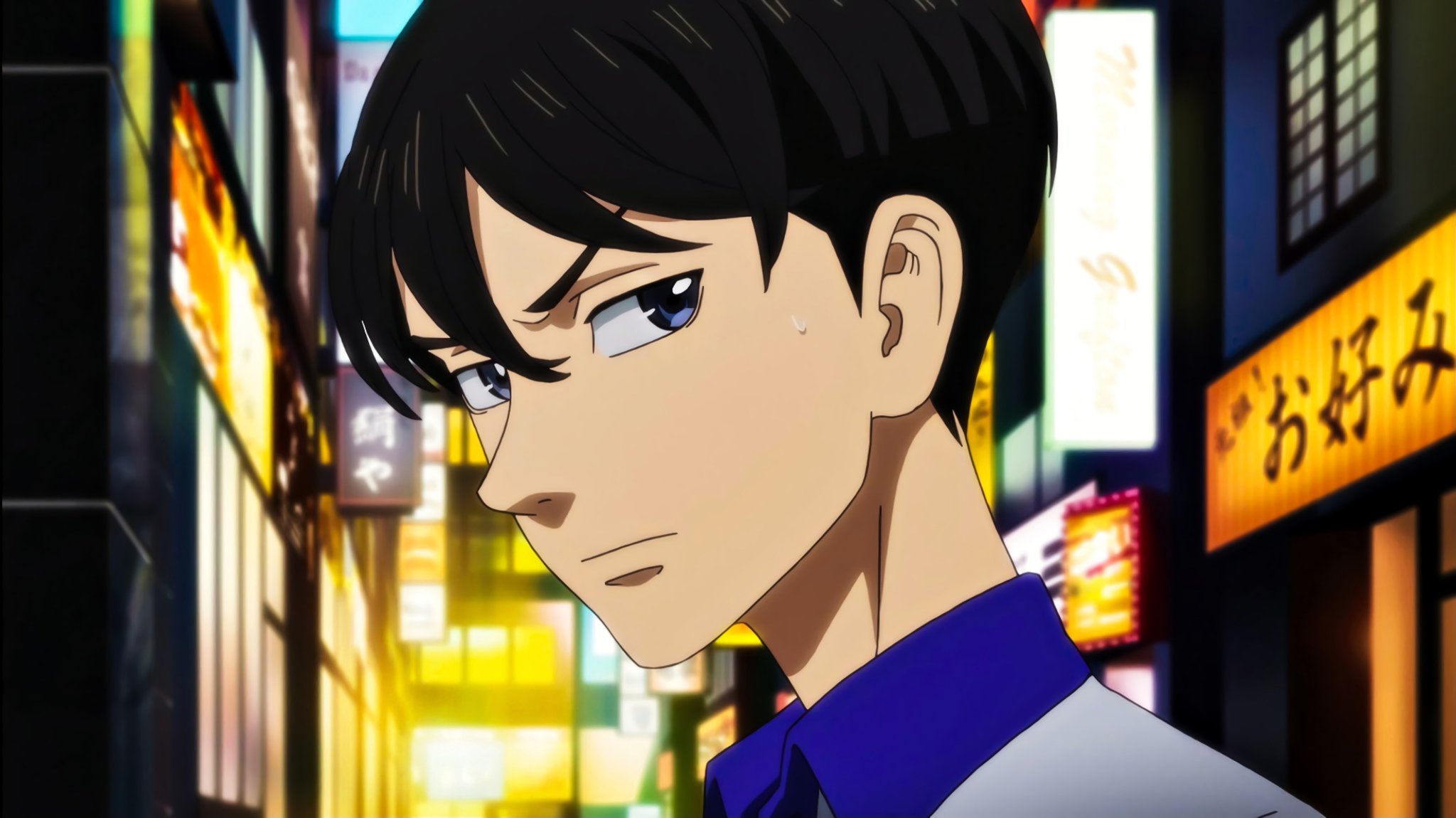
There’s not much for me to say about Naoto, aside from the plot inconsistencies I mentioned before. He wants to save his sister, and he trusts Takemichi to do it, but otherwise doesn’t have much weight on the story itself. I’ll give him a pass for the past stuff, since he’s like 10 years old then, but Naoto really is one of those characters who deserved even a little bit of development. The whole sequence with Hinata, Takemichi, and Naoto back at Hinata’s apartment, too, was really frustrating, and I still don’t really understand why Naoto trusted Takemichi to save her in the first place.

Alright, so I’m well aware that I’m making at least 8,300 enemies on this site by saying this, but I’m just not a big fan of Mikey. I understand that he’s an important founding member of Toman, and gets probably the most fleshed-out backstory out of anyone in the anime thus far, but his overwhelming power is at the crux of why many of the fight scenes just don’t seem that great to me.
When you introduce a character in a serious anime with physical strength without parallel (like Gojo or Dazai), you’re going to need to give reasons why they’re not present in every single fight, to prevent all conflicts from being one-sided. With the Tokyo Revengers anime, it becomes extremely obvious that the writers are just scrambling for reasons why Mikey isn’t there all the time, which gets really tiring. I also have a note about this from the manga, so avoid that if you don’t want to see spoilers.
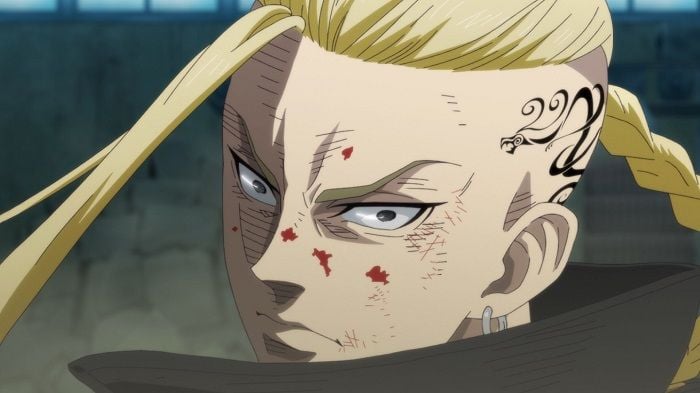
It’s been a while since I’ve said something nice, so here goes: I like Draken! I think his design is pretty cool, and I like how he balances out Mikey’s usually carefree personality with a straight-man sorta deal. Aside from Mikey, he’s one of the only characters who gets some sort of backstory, even though it’s sort of written off as a joke. He’s one of the few characters who seems sensitive to the real-world consequences of gang violence who unintentionally get caught in the crossfire, which makes him respectable in my eyes. I also really like his voice actor, who voiced Takao in Kuroko no Basuke and a bunch of other interesting roles.

Back to the characters I’m not fond of – I don’t find Kisaki to be a well-written villain at all. I almost prefer Hanma, because at least his design is a lot more distinct with the hand tattoos. Kisaki is consistently presented as an omnipotent, unstoppable threat to Takemichi’s goals, but hardly receives any spotlight in the actual anime. I know a bit about what happens in the manga, and I have to say that Kisaki’s motivations for being “evil” are really underwhelming, to the point where I literally just do not give a shit about this guy at all.
Though, that’s not to say that you can’t write a compelling character with simple, or even stupid convictions. For antagonists like Kisaki, it’s all in the cat-and-mouse type game of chess that’s played with the protagonist (Erased has a good example of this, or even Code Geass), but even that’s nonexistent in TokRev. There’s no sense that Kisaki’s closing in on anybody, really – he’s just a “bad” guy who’s always been several steps ahead, leading to Hinata’s death in every timeline and leaving Takemichi with nothing else left to do.
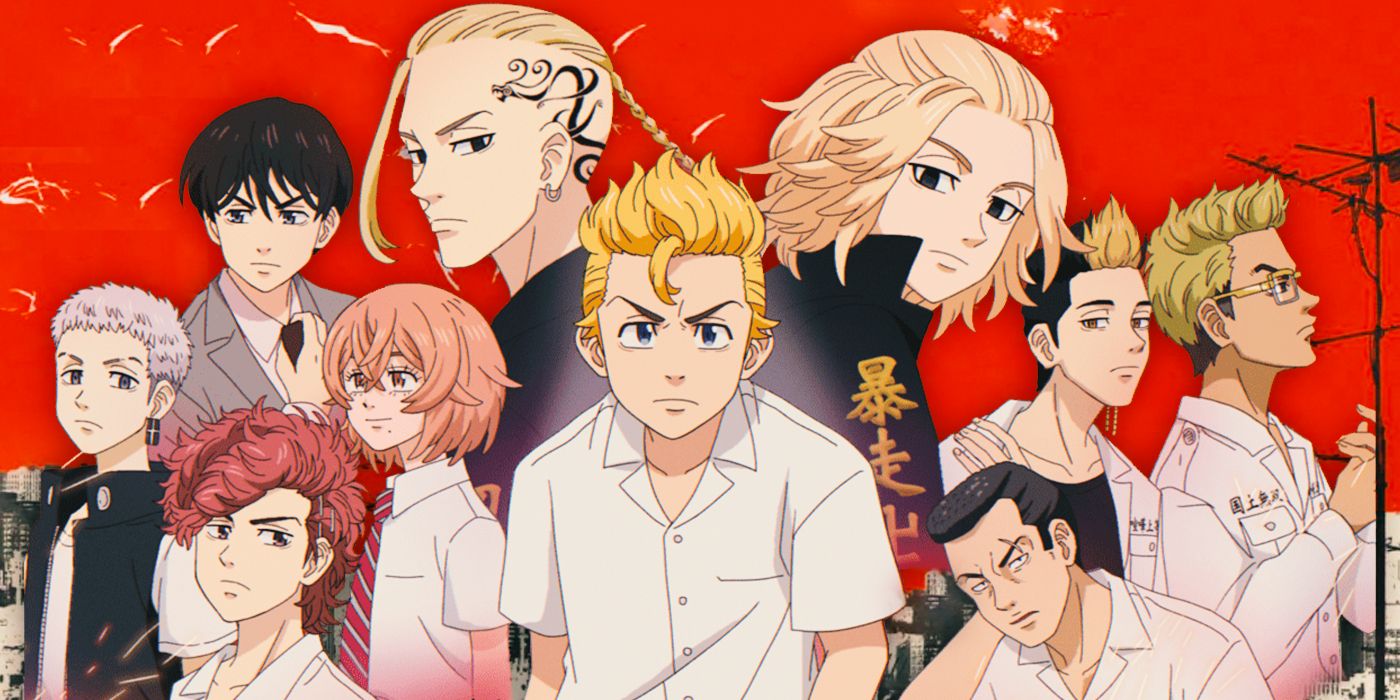
As for the rest of the male characters, I have generally positive opinions of Mitsuya, Chifuyu, Baji, and Akkun. The rest of them didn’t give off much of an impression to me. The bits about Mitsuya and Akkun’s ambitions to become a stylist and a hair stylist respectively were interesting, and overall I think the series would benefit from focusing on these aspirations instead of always making violence the priority. Doing this would help a lot, since the sheer amount of carnage this series portrays definitely leads viewers to a desensitivity toward what’s intended to be the most impactful part of the story.
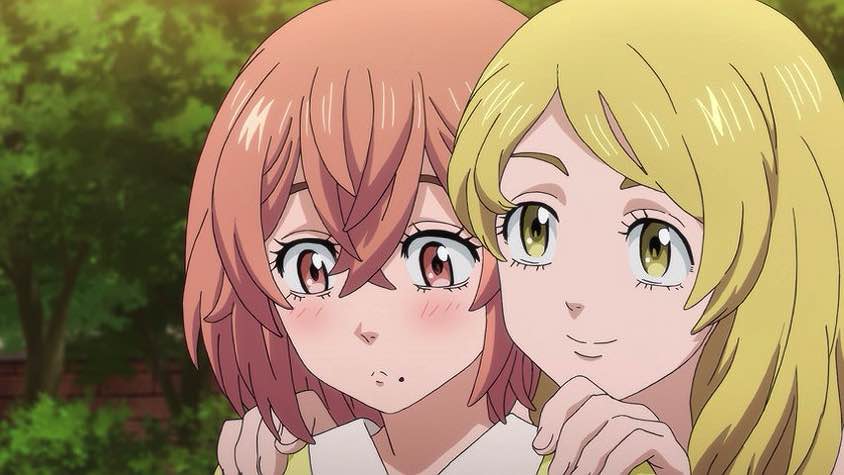
In a way, Hinata is written like a background character, even though she has lots of screen time, and is inarguably one of the most important characters in the entire story. While I want to like her, her lack of characterization just makes her flat and boring to me. It sort of gives off the impression that she exists solely for Takemichi, which makes me deeply uncomfortable.
Emma, meanwhile, is at least a little more interesting to me, though she’s also defined by her relation to her brother Mikey and her crush Draken. There’s also a moment in the anime where she seduces Takemichi as a 13-year-old, which was also deeply uncomfortable. I do like her teasing personality a bit better, since it gives a little bit of a contrast to Hinata’s unrelenting optimism, but even Emma receives less screen time than many of the minor characters in the Tokyo Manji Gang.Both Hinata and Emma are relegated to unimportant roles in the plot which, as mentioned earlier, is the only thing that drives the Tokyo Revengers anime forward. While these women aren’t visibly brutalized onscreen like Takemichi is, they are reduced to caricatures of young women in order to add stakes to the male characters’ fights, which is unfortunately pretty common in anime of this genre.

Scrutinizing each character individually makes it really easy to point out their flaws, but every character has a certain charm as well. Maybe it’s just their designs or the voice acting, but there’s something unexplainable about them that makes me understand why this show is so popular right now. The tone of the anime, too, is charmingly unconventional in how crude it is, and I think there’s value in having an anime like that be so popular. It’s not often that a story like this just launches straight into high-intensity battles, which can be weirdly refreshing in a certain light.
Still, coming off of watching this anime put a bad taste in my mouth, and I really just wanted to understand why that was. In exploring Tokyo Revengers’ flaws, I think I realized what aspects of media are most important to me, which will definitely help with creating more reviews in the future. I can’t say that I’d recommend the Tokyo Revengers anime to anyone, but if some part of this review stood out to you as something you might like, by all means, give it a shot.
Thank you for reading and, whether you agree with me or not, I hope you have a wonderful day!
Music:
Anime:
Video Games:
YouTube
67.5 out of 75 users liked this review
