It’s possible that Naoko Yamada is the greatest anime director of all time.
To some, that statement might seem like blasphemy. What about Miyazaki, and Hosoda, and Kon, and all those other acclaimed directors with long and storied careers? Yet the more I think about it, the more I realize just how singularly untouchable Yamada’s career has been. Her first role as director was with K-On, a show that single-handedly revolutionized the slice-of-life genre and still remains its best entry to this day. Then, with the first season of Hibike Euphonium, she helped spearhead Kyoto Animation’s greatest work of art ever. A Silent Voice broke down international barriers and achieved mainstream Western acclaim in a way only Ghibli films used to be able to do. Liz and the Blue Bird is the single most beautiful expression of intimacy ever put to film. And while I haven’t yet seen Tamako Market or Tamako Love Story, most of their fans seem to hold them in equally high regard as any of those shows and movies I just talked about. Yamada hasn’t just been cranking out masterpieces since before she was thirty; every single project she’s directed has been a masterpiece. Her track record is unimpeachable on a level that no other anime director can really match. Not even Miyazaki hits it out of the park every single time, but Yamada makes it look easy.
In that sense, it’s no surprise that The Heike Story is as good as it is. Why wouldn’t it be, coming from a director who’s never once fallen short of mastery? Not to mention this is yet another Yamada collaboration with Reiko Yoshida and Kensuke Ushio, the writer and composer who helped bring Silent Voice and Liz to life. You’d have to be crazy to fail with a team that talented. And yet, even by Yamada’s standards, The Heike Story is a mind-boggling feat. It’s an adaptation of a work of classic Japanese literature on par with the Iliad and Odyssey, a tale of the Heike clan’s rise to power and fall from grace. The original story is a sprawling epic full of massive battles and complex political machinations, with countless characters and moving parts to keep track of. At least that’s what I’ve heard; I haven’t read the original story myself, so I have no immediate context for what was changed, added or removed. All I can do is listen to people who have read it and trust their word on the subject. But what I can tell you for sure is this:
This adaptation seeks to tell that story in eleven episodes.
No, you didn’t misread that. The Heike Story condenses the entirety of its source material into a scant eleven episodes. It flows through huge stretches of time with the transience of a leaf on the wind, foregoing the original tale’s epic scope in favor of intimate character drama, rich thematic imagery, and searing portraits of the humanity behind the larger-than-life characters. It focuses not on the sprawling battles and the political scheming (though both are present here, just in smaller doses than you’d expect), but on the turmoil and tragedy of those caught up in the sweep of history, borne inexorably toward their fates. The Heike’s leaders and the ambition that leads them to folly. The Heike’s sons who inherit their fathers’ messes, alternately repeating their mistakes or desperately struggling to escape them. The Heike’s daughters who suffer at home under their society’s sexist expectations while the “great men” who set those expectations lead themselves to ruin. And at the center of it all is a new character written for this adaptation: Biwa, a girl with a cursed eye that can see everyone’s tragic futures bearing down on them, unable to do anything but bear witness as they march ever closer to their inescapable doom.
It’s a work of such staggering ambition that you can’t help but wonder if it’s even possible. Such a titanic story, such a lofty pedigree, trimmed down to just about five hours of atmospheric, deliberate storytelling? Surely not even the greatest artistic minds alive today would be able to pull that off. And to be fair, you can feel the show’s midsection bulging from the stress of everything it has to fit in. There are so many characters, so many locations, so many moving pieces to keep track of, and it can be very easy to lose sight of who’s doing what and why they’re doing it if you’re not playing close attention. Even now that I’ve finished it, I’m nowhere close to remembering every character’s name and place in the narrative. It reminds me a lot of A Silent Voice, which similarly truncated its source material by stuffing 64 manga chapters into just two hours of film. That movie, too, had a bloated midsection as a result of needing to fit so much content into a much smaller package. Perhaps this particular team of creators just likes trying to retell long stories in shorter forms than they’re really designed for. What can I say, every artist has their quirks.
But that’s the thing, folks: this isn’t just any old director we’re talking about here. This is Naoko Fucking Yamada. This is the woman who turned a mediocre 4-koma gag manga about four girls sitting around and sipping tea into a soaring treatise on the magic of friendships forged in youth. This is the woman who took a minor subplot out of its original context and turned into a stand-alone movie that’s one of the best parts of its franchise. Yamada has built her career on spinning gold out of seemingly impossible circumstances. And make no mistake: this anime is as unmistakably a Naoko Yamada anime as Devilman Crybaby was a Masaaki Yuasa anime. It’s so thoroughly filtered through its creator’s sensibilities, fascinations, and perspective that it might as well be a completely original story, an old tale made new by a fresh pair of eyes. It takes a literary work as archetypical as Homer and distills it into something far too specific, far too personal, and far too emotional to get hung up on the occasional awkward spots. A more straightforward, more complete adaptation might have been interesting in its own right, but something tells me it wouldn’t feel nearly as special.
Because just as Yamada and her team accomplished with A Silent Voice, The Heike Story’s truncated narrative is only a minor distraction from an otherwise jaw-dropping triumph. What it lacks in the original’s epic scope, it more than makes up for with the breathtaking intimacy of its animation and direction. Where it stumbles in the finer details of its plot, it covers for with the aching humanity of all its characters and the complex, broken paths they walk. It’s a searing portrait of human weakness and vulnerability, a haunting exploration of the transience of life and the fear of death. But it’s also a celebration of life, and its ability to persevere through grief and loss. It’s a story of love tested in despair thick enough to choke the air from your lungs. It’s a story of finding hope and forgiveness even when the world is being swallowed by cruelty. It’s a story of men who fall short and drive themselves into ruin, but also of those who carry on through blood and tears to seek a better tomorrow. You may not remember every character’s name, but the story makes you care so fucking much that it barely even registers.
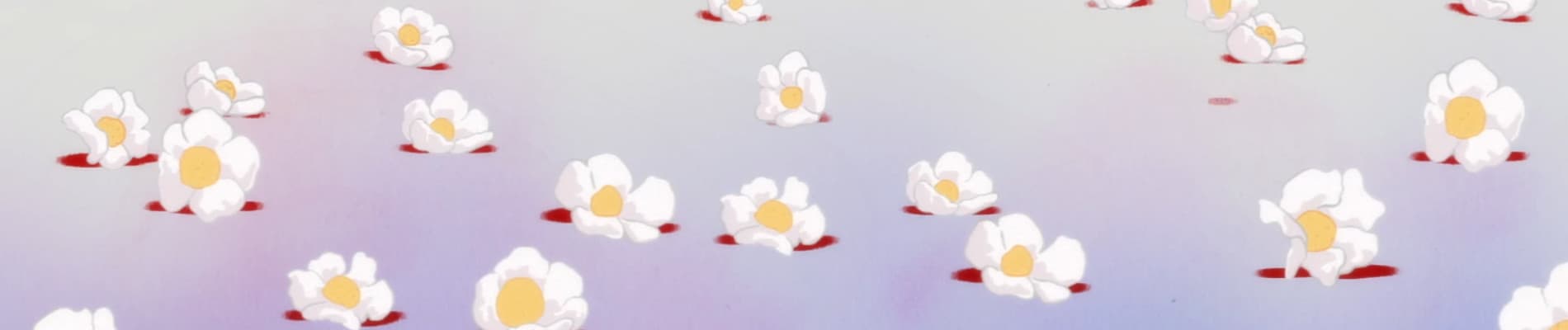
And because this is Yamada we’re talking about, that beautiful story is brought to life with some of the best presentation and production this medium has to offer. The show’s cinematography is brilliant, its editing is stunning, its imagery and symbolism bury into your soul and refuse to leave. The watercolor-brush aesthetics, courtesy of Science Saru, drape the proceedings in a potent sense of temporal beauty. The soundtrack is yet another unbearably serene accomplishment from Ushio, with instrumentals that seem to resonate from within your very ribcage. The cast is a murderer’s row of fantastic seiyuus delivering some of the best performances you’re likely to hear in anime all year (Aoi Yuki’s portrayal of Biwa might be one of her best roles ever, and that’s saying a lot). It’s the kind of show where something as simple as a character’s body language, or the placement of a single shot, is enough to make emotions well up within you, just from how beautifully they convey meaning. And the way all these different aspects play off each other culminates in a final act that turned me into a sobbing wreck. God, I’m still not over those last few minutes. I don’t know if I ever will be.
2021 has been a truly remarkable year for anime. We’ve been blessed with some of the most imaginative, impactful, and boundary-pushing works of art this medium’s had in a while. But even among the likes of Sonny Boy, Sk8 the Infinity, Wonder Egg Priority, 86 Eighty-Six, Oddtaxi, and the final Evangelion Rebuild, The Heike Story is a truly singular achievement. It’s my favorite non-sequel anime of 2021, losing out only to Re:Zero and Gintama the Final as my favorite overall of 2021. And if you know how fucking much I love those shows, you know I don’t make that comparison lightly. But really, who else but Naoko Yamada could challenge two of my favorite franchises for the top spot with a massively paired down literary passion project? That, folks, is why she may well be the greatest anime director of all time. And if you’ve let this show slip under your radar, I can only urge you to fix that oversight now. The Heike Story deserves to be seen and celebrated by as many people as possible. It’s a retelling of an old story that will linger for many years to come, passed down through generations like the songs plucked from the strings of a traveling musician. Life is fleeting and all things will one day fall to ruin, but stories this beautiful will remain alive forever, just as enrapturing centuries from now as they were on the day they were first spun.
35 out of 39 users liked this review