# Intro
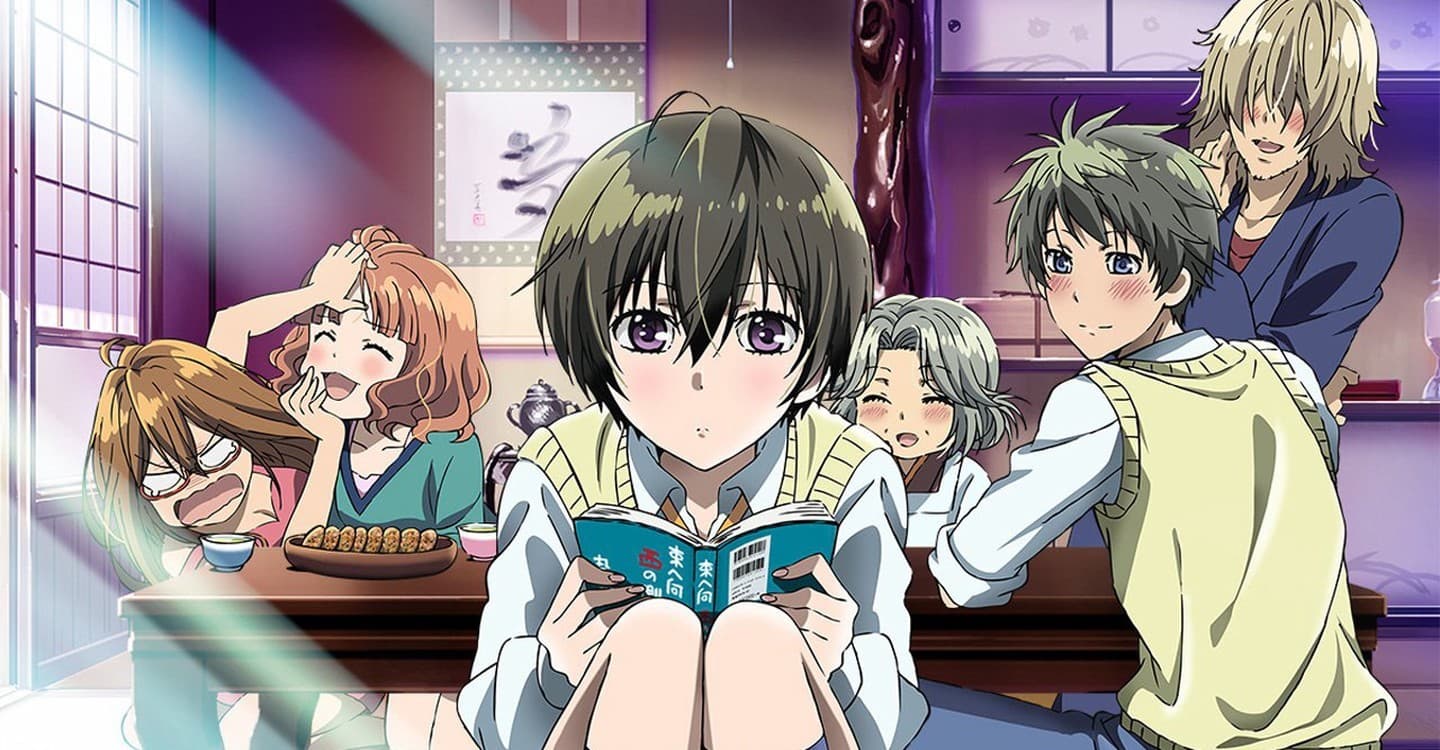
Following my Hanasaku Iroha Review is another blast from the past. Recommended by a dear friend, this unassuming, plain, and generic-looking 2014 RomCom turned out to be one of the best.
This review will focus on well-done segments not fully explained in other reviews as well as some of my own takeaways on what makes this show shine.
# 1/Story If I'm being honest, Bokura's grander story is average at best. A teenage love story between an overly "desperate" guy and an unusually quiet girl is nothing new. Yet it is.
-
Bokura manages to invent and reconstruct a generic rom-com into something special; not by having a wacky premise but by polishing and sharpening the in-betweens of its story, a seemingly typical rom-com turns into a story with a surprising amount of depth.
# 1.5/Staff/Adaptation Having read up to the current continuity of the anime, it is clear as day that Brain's Base did a magnificent job at adapting this story and its structure as well as possible.
An example Spoiler, click to viewclick to hide
fitting 2 scenes chapters apart to cater to a benchmark to mark the end of the anime (number exchanging scene in manga vs anime).
Speaking of Brain's Base, a lot of credit has to go to its staff behind the scenes, which came as a complete shock when researched because they aren't big names. - Consisting of old-timers in the industry since the 1990s yet barely known for producing any big shows - Shigeyuki Miya and Kenji Konuta playing the part of director and series composer cum scriptwriter. It is absolutely bonkers to me, the homework these 2 did to perfectly encompass and even elevate the homely and familiar vibe of the source.
- Following them, Shinichi Kurita leads character design. Just as brilliantly as his peers, he completely upgraded every characters' looks from the manga. Rounding out the main staff we have the one and only big name recognizable to most - Akito Matsuda, the absolute god of OSTs. There is not much to say, other than he does his job well - which is, excellently going by his regular standards.
These 4 leave their mark by working together to create a show that far surpasses its own source.
# Part 2: Cast With the puppeteers' section elaborated, next up are the puppets themselves. - Albeit cliché at first glance with very archetypal characters, when mixed together, like a super-effective concoction, this wicked brew turned out to be one of the show's largest advantages as well as some of my absolute favorite casts ever. Never before have I seen characters bounce off each other this cleanly and naturally - and at times it feels even more real than our own lives.
- Going back to quirks and clichés, the Kawai Complex does not just rest on its laurels and be satisfied that it has a decent enough cast to pass for a generic show; instead, we get full-blown chaos. While quirks and clichés work well enough for characters to disguise as "distinct" personalities, Bokura wa Minna Kawaisou drives home and removes the quotation marks on distinct by pushing them to the extreme (in a good way).
- With these glaring extremities, it's no surprise that if this was all there was to Bokura's steam train, the only destination bound is disaster. But of course, they made sure to bestow upon these extreme personalities are much, much-needed sense of human touch - with occasional, pure, heart-warming moments or a blindingly brilliant introspection on anything in life to offset the constant insanity.
As all these wonderful ingredients of success are mixed, a smooth and silky journey of seamlessly endless laughs and cries with wacky these residents is built.
# Part 3: Dialogue Branching off of the Kawai Complex's residents and on the topic of fluidity, are why they work so well - this show also has one of the best in the business when it comes to dialogue.
It is a daunting task to express how well dialogue is used within the complex to control one's emotions - smart, slick, natural, and insightful. Include introspection made so easily digestible through purposefully catered "comedy"; unparalleled fun in the highest tier of said comedy and there is never a dull moment throughout its runtime.
For better clarity, imagine Oddtaxi's mysteriously well-crafted dialogue fitting in so well with its grander plot; joining forces with Great Pretender's funny and witty retorts; resolving in this unexpected masterpiece of words.
# Part 4 : comedy The one part I'm not willing to back down on. This is the full subjective territory of one man and his stance on this show's comedy. Tldr, it's really really fucking good so skip this section if that's what you're looking for. - One huge underexplained part of this show is its comedy. Reading up on other reviews shines a light on the very obvious consensus that this show has got some GREAT comedy. And as agreed, great comedy there is. But the one negative to this style of comedy (repetitiveness) could arise from skeptics and this is why I'm here to destroy that tiny chance of retaliation.
- To start, we must first understand how Bokura uses comedy - while its quality is excellent, at first sight, a case could be made about it not having much innovation. It's "basically just" each character's archetype comedy used over and over again. According to Einstein, the definition of insanity is doing the same thing and expecting different results and I can see people arguing that this may be the case for Bokura's laughs. But the true meaning of that saying is actually not as it seems. Einstein's quote in quantum theory is not a criticism towards repeating a method or action as it is a common thing to do to achieve different results; and Bokura is no different.
- Similar to how physicists mix particles together in the exact same way trillions of times to achieve different results, Bokura uses its core comedy approach to provide hysterics of varying reasons and degrees with unmatched precision whereas most other shows that employ the same tactics fall flat after its initial phase due to lack of innovation. Obviously, you can chock this up to the subjectivity of taste in comedy, but the core idea is still that both subjects (quantum mechanics and Bokura) have the same end goal and require doing the same steps tirelessly to realize it, yet do exactly so, very effectively. Next comes how Bokura's comedy is easily distinguishable from others. Aside from it being significantly funnier, comedy in the complex is used to set a tone, regardless of its many different scenarios and situations. On top of that, it is also used as a method of conveying deeper messages about life in an easier-to-digest format - fun moments are more always more memorable than somber times.
It's thanks to these tools and other little gestures Bokura uses that distinctly separates it from the masses. Thank you for coming to my little lecture on this show's insanely genius comedy.
# BridgeA few more words before concluding; while these 4 points are the only elaborated positives provided by me, it is by no means the only positives of the show. The Kawai Complex is not a new show and numerous reviews on other good points have been made on it, so feel free to check them out if there's still that one missing link to get you fully interested.
Conclusion
All in all, Bokura wa Minna Kawaisou at its core, is just a grounded and hearty romcom about our wild teenage lives. That and also the fact that it's done way too fuckin well. I don't have much else to add except that I hope did the one who recommended me this absolutely wonderful experience justice.