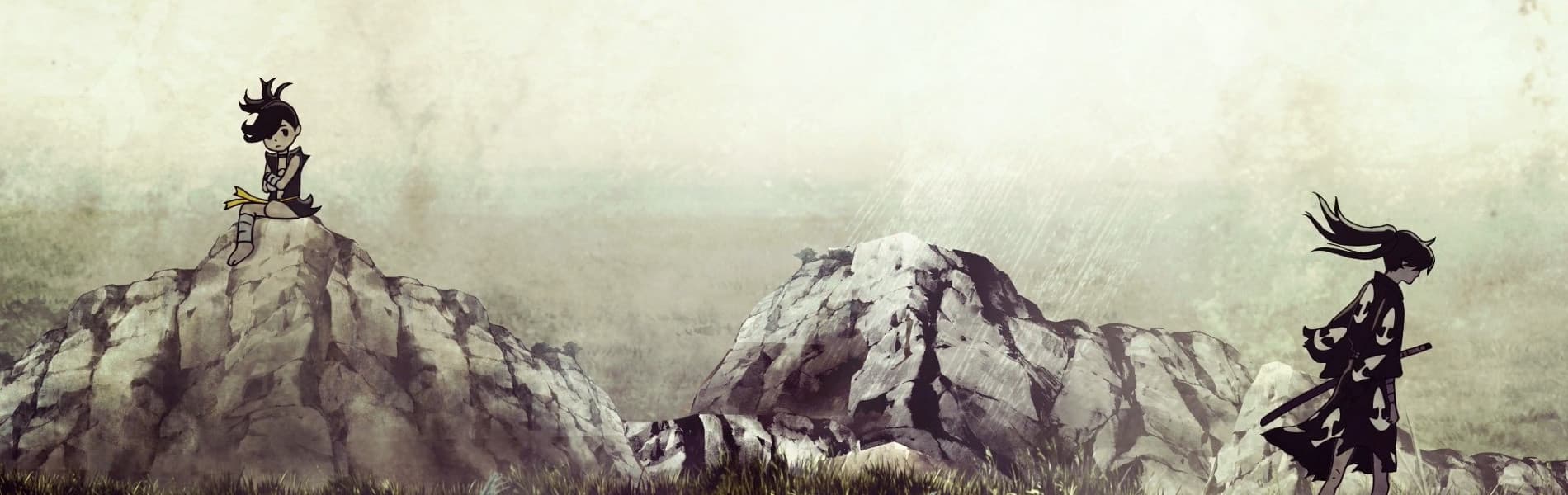
Dororo is a manga by Osamu Tezuka released in 1967 and adapted into an anime in 1969. The manga was also adapted into a live-action film in 2007 and a video game for the PlayStation 2 entitled Blood Will Tell. The anime is also produced by Tezuka Productions and MAPPA, famous for several anime titles such as Inuyashiki, Rage of Bahamut, and Yuri on Ice. Meanwhile, Tezuka Productions is a studio founded by Tezuka himself and has produced many legendary anime such as Astro Boy and Black Jack. The presence of these two studios provides a new color for the anime.
Dororo itself tells the story of a child whose father sacrificed for the sake of power. Daigo Kagemitsu, Hyakkimaru's father, asks 48 demons for help to give him the power to rule over all of Japan. However, there is a condition that Kagemitsu, namely, a sacrifice, must fulfill. Therefore, he sacrificed his son. Hyakkimaru was born without his 48 limbs, thrown into the river, and found by Jukai, a doctor who can make artificial limbs. However, wherever Hyakkimaru is, there will always be a demon who wants his life. The bloody adventure begins. However, on the way, he met a little thief named Dororo, who would later help Hyakkimaru on every trip.
In short, Dororo offers an exciting adventure wrapped in a fierce battle between demons and humans. The story takes place in the Sengoku period, where every nobleman fought for power, creating wars everywhere. It adds to the background of an increasingly dark atmosphere equipped with various tragedies.
Considering that Dororo is a classic anime remake, Kazuhiro Furuhashi made various changes in the story and characters. For example, in the classic version, Hyakkimaru himself had met Biwamaru before meeting Dororo, who advised him to stay happy even though he had no limbs and continue living. In the remake version, the opposite happens, where Hyakkimaru meets Dororo first before Biwamaru. In addition, in the old version, Dororo himself was beaten by the river for stealing food from a group of bandits, while in the latest version, she was beaten for selling goods stolen by a group of bandits.
Another detail is the priest figure at the temple where the demon resides whom Daigo killed when he meditated in the old version. In the remake version, the priest is killed immediately before Daigo meditates. Hyakkimaru can talk, whereas he can't talk in the new version. What has not changed is Hyakkimaru's extraordinary ability and has a kind of extrasensory perception in both versions. In addition, the remake version displays a fresher visual but does not necessarily throw away the characteristic illustration style of Tezuka himself. Another point that should not be missed is the beautiful landscape of the place typical of the Middle Ages in Japan, plus the background sound and voice actors add plus points in this remake version.
Furuhashi wants to build Hyakkimaru's character from zero to hero in the remake version. It brings up a realistic character, especially Hyakkimaru seems to have no emotions. Gradually, his emotions build up as the story progresses, creating a more cruel, brutal, and harsh impression on each presented story. In contrast to Tezuka, who portrays Hyakkimaru as a sad and emotional figure, he struggles to regain his purpose in life at some point in his life.
With the new formula, Furuhashi met the audience, especially those who love intense combat actions, without further ado. However, some aspects feel missing. In the old version, Tezuka displays many moral messages wrapped in emotions, such as when Dororo meets a hungry priest and asks for help. She said, why didn't the priest steal. However, the priest said that stealing other people's food is shameful. Whereas in the remake version, the message feels as if it is covered by a more intense battle, even though, in truth, the message is there to be conveyed. For example, helping selflessly shown by Jukai or learning to be independent, Dororo showed when he wanted to feed a puppy. However, an important point that should not be forgotten is the idea of why Dororo was present, namely to convey a message from Tezuka to the audience, especially children, that violence and war in any form will bring misery and destruction.
Almost every character in Dororo faces some challenge and dilemma in the lives of the two protagonists: Hyakkimaru and Dororo. The anime clarifies that it's not an easy world to hallucinate. A massacre with bloody content established itself as fantasy, or history, in very dark modifications. Monster is characterized by a mix of classic and modern designs while taking ideas from folk tales. The sense of gray morality explored in each episode will undoubtedly be controversial and contentious.
Dororo is not a complicated anime. Elements of every dark fantasy unite classic adventure, uniting itself as a visual masterpiece with its aesthetics and its perfectly matched use of black-and-white coloring. The show does not have a single pointless meaning for fighting. Nothing goes to waste, and the series isn't played forcibly with dialogue and character interactions, which is questionable, especially when it comes to humor. On the contrary, the chemistry between characters is the main center of the anime. The modern adaptation will easily make people interested in the audience who likes dark fantasy.
48 out of 53 users liked this review
