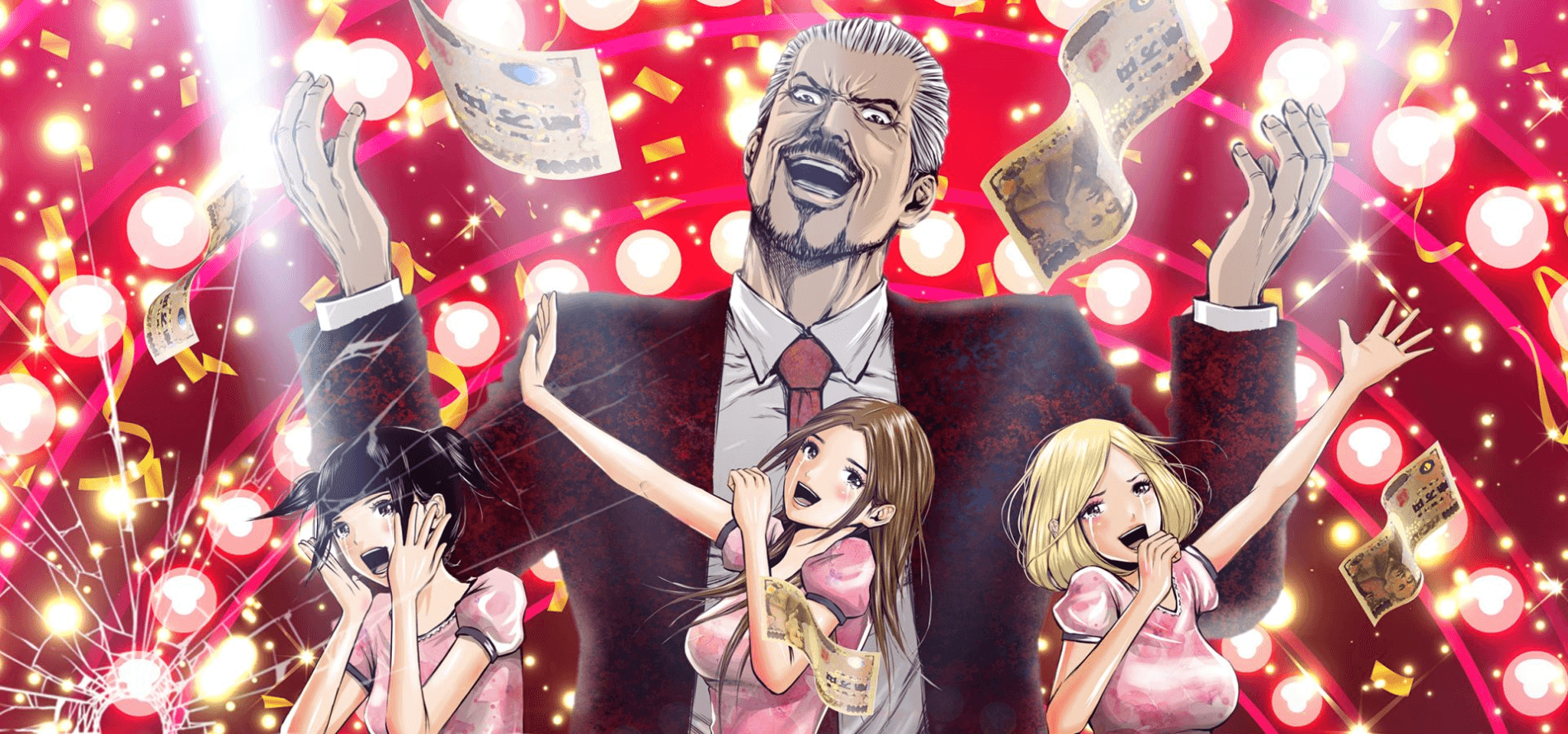


Comedy as a genre is inherently interesting to me— I mean, what people find funny is so flippant and subjective between each individual. It seems like a Herculean task to even formulate any gag string; when writing comedy, it’s hard to know if what you’re doing will hit. Sure there’s conventions to comedy writing, but playing it too safe will lead to making an average SitCom. So we enter one of the various approaches— absurdism. You throw shit at the wall, and see what sticks. This is very much what Gokudols entails, as one can see from the premise and cover alone. There’s always a perforating issue that plagues and attempted absurdist comedy, however. How far is too far? When does the wackiness devolve into mere nonsense and random equals funny gags? Shows like One Punch Man straddle this line near perfectly, but where does Gokudols fall? This is the core question I will tackle with this review; without further ado, let’s analyze Back Street Girls: Gokudols.
Intro To Gokudols

Upon failing a mission, three low-rank Yakuza are given two choices: die, or become a pop idol. Naturally, abandoning their Gokudo (Yakuza Path), they fly to Thailand and get the surgery. Unfortunately, it goes over incredibly successfully, and they spend the rest of the show coming to terms with their new lives. Exploring the various things a stoic Yakuza would be upset about within a cutesy girl’s body, they run with this premise. Of course, more elements like new members and even a Gokudols— their group— Hate Club appear, but it generally sticks to the core premise. Personally, while not all of the skits hit, I find this to be hilarious. Whether it being the girls forced to go through random and hellish training, or deal with a rival idol group on the radio show. It always pushes the limits of the premise and creates for entertainingly awkward situations as they put their literal lives on the line as idols.
Structure wise, the comedy is not all that dissimilar to something like The Disastrous Life of Saiki K. Short, comedic bursts focusing on singular premises and evolving one joke. This works for a myriad of reasons, but the most prominent one is the pacing. If one segment doesn’t land, there will be a new one within a few minutes. This way it’s always fresh; I believe this to be a general advantage over shows that spend an entire episode on one premise. Of course, the gag strings aren’t entirely detached. While I’ve heard plenty claim Gokudols doesn’t have a plot, they are simply objectively wrong. There are recurring characters and things that confound upon previous events, showing their progression as idols and even their hate group’s progression as… haters. So, no— you aren’t in for a 4-Coma or anything like that.

So let’s get to the elephant in the room: the production value. I can’t believe I’ve gone this far without even mentioning it, but many will automatically hate this show for the animation quality alone. It’s, put bluntly, horrendous. Characters are commonly drawn off model; the faces simply don’t even align half of the time. Everyone is incredibly ugly, and it’s rare to see people actually move. However, I would argue this almost works in favor of the show. While nowhere near the levels of Cromartie Highschool, the poor animation adds to the tone and comedy. The rough aesthetic generally meshes with the bizarre premise, creating for an incredibly unique experience. It won’t be for everyone, but I find the low budget to be hilarious— and sometimes I believe that’s intentional. I’ve never been one to cry about animation anyways, however. From a critical perspective, it’s most certainly bad; if you can’t handle that, avoid this one.
Character Writing

So, evidently, I dig this show— but let’s destroy that perception as we get into where the series falls on its head. Characters are the key to most stories, and for comedy this especially holds true. That’s nothing lamer than a disconnected knock knock joke; comedy in fiction, around at least 70% of the time, is funny because it comes from the characters. Gintoki, Saiki, Kazuma and most other comedy-based protagonists are vital to what makes their shows so memorable. Unfortunately, we don’t really have that here. They try to establish the characters well by panning over them several times, establishing names, and directly stating personality traits— but nothing about their designs or actions are particularly compelling or unique. They just mesh, which works for the comedy most of the time, but is rather lacking. By the end you can say a few things about each character that has been directly shown as opposed to told, like Mari’s hemorrhoids, but I think most will agree the impression is weak. Naturally, that has its own reason— inconsistency. In episode two, Mari is established to be jealous of Airi and Chika receiving so many nice gifts from fans. The joke here is that she’s slowly seeped into the psychology of an idol and abandoned her Yakuza roots, but it does establish a good bit about her character. Later, Mari is shown to have destroyed an entire marriage because she has so many dedicated fans. Of course, it’s possible she just grew in that one episode time span, but it wasn’t directly shown so it fails to deliver in what the initial skit set up. If you can’t keep your character traits homogeneous, then your characters will come off as muddled and unmemorable.
On that note, however, I believe the lack of personality bar their Yakuza archetypes from our main trio makes Boss Inugane stand out all the more. Being the leader of the Yakuza, he automatically holds comedic potential due to his sheer power. The shit he puts the girls through never fails to deliver as well; his tacit threats and demon-like demeanor provide a palpable presence. If the rest of the cast had stand-out character traits like this, I believe the reception would be far better as a whole.
(As a bonus note, their producer was great. His naivety on the situation created for some great and naturally following humor.)
Evolution of a Joke

What ultimately determines if the premise is purely a gimmick and remains one-note is how they evolve the joke within the show, however. How far can you take something like this and run with it? One Punch Man is applauded for how it deftly handles its gimmicky premise, and modern day Isekai are lambasted for their shallow attempts at grabbing attention. On this line, Gokudols falls more towards the One Punch Man side. Instead of beating the premise into the ground with the most predictable copy-paste gender swap gags, they use the Yakuza and idol settings dichotomy to their advantage. Some of the funniest shit comes up because we have these husky-ass men in these cutesy girls idols being asked to act like women. I mean, think about the early 2000’s perception around idol culture and how men— especially Yakuza— could misconceive that. Comedic goldmine, and I can’t say I saw it all coming. This isn’t to say there aren’t bad jokes, but you’ll see what I mean when you watch it. They do things like putting the girls on talk shows, making them fail for acting like cute idols, but then fail even harder when they’re told to answer the questions honestly as that’s what’s popular in the modern idol movement. Of course, they employ a lot of misunderstanding comedy— which may be tiring for a lot of people, as it’s so commonplace in AniManga, but it’s done pretty well here.
By the end, there are enough new concepts introduced into the show to make it feel like the joke evolved at least a little. Inugane’s wife, the hate-club, the other girls who join— all of these push it past its base archetype and keep the formula from getting stale. So, yeah. Gokudols is pretty great in this aspect.
Conclusion

While not perfect by any means, Gokudols was a fresh absurdist comedy that’s a nice reprieve from most of the schlock put out nowadays. Some will fucking despise this show, while others will love it— as it’s generally polarizing. If you want something similar but far better, check out Prison School. I know this review was rather short, but that’s all I have to say. Pretty fun, but nothing stand-out. I definitely recommend you check it out; see you peeps next review.