Katanagatari
a review by Calxylian
a review by Calxylian
Katanagatari, written by Nisio Isin, published twelve volumes of the light novels as part of the Kodansha section. All of the books were released at one book per month from January to December 2007, with a spin-off novel published in 2008. While it's a phenomenal feat, readers continue to wonder if any of the sequences were cut to benefit and meet deadlines time, even if adaptations can endure for the sake of scrutiny. The series lives up to its title, a story about swords. Beginning with fire and death when the rebellion against the Owari shogunate met a bloody end, twenty years later, a small boat crosses the sea to a deserted island where Togame hopes to enlist the help of Musue Yasuri, the head of the 6th generation of Kyotōryū's sword style (which means "flow of the empty sword," a bare-handed fighting style) and a hero of the rebellion. However, she finds Shichika Yasuri more bumpkin and tough as nails.
Besides the series being very prominent in the visual aspect, one of the things that stands out the most is the dialogue. The show is very well written, with excellent conversation and intelligent answers. The explanation is usually concise and clear for the audience to follow. There's also a lot of pun and verbalism going into modern popular culture, which makes for a nice change of pace, as is usually to be expected in any serious conversation. Serious conversations can be about revenge, loyalty, or honor. However, in a specific moment, the dialogue can be unpleasant for audiences who want a little conversation and want a little more action, mainly because the fight ended in such a short time. The story can sometimes be predictable, considering the plot that drives the entire series can be nothing more than repeated conversations, fights, and conversations. It is the most extensive critique of Katanagatari, being a quest for retrieval by uniting the narrative into an upside-down.
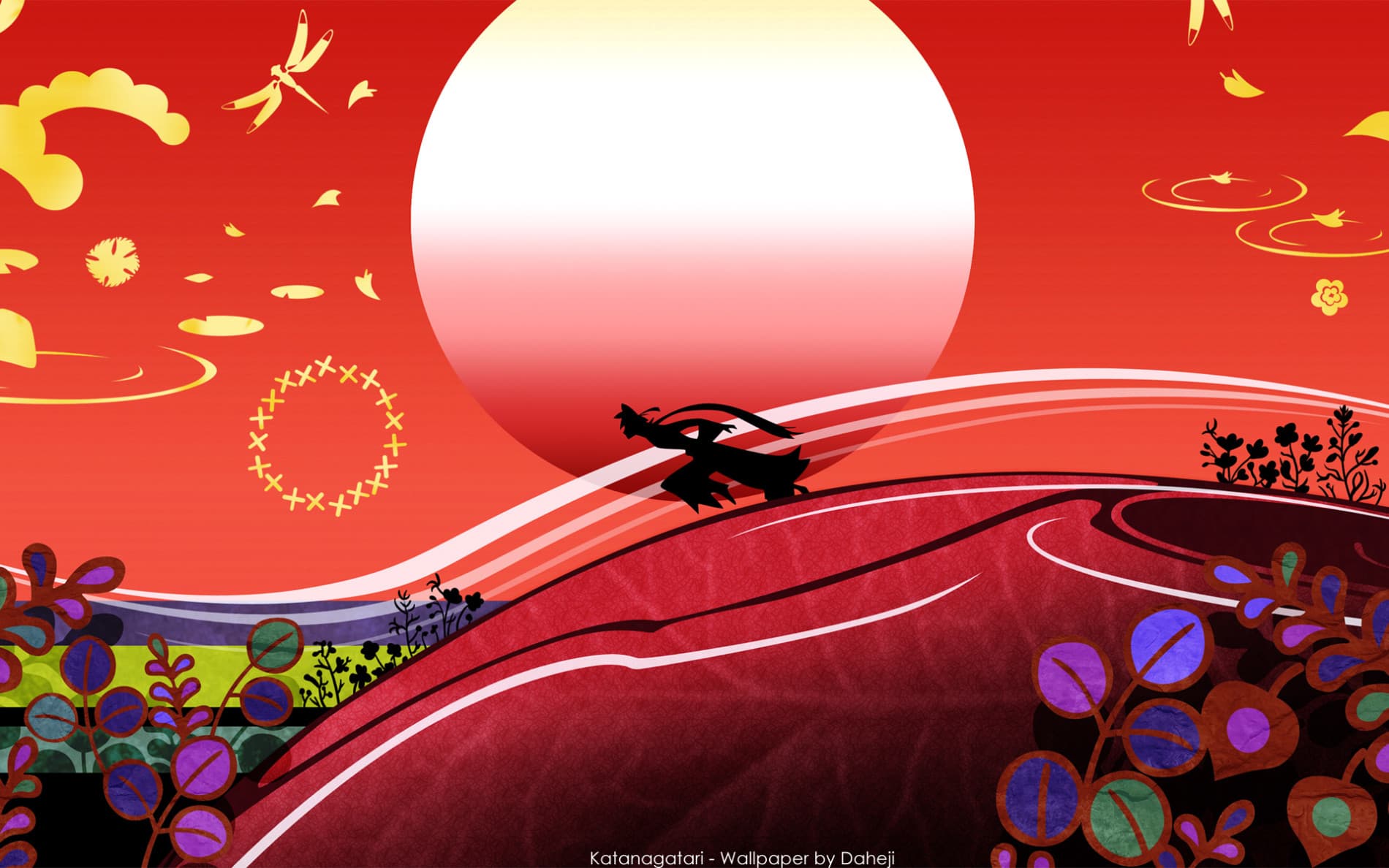
By using the principles of style, the design tries to combine traditional Japanese themes to modern fighting games in the style of Samurai Champloo. Regardless of which, shortcomings become another thing. The scenery is surprising, and almost every frame is filled with small details that the audience often goes unnoticed. Visuals aside, the characters are simple but full of striking style. The costumes vary from regular to absurd. The characters themselves also have specific facial features like cartoons in general. While people expect this kind of design to be a roomy expression, it is quite the opposite. White Fox is the studio behind the making of the show, where the studio is famous for anime such as Akame ga Kill!, Re:Zero, and Steins;Gate. The studio has done a fantastic job with the animation and design of the series. Apart from having a certain elegance about the movement, the actual fight scenes are very well animated and choreographed in such away. If only the audience or critics could appreciate more the design and artwork, it might be the series to be one of the hidden gems.
Katanagatari also stands out for its scriptwriting power. Due to the robust dialogue, the anime often overlooks how good the voice actors are. Yoshimasa Hosoya's role as the bumpy yet innocent Shichika may have caused him some concern as the character is effectively emotionless for most of the series. The flat conveyer works very well. However, it makes the audience try and stop figuring out if what he meant was a joke. Besides Hosoya, Yukari Tamura as Togame is not like the usual tsundere characters. She plays her character with many mood swings, emotional changes of the character with confidence. However, it's fantastic when Hosoya keeps his head together with other experienced voice actors. While the show has potential from a voice-over aspect, it features a lot of music in the form of two opening themes, twelve ending themes, and many background soundtracks. The opening and ending theme songs are also handled very well. However, given the number of songs on offer, it's personal to decide which ones don't and which ones do. Most of the series has a very subtle tone that is not too flashy.
Such an approach is that the dialogue does not struggle to lead a particular scene. Regardless of which, there is a drawback. Katanagatari has too many characters for its sound. Shichika and Togame appeared utterly confident. They both have mature dialogue and generally bounce off each other like a comedian duo on stage. The same cannot be said about the supporting characters, and apparently, it is nothing more than characters whose respective roles are to prove the motives of the protagonist and the main heroine. It is not that the characters are flawed. While a lot of attention was paid to the two main characters, there was little left for the screentime of the supporting characters.
While the series is personally underrated but has plenty to recommend, a valid critique of Katanagatari is like a soap opera tearjerking drama. It has too many "talks." The dialogue is too excellent, and such the dialogue is when the character must continue to act. It should be noted how part of this is because the series parodies the typical character behavior found in many anime, especially shounen. The series is excellent in a specific way, strange but spectacular. However, it's mostly too much of a quest where it falls into a stand-up comedian trying hard to be funny. However, it is undeniable due to its innovation and originality. It would be too easy for White Fox to follow such a tested or attempted path for a samurai theme. However, the fact that the show decided to stick to the concept of the creator from how to see the character from another side.
25 out of 28 users liked this review
