One-Punch Man
a review by Nagumo
a review by Nagumo

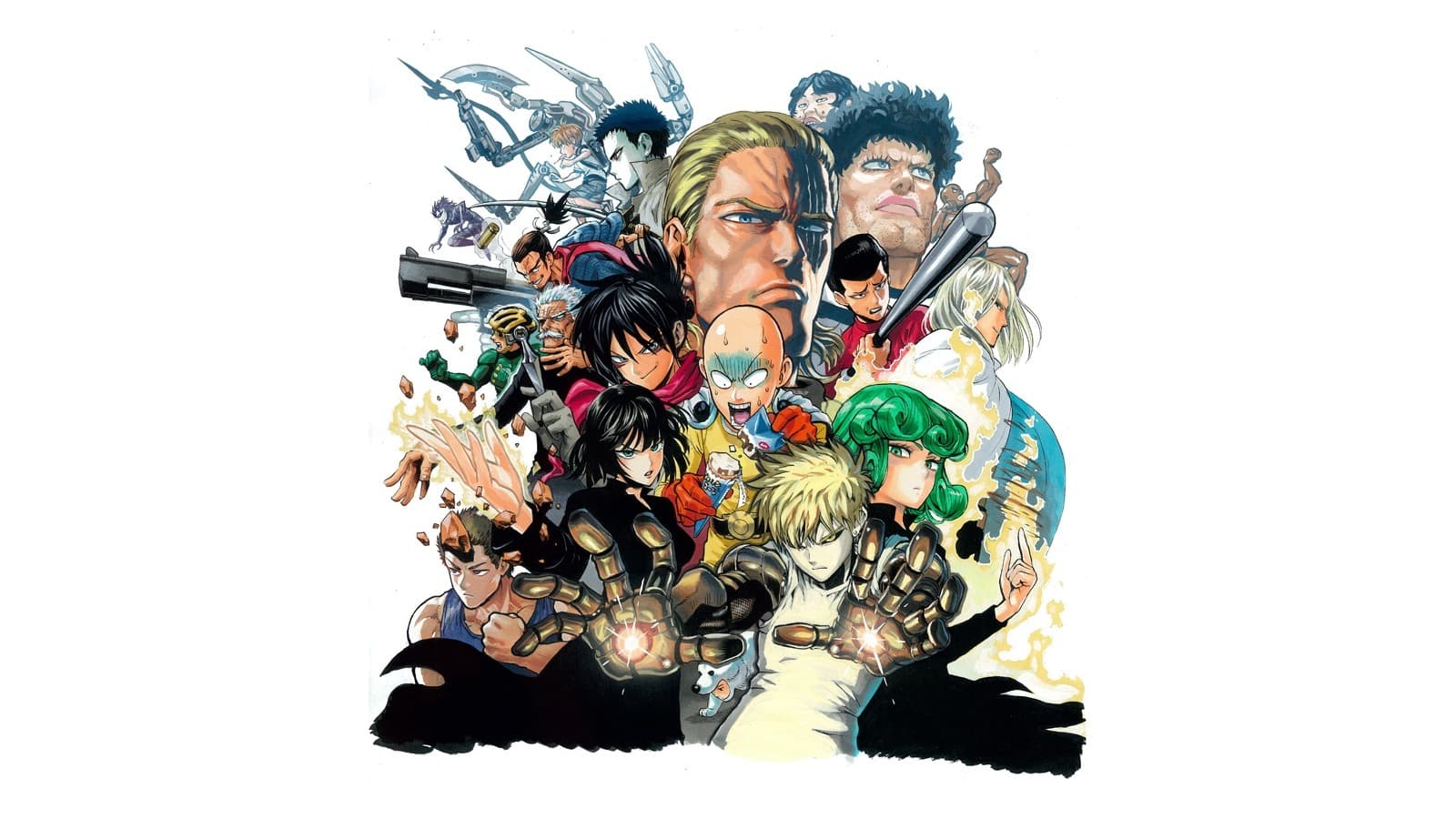
One-Punch Man is a manga with incredible story-telling, astonishing art, amazing fights, funny humor, and much more. The fights are really incredible with some insane choreography. You can see what’s going on in every panel, in every fight and the art is gorgeous. Murata is really talented and even characters design that is designed as something as simple as a neuron looks amazing and he does an insanely good job. It just makes the fight that much better, when the art is god-tier. ONE is the author and is superb at writing stories, so when they combine forces, everything is just amazing. ONE has also written Mob Psycho 100, and they have similar themes and topics. One-Punch Man explores its themes really well alongside its humor, which never gets old. It has an ensemble cast, but every character adds value with their unique traits and has character development.
Saitama, the main character, lives in a world where heroes are common. He has trained so much, without ever giving up, that’d he never lose in a fight. He defeats every monster with a single punch. Fights bore him since every fight ends within a single punch. He feels lonely, being the only person with overwhelming superstrength, through Saitama, loneliness, and depression are described. He feels nothing whenever he fights and always looks forward to a new fight when someone seems strong, but he always ends them within one punch. He is a hero and does it as a hobby since he just wants to find someone that’s strong enough to last over one punch, but never finds them. Genos, the cyborg, who’s seeking revenge against the cyborg that killed his family, observes Saitama’s incredible power and begs him to become his disciple. Saitama accepts his request and thus Genos becomes his disciple. It's a fun encounter between them and Saitama doesn't really realize what he said yes to, but their bond is really entertaining with Genos, who writes everything he says down.
Genos wants to get stronger after having watched Saitama defeat a strong opponent with one punch, but there’s not much that can be taught. Saitama reveals his secret during his fight against the “House of evolution.” All he did was keep training for three years, never giving up, even if his body said no. It seems too simple for Dr. Genus and Genos. They work with biology and mechanics in order to get stronger, but there’s no cheat code. Saitama broke his limiter by never giving up. Dr. Genus realizes the truth, that an ordinary human like Saitama could become strong by sheer willpower, thus he disbands the organization. The manga keeps referring to earlier chapters and you still see them in later chapters, how they’ve changed and realized their mistake. Even though Genos thinks Saitama is full of crap, he continues to follow him and observe his daily day, writing everything down.

Genos and Saitama join the hero association together, but even before their exams, Genos gets called to an interview and they already agree that he should become an S-ranked hero without actually seeing him in combat. While Saitama takes the exam and scores perfectly in the physical exam, while butchering the written exam. He becomes a C-ranked hero. Neither did they ever see him in combat nor test him. It makes for many funny moments when Saitama becomes “The underdog” since he’s C-ranked and others underestimate him, but it shows that a hierarchy is created within the hero association. It doesn’t matter if you’re actually strong enough to beat monsters. To climb the rankings, you need to become number one within your rank, but certain individuals camp those spots, making it hard to climb the rankings. This is actually discussed a lot through the manga. What makes a hero and is there a need for a hero association?
When Saitama and Genos do become heroes, a lot of other characters are introduced and an ensemble cast is created. Later on, Saitama gets less and less screen time, making him a side character. While this can be a problem, it is done well in the manga, since the other characters are well-written as well. Though this becomes a problem if you tend to like the main character the most and find side characters boring. But if the focus always was on Saitama, then it could get a lot more boring, since every monster would be defeated within one punch, which is the punch line, that he comes in and does the clean-up job after all the other heroes have struggled, trying to take the monster down. Though his moments often show his indifference and that he doesn't take his job seriously, which creates fun moments like this:


There are also times where Saitama is looking after Garou because of him being described as insanely strong, so Saitama thinks Garou might be able to put up a fight against him. But Saitama looks after him blindly, not knowing how he looks and ends up butting heads with him a few times without realizing that it is Garou.

This should make it quite predictable, but it keeps breaking the audience’s expectations by making the fights and fights less dramatic. It exaggerates typical shounen or superhero tropes, making it quite unpredictable. You’re never entirely sure what’ll happen and this is also a reason Saitama became a side character because you know he will never lose in a fight. For example, when Garou goes on a rampage after the hero association tries to convince the inmates to help them in their upcoming fight, he says “I’ll train for another 6 months,” quite a common trope and it does this a lot of times. Whenever Saitama beats Garou, he doesn't realize it himself and that breaks the audience's expactions.
During the hero association vs the monster association. The heroes constantly get beaten up and learn to fight together, after never really have tried to work as a team. They have their differences, but through constantly getting beaten, they work together and Atomic Samurai, who usually works with no one, is the one who suggests it. They set their differences aside later in that fight. They never worked together, because there was no reason since monsters work alone and it’s easy enough for a hero to take on one monster. That arc isn’t done yet, but they’re working more together after having split up.
Saitama mostly doesn’t care about these fights, since he’s always looking for a strong opponent, that can release him from his “depression”, “loneliness,” but he finds no and is therefore left out of most fights, making the side-characters take the spot-light. The story is very well written with lots of foreshadowing, and everything that happens has a reason. For example, when Saitama fights against Boros and lands on the moon, during their fights, and creates a vast crater. That crater keeps reappearing and is always shown when the moon is drawn.
Another thing like the subterranean people who lived underneath the earth and are introduced early on to fight Saitama. Actually lives under the earth in his area and their hideout is used during this arc. The monster association is using its hideout as a base for operation. Every minor incident is used in the broader picture, developing the plot, creating character development, etc. During the Deep Sea King incident, many heroes were utterly defeated and couldn’t put up a fight, but they kept trying, giving people hope and light. Mumen Rider knew well enough that he could do nothing against the Sea King, but yet he kept standing up, trying his utmost, giving people hope.
At last, Saitama shows up and defeats it with a single punch, leaving everyone shocked that he could beat it since he’s C-ranked and people doubt the monster was actually strong and call the other heroes weak. Even though Saitama is the strongest human, people speculate and come up with their own theories. Saitama doesn’t want people to look down on the other heroes, since they’ve done everything they could, and even on the verge of death, they still stand up. He takes on the entire burden, making people praise the other heroes for their work. The heroes who were utterly defeated during these fights use this as a stepping-stone to grow. They start wanting to acquire more power because there was nothing they could do and their job as heroes is defeating monsters, saving people, but they were unable to do exactly that.
There’s also the meteor incident, where Saitama decreases the damage of the meteor, but yet other heroes don’t want their standings within the hierarchy to be taken. Many heroes care little about their duties, but more so about their standings. Saitama is super strong and could be of major help in the future against stronger threats, but yet those heroes that drop in rankings because of his appearance still seek to scheme and to break his spirit. The story keeps showcasing these things, but to be honest, this current arc is a little drawn out, but it seems like it will get more interesting, given the last couple of chapters. Chapters also rarely come out, which can be a problem with an ensemble cast, since you’ll nearly never see the main character, Saitama.
It has some really excellent character development, like with the Deep Sea King, where those heroes that were beaten start to seek power and constantly have flashbacks of it when they’re fighting others. One-Punch Man is also a clash between ideology and ideals. The hero association has created a hierarchy where it’s hard to climb. Some view heroes as useless, that only crave fame and cannot do anything against evil. Suiryu dislikes heroes. He views them as cocky and fame-craving. He believes no hero can destroy evil, therefore there’s no reason for them to exist, but during the tournament, when the monsters appear to recruit new members.
Goketsu destroys him. He asks for help, realizing what a hero is and why they’re so important. They're the ones that bring light, they keep standing up, fighting against much stronger opponents. He ends up wanting to become a hero himself. Another example is Garou, who wants to become a monster and is labeled the hero hunter. Slowly, as the story progresses, we realize that his goal differs completely from just defeating every heroes. He wants to be viewed as a monster that inserts fear into everyone, so everybody will come together. He doesn’t just defeat heroes, but monsters as well. He rejects both the hero association and the monster association. It has insanely good character progression.
The monsterfication progress is another good example, that people don't want to work for power like what Saitama did, where he kept training, never giving up. People will accept becoming monsters just to obtain more power, they don't want to put the work in to get stronger. People will always want to take the easier route, rather than the harder one.
Other characters like King, Fubuki, Bang, Tatsumaki, Metal Bat, Pig God. All add value to the show by having their own unique quirks that make the story hilarious. King is viewed as one of the strongest heroes by the association, but it’s all because of luck. He doesn’t possess any kind of strength, but he has a great poker face, making his opponent overthink every detail. Every time he speaks, his opponent misinterprets it. It makes for really fun tense moments when he’s shaking of fear, while his opponents are hearing the king's engine and overthinking every detail.
In conclusion, One Punch Man was an enjoyable read, with phenomenal writing, characters, art, humor, etc. It gets a bit stretched out with the ensemble cast and its current arc, but it’s getting better slowly and it seems like Saitama will get more screen time now, though there is a long waiting time between each chapter, so you need to have a bit of patience if you wish to read it while it’s releasing. Nevertheless, a really good manga and I’d recommend it. I’ll give it a score of 92/100 since it does get a little boring when Saitama is so much off-screen.
71.5 out of 77 users liked this review
