

Why has ‘NGE’ been described as a breakthrough work in animation culture?
Few works of Japanese animation have been as influential and culturally significant to the medium as Studio Gainax's Neon Genesis Evangelion (1995) television series directed by Anno Hideaki and its follow-up film The End of Evangelion (1997). Airing during a period of what was for many a period of creative stagnation within the medium, with some going as far as to declare 'anime as a genre…dead'. Evangelion proved to many that there were themes, aesthetics, and critiques yet unexplored by animation directors and became regarded as a breakthrough work in animation culture. Evangelion is an incredibly dense series featuring a multitude of profound themes, aesthetic modes, and inspiration, and references to countless other media but there are several specific aspects of the series that stand out. Evangelion's dysfunctional protagonist and its equally troubled wider cast, utilization of the aesthetics, production methods and values, and the genre conventions of the Japanese animated television series (as opposed to an animated film) and a reflective critique of the otakuism and the typical viewer's relationship with animation are the key qualities that have caused many to describe it as a breakthrough work in animation culture.
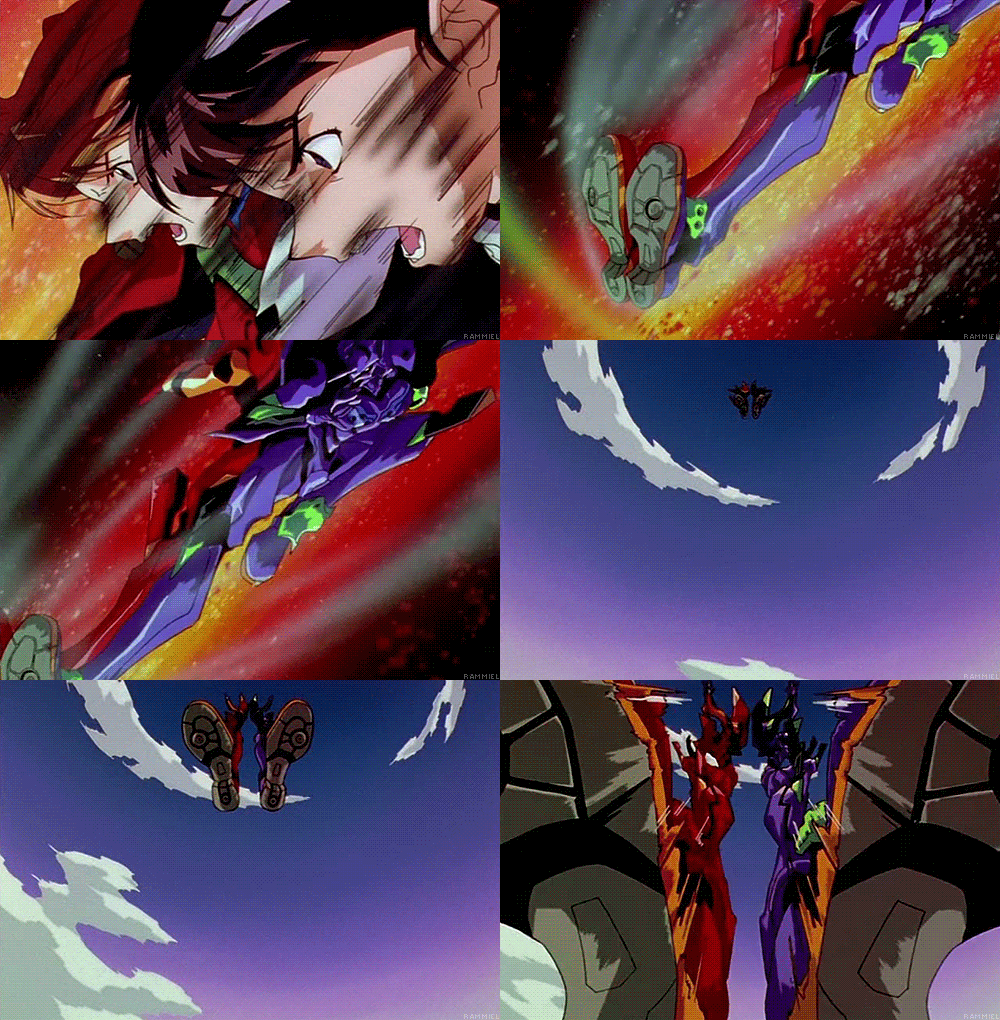
Aesthetic inspiration from the director's childhood influences can be seen in elements such as the Evangelion Units' human-like designs and giant scale fistfights with alien invaders among cityscapes that give the action scenes a more Ultraman-Esque tokusatsu quality than the typical high-speed space dogfights of other mecha animation such as Gundam or Super Dimension Fortress Macross (1982). Other instances of tokusatsu DNA in the animation of Evangelion include a reference to the titular superhero Kamen Rider's (1971) signature flying kick in episode 9 with the sort of lavishly detailed action animation and use of exaggerated perspective reserved for only the most important fight choreography in the series.

There are few elements of Evangelion that are as significant in its placement as a breakthrough piece of animation as its metanarrative on the otaku's relationship with media, fandom, and escapism. While it has been argued that Evangelion is not an animated series about anyone specific theme or message, it is difficult to argue that it does not make a strong statement on the unhealthy relationship many otaku have with the media they love as vehicles for escapism. Throughout the series we see a reoccurring theme of characters using different methods for escapism, running away from their problems, and refusal to engage with their flaws and insecurities most of which manifest in the characters' refusal of any kind of intimacy or vulnerability. Most of these examples relate to piloting the Evangelion Units such as Shinji and Asuka's deep insecurities and lack of parental love leading to desperation for external validation, or Gendo's obsession with his plan to use the Evangelions and Third Impact to reunite with his wife as an unhealthy coping mechanism. While ultimately this is concerning the theme of isolation and loneliness in Evangelion there are also many parallels to be drawn between the characters' relationships with the mecha and the audience's relationships with otakuism and because of the introspective nature of the series it can also be argued that this criticism of the otaku as an escapist who runs from vulnerability and suffering comes from Anno's history as an otaku. Anno simultaneously critiques the otaku viewer as well as the creatively regressive animation director whose fixations with 'anime-like' tropes such as the moe, lolicon (e.g. Rei), and the giant robot (Gendo and Shinji's fixations) by appealing to the otaku on a surface level before denying the viewer an escape and deploying dejected characters as a tool for self-reflection and ultimately encouragement to accept one's vulnerability.
The core messages, themes, and ideas of Evangelion lie not within the mecha action, war narrative, or post-apocalyptic setting but its protagonist Ikari Shinji. It is immediately clear from the very first episode that Shinji is an atypical anime protagonist and even unfit to be the sort of character placed into the mecha-pilot role as he is reluctant to fight, emotionally withdrawn and generally quiet and timid, and seems to retain few outstanding qualities of the genre-defining protagonists of the 70s. Despite that, there are some similarities between Shinji and characters like Mobile Suit Gundam's (1979) Amuro Ray and Space Battleship Yamato's (1974) Susumu Kodai tragic past and talent for piloting that enable the series and its protagonist to provide the audience with familiar aspects for which the series will exploit later. Through Shinji, Evangelion shows its true colours as a coming-of-age story and exploration of the struggle of the human experience as an entity forever individual yet ultimately yearning for intimacy with others using psychological theory and multiple characters' complicated relationships with their parents. Shinji's resentment towards his father, his spiritual and physical intimacy with Eva Unit-01 (which contains the soul of his mother), and his somewhat romantic and sexual feelings towards Rei: a teenage clone of his mother contains elements of Sigmund Freud's Oedipus Complex which is explored profoundly throughout the series. Educated viewers of Evangelion in the mid-1990s would have picked up on such themes and would have simply been impressed and shocked that an animated mecha series not only references but also explores such themes, as up until that point themes of the like would have been reserved to the more mature, culturally significant, internationally regarded and artistically revered animated films of directors such as Oshii Mamoru or Otomo Katsuhiro.
Another aspect of Evangelion that stands out from other mecha animation is in its exploration of gender and the roles of women and men, as the series features many women in roles of power and examines the pervasiveness of traditional masculinity in the genre. Anno and Gainax were no strangers to depicting women in roles significant to the narrative as his directorial repertoire at the time featured exclusively female protagonists with Nadia: Secret of Blue Water (1990) and Gunbuster (1988) and the protagonist of Evangelion itself was going to feature a female protagonist in very early stages of production. Where Evangelion stands out as a breakthrough animation is in its fully developed mature female characters such as Katsuragi Misato and Akagi Ritsuko rather than the more typical rorikon-Esque characters of many Japanese animation, although characters like Ayanami Rei show that the series has not entirely severed this trope. Such characters are given plenty of screen time exploring their own trauma's such as Misato's relationship with men and intimacy in episode 15 and in a way are more fleshed out than most of their male colleagues. Ortega explores how even the protagonist is made to explore gender as she describes 'Shinji's encounter with a sort of "eternal feminine" in his disappearance inside the Eva as well as his embrace of 'the procreative imperative, returning the whole narrative to physicality and, furthermore, to the body as a potential source of life' in the final act of The End of Evangelion. What makes Evangelion's characters stand out against contemporary tv animations is their unconventionality when compared to the usual tropes of the mecha genre, specifically in their lack of traditional masculinity and intimate psychological struggles that dissociate them from the standard war narrative and as such has become regarded by many as a breakthrough work in animation culture.
All it takes is a glance at the number of academic writings, influence on filmmakers and animators as well as merchandise sale figures and box office numbers to understand that Neon Genesis Evangelion is one of the most important works of animation of the 1990s. Anno and the ideologically synchronized Studio Gainax play with high and low culture to create a work that not only understands and explores to the fullest its medium but also embraces the 'anime-like' imagery and stylings of tv animation with art film sensibilities whose own creative leaders had long shunned to create a work where its profound introspection on the human condition is as accessible as it is challenging. Add to this a near unseen level of self-awareness and self-criticality in animation that comes out of genuine and authentic love and concern for those who appreciate the medium of animation, and it is plain to see why so many from the most academic of critics to even the least critically engaged otaku see Evangelion as a breakthrough work of animation culture.
Bibliography
• Broderick, Mick ‘Anime's Apocalypse: Neon Genesis Evangelion as Millenarian Mecha’, Intersections 7, 2002
• Azuma, Hiroki, ‘Anime or Something Like It: Neon Genesis Evangelion’ InterCommunication 18, 1996
• Ortega, Mariana, ‘My Father, He Killed Me; My Mother, She Ate Me: Self, Desire, Engendering, and the Mother in Neon Genesis Evangelion’, Mechademia 2, 2007, 216-232
• Napier, Susan J.’, When the Machines Stop: Fantasy, Reality, and Terminal Identity in Neon Genesis Evangelion and Serial Experiments: Lain' in Christopher Bolton (ed.), Robot Ghosts and Wired Dreams: Japanese Science Fiction from Origins to Anime, Minnesota, 2007, 101–22.
• Cavallaro, Dani, Anime Intersections: Tradition and Innovation in Theme and Content, 2007, 54-70
• Sadamoto, Yoshiyuki, Der Mond: The Art of Neon Genesis Evangelion, Tokyo, 1999
• ‘Hideaki Anno Exhibition’, National Art Centre, Tokyo website https://www.nact.jp/english/exhibitions/2021/annohideaki2021/
____
Will probably come back to this and make it look a bit more presentable/edit some things/add more gifs