Just like how LGBT-themed books are becoming more and more common, manga centered on the subject have started popping up in the anime/manga industry, with varying degrees of success in regards to how they portray LGBT themes and issues. Some, such as Yuhki Kamatani's Shimanami Tasogare: Our Dreams At Dusk, drawn by an actual non-binary mangaka, explore every possible facet of what it means to be a part of the LGBT spectrum, from finding accepting communities to dealing with the various types of homophobia with nuance and sensitivity. Others, like Kaito's Blue Flag, while well-meaning in its own way, tend to miss the mark on certain things with their superficial treatment of the issues they try to address. I first heard about Love Me For Who I Am, aka Fukakai na Boku no Subete o, through someone mentioning it in passing on TVTropes (For clarification, I don't have an account there. I just lurk whenever I feel like it). Curious, I decided to check it out, and as of this writing, all five volumes have been scanlated, and I've read the entire thing, with intent to buy the rest of the volumes that Seven Seas hasn't put out yet. So what do I think of the manga? Well, I do like it, but there are some things that prevent it from being truly great. And for any trolls wondering, no, it is absolutely NOT the fact that it actually tries to seriously tackle LGBT issues and take its premise seriously. I don't know why people consider that to be a problem, as I'm going to clear the air right now: This isn't a fetishy trap manga meant to titillate people. It's an actual manga that makes it very clear that it's going to explore LGBT issues, and anyone who tries to claim that the manga is somehow "pushing an SJW agenda" or is claiming stuff like this should never be in a manga or are pissy about not having their fetishy trap hentai can go piss off.
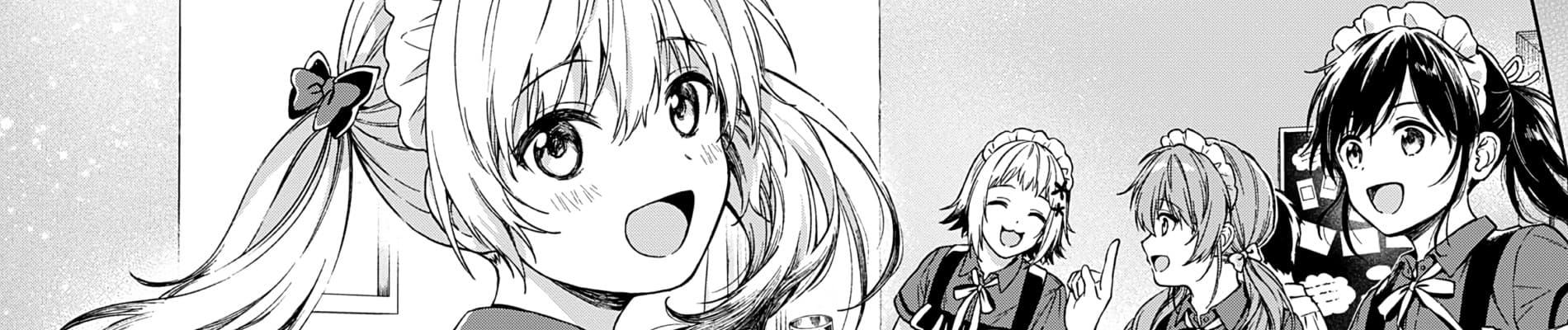
If that's the case, what is Love Me For Who I Am about? The story begins when a young boy, Tetsu Iwaoka, accidentally sees a classmate of his, Ryuunosuke Mogumo, tying a wishing tag to a tree. He happens to see the tag's contents and finds that Mogumo, who dresses effeminately for reasons Tetsu doesn't know, wishes for friends who accept them for who they are. Tetsu thinks he has just the thing, and invites Mogumo to work at a cafe that his sister runs. But when Mogumo gets to the cafe, a problem arises. The cafe in question is a crossdressing maid cafe, where boys wear maid outfits, and Mogumo doesn't identify as either male or female. Through trial and error, Mogumo gets to know and befriend everyone at the cafe, eventually carving out a place for themselves there, maybe finally finding the acceptance they've always wanted. But the world isn't very understanding towards people like Mogumo, and when certain people from Mogumo's past threaten to uproot everything they worked so hard for, the people at the cafe intend to do all they can to support their friend.
Now, a little background: Kata Konayama started off as a hentai doujin artist, which isn't particularly uncommon among up and coming mangaka, and one of the doujinshi he penned, Kimi Dake no Ponytail, was conceived as a prequel to this. So technically, this is Konayama's official debut as a mainstream mangaka and a sequel to one of his early doujinshi. On a technical level, Konayama's art is fine. Backgrounds are reasonably detailed but not overly so, the linework is clean, the panel layout is good, and I gotta say, Konayama has a real knack for facial expressions. But one thing I can see people having a problem with is that the character designs lean very heavily towards the moe aesthetic, with the employees at the cafe looking like cute little ten-year-old girls even though many of them are boys (With two exceptions, Mei and Mogumo) and are teenagers at the oldest. Most anime/manga fans I know aren't too big on cutesy moe character designs because of their somewhat fetishistic nature, which is fine, but in case anyone is wondering, there's no fanservice or characters being sexualized or put in compromising positions here (Thank God!), so you can rest assured on that one.
The characters, I admit, I'm conflicted on. On one hand, the author does try to give Tetsu, Mogumo, Kotone, and others decent development throughout the manga, which is good. But a lot of their development is tied to their sexual orientations, and while we do get to see some tidbits of their personalities on occasion, a good chunk of the manga is spent with them dealing with their own issues related to their identities, which can make them feel like they came out of an after school special at times. What I mean is, after reading the manga, ask yourself these questions: Who are they? What drives them? What are their interests outside of wearing their favorite outfits and learning about their sexual orientations/identities? Much of the manga focuses on the characters trying to come to terms with themselves, which is fine, but other than a few small things, it feels like the characters are solely defined by their orientation. Plus, other characters, such as Suzu and Ten-chan, don't get much in the way of development at all, and mostly have one or two personality traits at most. They're not bad or anything, but this cast of characters feels rather bland like wheat toast. It doesn't help that they don't exactly leave a good first impression at the start. I've seen a lot of people take issue over Mogumo getting upset over being misgendered by people who didn't know them and their circumstances right away, decrying them and their struggles as just being a whiny, entitled brat throwing a tantrum. I personally didn't mind Mogumo reacting the way they did in the first chapter, as I assumed it was the culmination of them just getting sick and tired of being misgendered but not knowing how to really explain it in a calmer manner. I mean, they're teenagers. Would you really expect teenagers to talk to each other calmly about these kinds of issues? Plus, Tetsu doesn't have much character other than being nice and an ally to others on the LGBT spectrum, and I really didn't like Kotone. I hate it when characters fall into the "I'm jealous of this random person and bully them because they have the nerve to talk to my friend/crush/whatever" trope, as it's old, boring, and really needs to die, though the manga does give her reasons for being that way.
Plus, there's something else I find myself confused about as well. Seven Seas constantly mentions Mogumo being non-binary in their blurbs for the manga, and Mogumo doesn't identify as either male or female. I have to ask: Does Mogumo even know that the term non-binary even exists? There's no indication that Mogumo knows that there's even a word for what they are. I think the manga really could have benefited from Mogumo learning more about what it means to be non-binary and finding others like them. Furthermore, the manga doesn't always nail the occasional mood shifts between its various chapters. Some chapters can go from happy-go-lucky to piling on angst and drama at the flip of a coin, and it can feel rather jarring. Mogumo is also given a needlessly heavy-handed, angsty backstory—though it may be true to life for some who actually experienced something similar IRL—but Konayama really could have tried to put in more effort to make the drama more subtle. Also, the manga is weirdly short too, only clocking in at five volumes and ending rather abruptly. I don't know if this is because Konayama wasn't allowed to do more with it or if they chose to end it on their own terms or what have you. I would have liked to have read more. But for the most part, other than some needless angst, the manga does make an earnest effort to tackle LGBT issues in a sensitive, tasteful light and promote understanding and acceptance, even if the ending is cheesy as all hell.
While not the absolute best LGBT manga out there, Love Me For Who I Am is still one of the better ones out there, even if it stumbles along the way.
22.5 out of 25 users liked this review