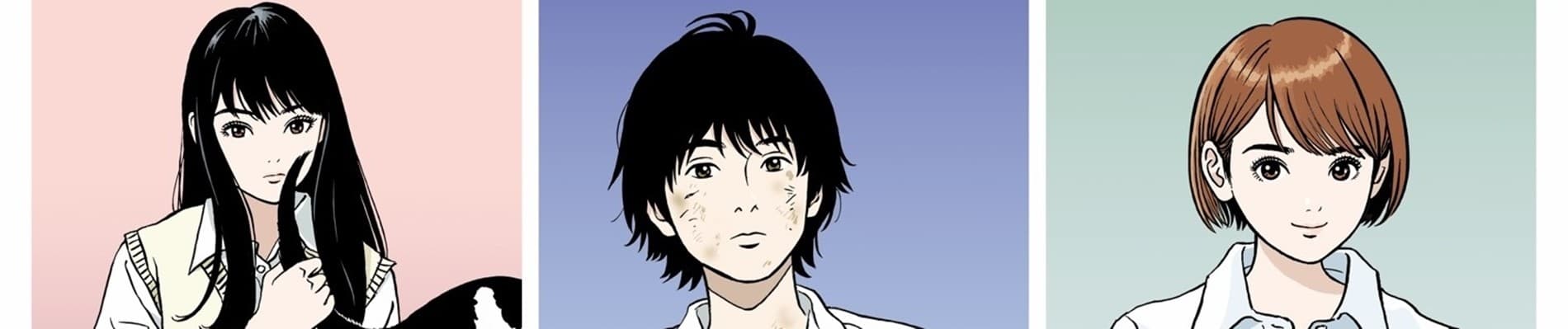
Sonny Boy
a review by brandotendie
a review by brandotendie
while it possesses on its surface all the density and intoxicating visual cadence of works like Evangelion, Sonny Boy's open-ended method of introducing concepts and characters and leaving nothing unresolved, as well its more cerebral approach to its thematic subtext as opposed to Eva's spiritual/emotional approach makes me think more of Serial Experiments Lain.
the main reason being i came away from every episode and the show at large in a state of surrender. like Lain, all the themes and ideas of the show are presented almost purely in a visual barrage (whether it's through the aforementioned rhythm of its editing, the psychedelia of its ever-changing settings, or the playful compositions that never relent to draw the eye even during static conversations, it's a pure assault that numbs you), and even with my full attention there were times where the subtext or main theme was lost on me, yet the comprehension of what it was trying to say slipping my grasp didn't affect my fulfilment nor my enjoyment.
in other words, Lain and Sonny Boy give a distinct sense of cerebral exploration of ideas by fully leaning into the strengths of the anime medium, conveying said ideas through the insane limitless possibilities of animation to make the experience feel almost purely experiential.
it demands revisits because again, the thematic meat of the show engages you on an almost subconscious level, and when you realize you should stop trying to solve its opaque density as if it were a Rubik's cube, you're left to just get sucked in and experience it all.
the beauty of Sonny Boy is that pairing this approach with the intentional disregard to almost all arcs'/subplots' conclusions makes almost each revisit feel unique each time. every interpretation, assumption, conclusion you may reach may change, and sometimes you end an episode without any of them.
it's a perfect reflection of the main GENERAL theme of the show, which wrestles with the illogical chaos of life coming out of adolescence. when prodded about this, director Natsume Shingo said:
"Every subjective point of view, no matter what it is, has its own form of correctness. One of the themes of the story is the children who continue to resist the illogicality that is born from that subjectivity."
the work itself espouses that theme. you can look up video essays or reddit posts all over and every single episode will have different interpretations, and they're all valid! but during the experience itself it's hard not to just become transfixed as your mind tries to reconcile what your eyes are being assaulted with.
Andrei Tarkovsky's quote about the "meaning" of his films comes to mind:
"Everybody asks me what things mean in my films. This is terrible! An artist doesn't have to answer for his meanings. I don't think so deeply about my work - I don't know what my symbols may represent. What matters to me is that they arouse feelings, any feelings you like, based on whatever your inner response might be. If you look for a meaning, you'll miss everything that happens. Thinking during a film interferes with your experience of it. Take a watch into pieces, it doesn't work. Similarly with a work of art, there's no way it can be analyzed without destroying it."
above all, Shingo understands that to succeed with something as esoteric as this work, you need to make the experience itself take precedent (visually!) above all else.
but unlike Tarkovsky's final point of art being analyzed, when Sonny Boy is taken under a scalpel to be scrutinized, it doesn't wither away, but instead, impossibly, its ideas blossom into something new entirely.
like life, though you may know the only way to experience it is to move forward, you can never fully box in or comprehend the experiences you collect every step of the way.
66.5 out of 73 users liked this review
