
It’s not always you find a piece of media where the main character is someone on the end of their lives, a senior person dealing with problems on the last few days left. The odds of finding this kind of story get even lower when it comes to action stories, all dominated by predominant archetypes.
Writer Hiroya Oku, Gantz creator, dares to subvert expectations with Inuyashiki – Last Hero, manga that became an anime, adapted by Studio MAPPA. Subversion is what least lacks in this series: Inuyashiki constantly surprises its audience in the best and worst ways possible, guaranteeing impact and confusion on its viewers.

TELL ME, MY HERO, WHERE YOU GOING?
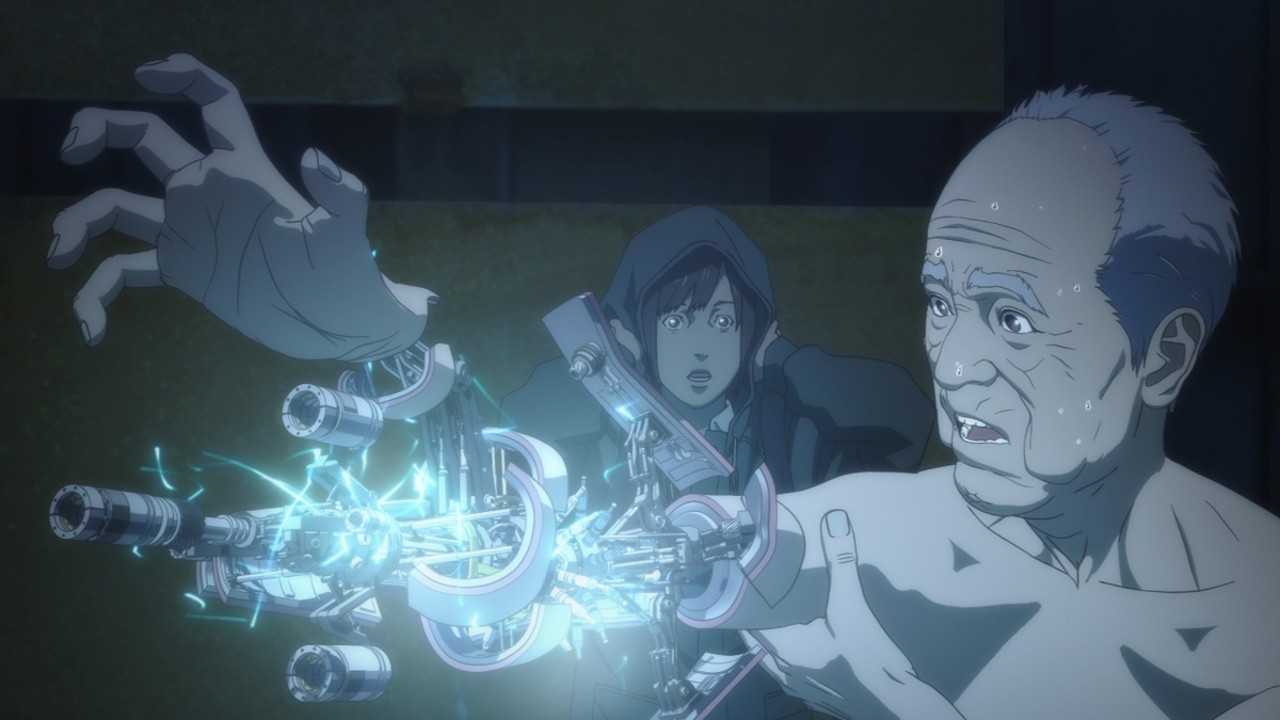
In Inuyashiki, we accompain a main character with the same name as the show: a senior man, husband and father, who spends his days being despised by his own family and society. Eventually, he discovers he has a cancer and he only has a few days left, in which he prefers to spend without telling any of his family members about it. Suddenly, Inuyashiki is struck by some kind of flying robotic object of unknown origin, and when he wakes up, he realizes he became a cyborg. The man decides to use his powers as a machine to save and protect the others, but his limits are challenged when a teenager with the same powers does the contrary as to Inuyashiki, putting the entire country at danger.
Inuyashiki’s synopsis makes the series look like a simple and by-the-patterns story about “hero vs. villain”, “good vs. evil”, but with a different kind of protagonist. However, it’s nothing like that: Inuyashiki – Last Hero is a more “psychological” story than “superhero” and “action”, especially when it comes to its protagonist and antagonist, their parallels and such, something the series never dares to forget. In fact, this contrast between action and psychological is the most consistent/persistent thing in the anime itself, besides the dosage of focus on both of them. The main problem of Inuyashiki is on how the focus is worked on.
Inuyashiki is inconsistent. This is the most notable thing about the series. All aspects suffer from some kind of problem: the direction (by Shuuhei Yabuta) always at some point chooses the weirdest of ways to narrate the story, many scenes and narrative arcs are completely unnecessary in general, and some secondary characters are introduced in odd ways that don’t even make sense seeing how they impact the storyline later on. The protagonist Inuyashiki is left aside in many occasions to give some space to Hiro Shishigami, the antagonist, who in many points of the story shows an odd path in his development, sometimes it doesn’t even feel like it’s going anywhere. The plot features many plot holes when it comes to logic, to the point that viewers may even get angry as to how the side characters and extras act towards the story’s events. Not only that, but one of the most random events of the show, which would be the origin of the object that transformed Inuyashiki into a machine, is completely ignored, just serving as a catalyst for the story to begin and nothing else. So many of these problems could have been solved in simple ways, all that was needed was more focus on the screenplay and direction.
However, as it was said before, Inuyashiki is inconsistent. So, at some point, all that is extremely bad will break the pattern and become extremely good. Fortunately, that’s what happens in the series.
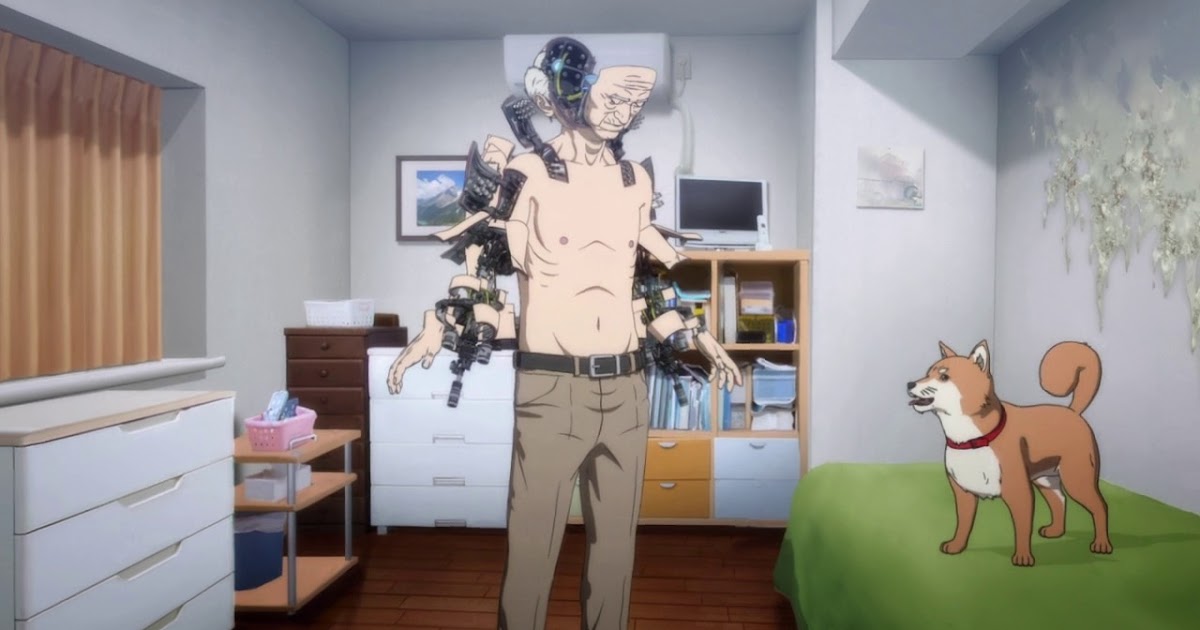
When the direction and script of Inuyashiki get it right, they don’t just “get it right”: they hit the mark one hundred percent entirely. It’s undeniable that the show makes you feel something more than frustration due to the inconsistency: at various moments Inuyashiki can make you smile, fear, get shocked and even cry.
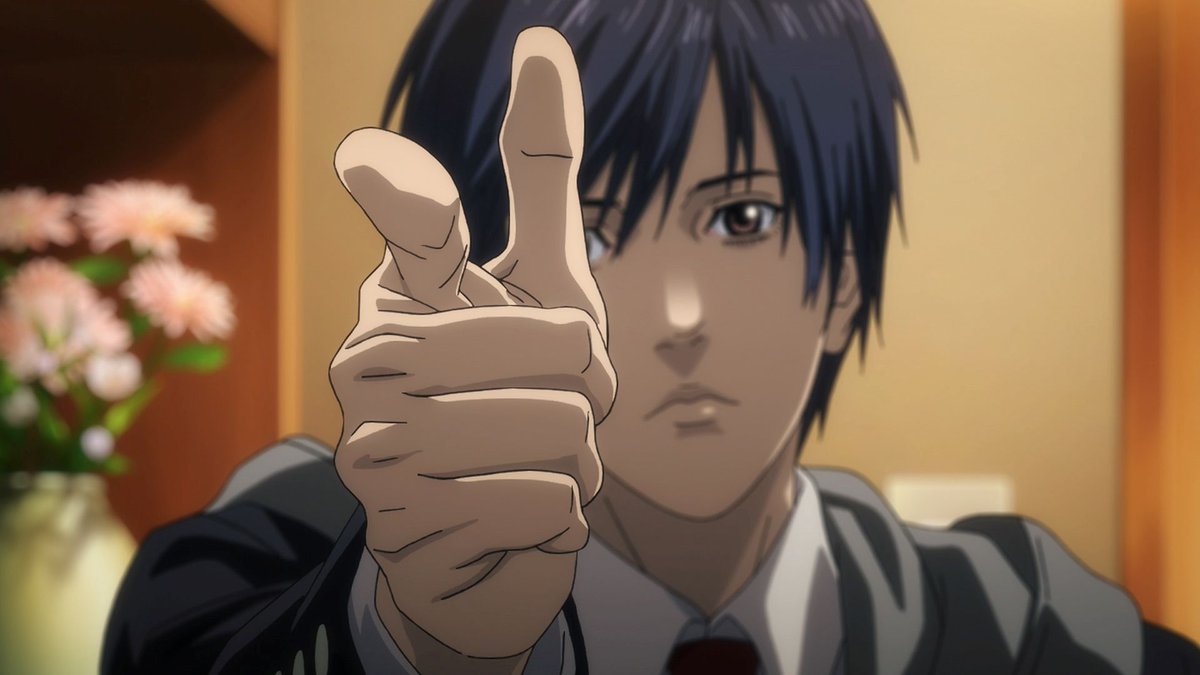
Right in its first episode, the empathy developed over the protagonist is enough to make you feel sad for his life and happy when he makes the difference. In the next few episodes, the anxiety and hatred for the antagonist are planted inside the viewer easily, and then all of that is subverted as soon as you understand the reason of specific actions he takes as the story goes by. Even if the antagonist Hiro Shishigami keeps confusingly going back-and-forth in his journey, the series manages to make you understand his psychological state and confusion as what to do, even making you hope a little bit he comes to terms with himself.
Meanwhile, the protagonist Inuyashiki might not get the focus and development he needed, but the small scenes about him are enough to make you get emotional even if a little bit. The secondary characters may be introduced in a weird way (and also be a little one-dimensional), but the relationships they maintain with the titular characters are so strong that you feel they make a difference by being there. Besides, the contrast Inuyashiki and Hiro share, even if more metaphorical than directly debated in the story, is a strong thing that would be even better with more focus on it.
That’s what makes Inuyashiki an emotionally confusing experience: it’s a good show that often loses itself. It’s not the kind of story in which the good aspects eliminate the bad ones, because all the wrong things are still there, right in its core, always knocking on the door. But the good aspects manage to be so good they save the entire show. All that’s left for us is to imagine how better could Inuyashiki be if the direction and script were more polished… and some more polishing for other factors, as well.
TWO OPPOSITES, ONE RESEMBLANCE
When it comes to things beside script and direction, Inuyashiki still manages to find success and failure simultaneously.
Inuyashiki’s animation is by far one of the most inconsistent ones that can be found in any anime series. Studio MAPPA utilizes a mix of 2D and CGI animation, even more so to animate the action scenes easily. However, even if they still have impact and strength, the CGI is not only incredibly notable: it is weak. Really weak. It’s totally weird to see a character previously 2D becoming a tridimensional model in the next shot, all of that because the artstyles of both don’t match at all. It’s not the worst use of CGI in the Japanese animated industry, but it’s still incredibly weak in terms of quality, and did not age well at all from 2017 to 2022.
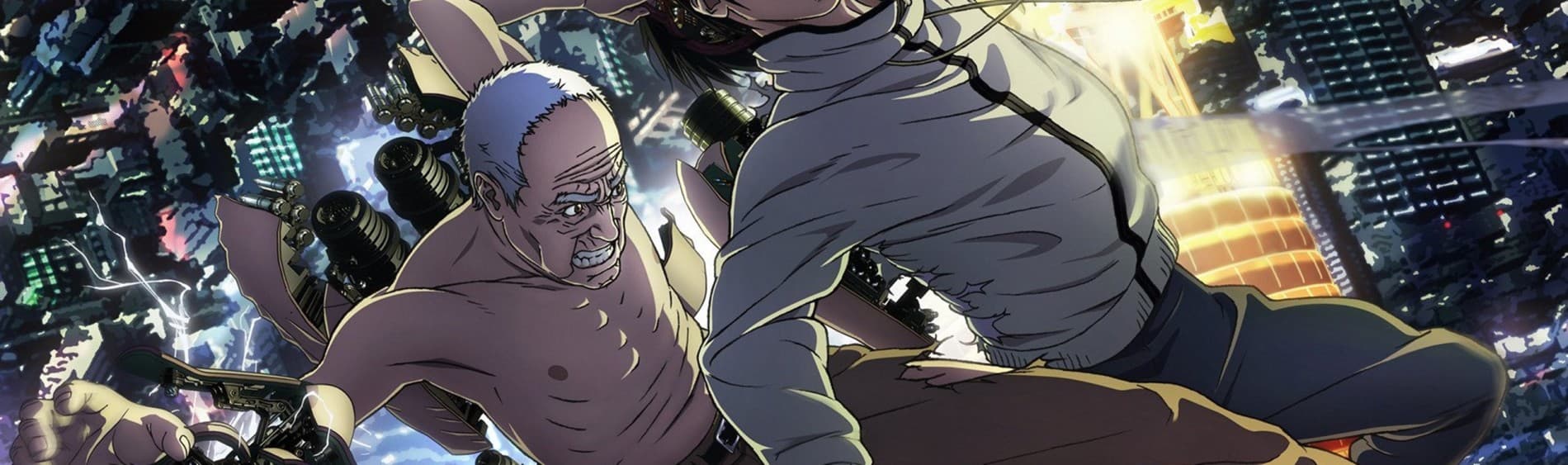
Once again, the action scenes have impact and strength. Seeing Inuyashiki and Hiro flying at open sky, passing by buildings with high speed, or even more physical fights between a character and another pass the necessary energy, Studio MAPPA does not fail in this aspect. The problem is the use of computer-generated imagery, which just becomes a huge inconvenience to the viewer, a really weird and ugly one.
The soundtrack of Inuyashiki is also full of hits and misses. In this case, the fault is more in the direction rather than the soundtrack as a whole. The music of Inuyashiki is simply splendid: not only the opening “My Hero” by Man With A Mission and the credits song, made by Akatsuki Rickhai, manage to be incredible, but the original soundtrack itself is good and emotional. The problem relies on how the soundtrack is used, as certain scenes contain music that don’t match at all, lacking tension or whatsoever. Fortunately, it’s not something that happens with frequency.
VERDICT
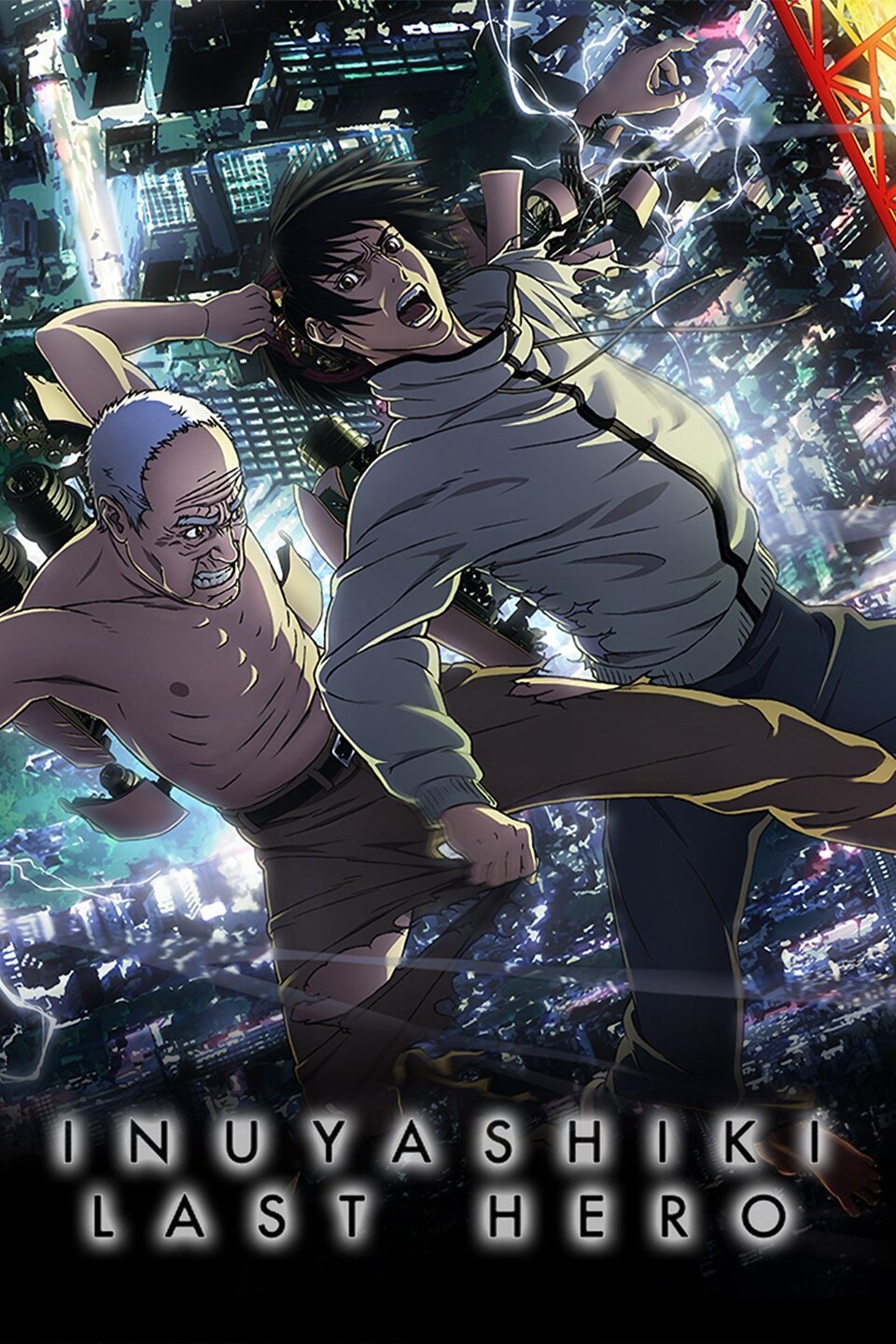
Inuyashiki is a huge mess. But even so, it’s a mess with lots of high points. It’s an enormous ride in a rollercoaster with good and bad points.
Behind the constant struggle present in its direction, narrative and even animation, Inuyashiki provides a gem of a story, surprisingly captivating characters and a big emotional core. It’s an anime that deserves at least a chance: it’ll always surprise you in the best and worst ways possible.
[This review is not meant to insult anyone and their hard work on the production of this series, as it’s only meant to be a critical and fair analysis of it.]