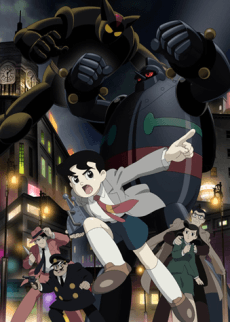
Tetsujin 28
a review by MayIsHere
a review by MayIsHere
I've always been interested in the aftermath, what happens after the heroes win? And after the villains lose? I can never shake off the thought after finishing a Manichean narrative, maybe triumph just doesn't do it for me anymore.
Alternatively, I found Tetsujin-28 deserving of praise for being one of the few mecha series to boldly depict a post-war story where the war actually happened and concluded at the beginning of the narrative. I would recommend it to any viewer interested in war fiction and giant robots, but I was more so compelled by Imagawa Yasuhiro's take on the classical nature versus technology dichotomy, a nuanced portrayal of nature's omnipresence juxtaposed with the technological death & rebirth of a nation. And interestingly, how the show opts to combine those two forces, instead of pitting them against each other.
I'm sure we are all somewhat familiar with Imperial Japan's publicized history during the second world war. Biomechanical weapons, human experimentation, chemical weapons, the works. They probably also attempted to invent a giant robot? Don't ask me for a citation. Similarly in the show, The Tetsujin is a bygone invention of the war era, a once novel ambition is now a retrofuturist relic of a time Japan desperately wants to forget. The robot is controlled by a small remote device, Shotaro tries his hardest to reign it in but often loses grip when faced with adversaries chasing after it. When Tetsujin is manipulated by external forces it often becomes a beast of nature, resembling an ecological disaster more so than a machine. I read this as an expression of similitude between industrial and natural forces; specifically their indifference to humanity, and concurrent utility. They have no truck with morality, righteousness, empathy, etc. This seems frightening at the outset, living in a state of constant hostility and fortuitous disaster, but the show seems more enamored by it than anything. It's also not necessarily unique to Tetsujin, Imagawa often depicts machines as capable of going both ways: to be God or the Devil (Giant Robo, Mobile Fighter G Gundam, Shin Mazinger Z Shogeki Hen, and Getter Robo Armageddon).
This is a delicious conceit in the context of post-war disarmament. How are monstrous military inventions utilized for reconstruction? The expected reaction is to be appalled (and maybe slightly fascinated) by the chilling ingenuity of scientific minds, though Imagawa proposes that Tetsujin and the many other "tools" in the show can be exercised for the good of the nation, and the good of mankind's development cycle. Arguably this philosophy stands at the opposite end of Japan's political attempts at concealing its bloody history during the war. For decades, subsequent governments have been moving away from raising any apology directed at their transgressions during the time, let alone any mention of technology from the era. Moreover, it clashes with the ever-present adage Shikata ga Nai. Tetsujin-28 rejects this, it tells us there is something that can be helped, regardless of how many times we self-destruct.

20 out of 21 users liked this review
