
The Good, the Bad and the Ugly
Manshuu embraces decadence, as unfiltered and pure as the opium cooked up by the protagonist. Accounting the tragic tale of a poverty-stricken Isamu turning to opium production to support his siblings after their mother dies, similar in the vein of a certain Walter White. Manshuu plays out simultaneously as a game of cat-and-mouse and build-a-drug-empire, making for arousing plot development as more characters are introduced, either an ally or formidable enemy. Not all characters are created with the same memorability and presence, but it doesn't come across as a surprise since Li Hua renders everyone below her.
Moral and ethics aren't very conscious between Isamu's sympathetic motivation and immoral cause. Between the timid, empathetic Isamu and the strong, apathetic Li Hua, exists no remorse, guilt or hesitance in their vile venture to expand their opium operations across China. Where it's easy to label their group as the bad, you'll come up short turning your head looking for the DEA or whatever party in good moral standing. Rather, you'd only find other drug-trafficking groups, one a part of the national army, battling it out to see who can plague innocent citizens with opium addictions. As a result, nothing but decadence and injustice crowds the story, rendering moral conflict and discussion without place.
Perhaps "decadence" is a prettier word to dress up "edgy", but Manshuu feels too polished to attach the former to. Primarily, all the barbarity and inhumanity work in the context of 1930s Machuria and the consequential events. Basic high-school history class recollection may ring the Opium Wars as familiar, and perhaps the fact that opium continued to be an alarming national plague for decades to come. Not to stifle yawns with history analyses, but Manshuu does seem to keep a tight grip on accuracy, referencing the Kwantung Army, Germany's revolutionary sulfa drug, among other things. Of course, there will be creative liberties taken in part of this, as with Golden Kamuy and other historical-fictional series. Nevertheless, Manshuu utilizes the context of the Japanese invasion of Manchuria, the consequences of the Opium Wars, the looming 2nd Sino-Japanese War and other ill-rooted events at the time, justifying the omnipresent binges of vice without excess ... most of the time.

Vice City
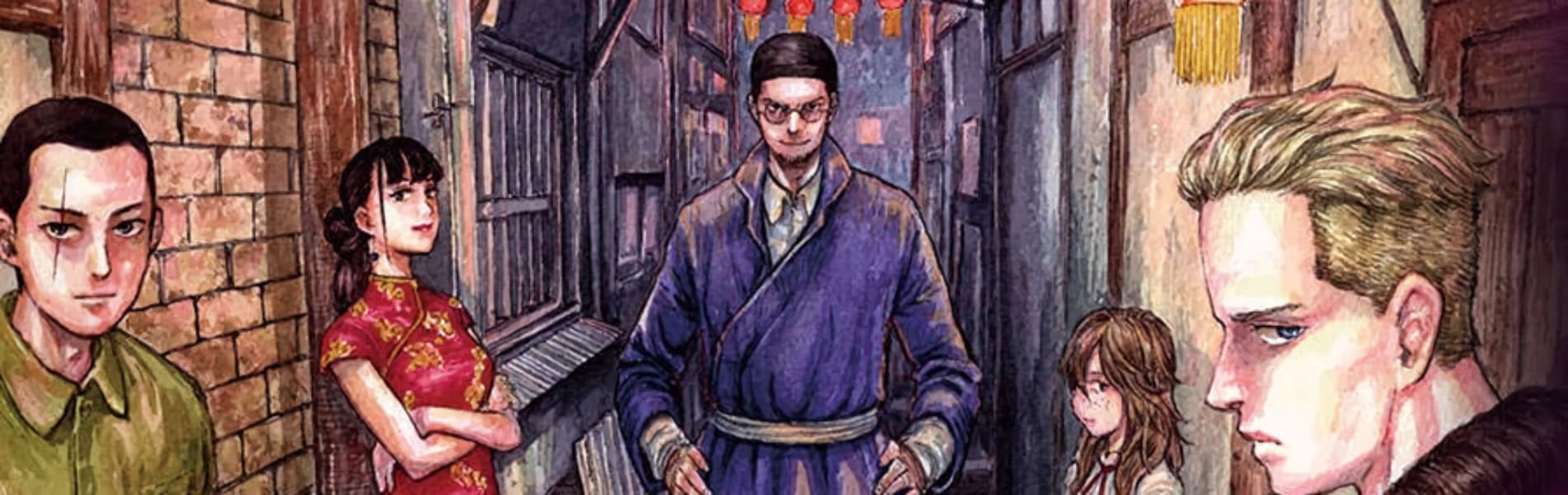
Historical context justifies Manshuu's decadence, but the art is surely the driving force behind it. And Tooru Hakoishi does damn good with it. He didn't demonstrate it with Full Drum, but Hakoishi is perhaps among the best in depicting femininity and a whiplash range of facial expressions. There's a bit of a rough, sketched air to the art, but Hakoishi's strength lies in how he conveys the oft heavy scenic tones, the depravity of the underground world and brief glimpses of the characters' hidden faces. Hidden intentions and/or hedonism define a fair share of the characters, appealing to Hakoishi's skill in facial shading and excessively repulsive, to the point of comedic, facial expressions. My favorite part of Hakoishi's artistic palette has to be his female character designs. As aforementioned, Hakoishi draws with superb femininity and soft sensuality, on par with Makoto Ojiro and Akihito Yoshitomi. Though, really, this is just in the case of Li Hua. Other female characters tend to have softer designs, but Hakoishi dedicates a befittingly sharp air to her with playful, cold eyes akin to a snake and an all-knowing smile.
A small detail, but it's a shame that Hakoishi can boast his coloring prowess with only the volume covers.


Conclusion
Manshuu Ahen Squad indulges in vice and decadence defining China's opium crisis. The presence of a singular villainous and heroic entity is absent, making for an engrossing crime story devoid of morals and ethics. With multiple factions scrambling for their solidification as the de facto opium empire, the game of cat-and-mouse plot relevant to the crime genre grows increasingly enthralling with the introduction of new characters.
In bearing its heart of decadence, the art acts as its blood. Inhumanity and hedonism plague the series, and Tooru Hakoishi conveys them with skillful character shading and comedically superfluous expressions befitting the dark airs of many scenes.
Although somewhat still taking its preadolescent steps, Manshuu is developing to be an enrapturing crime and historical series that other seinen fans will be bound to have a peek at.